The Bombay High Court has affirmed that a second developer who assumes liabilities of a first developer under a development agreement cannot evade obligations to homebuyers merely due to lack of direct contractual privity. This judgment reinforces the protective intent of the Real Estate (Regulation and Development) Act, 2016, and clarifies that statutory rights of allottees prevail over private contractual arrangements between developers.
Background & Facts
The Dispute
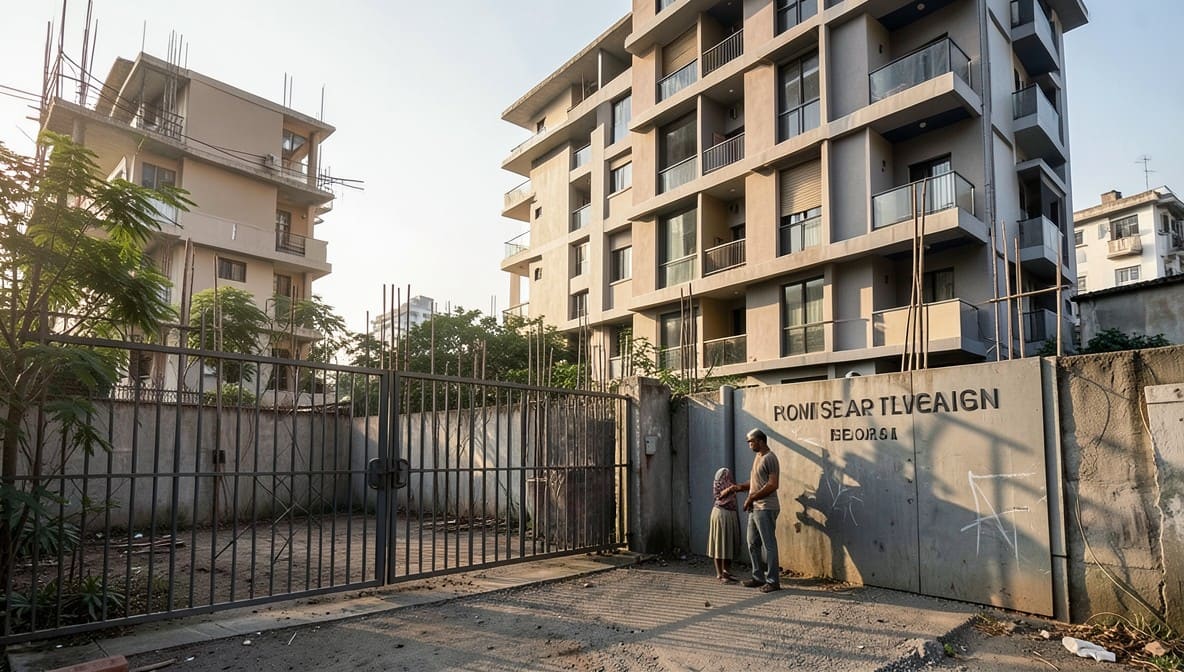
The dispute arose from the sale of residential units in the "Sun Gates" project in Malad (East), Mumbai, initially developed by M/s Super Constructions (Respondent No.2). The project was launched under a slum rehabilitation scheme. Respondent No.1, Sangeeta Ravi Punjabi, paid Rs. 12,78,750/- as 30% of the total consideration of Rs. 42,62,500/- for Flat No. 1701, measuring 775 sq ft, pursuant to an allotment letter dated 25.09.2010. The balance payment was to be made upon execution of a registered Agreement for Sale.
Key Facts
- The allotment letter dated 25.09.2010 specified the flat size, location, and total consideration.
- Respondent No.2 received Rs. 12,78,750/- from the Allottee and issued a formal allotment.
- On 28.04.2013, Respondent No.2 entered into a Development Agreement with the Appellant, M/s Sai Enterprises, transferring 50% of the FSI of the sale component.
- On 05.04.2016, Respondent No.2 transferred the remaining 50% FSI to the Appellant.
- On 17.10.2017, a tripartite Development Agreement was executed between Respondent No.2 (First Developer), Respondents No.3 and 4 (landowners), and the Appellant (Second Developer).
- Annexure VII to the Development Agreement listed all allottees of Respondent No.2, including Respondent No.1.
- On 23.03.2018, Respondent No.2 informed the Allottee that the project was stalled and handed over to the Appellant.
- On 27.04.2018 and 18.06.2018, the Allottee communicated her willingness to complete the transaction by paying the balance amount.
- On 29.01.2019, the Appellant sent a letter terminating the allotment dated 25.09.2010, offering only a refund with 10.55% interest or a new flat at a 10% discount on prevailing rates.
- The Allottee filed Complaint No. CC006000000057896 before the Maharashtra Real Estate Regulatory Authority (MahaRERA) on 01.02.2019.
Procedural History
- 25.09.2010: Allotment letter issued by Respondent No.2 to Respondent No.1.
- 28.04.2013: First FSI transfer from Respondent No.2 to Appellant.
- 05.04.2016: Second FSI transfer from Respondent No.2 to Appellant.
- 17.10.2017: Tripartite Development Agreement executed.
- 23.03.2018: Respondent No.2 notifies Allottee of project handover to Appellant.
- 27.04.2018 & 18.06.2018: Allottee expresses willingness to complete transaction.
- 29.01.2019: Appellant terminates allotment and offers refund.
- 01.02.2019: Complaint filed before MahaRERA.
- 03.08.2021: MahaRERA orders parties to act per Development Agreement dated 17.10.2017.
- 26.11.2025: Maharashtra Real Estate Appellate Tribunal allows Allottee’s appeal, directs allotment and payment of interest.
- 22.04.2026: Bombay High Court dismisses Second Appeal.
The Parties' Positions
For the Appellant (M/s Sai Enterprises)
- Argued no privity of contract with the Allottee.
- Claimed liability under the Development Agreement was limited to refunding amounts to investors listed in Annexure VII.
- Contended that the project’s identity changed post-transfer and the exact flat size (775 sq ft) was no longer available.
- Asserted impossibility of performance due to increased construction costs.
- Alleged the complaint was time-barred.
For the Respondent (Sangeeta Ravi Punjabi)
- Maintained she was a statutory Allottee under RERA, 2016.
- Argued the Development Agreement clearly bound the Appellant to discharge liabilities of the first developer.
- Highlighted indemnity clauses in the Agreement.
- Pointed to the suspicious sale of unsold flats on 14.11.2025, just before the Appellate Tribunal’s order, as evidence of mala fide intent.
Relief Sought
The Appellant sought to set aside the Appellate Tribunal’s order dated 26.11.2025, which directed:
- Allotment of Flat No. 1701 (775 sq ft) in "Sethia Imperial Avenue".
- Execution of a registered Agreement for Sale.
- Payment of interest at SBI’s MCLR + 2% on Rs. 12,78,750/- from 26.09.2013 until possession.
The Legal Issue
The central question was whether a second developer, who assumes the liabilities of a first developer under a development agreement and indemnifies the first developer against claims of allottees, can be held liable to directly perform contractual obligations to those allottees under the Real Estate (Regulation and Development) Act, 2016, despite no direct contract with them.
Arguments Presented
For the Appellant
The Appellant relied on Clauses 10 to 12 of the Development Agreement dated 17.10.2017 to argue that its liability was confined to paying the first developer’s debts as listed in Annexure VII, and that such payments were meant only for refunding amounts, not for delivering flats. It contended that the Appellant was not a transferee of the project but merely a purchaser of FSI. It further argued that the doctrine of frustration applied due to increased construction costs and that the Allottee’s claim was barred by limitation. The Appellant also claimed that the original flat could not be delivered as the approved plan had changed.
For the Respondent
The Respondent relied on the express indemnity and liability clauses in the Development Agreement, particularly Recitals (EE) and Clause 4, which required the Appellant to "take over, pay, discharge and settle" all debts of the first developer towards investors listed in Annexure VII. She argued that the term "investors" was a misnomer for statutory Allottees under RERA, 2016, and that the Appellant’s conduct - terminating the allotment and later selling off all unsold flats - was mala fide. She emphasized that Section 18 of RERA grants the Allottee the primary right to seek possession, not merely refund.
The Court's Analysis
The Court conducted a meticulous textual analysis of the Development Agreement dated 17.10.2017. It noted that the Agreement explicitly required the Appellant to "take over, pay, discharge and settle" the debts and liabilities of the first developer towards investors listed in Annexure VII, which included the Respondent. The Court emphasized that the Agreement further provided: "In the event, if any investor(s) is/are unable to get settled due to his absence or due to any unreasonable demand, the Second Developer shall take over the liability."
"The Appellant further agreed that it would indemnify and keep indemnified the owners and first developer against any loss, damage, fine, penalties, legal proceedings and expenses that may be suffered by, imposed on or taken against the owners/first developer by any of the investors/creditors mentioned in Annexure VII."
The Court held that this language was not merely a financial obligation to reimburse the first developer but a direct undertaking to settle claims of the allottees. The Court rejected the Appellant’s argument that privity of contract was absent, stating that while the Allottee was not a party to the Development Agreement, the statutory rights conferred under RERA, 2016, could not be extinguished by private arrangements between developers.
The Court invoked Section 2(d) of RERA, 2016, which defines an "allottee" as a person to whom a flat has been allotted, regardless of whether the transaction was with the first or second developer. The Court held that the Respondent met all criteria of an allottee under the statute.
The Court further relied on Newtech Promoters and Developers Private Limited v. State of Uttar Pradesh to affirm that under Section 18 of RERA, the allottee’s primary right is to seek possession of the flat, and refund with interest is an alternative remedy. The Court dismissed the Appellant’s claim of impossibility of performance, noting that financial unviability does not constitute legal frustration under contract law, as established in Delhi Development Authority v. Kenneth Builders. The Court found the sudden sale of all unsold flats on 14.11.2025, just before the appellate order, to be a deliberate act to frustrate compliance.
The Court concluded that the Appellant’s conduct was not merely commercially opportunistic but legally dishonest, designed to evade statutory obligations under RERA.
The Verdict
The Appellant’s Second Appeal was dismissed with costs of Rs. 1,00,000/- to be paid to Respondent No.1 within four weeks. The Appellate Tribunal’s order dated 26.11.2025 was upheld. The Appellant is directed to allot Flat No. 1701, measuring 775 sq ft, in "Sethia Imperial Avenue", execute a registered Agreement for Sale, and pay interest at SBI’s Marginal Cost of Lending Rate plus 2% on Rs. 12,78,750/- from 26.09.2013 until actual possession is delivered. The Interim Application was dismissed as infructuous.
What This Means For Similar Cases
Second Developers Cannot Evade Statutory Obligations Through Structural Transfers
- Practitioners must now treat second developers as co-promoters under RERA if they assume liabilities of first developers via development agreements.
- Any attempt to limit liability to mere refund of amounts, while refusing delivery, will be viewed as a circumvention of RERA’s consumer protection mandate.
- Annexure lists in development agreements are binding on second developers for all named allottees, regardless of direct contract.
RERA Overrides Private Contractual Limitations
- The statutory right of an allottee to seek possession under Section 18 of RERA cannot be diluted by private agreements between developers.
- Courts will not permit developers to use technicalities like "no privity" to defeat statutory rights.
- The term "investor" used in private agreements will be interpreted as "allottee" under RERA if the transaction meets statutory criteria.
Mala Fide Conduct Will Be Penalized
- Sudden disposal of inventory immediately before judicial proceedings will be treated as evidence of bad faith.
- Courts may impose costs and reject claims of impossibility if the impossibility is self-created.
- Developers must maintain transparency in inventory disclosures and cannot manipulate sales data to frustrate orders.