The Bombay High Court has decisively held that a developer’s prolonged inaction over 13 years in a housing society redevelopment project bars any interim relief under Section 9 of the Arbitration and Conciliation Act, 1996. The Court prioritized the fundamental right of residents to safe habitation over the developer’s speculative profit interest, dismissing the petition seeking to restrain the society from appointing a new developer.
Background & Facts
The Dispute
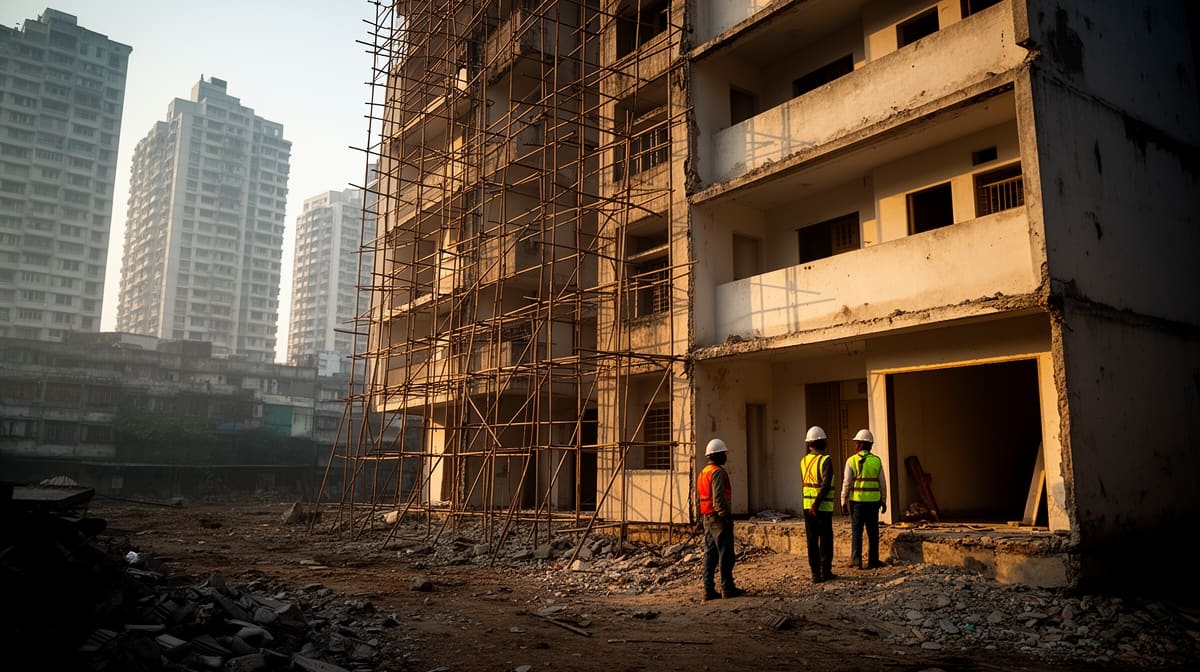
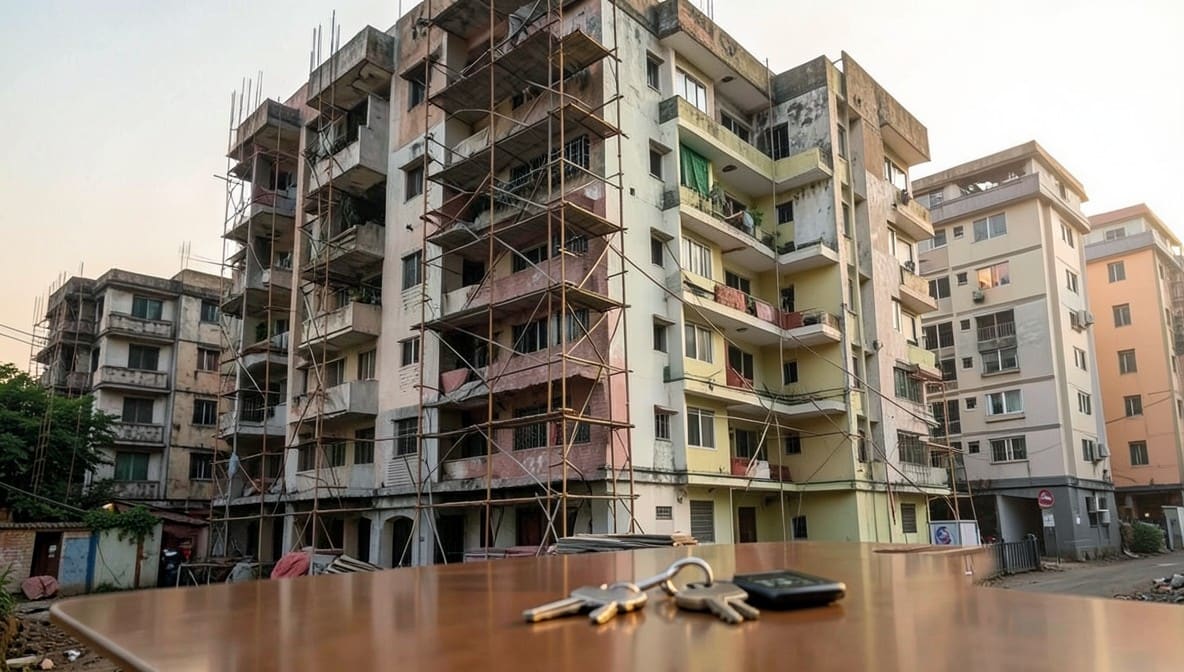
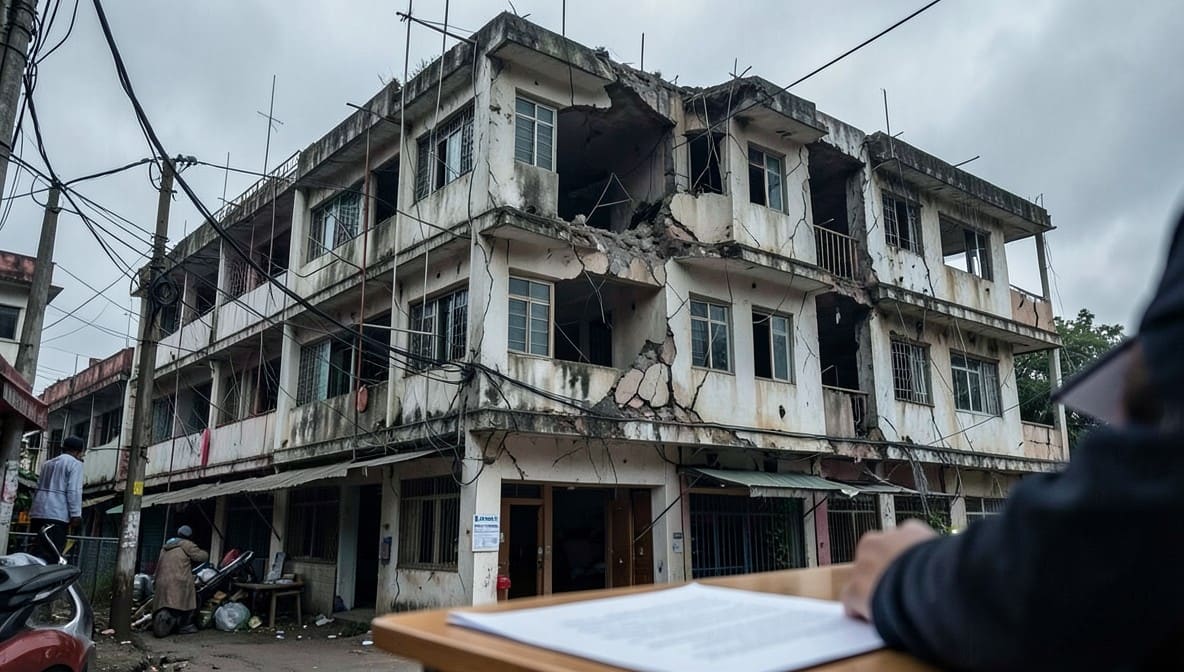
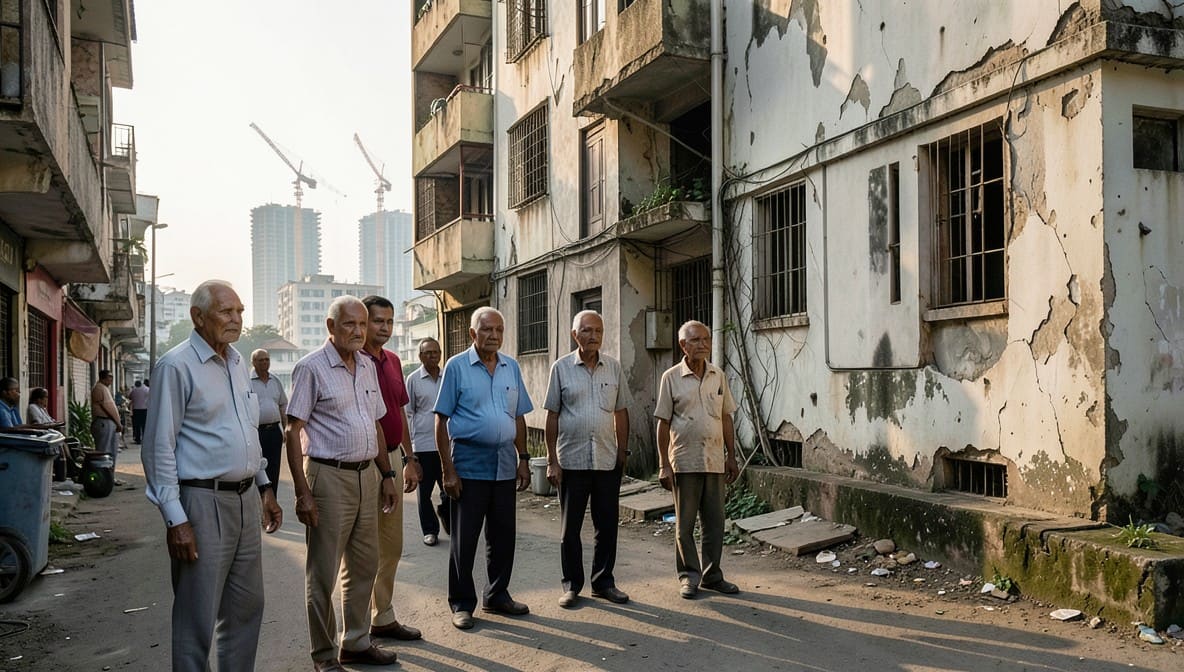
The dispute arises from a redevelopment agreement between M/s. Pioneer Constructions (Petitioner-Developer) and Sahakarnagar Co-operative Housing Society Ltd. (Respondent-Society), concerning the redevelopment of 46 dilapidated buildings constructed in 1957 on municipal land in Wadala, Mumbai. The Society, comprising 826 residential units, 19 shops, and 24 stalls, initiated redevelopment proceedings in 2013 due to structural deterioration and safety concerns. Despite multiple agreements and extensions, the project remained uninitiated for over 13 years.
Key Facts
- The first Development Agreement (DA) was executed on 22 June 2015.
- A revised DA was executed on 22 April 2016, with enhanced terms including increased Permanent Alternate Accommodation (PAA) size from 600 sq.ft. to 700 sq.ft., an earnest money deposit of Rs. 1 crore, and a corpus payment to members.
- The Society obtained a No Objection Certificate (NOC) from the Assistant Registrar on 11 March 2014.
- Between 2015 and 2018, the project was stalled due to pending Development Control Regulations (DCPR 2034).
- The Petitioner submitted no tentative plans, no consent letters from members, and no applications to MCGM for permissions.
- The Society terminated the Petitioner’s appointment via AGM resolution on 15 September 2023.
- The Managing Committee unilaterally withdrew the termination on 6 April 2024, without General Body approval.
- The Petitioner did not take any action during the six-month period following 6 April 2024, citing hospitalization of a partner.
- The Society reconvened the AGM on 30 September 2024 and re-terminated the Petitioner’s appointment.
- The Petitioner applied for a revised NOC on 24 March 2025, relying on the withdrawn 6 April 2024 letter, and obtained an NOC from the Divisional Joint Registrar on 1 April 2025.
- The Society challenged the NOC before the Hon’ble Minister of Co-operation, which set it aside by order dated 17 December 2025.
- The Petitioner did not challenge the Minister’s order despite four months passing.
- The Society appointed M/s. Sugee Developers as new developer via SGBM on 10 January 2026.
- The Petitioner filed the Section 9 petition on 18 April 2026, one day before the scheduled SGBM on 23 April 2026 to finalize the new DA.
Procedural History
- 22 June 2015: First Development Agreement executed.
- 22 April 2016: Revised Development Agreement executed.
- 15 September 2023: Society terminates Petitioner’s appointment via AGM.
- 6 April 2024: Managing Committee unilaterally withdraws termination.
- 10 April 2024: Society requests better terms from Petitioner.
- 27 May 2024: Petitioner requests completion of consents and PAA drafts.
- 18 June 2024: Society confirms continuation with Petitioner to Assistant Registrar.
- 30 September 2024: AGM re-terminates Petitioner’s appointment.
- 4 February 2025: Society claims to have communicated termination to Petitioner (denied).
- 24 March 2025: Petitioner applies for revised NOC.
- 1 April 2025: Divisional Joint Registrar grants NOC.
- 28 May 2025: Society files Revision Application before Hon’ble Minister.
- 17 December 2025: Hon’ble Minister sets aside NOC dated 1 April 2025.
- 10 January 2026: SGBM appoints M/s. Sugee Developers as new developer.
- 9 April 2026: Society issues notice for SGBM on 23 April 2026 to finalize new DA.
- 18 April 2026: Petitioner files Section 9 petition.
- 22 April 2026: Interim order issued for one week.
- 24 April 2026: Judgment pronounced.
The Parties' Positions
For the Petitioner
- Argued that termination on 30 September 2024 was invalid due to lack of notice and absence of termination clause in DA.
- Relied on K.S. Majunath v. Moorasavirappa to claim unilateral termination of non-determinable agreements is impermissible.
- Contended that withdrawal of termination on 6 April 2024 constituted waiver of past delays.
- Invoked All India Power Engineer Federation v. Sasan Power Limited to argue acquiescence.
- Claimed delay was due to lack of 70% member consents, which were the Society’s responsibility.
For the Respondent
- Asserted that the Petitioner had done nothing for 13 years beyond depositing Rs. 1 crore.
- Argued that the Managing Committee lacked authority to withdraw termination on 6 April 2024.
- Highlighted that the Petitioner concealed the Minister’s order dated 17 December 2025 setting aside the NOC.
- Stated that the Petitioner’s justification for delay shifted from ill-health to lack of consents.
- Emphasized that the Society’s members were living in unsafe, 70-year-old buildings.
Relief Sought
The Petitioner sought:
- An injunction restraining the Society from executing any development agreement with a new developer.
- A stay on implementation of resolutions dated 10 January 2026 and 30 September 2024.
- Interim protection for 12 weeks beyond final disposal of arbitral proceedings.
- Costs.
The Legal Issue
The central question was whether a developer’s gross and unexplained delay of 13 years in a housing society redevelopment project, coupled with failure to fulfill contractual obligations and concealment of adverse orders, justifies the grant of interim relief under Section 9 of the Arbitration and Conciliation Act, 1996, when the rights of residents to safe habitation are at stake.
Arguments Presented
For the Petitioner
The Petitioner relied on K.S. Majunath v. Moorasavirappa to argue that a non-determinable contract cannot be unilaterally terminated without judicial declaration. It contended that the withdrawal of termination on 6 April 2024 constituted acquiescence under All India Power Engineer Federation v. Sasan Power Limited, thereby waiving all prior defaults. It further claimed that the Society’s failure to secure 70% member consents, as mandated by Clauses 4 and 5 of the DA, was the primary impediment to progress, and that the Petitioner had acted diligently by submitting plans and correspondence. It argued that the Society’s conduct was motivated by greed to secure better terms from a new developer.
For the Respondent
The Respondent countered that the Petitioner had not incurred any expenditure, prepared no plans, and submitted no applications to MCGM. It emphasized that the Managing Committee’s withdrawal of termination on 6 April 2024 was ultra vires and without General Body approval. The Society highlighted that the Petitioner’s affidavit before the Minister admitted to inaction due to hospitalization, not lack of consents, and that the Petitioner suppressed the Minister’s order setting aside the NOC. It argued that the members’ right to live in safe housing outweighed the developer’s profit interest, and that the Petitioner’s belated petition was an abuse of process.
The Court's Analysis
The Court undertook a rigorous analysis of the balance of convenience, prima facie case, and irreparable injury under Section 9. It rejected the Petitioner’s reliance on K.S. Majunath, distinguishing it on the ground that redevelopment agreements are fundamentally different from agreements for sale of immovable property. The Court observed that a developer does not acquire ownership of land or even a vested right in sale units until obligations to members are fulfilled.
"In a redevelopment agreement, the developer undertakes the responsibility of rehousing the society members by demolishing the old building and by constructing a new one. In return, the developer secures right to sell the additional constructed units to recoup the expenditure and to earn profits. He has the responsibility of praying transit rent to the society members in the interregnum. Developer in an agreement for redevelopment does not secure ownership in the land and the Society continues to remain the owner."
The Court cited Huges Real Estate Developers LLP v. Khernagar Adarsh Co-operative Housing Society Limited and Ison Builders LLP v. Om Sai Ram Co-operative Housing Society, reaffirming that the rights of residents to safe habitation are paramount and cannot be subordinated to a developer’s profit motive. It noted that monetary compensation for the developer’s lost opportunity is feasible, whereas the harm to residents - living in structurally unsound buildings - is irreversible.
The Court found the Petitioner’s conduct to be marked by deliberate delay, shifting justifications, and suppression of material facts. The failure to challenge the Minister’s order setting aside the NOC for four months, combined with the lack of any tangible progress since 2013, demonstrated a lack of bona fides. The Court held that the Petitioner had not made out a prima facie case, and that the balance of convenience overwhelmingly favored the Society.
The Court further noted that the Petitioner’s application under Section 9 was filed only after the Society had already appointed a new developer and issued notice for finalizing the new DA - indicating tactical litigation rather than genuine urgency.
The Verdict
The Commercial Arbitration Petition (L) No. 13956 of 2026 under Section 9 was dismissed without any interim relief. The Court appointed Mr. Amrut Joshi, Advocate, as the sole arbitrator to adjudicate disputes arising under the Development Agreements dated 22 June 2015 and 22 April 2016. The arbitrator’s fees shall be borne equally by the parties, subject to the final award. The Court rejected the Petitioner’s request to extend the interim order beyond 22 April 2026. The Section 11 application was disposed of with the appointment of the arbitrator. No costs were awarded.
What This Means For Similar Cases
Developer Delay Is Fatal to Section 9 Relief
- Practitioners must now demonstrate active, continuous, and documented efforts to advance redevelopment projects before seeking interim injunctions.
- A delay exceeding five years without tangible progress will likely be deemed fatal to a Section 9 application.
- Reliance on contractual clauses requiring member consents will not excuse inaction if the developer has not initiated steps to obtain them.
Rights of Residents Trump Developer Profits
- Courts will prioritize the safety and habitation rights of society members over a developer’s speculative profit interest.
- Interim relief will be denied where the developer has not commenced construction, even if termination is disputed.
- Monetary compensation remains an adequate remedy for developers; physical harm to residents is not.
Suppression of Material Facts Will Be Penalized
- Failure to disclose adverse orders (e.g., Minister’s order setting aside NOC) constitutes suppression and undermines credibility.
- Courts will view belated applications filed days before critical meetings as tactical and disfavored.
- Parties must disclose all material documents, including those unfavorable to their case, at the interim stage.