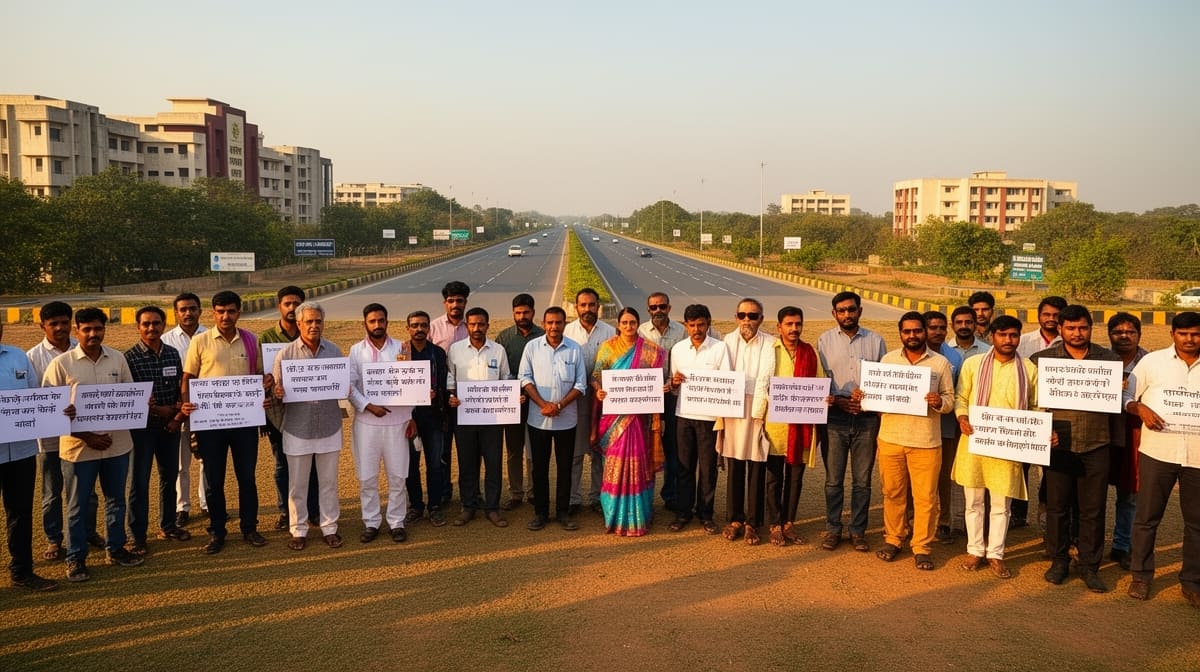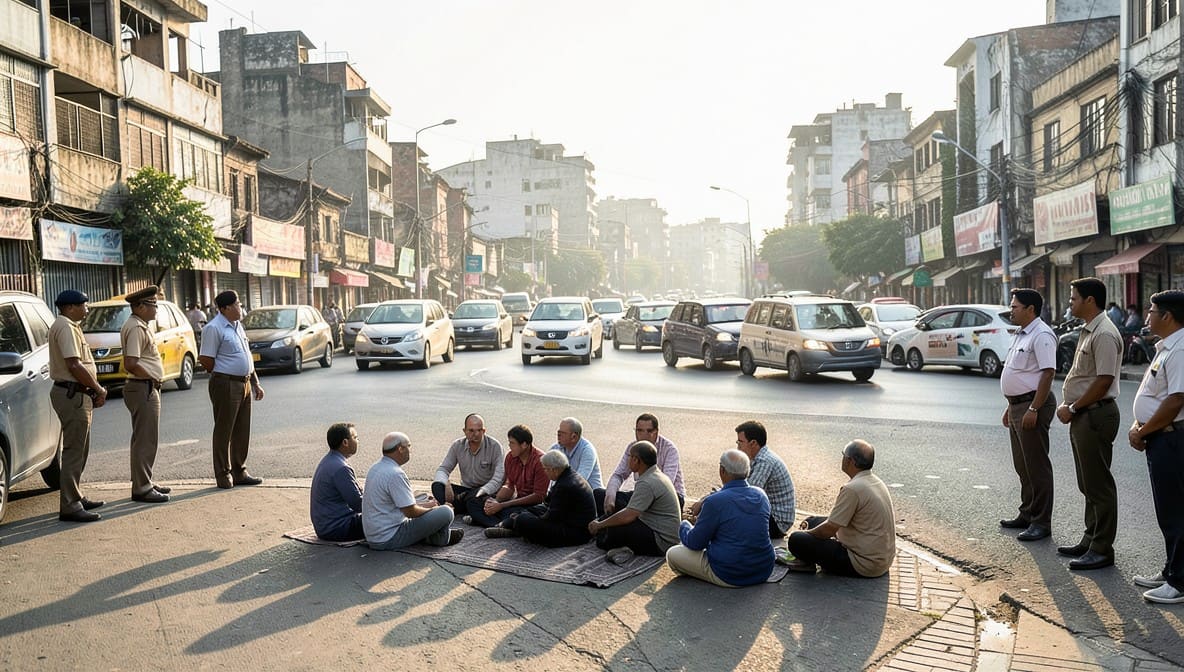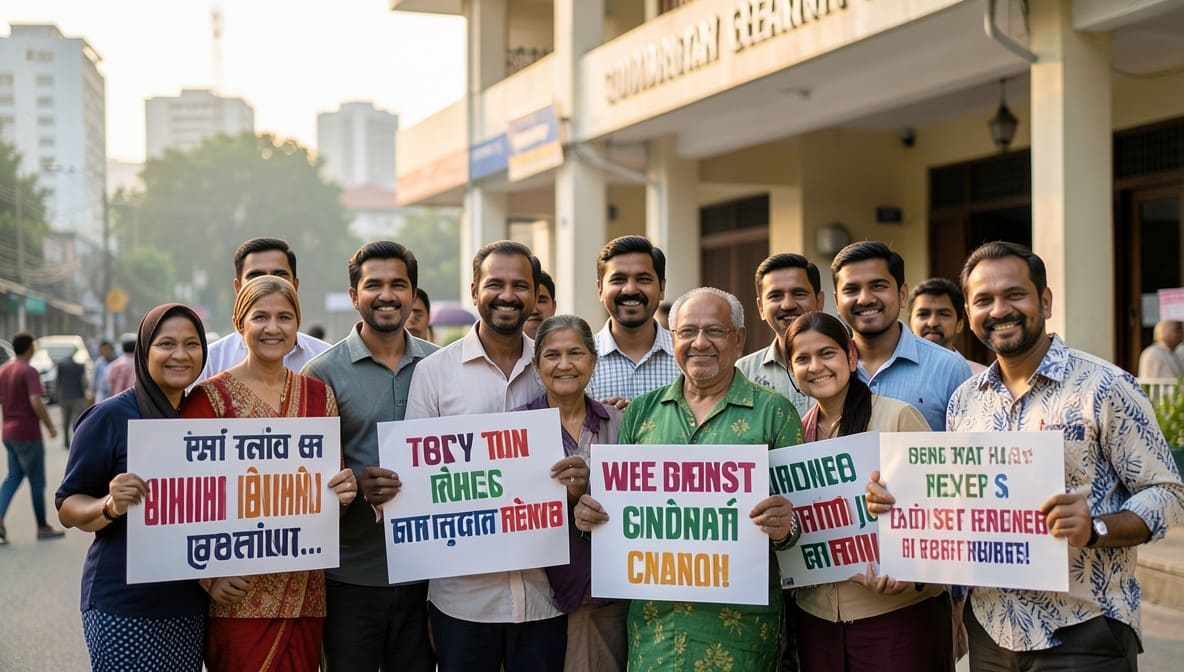
The Madras High Court has reaffirmed that denial of permission for a peaceful public meeting during an election period, without a reasoned order or application of legal standards, violates fundamental rights under Article 19(1)(a) and (b). The Court’s intervention underscores that administrative silence or non-decision cannot substitute lawful adjudication, even in sensitive electoral contexts.
Background & Facts
The Dispute
The petitioner, R. Saravanan, Conference Coordinator of the Peoples’ Democratic Youth Association, sought permission to hold a hall meeting on 12.04.2026 at the Working People’s Trade Union Hall (WPTUC), Dr. Vasudevan Salai, Kilpauk, Chennai. The meeting aimed to discuss electoral reforms, including proportional representation and democratic accountability. The petitioner submitted an online application via the Suvidha Portal and also approached the authorities directly. The 3rd respondent, Electoral Officer / Returning Officer, Anna Nagar, rejected the application by order dated 08.04.2026 (Ref: E1/002-209/2026), without assigning any reasons or citing specific legal grounds.
Key Facts
- The petitioner has been engaged in political and civic promotional activities for over three decades.
- The proposed meeting was scheduled for 12.04.2026 at a registered venue, WPTUC Hall, Kilpauk, Chennai.
- The application was submitted through the official Suvidha Portal as required under election-related regulations.
- The impugned order dated 08.04.2026 was non-speaking: it contained no rationale, no reference to public order concerns, no assessment of potential disruption, and no mention of any statutory provision invoked.
- No notice of objection was issued to the petitioner prior to rejection.
- The petitioner filed the writ petition on 09.04.2026, seeking quashing of the order and direction to permit the meeting on 12.04.2026 or any date before 19.04.2026.
Procedural History
- 08.04.2026: 3rd respondent issued non-speaking order rejecting meeting permission (Ref: E1/002-209/2026).
- 09.04.2026: Writ Petition No. 14629 of 2026 filed under Article 226 of the Constitution.
- 10.04.2026: Hearing before the Hon’ble Mr. Justice M. Dhandapani.
- 10.04.2026: Connected Miscellaneous Petition No. 15866 of 2026 filed for interim relief.
The Parties' Positions
For the Petitioner: The rejection was arbitrary, violative of Article 19(1)(a) and (b), and amounted to administrative suppression of dissent. The petitioner emphasized that the venue was non-political, the subject matter was civic education, and no prior incidents of unrest were reported. The petitioner argued that the absence of reasons rendered the order legally unsustainable.
For the Respondents (1 to 5): The State did not defend the impugned order on merits. Learned counsel for respondents 1 to 3 conceded that the order lacked reasoning and suggested that the petitioner be permitted to file a fresh application, which would be decided expeditiously.
Relief Sought
The petitioner sought:
- Quashing of the order dated 08.04.2026 (Ref: E1/002-209/2026)
- Direction to the 3rd respondent to grant permission for the meeting on 12.04.2026 or any date before 19.04.2026
- Alternatively, direction to consider a fresh application within a strict timeframe
The Legal Issue
The central question was whether an administrative authority may deny permission for a peaceful public meeting during an election period without assigning any reasons, and whether such non-speaking order violates the right to freedom of speech and assembly under Article 19(1)(a) and (b) of the Constitution.
Arguments Presented
For the Petitioner
The petitioner relied on State of Bihar v. Kameshwar Singh and Shreya Singhal v. Union of India to argue that any restriction on fundamental rights must be reasonable, procedurally fair, and accompanied by a reasoned order. The absence of reasons rendered the order arbitrary and violative of natural justice. The petitioner emphasized that the meeting was not political in nature but focused on electoral reform - a matter of public interest - and posed no threat to public order.
For the Respondent
The respondents did not contest the petitioner’s right to assemble. Counsel for respondents 1 to 3 conceded that the order dated 08.04.2026 was defective for lack of reasoning and proposed a remedial course: permitting the petitioner to file a fresh application, to be decided within a short deadline set by the Court.
The Court's Analysis
The Court observed that the impugned order dated 08.04.2026 was entirely non-speaking and failed to disclose any basis for denial. The Court noted that while the State may impose reasonable restrictions under Article 19(2) and Article 19(3), such restrictions must be grounded in law and accompanied by a reasoned decision.
"A non-speaking order denying permission to hold a peaceful meeting, particularly on a matter of public interest like electoral reform, cannot be sustained in law. It is not enough to invoke the general authority of election regulations; the authority must demonstrate how the proposed meeting would threaten public order, decency, or morality."
The Court further held that the petitioner’s request was not for an unrestricted right to assemble, but for a fair and transparent process. The Court emphasized that the right to assemble is not contingent on the convenience of the administration, and that the absence of reasons amounted to a denial of the right to be heard.
The Court also noted that the meeting was scheduled for 12.04.2026, and the petition was filed on 09.04.2026 - leaving minimal time for judicial intervention. Rather than quash the order and risk further delay, the Court opted for a remedial direction that preserved the petitioner’s rights while respecting administrative processes.
The Verdict
The writ petition was disposed of with the following directions:
- The petitioner shall submit a fresh application to the 2nd respondent (District Election Officer / Commissioner, Chennai Corporation) forthwith.
- The 2nd respondent shall consider the fresh application and pass a reasoned order latest by 10:30 a.m. on 11.04.2026.
- Any order passed shall specify the legal grounds for grant or refusal, referencing any applicable statutory provision or public interest concern.
- No costs were awarded.
- The connected miscellaneous petition was closed.
What This Means For Similar Cases
Reasoned Orders Are Non-Negotiable
- Practitioners must challenge any administrative denial of assembly permits that lacks reasoning, regardless of the context (elections, public safety, etc.).
- Non-speaking orders are per se illegal under Maneka Gandhi v. Union of India and must be set aside.
- Even during elections, authorities cannot rely on blanket restrictions; each denial must be individually justified.
Election Period Does Not Nullify Fundamental Rights
- The mere fact that elections are underway does not justify suppression of civic discourse.
- Meetings on electoral reform, voter awareness, or democratic accountability are protected speech under Article 19(1)(a).
- Authorities must distinguish between political campaigning and civic education - the latter is constitutionally protected.
Procedural Fairness Trumps Administrative Convenience
- Courts will not permit procedural shortcuts that deprive citizens of their rights.
- A fresh application with a strict deadline is a valid remedy only if the original denial was procedurally flawed.
- Practitioners should always demand written reasons at the first instance and file writs if denied.