Topic

Election Law

Election Law in India governs the conduct of elections, eligibility of candidates, dispute resolution, and electoral malpractices under the Representation of the People Act and constitutional provisions.

34 articlesLatest 2 weeks ago
Section 31 RP Act | BLA Undertaking for Enumeration Forms Struck Down; Verification Liability Limited to Photograph Match in SIR : Delhi HC
Case Law Analysis
|Delhi High Court

Section 31 RP Act | BLA Undertaking for Enumeration Forms Struck Down; Verification Liability Limited to Photograph Match in SIR : Delhi HC

The Delhi High Court quashed the ECI's mandate requiring Booth Level Agents to undertake verification of enumeration forms in Special Intensive Revision, holding that Section 31 RP Act confines BLA liability to photograph matching. The court deemed the blanket undertaking requirement arbitrary as the statutory duty to verify electoral rolls rests with Booth Level Officers, not party-appointed agents.

Section 86, Representation of People Act | Lack of notarisation and rubber-stamp attestations not fatal for peremptory dismissal of election petition : SC
Case Law Analysis
|Supreme Court of India

Section 86, Representation of People Act | Lack of notarisation and rubber-stamp attestations not fatal for peremptory dismissal of election petition : SC

The Supreme Court ruled that missing notarisation on Form-25 and rubber-stamp attestations do not automatically invalidate an election petition under Section 86 of the Representation of People Act. Such procedural defects are therefore not grounds for peremptory dismissal, safeguarding the petitioner’s right to contest the election result.

24-hour seizure reporting, one-year investigation deadline and mandatory High Court sanction for withdrawing election prosecutions | Election Commission powers under Art 324 : SC
Case Law Analysis
|Supreme Court of India

24-hour seizure reporting, one-year investigation deadline and mandatory High Court sanction for withdrawing election prosecutions | Election Commission powers under Art 324 : SC

The Supreme Court ruled that the Election Commission may compel seizure reports within 24 hours, must complete investigations within a year, and cannot withdraw election-related prosecutions without High Court permission, tightening controls on black-money influence in elections. This binding directive applies to all future election cases across India, affecting political parties, candidates and enforcement agencies.

Article 329(b) bars post-election asset-disclosure challenges via writ petition | Election grievance must be raised in election petition : MP HC
Case Law Analysis
|Madhya Pradesh High Court

Article 329(b) bars post-election asset-disclosure challenges via writ petition | Election grievance must be raised in election petition : MP HC

The court dismissed a writ petition seeking investigation of a returned candidate’s alleged asset concealment, holding that Article 329(b) precludes judicial review of post-election disclosures. Such grievances must be raised through a timely election petition under the Representation of the People Act, limiting the use of writ jurisdiction for election-related matters.

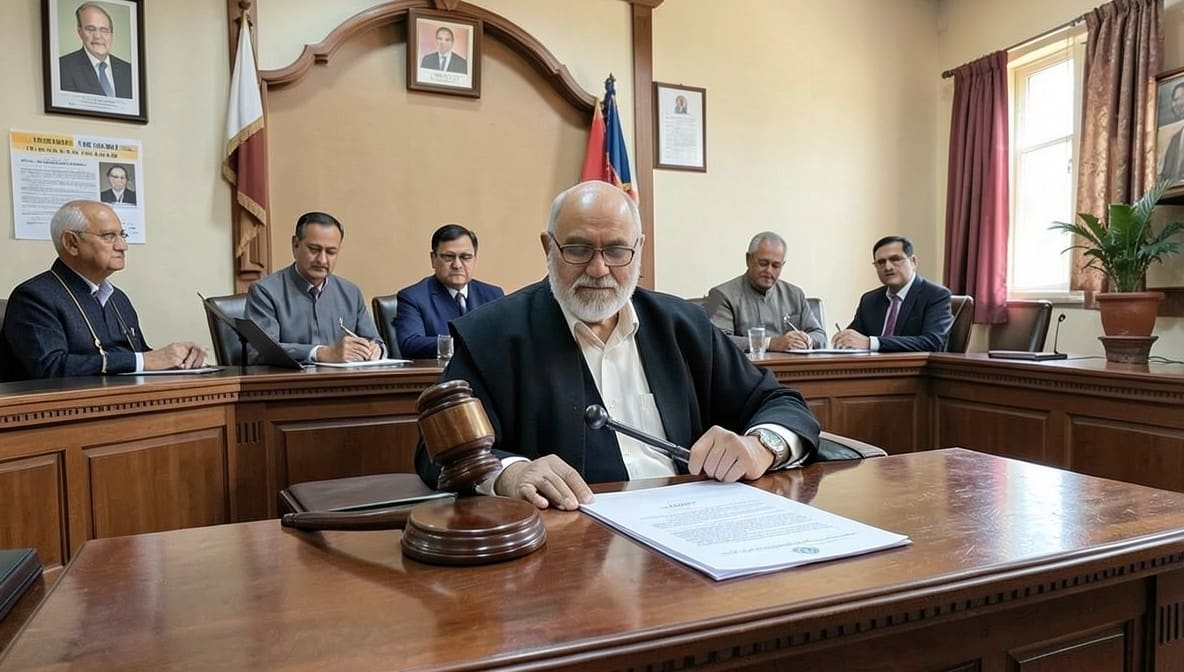
Natural Justice Breach | Arbitrary Rejection of Objections to Voters' List in Cooperative Society Election Quashed : AP HC
Case Law Analysis
|Andhra Pradesh High Court

Natural Justice Breach | Arbitrary Rejection of Objections to Voters' List in Cooperative Society Election Quashed : AP HC

The Andhra Pradesh High Court set aside an arbitrary order rejecting objections to a voters' list in a cooperative society election, emphasizing reasoned disposal and adherence to natural justice. The Court remanded the matter for fresh consideration after affording an opportunity of hearing to the petitioner, reinforcing procedural safeguards in cooperative governance.

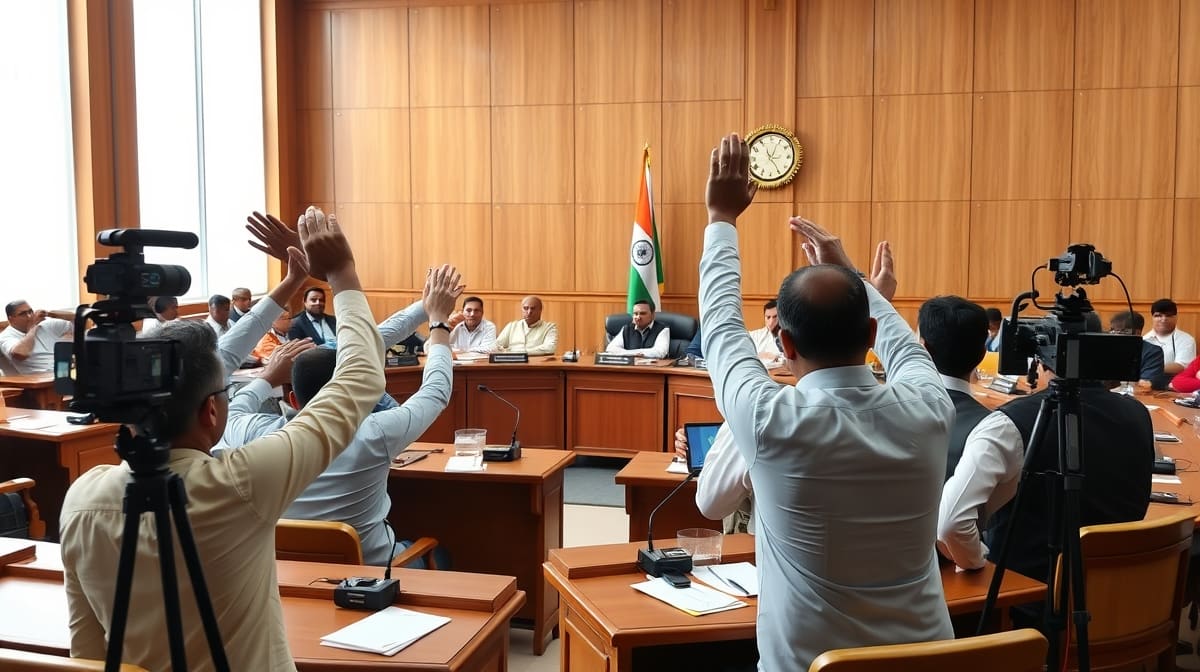
Punjab Municipal Election Rules 1994 | Detained Councillors Must Be Allowed to Take Oath & Vote; Videography Mandatory for Transparency : Punjab & Haryana HC
|Punjab and Haryana High Court

Punjab Municipal Election Rules 1994 | Detained Councillors Must Be Allowed to Take Oath & Vote; Videography Mandatory for Transparency : Punjab & Haryana HC

The Punjab & Haryana High Court ruled that detained councillors cannot be barred from taking oath or participating in municipal elections, ensuring their right to vote under the Punjab Municipal Election Rules, 1994. The Court mandated videography of the election process and directed the Deputy Commissioner to comply within 10 days, reinforcing transparency and procedural fairness in local governance.

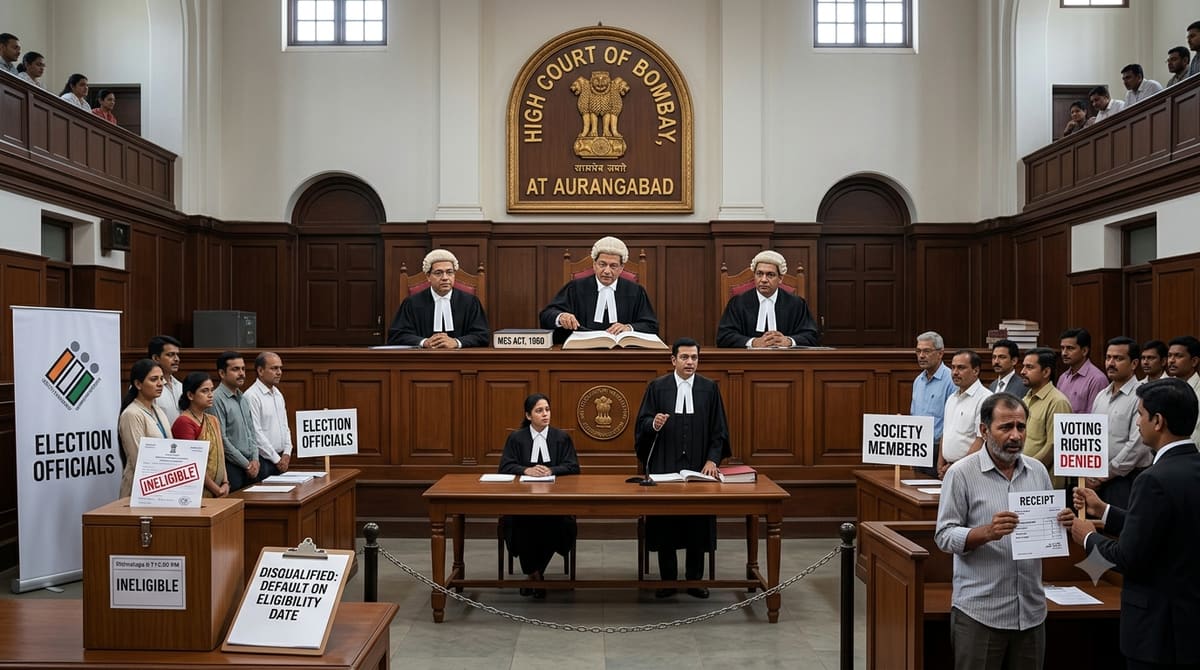
Section 27(10) MCS Act | Voting Rights Disqualified Based on Default Status on Eligibility Cut-off Date, Not Subsequent Payment : Bombay HC (Aurangabad Bench)
Case Law Analysis
|Bombay High Court

Section 27(10) MCS Act | Voting Rights Disqualified Based on Default Status on Eligibility Cut-off Date, Not Subsequent Payment : Bombay HC (Aurangabad Bench)

The Bombay High Court has ruled that a cooperative society loses its voting rights in bank elections if it was in default on the statutory eligibility cut-off date, even if dues are paid afterward. This clarifies that statutory disqualification under Section 27(10) is locked in at the time of nomination, not remedied retroactively - impacting how societies manage financial compliance ahead of elections.

Section 100(1)(d) RP Act | Election Petition Dismissed for Failing to Plead Material Effect of Nomination Defects : Bombay HC
|Bombay High Court

Section 100(1)(d) RP Act | Election Petition Dismissed for Failing to Plead Material Effect of Nomination Defects : Bombay HC

The Bombay High Court has ruled that mere technical violations in nomination forms - such as misplaced photographs or incomplete criminal disclosures - cannot void an election unless the petitioner specifically pleads how those defects materially affected the outcome. This reinforces that election petitions must go beyond procedural complaints and demonstrate real-world impact on voter choice, raising the bar for challengers nationwide.

Section 14 Child Labour Act | Mere Participation in Election Rally Without Proof of Age or Continuous Engagement Not 'Employment' : Karnataka HC
Case Law Analysis
|Karnataka High Court

Section 14 Child Labour Act | Mere Participation in Election Rally Without Proof of Age or Continuous Engagement Not 'Employment' : Karnataka HC

Karnataka High Court quashed proceedings under Section 14 of the Child Labour Act, ruling that sporadic participation in an election rally-without evidence of age or sustained employment-does not constitute 'employment' of children. The judgment reinforces that criminal liability under the Act requires proof of exploitative engagement, not incidental presence.

Section 482 BNSS | Custodial Interrogation Unnecessary for Pregnant Woman with Three Minor Children: MP HC Indore
Case Law Analysis
|Madhya Pradesh High Court

Section 482 BNSS | Custodial Interrogation Unnecessary for Pregnant Woman with Three Minor Children: MP HC Indore

The Madhya Pradesh High Court granted anticipatory bail to a pregnant woman facing election-related fraud charges, holding that custodial arrest would inflict irreparable harm on her unborn child and three young daughters. This ruling reinforces that personal circumstances under Article 21 can override procedural rigidity in non-violent, non-premeditated offences, setting a new benchmark for gender-sensitive bail jurisprudence under the BNSS.

U.P. Panchayat Raj Act | Preliminary Issues in Election Petitions Require Evidence, Not Threshold Adjudication : Allahabad HC
Case Law Analysis
|Allahabad High Court

U.P. Panchayat Raj Act | Preliminary Issues in Election Petitions Require Evidence, Not Threshold Adjudication : Allahabad HC

Allahabad HC rules that preliminary issues in Gram Panchayat election petitions under the U.P. Panchayat Raj Act cannot be decided without evidence, reinforcing the principle of natural justice. The court set aside an order that adjudicated factual disputes at the threshold stage, mandating a full trial for contested issues.

Section 8(2)(l) HP Municipal Corporation Act | Disqualification Requires Valid Demarcation Order Under Land Revenue Act : HP HC
Case Law Analysis
|Himachal Pradesh High Court

Section 8(2)(l) HP Municipal Corporation Act | Disqualification Requires Valid Demarcation Order Under Land Revenue Act : HP HC

The Himachal Pradesh High Court ruled that disqualification under Section 8(2)(l) of the HP Municipal Corporation Act mandates a lawful adjudication under the Land Revenue Act, not an ex parte administrative order. The court quashed the nomination rejection, emphasizing that natural justice requires a valid demarcation order before disqualification.