Topic

Freedom of Speech

Freedom of speech in Indian law encompasses the constitutional rights under Article 19(1)(a) to express opinions and Article 19(1)(b) to assemble peacefully, subject to reasonable restrictions.

11 articlesLatest September 2026
Bonnard Principle | Interim Injunction in Defamation Set Aside - Plaintiff Must Prove Truth Defence Certain to Fail, Not Prima Facie Case : Calcutta HC
|Calcutta High Court

Bonnard Principle | Interim Injunction in Defamation Set Aside - Plaintiff Must Prove Truth Defence Certain to Fail, Not Prima Facie Case : Calcutta HC

The Calcutta High Court set aside an interim injunction in a defamation suit, ruling the trial court erred by not applying the Bonnard Principle. A plaintiff must prove the defence of truth is certain to fail at trial - not merely establish a prima facie case - to obtain pre-trial restraint. The decision raises the threshold for interim relief in defamation, strengthening free speech protections.

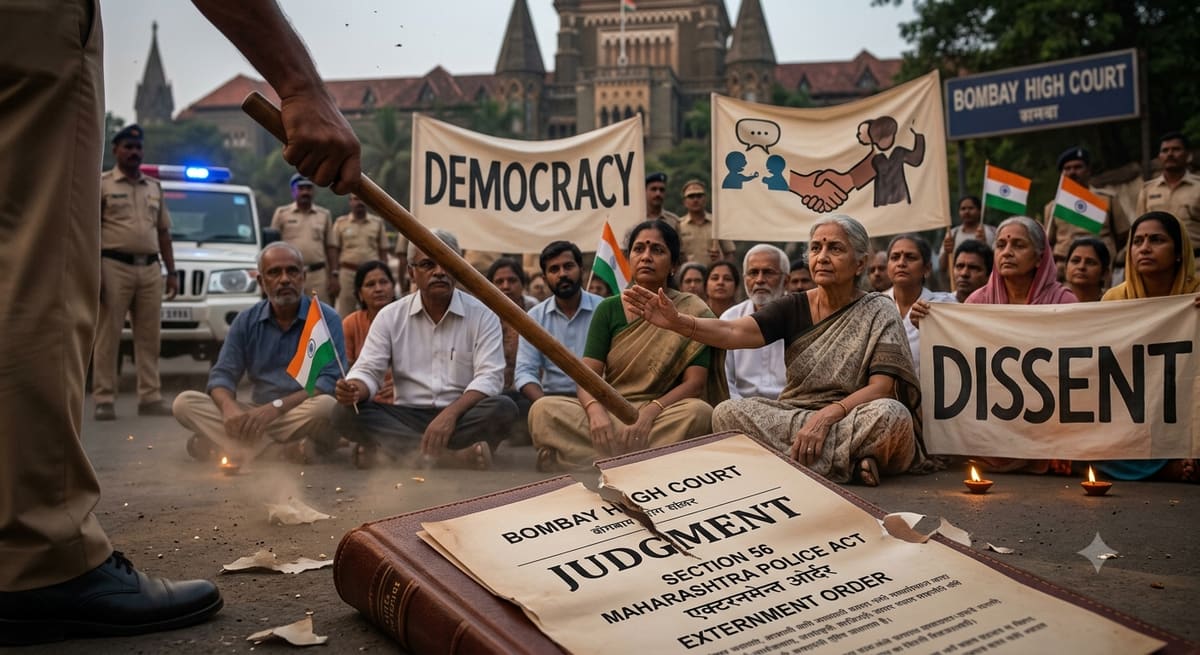
Section 56 Maharashtra Police Act | Externment Order Invalidated When Used to Suppress Peaceful Political Protest: Bombay HC
Case Law Analysis
|Bombay High Court

Section 56 Maharashtra Police Act | Externment Order Invalidated When Used to Suppress Peaceful Political Protest: Bombay HC

The Bombay High Court has ruled that using externment orders under Section 56 of the Maharashtra Police Act to silence peaceful political dissent by a registered party official violates fundamental rights to free speech and assembly. This sets a critical precedent: opposition to government policy, even when expressed through unapproved protests, cannot be equated with public disorder warranting forced displacement.

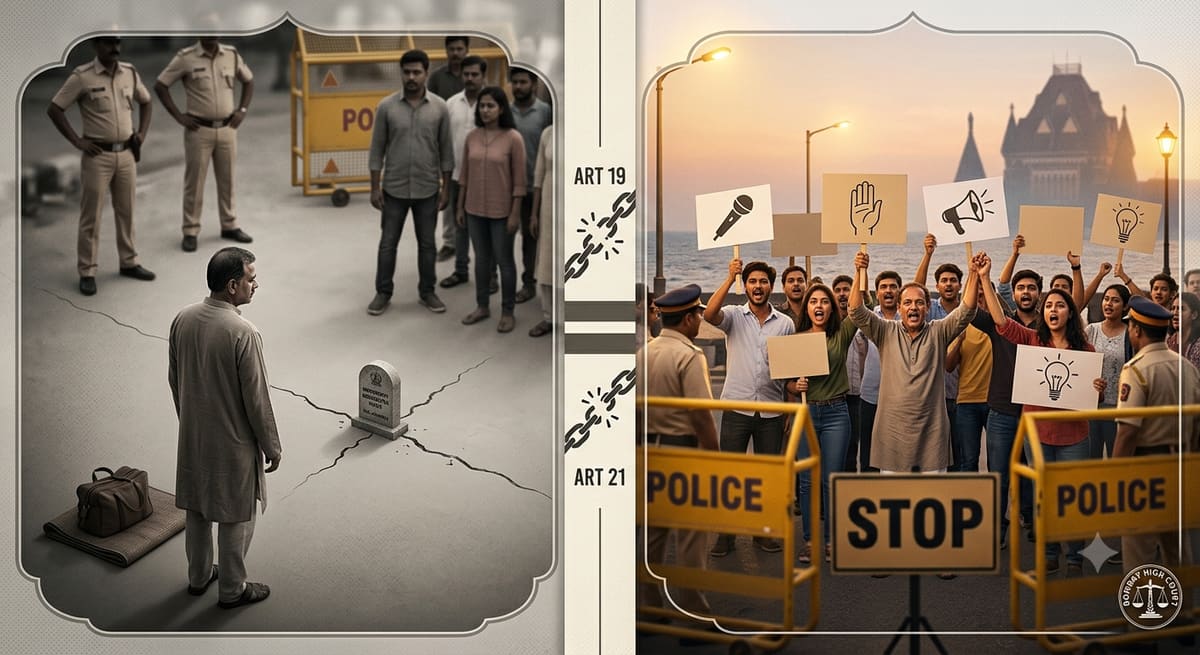
Section 56 Maharashtra Police Act | Externment Orders Violate Articles 19 & 21 If Used to Stifle Democratic Protests : Bombay HC
Case Law Analysis
|Bombay High Court

Section 56 Maharashtra Police Act | Externment Orders Violate Articles 19 & 21 If Used to Stifle Democratic Protests : Bombay HC

Bombay High Court quashes externment orders under Section 56 of the Maharashtra Police Act, ruling that suppressing protests against government policies through such orders infringes fundamental rights. The judgment reinforces that externment cannot be used as a tool to curb lawful dissent, setting a precedent for protecting democratic expression.

Article 19(1)(b) | Municipal Land Use Restrictions Cannot Override Right to Peaceful Assembly: Andhra Pradesh HC
Case Law Analysis
|Andhra Pradesh High Court

Article 19(1)(b) | Municipal Land Use Restrictions Cannot Override Right to Peaceful Assembly: Andhra Pradesh HC

Andhra Pradesh High Court rules that administrative classifications of land cannot supersede the constitutional right to peaceful assembly, directing authorities to consider alternative venues for public meetings. The judgment reinforces that fundamental rights under Article 19(1)(b) prevail over arbitrary municipal restrictions, setting a precedent against administrative arbitrariness in public gathering permissions.

Article 19(1)(a) & (b) | Non-Speaking Order Denying Election Meeting Permission Violates Right to Assembly : Madras HC
Case Law Analysis
|Madras High Court

Article 19(1)(a) & (b) | Non-Speaking Order Denying Election Meeting Permission Violates Right to Assembly : Madras HC

Madras HC quashes an administrative order denying permission for a hall meeting during elections, ruling that non-speaking orders restricting assembly rights under Article 19(1)(a) and (b) are unlawful. The Court directs reconsideration of the application, reinforcing that administrative silence cannot justify restrictions on fundamental rights.

Article 19(1)(b) | Preventive Cancellation of Public Meeting Without Specific Grounds Violates Right to Peaceful Assembly : Telangana HC
Case Law Analysis
|Telangana High Court

Article 19(1)(b) | Preventive Cancellation of Public Meeting Without Specific Grounds Violates Right to Peaceful Assembly : Telangana HC

Telangana High Court quashes the arbitrary cancellation of a political party's public meeting, ruling that vague fears of public disorder cannot justify curtailing the fundamental right to peaceful assembly under Article 19(1)(b) without specific, cogent reasons and prior hearing. The judgment reinforces that preventive censorship must meet constitutional scrutiny to avoid violating democratic freedoms.

Section 499 IPC | Truth & Public Interest as Absolute Defences in Defamation: Himachal Pradesh HC Upholds Journalist’s Right to Publish on Public Servant’s Financial Dealings
Case Law Analysis
|Himachal Pradesh High Court

Section 499 IPC | Truth & Public Interest as Absolute Defences in Defamation: Himachal Pradesh HC Upholds Journalist’s Right to Publish on Public Servant’s Financial Dealings

The Himachal Pradesh High Court reaffirmed that truth and public good are absolute defences under Section 499 IPC, dismissing a criminal defamation complaint against a journalist. The court held that publishing truthful information about a public servant’s financial dealings, in good faith and for public interest, does not constitute defamation, especially when the official withheld requested details.

Article 19(1)(b) | Police Denial of Assembly Permission Without Hearing or Reasoned Order Violates Constitutional Right : Madras HC
Case Law Analysis
|Madras High Court

Article 19(1)(b) | Police Denial of Assembly Permission Without Hearing or Reasoned Order Violates Constitutional Right : Madras HC

Madras High Court quashes a police order rejecting permission for a political conference, ruling that arbitrary denial without affording a hearing or providing reasoned grounds infringes the fundamental right to peaceful assembly. The court emphasizes that public order concerns must be addressed through mitigation measures, not outright prohibition, setting a precedent for procedural fairness in police discretion.