Tribunals and Commissions judgments

1767 Tribunals and Commissions judgments explained in plain English: what was decided, the law applied and why it matters. Page 12 of 74.

Section 263 IT Act | Limitation Period for Revisionary Powers Runs from Original Assessment, Not Reassessment Order : ITAT Delhi
Case Law Analysis
|Income Tax Appellate Tribunal

Section 263 IT Act | Limitation Period for Revisionary Powers Runs from Original Assessment, Not Reassessment Order : ITAT Delhi

The ITAT Delhi holds that the two-year limitation under Section 263 begins from the date of the original assessment order, not the subsequent reassessment, when the revision challenges errors inherent in the initial assessment. This clarifies a critical procedural trap for tax authorities and protects assessees from delayed revisionary attacks on stale assessments, directly impacting how revenue departments strategize revisionary proceedings.


CESTAT Upholds CTH 8708 94 00 Classification for EPS-ECU & Automotive Parts Under General Interpretative Rules : Delhi Bench
Case Law Analysis
|Custom, Excise & Service Tax Tribunal

CESTAT Upholds CTH 8708 94 00 Classification for EPS-ECU & Automotive Parts Under General Interpretative Rules : Delhi Bench

The Customs, Excise and Service Tax Appellate Tribunal (CESTAT), Delhi, affirmed the classification of Electronic Control Units for Electronic Power Steering (EPS-ECU) and related parts under CTH 8708 94 00, dismissing appeals challenging differential duty demands. The ruling reinforces binding precedent on tariff classification under the General Interpretative Rules, impacting automotive manufacturers and importers.

SEZ Unit Refund Claims Exempt from 1-Year Limitation under Notification 40/2012-ST | CESTAT Chandigarh
Case Law Analysis
|Custom, Excise & Service Tax Tribunal

SEZ Unit Refund Claims Exempt from 1-Year Limitation under Notification 40/2012-ST | CESTAT Chandigarh

CESTAT Chandigarh holds that Special Economic Zone units are not bound by the one-year limitation period in Finance Act notifications for service tax refunds, as their entitlement arises from statutory exemption provisions under the SEZ Act. This clarifies that SEZ-specific refund rights operate independently of general time bars, benefiting exporters and SEZ-based service recipients with delayed claims.

Section 48 Income Tax Act | Registered Valuer’s Report Must Prevail Over Arbitrary AO Valuation for Indexed Cost of Acquisition : ITAT Delhi
Case Law Analysis
|Income Tax Appellate Tribunal

Section 48 Income Tax Act | Registered Valuer’s Report Must Prevail Over Arbitrary AO Valuation for Indexed Cost of Acquisition : ITAT Delhi

The ITAT Delhi has held that an Assessing Officer cannot substitute a registered valuer’s report with an arbitrary, unsupported methodology to compute indexed cost of acquisition under Section 48. This reinforces the legal primacy of expert valuation in capital gains assessments and protects taxpayers from speculative adjustments by revenue authorities.

Section 65(105)(zzzm) Finance Act | Municipal Corporations Exempt from Service Tax on Advertisement Space Sales Pre-2012: CESTAT Chandigarh
Case Law Analysis
|Custom, Excise & Service Tax Tribunal

Section 65(105)(zzzm) Finance Act | Municipal Corporations Exempt from Service Tax on Advertisement Space Sales Pre-2012: CESTAT Chandigarh

CESTAT Chandigarh ruled that municipal corporations do not qualify as 'persons' under Section 65(105)(zzzm) of the Finance Act, 1994, for the period before 01.07.2012, exempting them from service tax on advertisement space sales. The decision sets a precedent for statutory interpretation of taxable entities, impacting revenue disputes involving constitutional bodies.

Service Tax Exemption for Railway Projects | Notification 25/2012 Covers Both Public and Private Use: CESTAT Chandigarh
Case Law Analysis
|Custom, Excise & Service Tax Tribunal

Service Tax Exemption for Railway Projects | Notification 25/2012 Covers Both Public and Private Use: CESTAT Chandigarh

CESTAT Chandigarh has ruled that services related to railway infrastructure qualify for exemption under Notification 25/2012 regardless of whether the project serves public or private interests, clarifying that the exemption is not contingent on ownership or end-use. This decision shields project consultants and agents from service tax liability in railway development, offering critical relief to private contractors and public-sector partners alike.

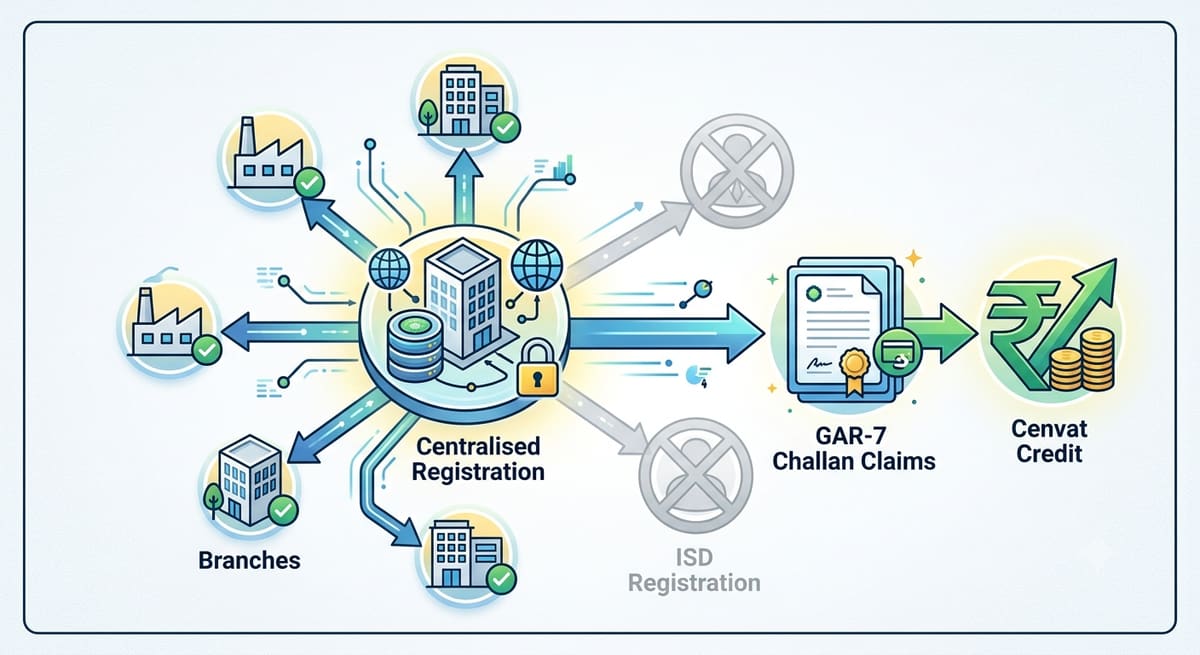
Cenvat Credit | Centralised Registration Allows GAR-7 Challan Claims Without ISD Registration: CESTAT Chandigarh
Case Law Analysis
|Custom, Excise & Service Tax Tribunal

Cenvat Credit | Centralised Registration Allows GAR-7 Challan Claims Without ISD Registration: CESTAT Chandigarh

Taxpayers with centralised registration can claim Cenvat credit using GAR-7 challans even without ISD registration, as CESTAT Chandigarh prioritises substantive entitlement over procedural compliance. This ruling empowers large multi-unit businesses to streamline input tax credit claims without the added burden of separate ISD setup, significantly reducing administrative friction under the erstwhile service tax regime.

Section 144C(13) IT Act | Strict One-Month Limit for Final Assessment Order Mandatory: ITAT Delhi Quashes Time-Barred Order
Case Law Analysis
|Income Tax Appellate Tribunal

Section 144C(13) IT Act | Strict One-Month Limit for Final Assessment Order Mandatory: ITAT Delhi Quashes Time-Barred Order

ITAT Delhi ruled that the final assessment order under Section 144C(13) of the Income Tax Act must be passed within one month of receiving DRP directions, failing which it is barred by limitation. The decision reinforces procedural compliance in transfer pricing assessments, impacting taxpayers and revenue authorities alike.

Section 272A(1)(d) IT Act | Reasonable Cause Exempts Penalty for Non-Compliance with Notices : ITAT Lucknow
Case Law Analysis
|Income Tax Appellate Tribunal

Section 272A(1)(d) IT Act | Reasonable Cause Exempts Penalty for Non-Compliance with Notices : ITAT Lucknow

ITAT Lucknow sets aside a ₹40,000 penalty under Section 272A(1)(d) after finding the assessee had valid grounds for failing to comply with notices under Sections 142(1) and 143(2). The ruling reinforces that penalties cannot be sustained without disproving the assessee’s reasonable cause defence, offering relief to taxpayers facing procedural non-compliance.

Section 154 IT Act | Delay in Rectification Appeal Condonable If Merits Remain Unadjudicated: ITAT Ahmedabad
Case Law Analysis
|Income Tax Appellate Tribunal

Section 154 IT Act | Delay in Rectification Appeal Condonable If Merits Remain Unadjudicated: ITAT Ahmedabad

ITAT Ahmedabad condones a 485-day delay in appealing a rectification order under Section 154 of the Income Tax Act, holding that natural justice mandates de novo adjudication where the substantive merits of the case remain unresolved. The ruling underscores that procedural delays cannot bar substantive justice if broader tax issues (e.g., Section 56(2) additions) are still pending.

Section 143(2) Notice Mandatory for Reassessment | Non-Compliance Vitiates Assessment Under Section 144C : ITAT Mumbai
Case Law Analysis
|Income Tax Appellate Tribunal

Section 143(2) Notice Mandatory for Reassessment | Non-Compliance Vitiates Assessment Under Section 144C : ITAT Mumbai

ITAT Mumbai rules that failure to issue a mandatory notice under Section 143(2) during reassessment proceedings renders the entire assessment void ab initio. The tribunal held that issuing a demand notice alongside a draft assessment order under Section 144C without adhering to procedural safeguards constitutes a jurisdictional error, impacting all taxpayers undergoing reassessment.

Section 148A IT Act | Condonation of Delay & Reassessment Validity Require Independent Adjudication : ITAT Mumbai
Case Law Analysis
|Income Tax Appellate Tribunal

Section 148A IT Act | Condonation of Delay & Reassessment Validity Require Independent Adjudication : ITAT Mumbai

ITAT Mumbai rules that the Commissioner of Income-tax (Appeals) must independently adjudicate both the condonation of delay in filing appeals and the validity of reassessment proceedings under Section 148A of the Income Tax Act. The order sets aside the CIT(A)'s failure to apply this dual-test standard, restoring the appeal for fresh consideration and reinforcing procedural safeguards in tax disputes.

Section 121(2) IBC | Three-Month Deadline for Personal Guarantor Bankruptcy Applications is Directory, Not Mandatory : NCLAT
Case Law Analysis
|National Company Law Appellate Tribunal

Section 121(2) IBC | Three-Month Deadline for Personal Guarantor Bankruptcy Applications is Directory, Not Mandatory : NCLAT

NCLAT rules that the three-month timeline under Section 121(2) of the IBC for filing bankruptcy applications against personal guarantors is directory, not mandatory, allowing condonation of delay under the Limitation Act. This decision clarifies that financial creditors can proceed with insolvency applications even beyond the prescribed period, ensuring flexibility in personal guarantor insolvency proceedings.

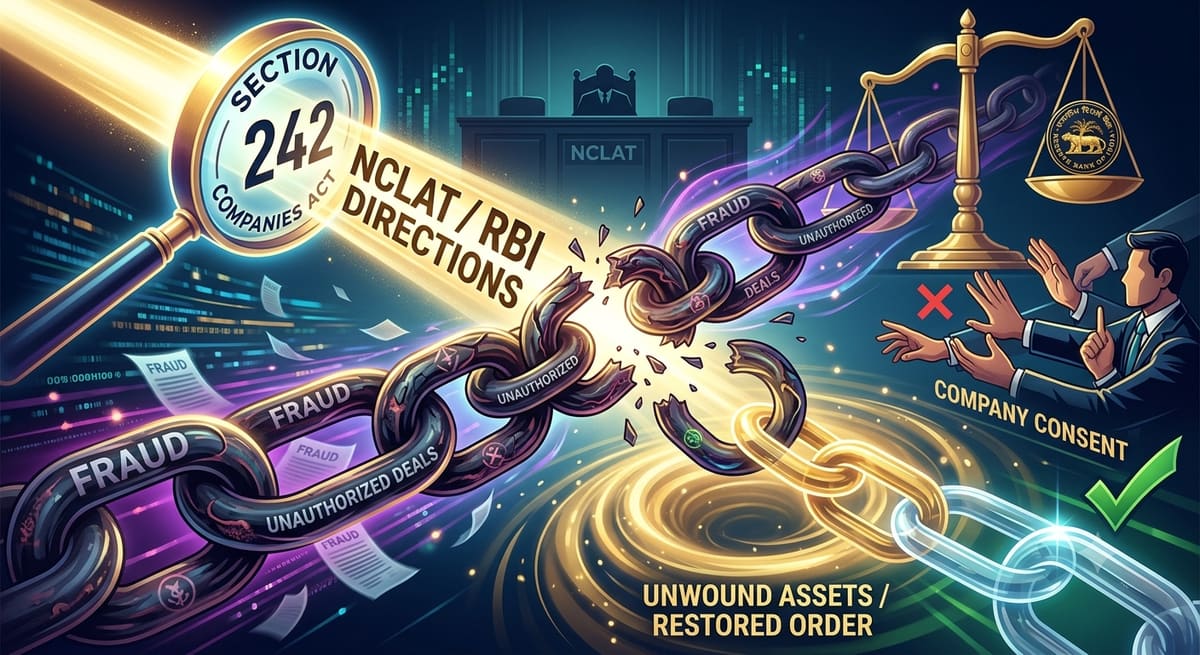
Section 242 Companies Act | Fraudulent Transactions Can Be Unwound Without Consent: NCLAT Upholds RBI Directions as Binding
Case Law Analysis
|National Company Law Appellate Tribunal

Section 242 Companies Act | Fraudulent Transactions Can Be Unwound Without Consent: NCLAT Upholds RBI Directions as Binding

NCLAT ruled that fraudulent transactions under Section 242 of the Companies Act can be set aside without the consent of involved parties, reinforcing RBI directions as legally binding. The judgment impacts insolvency proceedings and corporate governance, particularly for NBFCs and group companies engaged in sham lending arrangements.

Fraudulent Transactions Do Not Constitute Financial Debt Under Section 5(8) IBC : NCLAT Rejects CIRP Admission for Unauthorized Disbursements
Case Law Analysis
|National Company Law Appellate Tribunal

Fraudulent Transactions Do Not Constitute Financial Debt Under Section 5(8) IBC : NCLAT Rejects CIRP Admission for Unauthorized Disbursements

NCLAT holds that disbursements made into unauthorized accounts through fraudulent means cannot be classified as financial debt under the Insolvency and Bankruptcy Code, 2016. The ruling bars initiation of Corporate Insolvency Resolution Process (CIRP) where loan agreements lack valid authorization, reinforcing the doctrine of indoor management in financial transactions.

Section 65 IBC | Malicious Refusal by Single Creditor to Accept Repayment Justifies CIRP Termination : NCLAT
Case Law Analysis
|National Company Law Appellate Tribunal

Section 65 IBC | Malicious Refusal by Single Creditor to Accept Repayment Justifies CIRP Termination : NCLAT

NCLAT rules that a single creditor’s unjustified refusal to accept repayment of an admitted debt during CIRP constitutes abuse of process under Section 65 IBC, warranting termination of insolvency proceedings. The ruling protects corporate debtors from frivolous or malicious creditor actions that undermine the IBC’s objectives.

Settlement Breach as Material Default | NCLAT Revives CIRP Upon Non-Compliance with Consent Terms : NCLAT
Case Law Analysis
|National Company Law Appellate Tribunal

Settlement Breach as Material Default | NCLAT Revives CIRP Upon Non-Compliance with Consent Terms : NCLAT

NCLAT rules that a financial creditor can revive Corporate Insolvency Resolution Process (CIRP) if the corporate debtor breaches court-recorded settlement terms, treating non-compliance as a material default. This reinforces strict adherence to settlement agreements under the Insolvency and Bankruptcy Code, impacting creditors' rights to reinitiate insolvency proceedings.

IBC Section 5(24)(i) | Step-Down Control Through Subsidiaries Constitutes Related Party Status : NCLAT
Case Law Analysis
|National Company Law Appellate Tribunal

IBC Section 5(24)(i) | Step-Down Control Through Subsidiaries Constitutes Related Party Status : NCLAT

NCLAT has ruled that control exercised indirectly through subsidiary entities qualifies as 'related party' under the IBC, triggering strict scrutiny of claims and denying secured creditor status for immovable asset claims. This clarifies the scope of related party exposure in CIRP and caps recoveries to principal paid under FEMA, significantly impacting restructuring strategies for corporate groups with layered ownership.

IBC Section 7 | Interest Default Over ₹1 Crore Triggers CIRP Initiation Even After OTS Breach: NCLAT
Case Law Analysis
|National Company Law Appellate Tribunal

IBC Section 7 | Interest Default Over ₹1 Crore Triggers CIRP Initiation Even After OTS Breach: NCLAT

NCLAT rules that a financial creditor’s interest default exceeding ₹1 crore constitutes a valid default under Section 7 of the IBC, even if the corporate debtor breached a One Time Settlement (OTS). The ruling clarifies that service of notice via MCA-registered email suffices for CIRP initiation, impacting creditors’ rights and insolvency proceedings.

Section 242(4) Companies Act | Right to File Para-Wise Reply After Remand is Absolute : NCLAT Upholds Natural Justice in Oppression & Mismanagement Cases
Case Law Analysis
|National Company Law Appellate Tribunal

Section 242(4) Companies Act | Right to File Para-Wise Reply After Remand is Absolute : NCLAT Upholds Natural Justice in Oppression & Mismanagement Cases

NCLAT rules that parties in oppression and mismanagement proceedings under Section 242(4) of the Companies Act have an absolute right to file a detailed para-wise reply after remand, reinforcing principles of natural justice. The judgment clarifies that this right cannot be denied even if procedural defects exist, ensuring fair adjudication in corporate disputes.