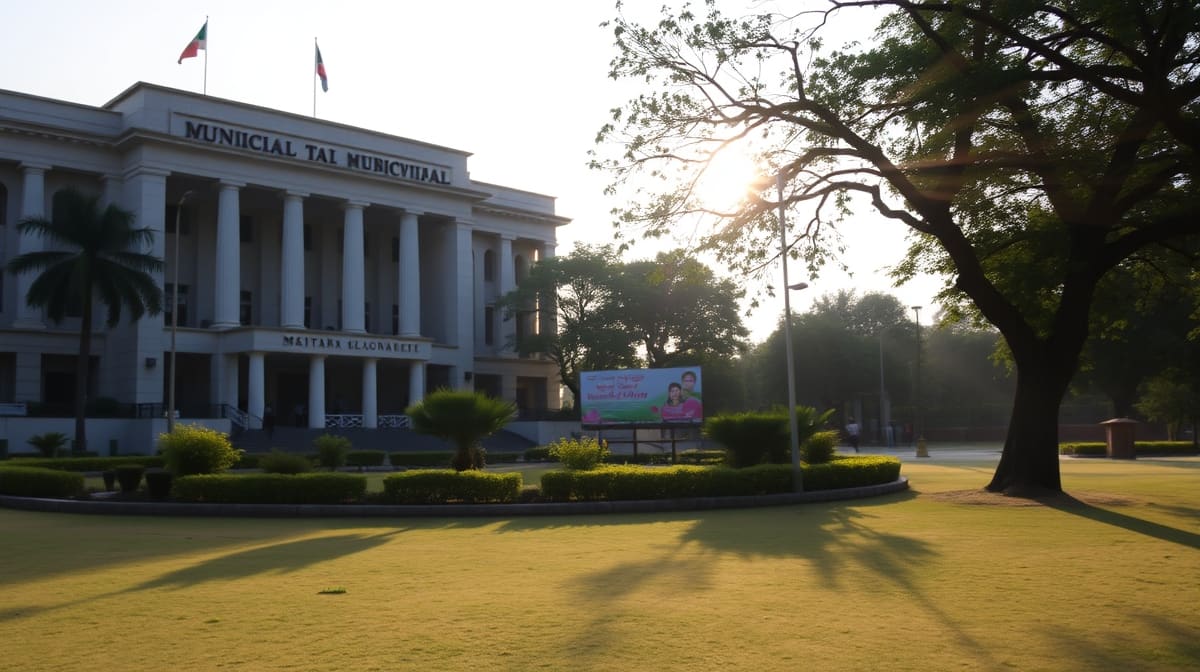
The Customs, Excise and Service Tax Appellate Tribunal has clarified a critical boundary in India’s indirect tax regime: municipal corporations, as constitutional local bodies, are not 'persons' under the pre-2012 definition of taxable service under the Finance Act, 1994. This ruling overturns a substantial service tax demand and reinforces the principle that statutory levies collected by sovereign entities for public purposes cannot be reclassified as commercial services.
Background & Facts
The Dispute
The Appellant, Municipal Corporation, Mohali, a constitutional local body established under the Punjab Municipal Corporation Act, 1976, was assessed for service tax on amounts collected from private entities for allowing advertisements on public infrastructure. The Department contended that the Corporation was engaged in the taxable service of 'selling of space for advertisement' under Section 65(105)(zzzm) of the Finance Act, 1994. The Appellant contested this, asserting that the amounts collected were not consideration for a service but statutory advertisement tax levied under Sections 90 and 122 of the Punjab Municipal Corporation Act, 1976, in exercise of its constitutional powers under Article 243X of the Constitution.
Key Facts
- The Appellant managed public parks, green belts, and bus shelters owned by the Greater Mohali Area Development Authority (GMADA), which had been entrusted to it for maintenance.
- Private parties were granted permission to maintain these areas in exchange for the right to display advertisements.
- The Appellant levied and collected amounts from these parties under the label of 'advertisement tax' as authorized by Sections 90 and 122 of the Punjab Municipal Corporation Act, 1976.
- These amounts were deposited into the Government Treasury for public welfare purposes.
- The Department issued a Show Cause Notice dated 30.05.2011 demanding service tax of Rs. 11,92,449 for the period April 2005 to March 2010, along with interest and penalty.
- The Appellant relied on Circular No. 89/7/2006-ST dated 08.12.2006 and Master Circular No. 96/7/2007-STC dated 23.08.2007, which clarified that taxes or fees collected by constitutional bodies under statutory authority are not taxable.
- The activity of 'selling of space for advertisement' was excluded from service tax w.e.f. 01.07.2012.
Procedural History
- 30.05.2011: Show Cause Notice issued demanding service tax of Rs. 11,92,449 for April 2005 to March 2010.
- 29.08.2012: Order-in-Original passed by Adjudicating Authority confirming demand, interest, and penalty.
- 19.01.2015: Order-in-Appeal passed by Commissioner (Appeals), Chandigarh-II, upholding demand after allowing cum-tax-value benefit.
- 13.02.2026: Hearing before CESTAT Chandigarh Regional Bench.
- 01.07.2026: Final Order passed by CESTAT allowing the appeal.
The Parties' Positions
For the Appellant
- The Appellant is a constitutional local body, not a 'person' as defined under the General Clauses Act, 1897, prior to 01.07.2012.
- The amounts collected are statutory advertisement tax, not consideration for a service.
- The properties on which advertisements were displayed were owned by GMADA, not the Appellant.
- The activity was performed in public interest under statutory mandate, not for profit.
- Circulars No. 89/7/2006-ST and 96/7/2007-STC exempt such statutory levies from service tax.
- Extended period of limitation under Section 73 cannot be invoked as there was no suppression of facts or intent to evade tax.
- Precedents in Deputy Commissioner of Police, Jodhpur v. Commissioner of C.Ex. & S.T., Jaipur-II and M/s Indian Red Cross Society v. Commissioner of C.Ex. & S.T., Chandigarh support the position.
For the Respondent
- The amounts received were 'consideration' for providing space for advertisements.
- The Appellant was acting as a service provider under Section 65(105)(zzzm).
- The label 'advertisement tax' does not alter the nature of the transaction.
- The Appellant had not discharged the burden of proving the statutory nature of the levy.
Relief Sought
The Appellant sought: (1) setting aside of the impugned order dated 19.01.2015; (2) cancellation of the service tax demand of Rs. 11,92,449; (3) cancellation of interest and penalty; and (4) declaration that municipal corporations are not liable for service tax on advertisement space sales prior to 01.07.2012.
The Legal Issue
The central question was whether a municipal corporation, acting as a constitutional local body under Article 243X of the Constitution and collecting advertisement tax under statutory authority, qualifies as a 'person' under Section 65(105)(zzzm) of the Finance Act, 1994, prior to 01.07.2012, thereby rendering its collection of advertisement-related fees subject to service tax.
Arguments Presented
For the Appellant
The Appellant relied on the definition of 'person' under Section 2(42) of the General Clauses Act, 1897, which, prior to 01.07.2012, did not explicitly include the State or its instrumentalities. The Appellant argued that the term 'person' in the Finance Act was not defined until the 2012 amendment, and therefore, the General Clauses Act applied. Citing Deputy Commissioner of Police, Jodhpur v. Commissioner of C.Ex. & S.T., Jaipur-II and its affirmation by the Supreme Court in 2018 (2018 (11) GSTL J133 (SC)), the Appellant contended that state entities, including police departments, were not 'persons' for service tax purposes. By analogy, municipal corporations, as constitutional bodies performing sovereign functions, were equally excluded. The Appellant further relied on M/s Indian Red Cross Society v. Commissioner of C.Ex. & S.T., Chandigarh (Final Order No. 60361/2025) and Karad Nagar Parishad v. Commissioner of C.Ex. & S.T., Kolhapur (2019 (20) GSTL 288 (Tri-Mum)), which held that statutory taxes collected under municipal laws cannot be taxed as services. The Appellant also invoked Circular No. 89/7/2006-ST, which explicitly excluded such levies from service tax.
For the Respondent
The Respondent argued that the nature of the transaction, not the label, determined taxability. It contended that the Appellant was providing space for advertisements in exchange for monetary consideration, irrespective of the statutory framework under which the fee was collected. The Respondent maintained that the Appellant had not proven that the amounts were exclusively statutory tax and not commercial consideration. It also argued that the extended period of limitation was applicable due to the Appellant’s failure to disclose the nature of the receipts.
The Court's Analysis
The Tribunal conducted a rigorous analysis of statutory interpretation, constitutional authority, and precedent. It first examined the definition of 'person' under the Finance Act, 1994, prior to 01.07.2012. Since the Act did not define 'person' during the relevant period, the Tribunal applied Section 2(42) of the General Clauses Act, 1897, which defines 'person' as including companies or associations but does not explicitly include the State or its instrumentalities. The Tribunal held that the absence of explicit inclusion of the State in the definition, coupled with the principle of statutory interpretation that sovereign functions are not presumed to be commercial, supported the Appellant’s position.
"The Appellant being a local body, are not covered within the term 'person' and consequently not covered under the definition of 'taxable service'."
The Tribunal then examined the nature of the amounts collected. It found that the Appellant did not own the properties on which advertisements were displayed; they were owned by GMADA and entrusted to the Appellant for maintenance. The Appellant, in turn, entrusted maintenance to private parties in exchange for the right to display advertisements. The amounts collected were labeled and legally authorized as 'advertisement tax' under Sections 90 and 122 of the Punjab Municipal Corporation Act, 1976, and deposited into the Government Treasury for public purposes. The Tribunal accepted the Appellant’s argument that this was a statutory levy, not a commercial transaction.
The Tribunal further relied on Karad Nagar Parishad, which held: "...the advertisement tax being a statutory levy cannot be chargeable to service tax." It also cited the Supreme Court’s affirmation in Deputy Commissioner of Police, Jodhpur that state entities are not 'persons' under the pre-amendment definition. The Tribunal rejected the Department’s contention that the label 'license fee' altered the nature of the levy, noting that the source of authority was statutory, not contractual.
Regarding the extended period of limitation, the Tribunal held that the demand for the period 2005-2010, raised in 2011, was beyond the normal one-year period under Section 73. It further held that the issue involved a bona fide legal interpretation, not suppression of facts. Citing Commissioner of CGST, Jaipur v. Rajasthan Tourism Development Corporation Ltd. (2018 (15) GSTL 307 (Raj.)), the Tribunal ruled that extended period cannot be invoked against public undertakings acting under statutory authority.
Finally, the Tribunal held that since the demand itself was unsustainable, the imposition of interest and penalty under Sections 77 and 78 was legally untenable.
The Verdict
The Appellant succeeded. The Tribunal set aside the impugned Order-in-Appeal dated 19.01.2015, cancelled the service tax demand of Rs. 11,92,449 for the period April 2005 to March 2010, and quashed the interest and penalty imposed. The Tribunal held that municipal corporations are not 'persons' under Section 65(105)(zzzm) of the Finance Act, 1994, prior to 01.07.2012, and that statutory advertisement tax collected under municipal laws is not subject to service tax.
What This Means For Similar Cases
Municipal Corporations Are Exempt from Service Tax on Statutory Levies
- Practitioners representing municipal bodies can now confidently assert that advertisement tax, parking fees, or other statutory levies collected under state municipal acts are not taxable under service tax or GST if collected under statutory authority.
- The burden shifts to the tax department to prove that a levy is not statutory but commercial in nature.
- Any demand raised against local bodies for similar levies prior to 01.07.2012 must be challenged on grounds of statutory exemption and non-inclusion of the State in the definition of 'person'.
Extended Period of Limitation Cannot Be Invoked Against Constitutional Bodies
- Tax authorities cannot invoke extended limitation under Section 73 against local bodies or public undertakings for disputes involving legal interpretation, absent evidence of fraud or suppression.
- Bona fide belief in non-taxability, supported by circulars or judicial precedents, is sufficient to bar extended period.
- This principle extends to other statutory levies such as octroi, entry tax, or user charges collected under municipal or state laws.
Pre-2012 Service Tax Law Requires Strict Interpretation of 'Person'
- Cases involving pre-2012 service tax liability must be analyzed under the General Clauses Act, 1897, not the post-amendment definition.
- The exclusion of the State from the definition of 'person' remains a valid defense for all government entities, including universities, hospitals, and public utilities, for services rendered in sovereign or statutory capacity.
- Practitioners should review all pre-2012 assessments against local bodies and file appeals or revisions where applicable.