The Customs, Excise and Service Tax Appellate Tribunal (CESTAT) Chandigarh has clarified that service tax cannot be levied on construction or installation services related to railway projects, regardless of whether the railway serves public or private interests. This ruling reaffirms the broad scope of exemption under Notification No. 25/2012 and rejects artificial distinctions imposed by tax authorities.
Background & Facts
The Dispute
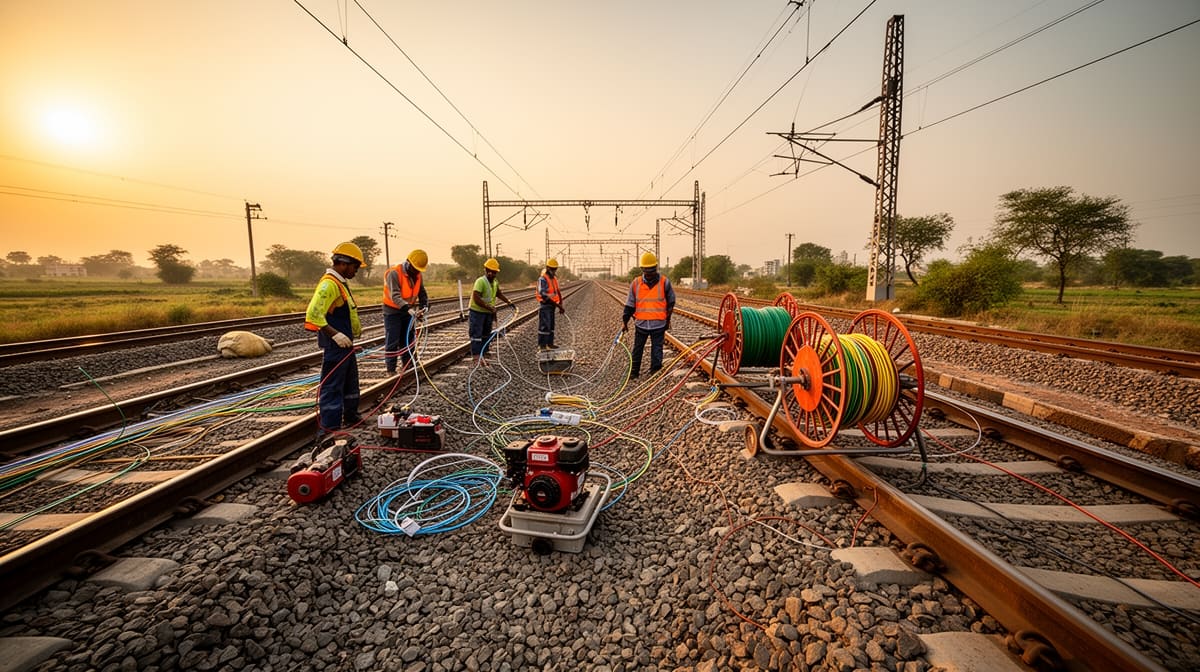
The appellant, M/s Rites Ltd., acted as a project management consultant and agent for Damodar Valley Corporation (DVC), a Public Sector Undertaking, in relation to the construction of a railway siding. M/s Shyan Takniki Udyog (STU) was engaged by DVC to execute the works. The Revenue issued a show cause notice alleging that Rites Ltd. was liable to pay service tax under the reverse charge mechanism under Section 68 of the Finance Act, 1994, as the recipient of services from STU.
Key Facts
- The appellant is a consulting engineering firm engaged by DVC as its agent under a power of attorney
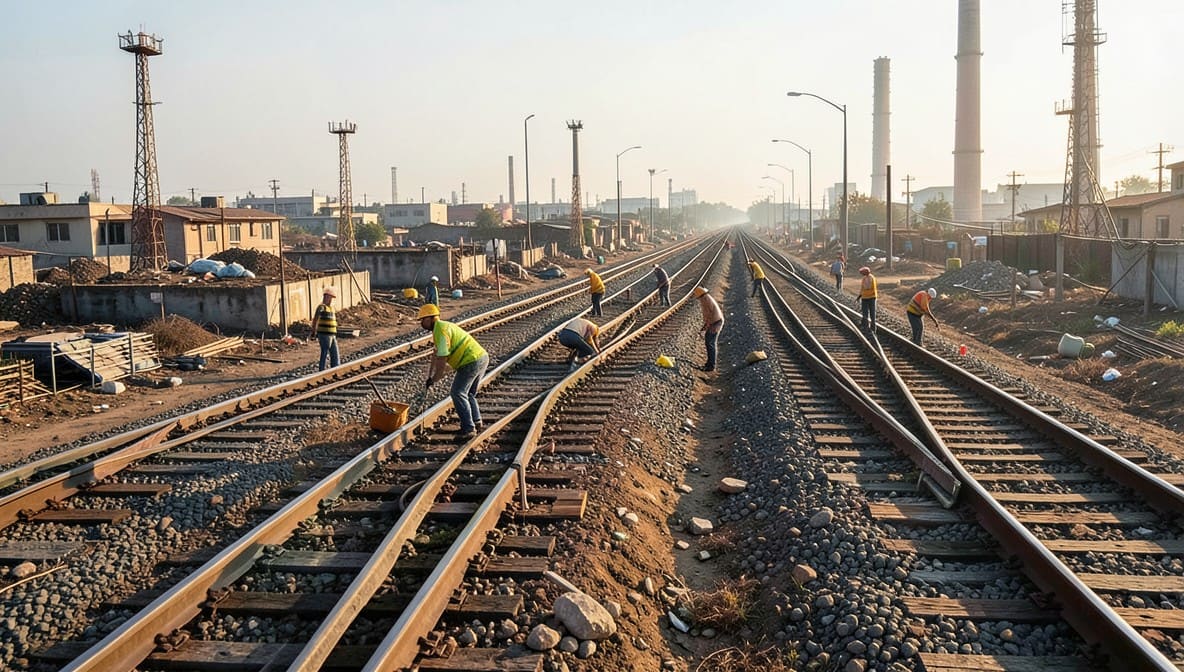
- The underlying work involved construction of a railway siding for DVC’s internal use
- The service provided by STU to DVC was for construction, erection, commissioning, or installation of original work pertaining to railways
- The Revenue contended that the exemption under Notification No. 25/2012 did not apply because the railway was not for "public use" as defined under the Railways Act, 1989
- The appellant was assessed for service tax of Rs. 41,08,925/- under the proviso to Section 73(1) of the Finance Act, 1994, along with interest under Section 75 and penalties under Sections 77 and 78
- Penalty under Section 76 was dropped by the adjudicating authority
Procedural History
- 11.09.2017: Show cause cum demand notice issued by Deputy Director, DGCEI
- 06.10.2017: Appellant filed reply contesting liability on two grounds: (i) agency status and (ii) exemption under Notification 25/2012
- 16.03.2018: Assistant Commissioner passed order holding appellant liable for Rs. 41,08,925/- plus interest and penalties
- 31.08.2018: Commissioner (Appeals), CGST, Gurugram dismissed the appeal, upholding the assessment
- 19.03.2026: Hearing before CESTAT Chandigarh
- 01.07.2026: Final order passed by CESTAT
The Parties' Positions
For the Appellant
- Argued that it was merely an agent of DVC, a disclosed principal, and therefore not liable as a service recipient under Section 78
- Contended that the services rendered by STU fell squarely within Sl. No. 14(a) of Notification No. 25/2012, which exempts services related to "railways"
- Asserted that the term "railways" is not defined in the Finance Act, 1994 and must be understood in its ordinary meaning
- Cited judicial precedents including Konkan Railway Corporation Ltd. v. Commissioner of Service Tax, Delhi Metro Rail Corpn. Ltd. v. Municipal Corpn. of Delhi, and Nabha Power Ltd. v. Commissioner of Central Excise & ST
- Emphasized that the Tribunal had already settled this issue in its own favor in M/s Rites Ltd. v. Commissioner of Central Excise, Goods & Service Tax, Gurgaon-I [2025 SCC Online CESTAT 3991]
For the Respondent
- Maintained that the exemption under Notification 25/2012 applies only to railways serving the general public, not to private or internal railway lines
- Relied on the definition of "railways" under the Railways Act, 1989 to argue that DVC’s internal siding did not qualify
- Argued that the reverse charge mechanism applied because Rites Ltd. received taxable services from STU
- Reiterated findings of the Commissioner (Appeals) that the appellant was the service recipient and not merely an agent
Relief Sought
The appellant sought: (i) setting aside of the impugned order dated 31.08.2018; (ii) cancellation of the service tax demand of Rs. 41,08,925/-; (iii) refund of any interest or penalty paid; and (iv) declaration that services related to railway projects are exempt under Notification 25/2012 irrespective of public or private use.
The Legal Issue
The central question was whether services related to the construction of a railway siding, undertaken for a Public Sector Undertaking like DVC, qualify for exemption under Sl. No. 14(a) of Notification No. 25/2012-Service Tax dated 20.06.2012, even if the railway is not used for public transportation, and whether the appellant, acting as an agent, can be held liable under the reverse charge mechanism.
Arguments Presented
For the Appellant
The appellant relied on the principle of strict construction of exemption notifications, arguing that the term "railways" in Notification 25/2012 must be interpreted in its common parlance and not restricted by definitions from the Railways Act, 1989. It cited Konkan Railway Corporation Ltd. and Delhi Metro Rail Corpn. Ltd. to establish that the exemption extends to all railway infrastructure, including private or internal lines, provided they are for railway purposes. It further argued that as an agent of a disclosed principal (DVC), it could not be treated as a service recipient under Section 78 of the Finance Act, 1994, citing Sections 226 and 230 of the Indian Contract Act and judgments like Vivek Automobiles Ltd. v. Indian Inc. and RPP Contractors Pvt. Ltd. v. RITES Ltd.
For the Respondent
The Revenue contended that the exemption under Notification 25/2012 was intended only for railways serving the general public, and that internal railway sidings for PSUs did not qualify. It argued that the term "railways" should be interpreted in light of the Railways Act, 1989, and that the appellant, by receiving services from STU, was the effective recipient under the reverse charge mechanism. It relied on the Commissioner (Appeals)’s finding that the appellant’s role was not merely administrative but involved active procurement and management.
The Court's Analysis
The Tribunal held that the issue was no longer res integra, having been conclusively settled in its own earlier decision in M/s Rites Ltd. v. Commissioner of Central Excise, Goods & Service Tax, Gurgaon-I [2025 SCC Online CESTAT 3991]. The Tribunal emphasized that the Finance Act, 1994, does not define the term "railways," and therefore, the ordinary meaning must prevail. It rejected the Revenue’s attempt to import the definition from the Railways Act, 1989, stating that such an approach would be impermissible and contrary to the legislative intent of the exemption notification.
"The exemption from tax is available to 'railways', excluding mono rail or metro, by notification no. 25/2012-ST dated 20th June 2012... the distinction between railway for private purpose and railway for public service cannot be artificially contrived to suit tax administration; neither can the definition in another statute be drawn upon for the purported purpose of illumination."
The Tribunal further clarified that "public use" in the context of the exemption does not mean use by the general public, but includes use by Public Sector Undertakings such as DVC. It cited Konkan Railway Corporation Ltd. and CONCOR, 2024 (6) TMI 192 to affirm that the exemption applies to all railway infrastructure, regardless of ownership or end-user. The Tribunal also noted that the appellant’s role as an agent of a disclosed principal rendered it ineligible for liability under the reverse charge mechanism, as the true recipient of services was DVC.
The Tribunal found no material distinction between the facts of the present case and those in its prior judgment, and held that the Commissioner (Appeals) erred in ignoring binding precedent.
The Verdict
The appeal was allowed. The Tribunal set aside the impugned order dated 31.08.2018, cancelled the service tax demand of Rs. 41,08,925/-, and directed the refund of any interest or penalty paid by the appellant. The Tribunal held that services related to railway projects are exempt under Notification No. 25/2012 irrespective of whether the railway serves public or private purposes, and that an agent acting on behalf of a disclosed principal is not liable under the reverse charge mechanism.
What This Means For Similar Cases
Exemption Applies to All Railway Infrastructure
- Practitioners can now confidently argue that any construction, erection, commissioning, or installation service for railway lines - including sidings, spurs, or private lines - is exempt under Notification 25/2012
- The term "railways" must be interpreted broadly and not restricted by definitions from other statutes
- Revenue authorities cannot impose conditions like "public use" that are not explicitly stated in the notification
Agent Not Liable Under Reverse Charge
- When a service recipient is a disclosed principal, the agent acting on its behalf cannot be treated as the recipient for tax purposes
- Section 78 of the Finance Act, 1994, does not override the principles of agency under the Indian Contract Act
- Tax demands against consultants or project managers acting as agents for PSUs must be challenged on agency grounds
Precedent Binding Across Jurisdictions
- CESTAT benches across India are bound by prior decisions of the same Tribunal on identical issues
- Taxpayers may invoke prior favorable rulings in their own cases to seek immediate relief
- Revenue authorities must align their assessments with settled jurisprudence, not arbitrary interpretations