Rajasthan High Court judgments

488 Rajasthan High Court judgments explained in plain English: what was decided, the law applied and why it matters. Page 8 of 21.

Section 376 IPC | Contemporaneous Statement Overrides Delayed FIR; Benefit of Doubt Mandated Absent Forensic Corroboration : Rajasthan HC
Case Law Analysis
|Rajasthan High Court

Section 376 IPC | Contemporaneous Statement Overrides Delayed FIR; Benefit of Doubt Mandated Absent Forensic Corroboration : Rajasthan HC

Rajasthan High Court acquitted accused in a gang rape case, holding that contradictions, delayed FIR, and lack of forensic evidence shift the benefit of doubt to the accused. The ruling underscores that contemporaneous statements carry greater evidentiary weight than delayed complaints, setting a precedent for similar prosecutions.

Article 14 & State Liability | Earnest Money Forfeiture Unlawful If Land Not Delivered Encroachment-Free as Advertised : Rajasthan HC
Case Law Analysis
|Rajasthan High Court

Article 14 & State Liability | Earnest Money Forfeiture Unlawful If Land Not Delivered Encroachment-Free as Advertised : Rajasthan HC

The Rajasthan High Court ruled that a statutory authority cannot forfeit ₹9.46 crores in earnest money for failing to deliver encroachment-free land as promised in public auctions. The court directed a full refund with 10% interest, reinforcing that state entities cannot escape liability for contractual breaches under the guise of administrative discretion.

Insurance Claim | Pre-existing Condition Does Not Bar Payout If Accident Is Proximate Cause: Rajasthan HC | Burden of Proof on Insurer
Case Law Analysis
|Rajasthan High Court

Insurance Claim | Pre-existing Condition Does Not Bar Payout If Accident Is Proximate Cause: Rajasthan HC | Burden of Proof on Insurer

The Rajasthan High Court held that an insurer cannot deny a death claim merely because the deceased had a pre-existing heart condition - the burden lies squarely on the insurer to prove the condition, not the accident, caused death. Without corroborative medical evidence linking the condition to the fatality, the claim must be upheld, reinforcing protections for beneficiaries under accident-based policies.

Section 17A PC Act | Prior Sanction Not Required for FIR Registration in Trap Cases with Recorded Bribe Demand : Rajasthan HC
Case Law Analysis
|Rajasthan High Court

Section 17A PC Act | Prior Sanction Not Required for FIR Registration in Trap Cases with Recorded Bribe Demand : Rajasthan HC

The Rajasthan High Court has ruled that Section 17A of the Prevention of Corruption Act does not mandate prior government approval to register an FIR when a bribe demand is conclusively recorded and a trap operation is successfully executed. This clarifies that procedural safeguards under Section 17A apply to investigations, not to the initial triggering of criminal proceedings in clear-cut corruption traps, empowering ACB to act swiftly against documented extortion.

Section 302/149 IPC | Common Object in Unlawful Assembly Sustains Murder Conviction Even Without Individual Fatal Act: Rajasthan HC
Case Law Analysis
|Rajasthan High Court

Section 302/149 IPC | Common Object in Unlawful Assembly Sustains Murder Conviction Even Without Individual Fatal Act: Rajasthan HC

The Rajasthan High Court upheld murder convictions under Section 302/149 IPC when the collective action of an unlawful assembly, driven by a shared criminal intent, resulted in fatal injuries - even if no single accused delivered the blow. This reinforces that liability under Section 149 is not contingent on individual causation, but on the unity of purpose and participation in the unlawful act, significantly impacting how prosecutorial evidence is evaluated in mob violence cases.

Section 302 IPC | Acquittal Mandated Where Hostile Witnesses and Incomplete Medical Evidence Fail to Prove Guilt Beyond Reasonable Doubt: Rajasthan HC
|Rajasthan High Court

Section 302 IPC | Acquittal Mandated Where Hostile Witnesses and Incomplete Medical Evidence Fail to Prove Guilt Beyond Reasonable Doubt: Rajasthan HC

Rajasthan High Court acquitted an accused in a murder trial, emphasizing that hostile prosecution witnesses and gaps in medical evidence create reasonable doubt, reinforcing the prosecution's burden to establish guilt beyond all doubt. The ruling underscores the judiciary's duty to ensure no conviction occurs on unreliable testimony or incomplete forensic proof.

Article 21 | Police Duty to Assess Threat Perception for Adult Couples in Inter-Faith/Inter-Caste Marriages : Rajasthan HC
Case Law Analysis
|Rajasthan High Court

Article 21 | Police Duty to Assess Threat Perception for Adult Couples in Inter-Faith/Inter-Caste Marriages : Rajasthan HC

Rajasthan High Court directs police to evaluate threat perceptions and provide protection to adult couples in inter-faith or inter-caste marriages, reinforcing that fundamental rights under Article 21 cannot be compromised. The ruling mandates law enforcement to prevent vigilante actions and ensure safety without adjudicating marital validity.

Section 483 BNSS | Bail Mandated Where FIR Delay, Implausible Incident, and Prosecutrix's Conduct Undermine Credibility : Rajasthan HC
|Rajasthan High Court

Section 483 BNSS | Bail Mandated Where FIR Delay, Implausible Incident, and Prosecutrix's Conduct Undermine Credibility : Rajasthan HC

Rajasthan High Court grants bail in a sexual offence case, emphasizing that unexplained FIR delay, improbable incident details, and the prosecutrix's own conduct (including no alarm despite presence of witnesses) erode the case's credibility. The ruling reinforces that bail may be granted where the prosecution's version lacks plausibility, even in serious offences, without prejudging merits.

Pension Rights | Administrative Failure to Maintain Service Records Cannot Justify Denial After 37 Years of Service : Rajasthan HC
Case Law Analysis
|Rajasthan High Court

Pension Rights | Administrative Failure to Maintain Service Records Cannot Justify Denial After 37 Years of Service : Rajasthan HC

The Rajasthan High Court has ruled that decades of uninterrupted government service cannot be nullified by the state’s own failure to preserve service records. This decision protects retired employees from punitive administrative negligence, affirming that procedural lapses by the employer cannot override substantive rights earned through long-term public service.

Section 108 BNS | Bail Granted When Video Evidence Fails to Prove Instigation to Suicide : Rajasthan HC
Case Law Analysis
|Rajasthan High Court

Section 108 BNS | Bail Granted When Video Evidence Fails to Prove Instigation to Suicide : Rajasthan HC

The Rajasthan High Court granted bail to accused under Section 108 BNS, holding that mere video recordings of alleged verbal abuse, even if humiliating, do not constitute legally sufficient instigation to suicide absent clear causal linkage. This clarifies that emotional distress from public shaming, without direct coercion or threat, cannot automatically trigger criminal liability under the new penal code, protecting individuals in familial disputes from overcriminalization.

Section 483 BNSS | Interim Bail Granted for Accused to Be Present at Spouse’s Imminent Delivery : Rajasthan HC
Case Law Analysis
|Rajasthan High Court

Section 483 BNSS | Interim Bail Granted for Accused to Be Present at Spouse’s Imminent Delivery : Rajasthan HC

The Rajasthan High Court has recognized the right of an accused to be with his pregnant wife during childbirth as a humanitarian ground for interim bail under Section 483 BNSS, setting a precedent for family-centric relief in pre-trial detention cases. This ruling affirms that personal bonds and societal dignity can outweigh procedural rigidity when life-altering events are imminent.

Article 21 | Interim Bail Granted for Non-Urgent Surgical Implant Removal Due to Persistent Pain: Rajasthan HC
Case Law Analysis
|Rajasthan High Court

Article 21 | Interim Bail Granted for Non-Urgent Surgical Implant Removal Due to Persistent Pain: Rajasthan HC

The Rajasthan High Court has ruled that persistent physical pain from surgically implanted medical devices, even when removal is not immediately life-threatening, constitutes a violation of the right to bodily integrity under Article 21. This sets a precedent for granting interim bail in cases where prolonged suffering in custody undermines human dignity, expanding the scope of medical necessity beyond emergency conditions.

Class-IV Employees Entitled to Study Leave for GNM Training if in Departmental Interest | Rajasthan HC
Case Law Analysis
|Rajasthan High Court

Class-IV Employees Entitled to Study Leave for GNM Training if in Departmental Interest | Rajasthan HC

The Rajasthan High Court has affirmed that Class-IV employees in the public health service are eligible for study leave to pursue GNM training when it serves departmental interest, relying on precedent in Himmat Singh. This ruling expands access to professional upskilling for non-gazetted staff and reinforces functional interpretation of service rules over rigid classification.

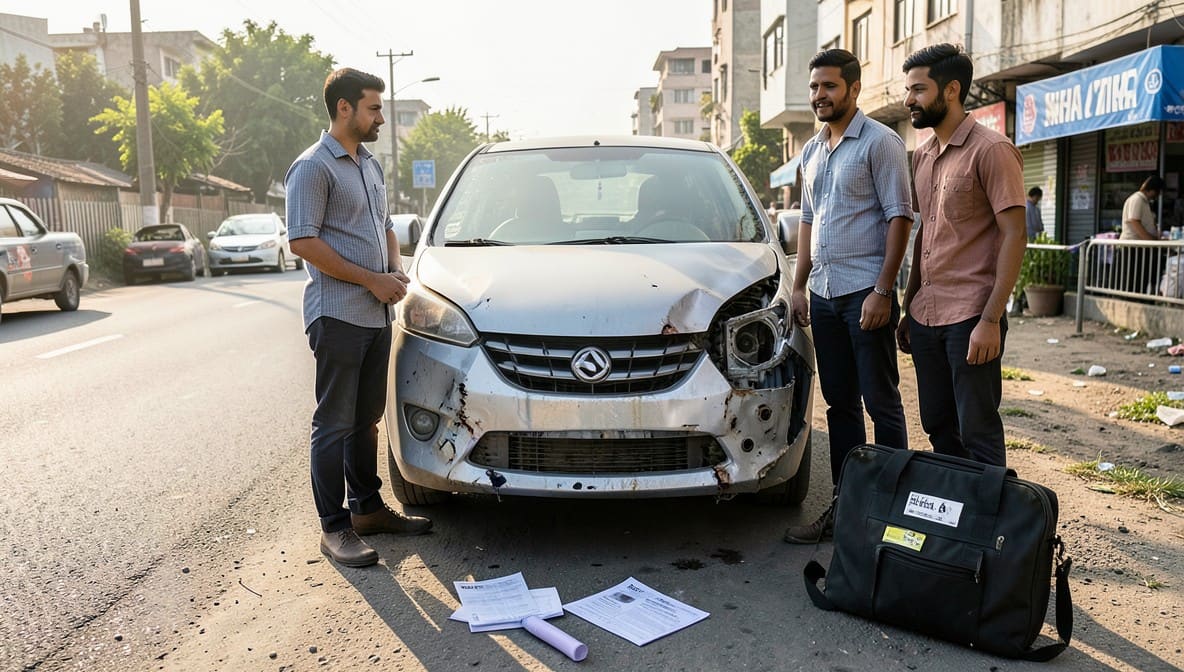
Motor Vehicles Act | Composite Negligence Requires Direct Evidence Against Driver: Rajasthan HC Sets Strict Proof Standard
Case Law Analysis
|Rajasthan High Court

Motor Vehicles Act | Composite Negligence Requires Direct Evidence Against Driver: Rajasthan HC Sets Strict Proof Standard

Rajasthan High Court dismisses motor accident claim petition, ruling that composite negligence cannot be inferred without direct evidence against the scooter driver. The judgment underscores the need for eyewitness testimony, timely FIR, and investigation reports to establish liability, impacting insurer liability and personal injury claims under the Motor Vehicles Act.

BNSS Section 173(3) | Mandatory Preliminary Inquiry Before FIR for Offences Under 7 Years: Rajasthan HC Reinforces Arnesh Kumar Guidelines
Case Law Analysis
|Rajasthan High Court

BNSS Section 173(3) | Mandatory Preliminary Inquiry Before FIR for Offences Under 7 Years: Rajasthan HC Reinforces Arnesh Kumar Guidelines

The Rajasthan High Court ruled that Section 173(3) of the Bharatiya Nagarik Suraksha Sanhita (BNSS) mandates a preliminary inquiry before registering an FIR for offences punishable by less than seven years. The court emphasized compliance with the Arnesh Kumar guidelines, holding that failure to conduct such an inquiry renders the FIR unsustainable. This decision impacts procedural safeguards in criminal investigations, ensuring due process for accused persons.

CrPC Section 244(3) | Trial Courts Cannot Deny Defence Witness Summons on Premature Relevance Grounds: Rajasthan HC
Case Law Analysis
|Rajasthan High Court

CrPC Section 244(3) | Trial Courts Cannot Deny Defence Witness Summons on Premature Relevance Grounds: Rajasthan HC

Rajasthan High Court rules that trial courts cannot reject applications to summon defence witnesses merely on grounds of premature relevance assessment. The judgment underscores that the relevance of a witness can only be determined after examination, ensuring fair trial rights under CrPC Section 244(3). The ruling sets aside an order denying summons to a bus conductor in an NDPS case, reinforcing judicial scrutiny over witness relevance.

Section 528 BNSS | Inherent Jurisdiction Survives Despite Alternative Remedy for Abuse of Process in Interlocutory Orders: Rajasthan HC
Case Law Analysis
|Rajasthan High Court

Section 528 BNSS | Inherent Jurisdiction Survives Despite Alternative Remedy for Abuse of Process in Interlocutory Orders: Rajasthan HC

The Rajasthan High Court affirmed that petitioners may invoke Section 528 BNSS to challenge interlocutory orders tainted by abuse of power, even when a statutory revision remedy exists. This reinforces that inherent jurisdiction is not ousted by procedural alternatives when justice is at stake - a critical safeguard for parties facing arbitrary dispossession or procedural manipulation in pending civil disputes.

Right to Cross-Examination in Juvenile Cases | Counsel’s Absence Cannot Justify Closing Witness Examination: Rajasthan HC
Case Law Analysis
|Rajasthan High Court

Right to Cross-Examination in Juvenile Cases | Counsel’s Absence Cannot Justify Closing Witness Examination: Rajasthan HC

The Rajasthan High Court has ruled that closing cross-examination of a complainant solely because the juvenile accused’s counsel was absent violates the fundamental right to a fair trial under the Juvenile Justice Act. This sets a critical precedent that procedural lapses by defense counsel cannot override the child’s constitutional right to confront witnesses, reinforcing that juvenile proceedings demand heightened procedural safeguards.