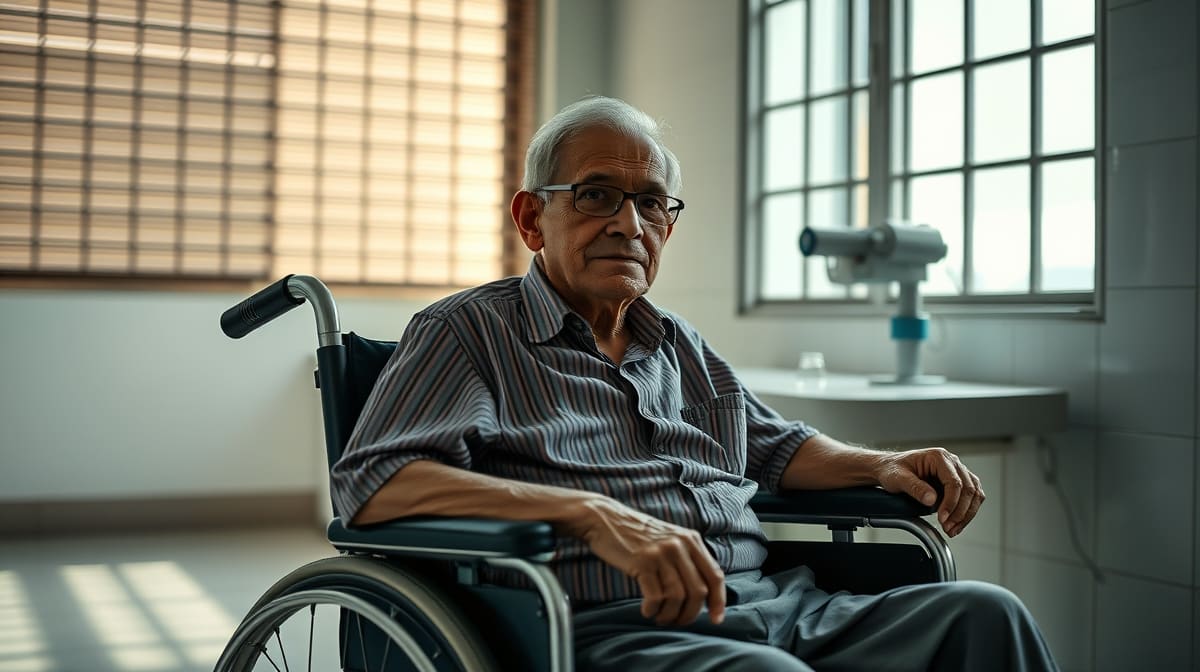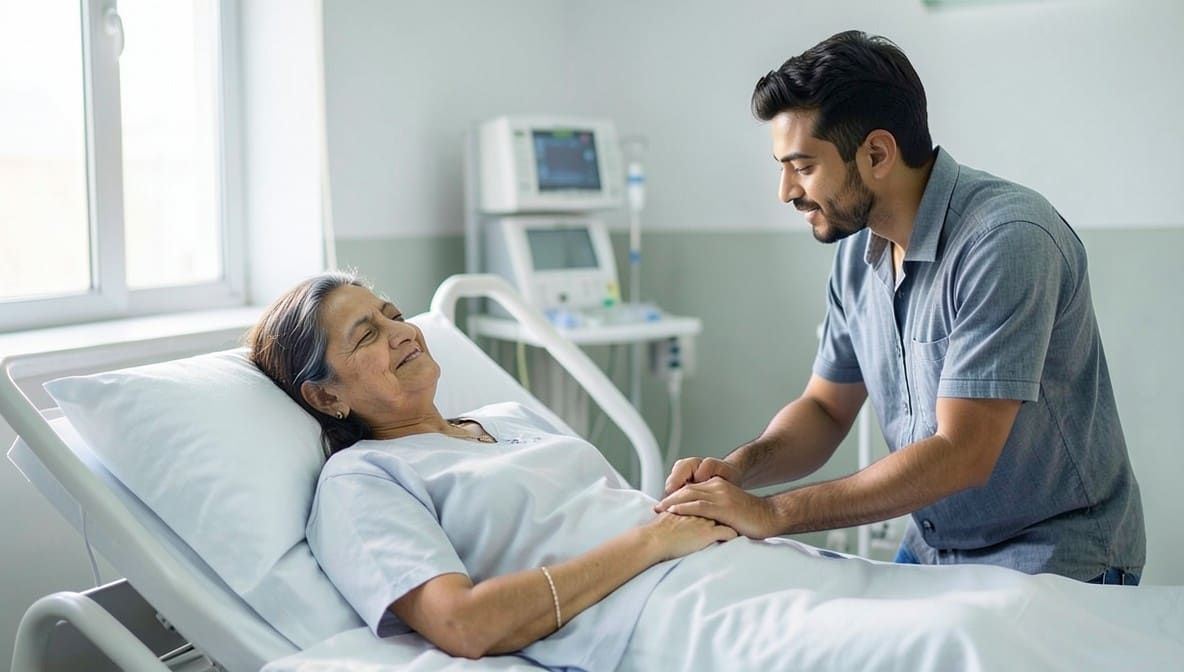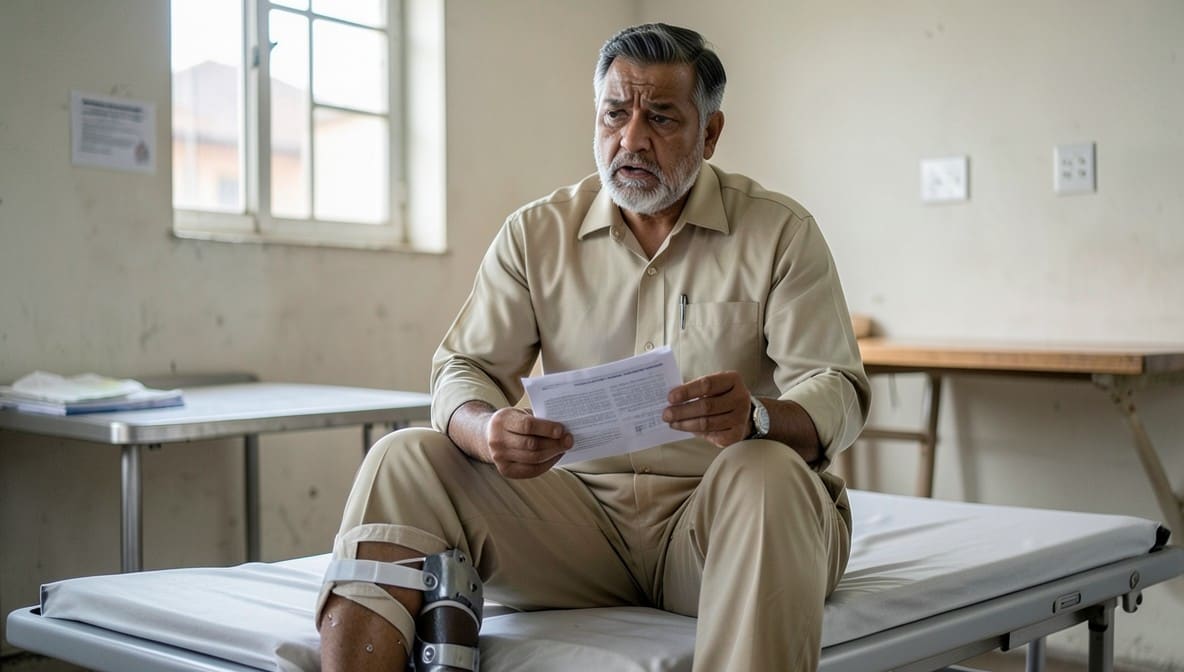
The Rajasthan High Court has recognized that persistent physical suffering due to retained surgical implants in a convicted prisoner can justify interim bail, even when the medical procedure is not immediately life-threatening. This ruling affirms that the right to humane treatment under Article 21 extends to incarcerated individuals seeking relief from chronic pain caused by medical devices.
Background & Facts
The Dispute
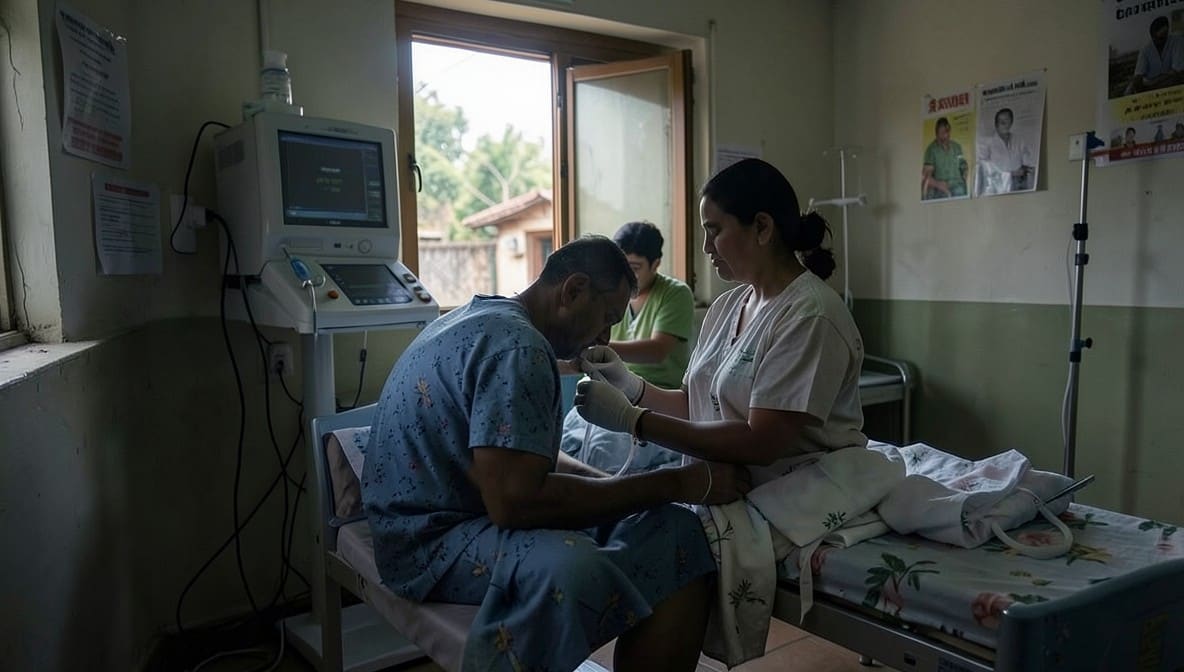
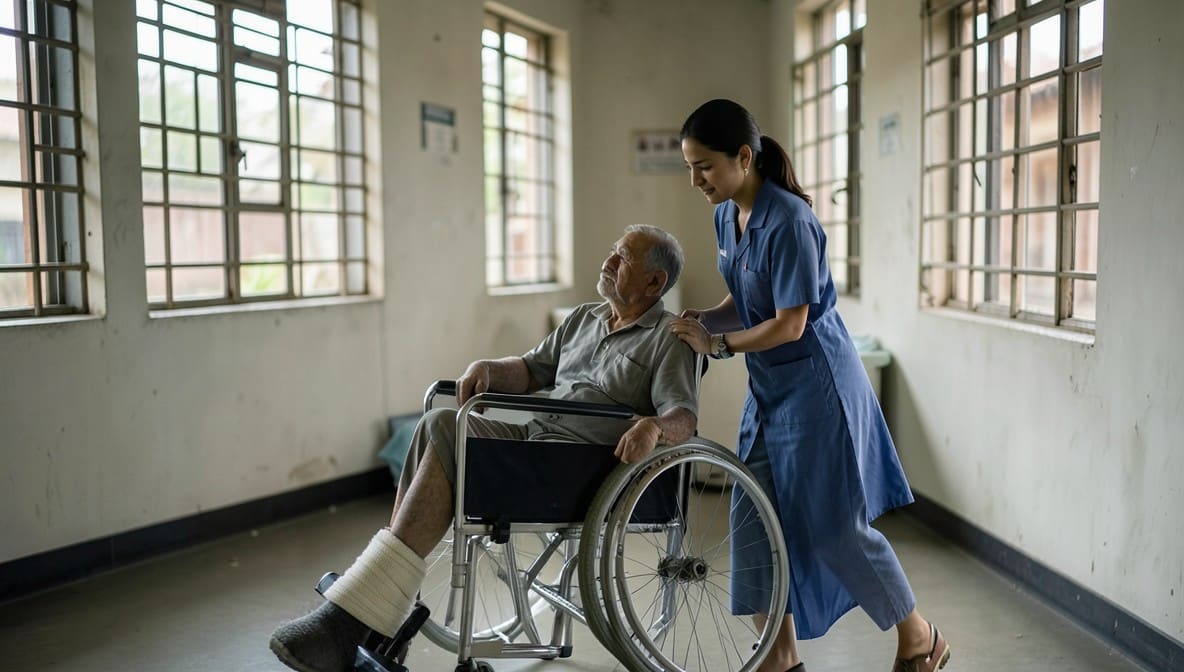
The petitioner, Shri Ram S/o Bheru Lal, is a convicted prisoner currently lodged in Central Jail, Jodhpur. He underwent major orthopedic surgery approximately 18 months prior to filing this petition, during which metallic rods, nails, or wires were inserted into both legs to stabilize fractures. The petitioner now seeks interim bail to undergo a surgical procedure to remove these implants, citing ongoing pain and mobility impairment.
Key Facts
- The petitioner was convicted and sentenced to imprisonment in an unspecified criminal case
- Surgery involving internal fixation devices was performed on or around November 2024
- The implants have caused persistent pain and restricted movement since the surgery
- No emergency or life-threatening complication has been reported
- The petitioner has no history of disciplinary violations in jail
Procedural History
- 14.05.2026: Criminal Writ Petition No. 1222/2026 filed before the High Court of Judicature for Rajasthan at Jodhpur seeking interim bail
- 23.04.2026: Court directed the Jail Administration to submit a medical report on the petitioner’s condition
- 03.05.2026: Senior Medical Officer, Jail Dispensary, Jodhpur, submitted report confirming presence of metallic implants and opining that their removal is not an immediate medical necessity
- 14.05.2026: Petition heard and decided on the same day
Relief Sought
The petitioner sought interim bail for a period of two months to undergo surgical removal of the implants, with assurance of surrendering back to custody upon completion of the procedure.
The Legal Issue
The central question was whether interim bail can be granted to a convicted prisoner solely on the ground of persistent pain caused by retained surgical implants, when the medical authority has opined that removal is not an urgent or inevitable procedure.
Arguments Presented
For the Petitioner
Mr. Vishal Singh Bhati argued that the petitioner’s right to health and dignity under Article 21 of the Constitution includes access to timely medical intervention, even for non-emergency conditions. He emphasized that the implants are causing chronic pain, affecting mobility and quality of life, and that the procedure is safe and routine. He cited Sunil Batra v. Delhi Administration to assert that prisoners retain fundamental rights, including the right to medical care.
For the Respondent
Mr. Sri Ram Choudhary, Public Prosecutor, acknowledged the presence of the implants and the petitioner’s satisfactory conduct in jail. However, he contended that since the Senior Medical Officer had explicitly stated that removal was not inevitable or urgent, there was no compelling medical ground to suspend the sentence. He argued that granting bail on such grounds could set a precedent undermining the finality of convictions.
The Court's Analysis
The Court acknowledged the Medical Officer’s opinion that the removal of implants was not an immediate medical necessity. However, it rejected the notion that only life-threatening or emergency conditions qualify for interim bail on medical grounds. The Court observed that Article 21 protects against inhuman treatment, which includes prolonged suffering from preventable pain.
"This Court is of the opinion that when the requirement has not been ruled out, it would make no difference whether the implants are removed now or sometime subsequent. The petitioner has specifically pleaded that he is suffering pain because of the same."
The Court emphasized that the absence of urgency does not equate to absence of need. The petitioner’s suffering was documented, his conduct in custody was unblemished, and the procedure was deemed safe and feasible. The Court held that the balance of convenience favored temporary release, given the minimal risk to public order and the significant relief to the petitioner’s physical condition.
The Court further noted that the proposed bail conditions - personal bond and sureties - provided sufficient assurance of return, aligning with the principle of proportionality in bail jurisprudence.
The Verdict
The petitioner succeeded. The Court granted interim bail for a period of thirty days, subject to the following conditions: the petitioner shall furnish a personal bond of Rs. 50,000 and two solvent sureties of Rs. 25,000 each, to the satisfaction of the Trial Court; he shall surrender to the Central Jail, Jodhpur, on the morning after the expiry of the thirty-day period; and his sentence shall remain suspended during this period.
What This Means For Similar Cases
Medical Pain, Not Just Emergencies, Can Justify Bail
- Practitioners may now argue that chronic, documented pain from retained medical devices qualifies as a ground for interim bail under Article 21
- The threshold is not "imminent danger" but "significant suffering" that is medically recognized and remediable
- Medical reports need not state "urgent" - only that the condition is not ruled out
Procedural Safeguards Are Key
- Courts will require enforceable conditions: personal bond, sureties, and a fixed surrender date
- Conduct in custody is a critical mitigating factor - good behavior strengthens the plea
- The burden is not on the prisoner to prove medical emergency, but to establish credible suffering and feasibility of treatment
Precedent Expands Human Rights in Custody
- This judgment reinforces that incarceration does not extinguish the right to humane treatment
- It aligns with Sunil Batra and Kartar Singh v. State of Punjab by affirming that dignity persists even after conviction
- Future petitions for medical bail may cite this case to support requests for dental, orthopedic, or psychiatric interventions