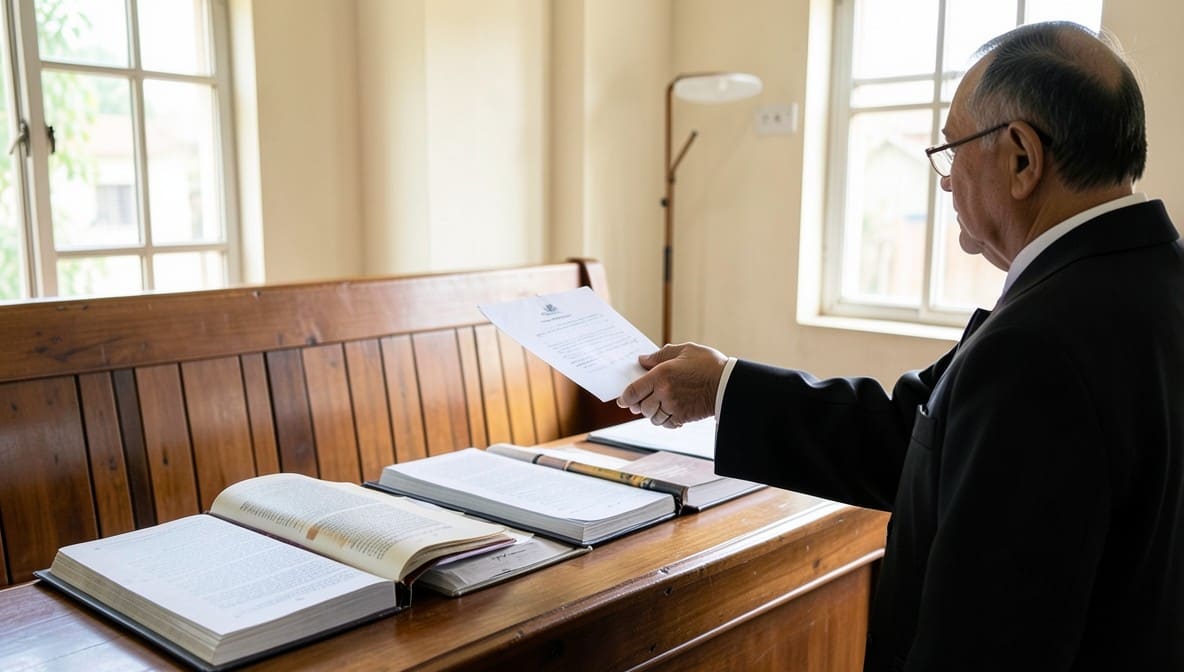
The Rajasthan High Court has reaffirmed that the inherent jurisdiction of the High Court under Section 528 of the Bharatiya Nagarik Suraksha Sanhita, 2023, is not extinguished merely because a statutory revision remedy exists. This ruling clarifies that courts may intervene where there is a clear abuse of process or failure to comply with mandatory procedural safeguards, even in interlocutory matters.
Background & Facts
The Dispute
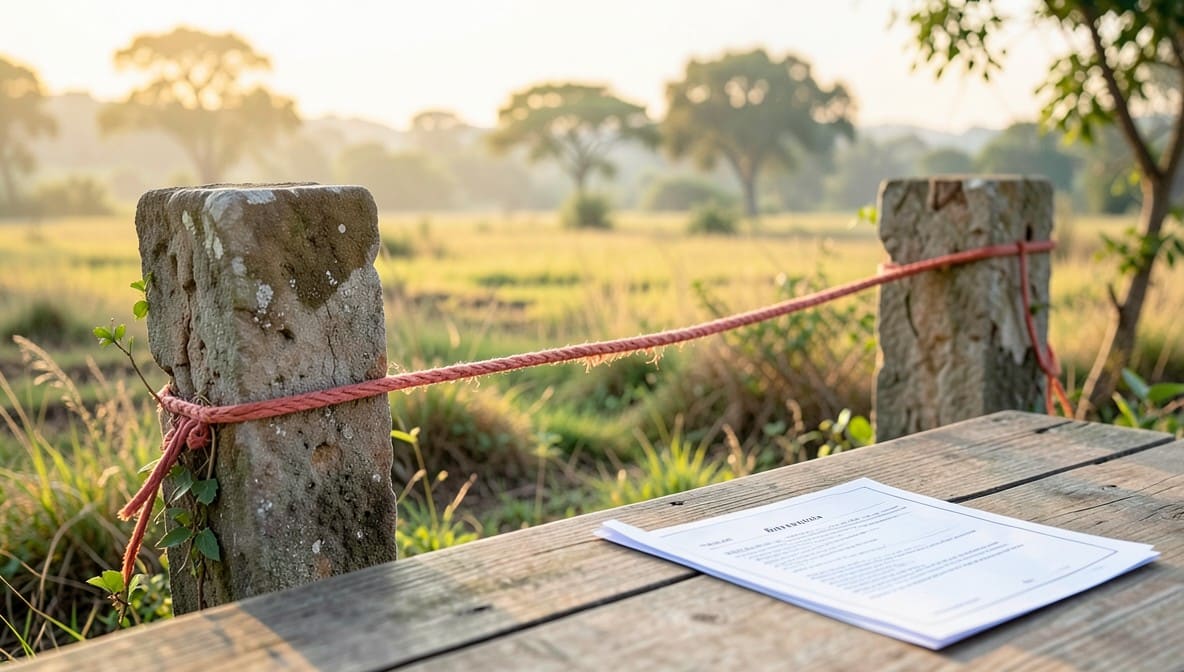
The petitioner, Manoharlal S/o Bajrang Ram, challenges an order dated 06.04.2026 passed by the Deputy District Magistrate, Lohawat, District Phalodi, which attached disputed plots and handed over possession to a Receiver under Sections 164 and 165 of the Bharatiya Nagarik Suraksha Sanhita, 2023 (BNSS-2023). The petitioner claims lawful possession of the land and asserts that the order was passed without adherence to procedural requirements, despite a pending civil suit between the parties seeking injunction against dispossession.
Key Facts
- The dispute concerns possession of agricultural plots located in Dhaka Ki Dhani, Hansa Desh, District Phalodi
- A civil suit is pending before the civil court, wherein the petitioner has sought a permanent injunction against dispossession
- The Deputy District Magistrate issued the impugned order on 06.04.2026 under Sections 164 and 165 of BNSS-2023
- No record indicates compliance with the mandatory requirements of Section 164 BNSS-2023, which mandates inquiry into possession and likelihood of breach of peace before invoking Section 165
- The petitioner was not given an opportunity to be heard prior to the order
- The order resulted in immediate physical dispossession of the petitioner from the disputed land
Procedural History
- 06.04.2026: Deputy District Magistrate passes order attaching property and appointing Receiver under Sections 164 and 165 BNSS-2023
- 15.04.2026: Petitioner files Criminal Miscellaneous Petition No. 3364/2026 before the High Court of Judicature for Rajasthan at Jodhpur under Section 528 BNSS-2023
- 01.05.2026: Arguments concluded and matter reserved
- 13.05.2026: Judgment pronounced
The Parties' Positions
The petitioner contends that the order was passed in violation of natural justice and without following the mandatory preconditions under Section 164 BNSS-2023. He argues that the Magistrate acted arbitrarily to oust him from possession, thereby constituting an abuse of process. He further submits that the pendency of a civil suit for injunction renders the criminal proceeding inappropriate.
The respondent, State of Rajasthan and SHO Lohawat, argue that the Magistrate acted within statutory powers under Sections 164 and 165 BNSS-2023, which are independent of civil proceedings. They assert that the Magistrate was justified in acting to prevent breach of peace where both parties claimed possession.
Relief Sought
The petitioner seeks quashing of the order dated 06.04.2026, restoration of possession, and directions to the Magistrate to follow due process under Sections 164 and 165 BNSS-2023 before any further action.
The Legal Issue
Can the High Court exercise its inherent jurisdiction under Section 528 of the BNSS-2023 to quash an interlocutory order passed under Sections 164 and 165, despite the availability of a statutory revision remedy under Section 438 BNSS-2023?
Arguments Presented
For the Petitioner
The petitioner’s counsel argued that Section 528 BNSS-2023, corresponding to Section 482 CrPC, preserves the High Court’s inherent power to prevent abuse of process and secure justice, irrespective of alternative remedies. He relied on Prabhu Chawla v. State of Rajasthan (2016) 16 SCC 30 and Pratap Singh v. State of Rajasthan (2004) to assert that the existence of a revision remedy does not bar invocation of inherent jurisdiction where there is a clear violation of procedure, arbitrariness, or harassment. He emphasized that Section 164 BNSS-2023 requires a preliminary inquiry into possession and likelihood of breach of peace, which was entirely skipped. He further contended that the order was interlocutory and thus not appealable, making the inherent jurisdiction the only effective remedy.
For the Respondent
The respondent’s counsel argued that Section 438 BNSS-2023 provides an adequate statutory remedy of revision against the impugned order, and therefore, the petition under Section 528 is not maintainable. He cited Amarnath v. State of Haryana (1977) 4 SCC to assert that the powers under Sections 164 and 165 are independent of civil proceedings and may be invoked even when a civil suit is pending, provided there is a reasonable apprehension of breach of peace. He contended that the petitioner’s grievance is essentially civil in nature and should be resolved through the civil court, not by invoking criminal inherent jurisdiction.
The Court's Analysis
The Court began by acknowledging that both parties conceded the existence of a statutory revision remedy under Section 438 BNSS-2023. The central issue, therefore, was whether this remedy precluded the exercise of inherent jurisdiction under Section 528.
The Court extensively relied on the Supreme Court’s judgment in Prabhu Chawla v. State of Rajasthan, particularly the observations of Justice Krishna Iyer in Madhu Limaye v. State of Maharashtra. The Court quoted:
"The opening words of Section 482 contradict this contention because nothing of the Code, not even Section 397, can affect the amplitude of the inherent power preserved in so many terms by the language of Section 482."
The Court held that the non-obstante clause in Section 528 BNSS-2023 mirrors Section 482 CrPC and preserves the High Court’s inherent jurisdiction unconditionally. The existence of a revision remedy does not oust this power. The Court emphasized:
"The limitation is self-restraint, nothing more. The policy of the law is clear that interlocutory orders, pure and simple, should not be taken up to the High Court resulting in unnecessary litigation and delay. At the other extreme, final orders are clearly capable of being considered in exercise of inherent power, if glaring injustice stares the court in the face."
The Court found that the impugned order was not merely interlocutory but involved a deprivation of possession without compliance with mandatory procedural safeguards under Section 164 BNSS-2023. The failure to conduct an inquiry into possession, the absence of hearing, and the immediate execution of the order constituted an abuse of process. The pendency of a civil suit seeking injunction further underscored the need for restraint.
The Court distinguished Amarnath on the ground that it dealt with the validity of invoking Sections 164/165 in the face of civil litigation, not with procedural violations that amount to abuse of process. The Court held that while the Magistrate may have jurisdiction to act, the manner of exercise was unlawful.
The Verdict
The petition was allowed on the issue of maintainability. The High Court rejected the preliminary objection and held that the petition under Section 528 BNSS-2023 is maintainable. The Court directed that the petition be listed for hearing on merits to examine whether the order dated 06.04.2026 was passed in violation of Section 164 BNSS-2023 and whether it constituted an abuse of process. The status quo ante shall be maintained until further orders.
What This Means For Similar Cases
Inherent Jurisdiction Is Not a Last Resort - It Is a Constitutional Safeguard
- Practitioners may invoke Section 528 BNSS-2023 even when revision is available if the order involves procedural illegality, arbitrariness, or deprivation of rights without hearing
- The mere existence of a statutory remedy does not bar inherent jurisdiction - the test is abuse of process or failure to secure justice
- Courts must examine the substance of the grievance, not the form of the petition
Procedural Compliance Under Sections 164/165 BNSS-2023 Is Mandatory
- Section 164 requires a preliminary inquiry into possession and likelihood of breach of peace before any order under Section 165 can be passed
- Failure to record reasons or conduct inquiry renders the order void ab initio
- Possession cannot be transferred summarily without compliance with Section 164, even if a civil suit is pending
Civil and Criminal Remedies Coexist - But Criminal Powers Cannot Override Civil Rights
- The pendency of a civil suit does not bar invocation of Sections 164/165, but it imposes a higher duty of caution
- Criminal authorities cannot act as de facto civil courts to determine title
- Where civil courts are seized of the matter, criminal orders affecting possession must be strictly limited to preventing imminent breach of peace, not resolving ownership