The Rajasthan High Court has clarified that in motor accident claims, liability cannot be imposed on a vehicle’s insurer without clear evidence of negligence by its driver, even when another unidentified vehicle is involved. The judgment underscores the necessity of credible evidence and procedural compliance in establishing composite negligence.
Background & Facts
The Dispute
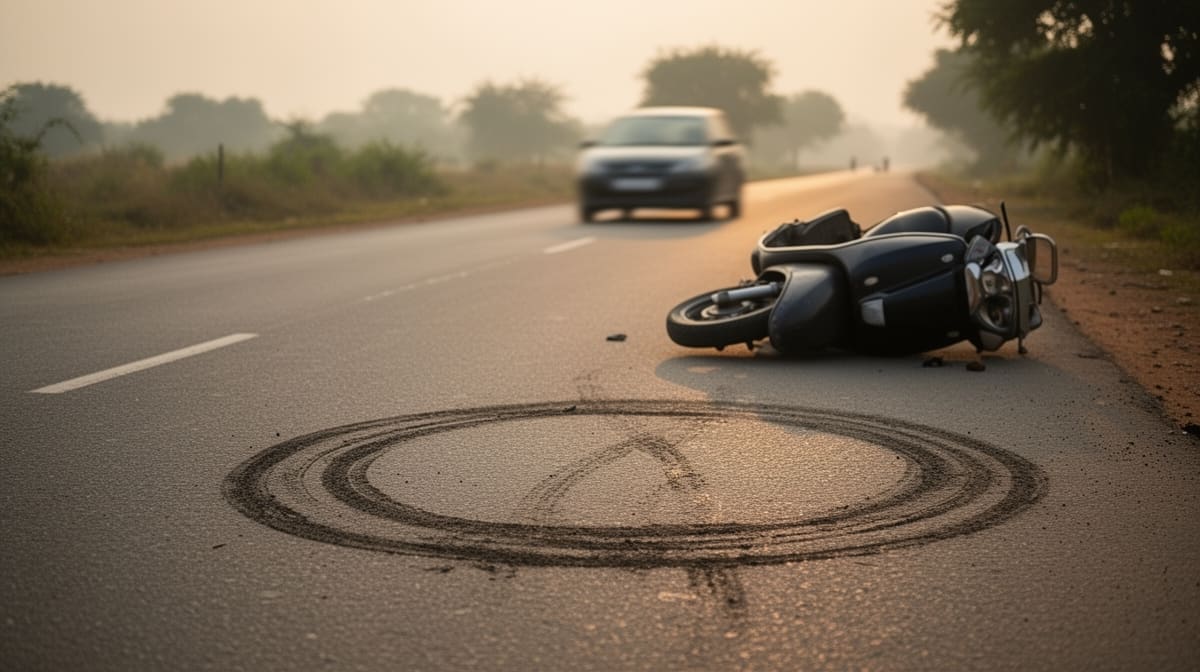
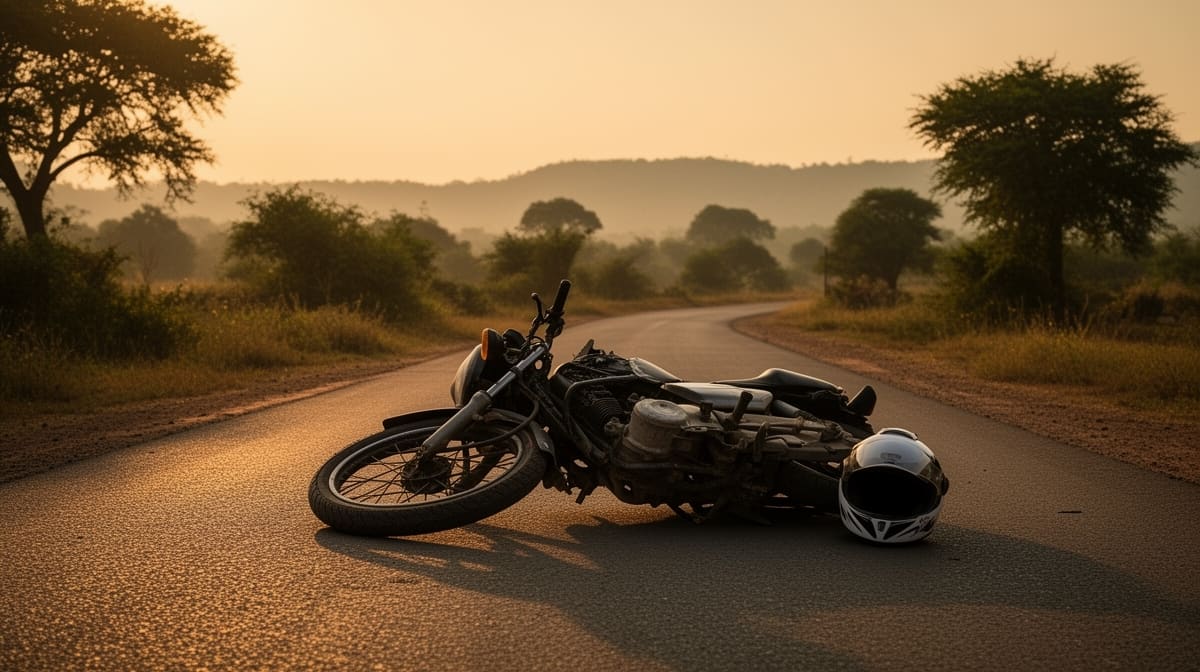
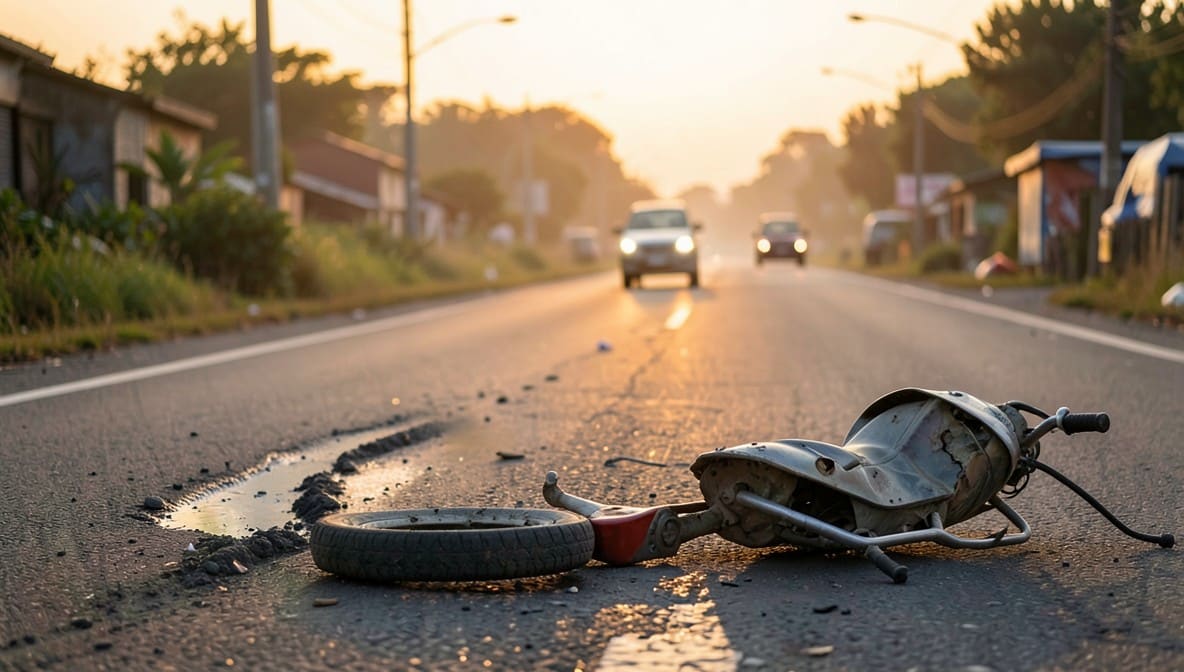
On 16.04.2015 at approximately 9:00 PM, Jaikumar Daga, the deceased, was travelling as a pillion rider on an Activa scooter (registration No. RJ-14-ES-1612) driven by his nephew, Krishan Kant Bihani. Near the old JDA Office in Vidhyadhar Nagar, Jaipur, an unknown motorcycle, allegedly driven rashly and negligently, collided with the scooter from behind. The impact caused the scooter to lose balance, resulting in both riders falling on the road. Jaikumar Daga sustained grievous injuries and succumbed to them on 08.05.2015.
Key Facts
- The scooter was registered in the name of Sunita Daga, the deceased’s wife and claimant No. 2.
- Krishan Kant Bihani, the driver, was the deceased’s nephew and a resident of Jaipur.
- The accident occurred on 16.04.2015; the First Information Report (FIR) was lodged on 09.05.2015 - a delay of 23 days.
- The FIR, filed by Krishan Kant Bihani, stated that the accident was caused solely by the unknown motorcycle.
- Sunita Daga (AW-1), the claimant and wife of the deceased, testified that she had discussed the accident with Krishan Kant Bihani during Jaikumar’s treatment and had verified the contents of the FIR before its filing.
- The investigating agency filed a final report (Ex-NA-1) concluding that the accident was caused solely by the unidentified motorcycle, with no negligence attributed to the scooter driver.
- Krishan Kant Bihani allegedly sustained a hand fracture in the accident but did not undergo medical examination or produce any medical records.
- The claimants claimed compensation of Rs. 1,08,80,000 under various heads including loss of dependency, medical expenses, and funeral costs.
Procedural History
- 16.04.2015: Accident occurred.
- 08.05.2015: Deceased died.
- 09.05.2015: FIR lodged by respondent No. 1 (driver).
- 2014: Motor Accident Claim Petition (MAC Case No. 902/2014) filed before Motor Accident Claims Tribunal No. 2, Jaipur.
- 07.04.2021: Tribunal dismissed the claim petition, holding no composite negligence and no liability on the insurer.
- 10.04.2021: Notice of appeal issued.
- 13.05.2026: High Court delivered judgment on Civil Miscellaneous Appeal No. 1053/2021.
The Parties' Positions
For the Claimants (Appellants)
- Argued that the accident resulted from composite negligence of the scooter driver and the unknown motorcycle.
- Contended that the delay in filing the FIR was due to the family’s focus on the deceased’s prolonged medical treatment.
- Relied on Ravi v. Badrinarayan and Ors. (2011) 4 SCC 693 to support the proposition that delay in FIR does not automatically invalidate a claim if satisfactorily explained.
For the Respondents
- The driver (Krishan Kant Bihani) denied any negligence and asserted sole fault of the unknown motorcycle.
- The insurer (New India Assurance Company Limited) contended:
- The claim petition was filed by the owner (Sunita Daga) against herself, creating a conflict of interest.
- The delay in FIR was unexplained and suspicious.
- The claimants colluded with the driver to fabricate liability.
- No evidence established negligence by the scooter driver.
Relief Sought
The appellants sought reversal of the Tribunal’s order and a direction to award compensation of Rs. 1,08,80,000 against the insurer of the scooter, on the basis of composite negligence under Section 140 and Section 166 of the Motor Vehicles Act, 1988.
The Legal Issue
The central question was whether composite negligence can be established against the driver of a scooter when the sole eyewitness (who is also a close relative of the deceased) does not testify, the FIR is delayed without a credible explanation, the investigating agency attributes fault solely to an unidentified vehicle, and the claimant fails to examine any independent witness to the accident.
Arguments Presented
For the Appellant/Petitioner
Counsel for the appellants relied on Ravi v. Badrinarayan and Ors. to argue that delay in lodging an FIR is not fatal if reasonably explained by the exigencies of medical treatment. They submitted that the Tribunal erred in dismissing the claim solely on the ground of FIR delay, without considering the context of the deceased’s prolonged hospitalization. They further contended that the insurer’s liability under Section 140 is statutory and does not require proof of fault by the insured vehicle if the accident involved multiple vehicles. The failure to examine the driver, they argued, was not fatal because the claimants had produced documentary evidence and the testimony of the deceased’s wife.
For the Respondent/State
Counsel for the insurer and driver argued that the claimants bore the burden of proving negligence by the scooter driver to invoke composite liability. The FIR, filed by the driver himself, explicitly blamed the unknown motorcycle. The claimant-wife admitted in her testimony that she had verified the FIR’s contents and accepted the driver’s version. The investigating agency’s final report (Ex-NA-1) corroborated this. The failure to examine the sole eyewitness - who was available and not hostile - was fatal to the claim. The Court in Cholamandalam General Insurance Co. Ltd. v. Smt. Badami had held that failure to examine an eyewitness on whom the claimant’s case depends leads to adverse inference. The insurer, therefore, could not be held liable for an accident caused by an unidentified third party without any fault attributable to the insured vehicle.
The Court's Analysis
The Court undertook a meticulous review of the evidence and procedural lapses. It noted that the claimants’ entire case rested on the assertion of composite negligence, yet they failed to adduce any direct or circumstantial evidence implicating the scooter driver. The sole eyewitness, Krishan Kant Bihani, was not examined despite being a party to the proceedings and a close relative of the deceased. The Court observed:
"The claimants could have examined respondent No.1 to prove their case. However, they failed to do so."
The Court further emphasized that the testimony of Sunita Daga (AW-1) - the claimant and wife of the deceased - was not that of an eyewitness. Her account was based on second-hand information from the driver, and she admitted to having verified the FIR’s contents, which exonerated the driver. The Court held:
"The contents of the FIR as well as the testimony of AW-1 clearly indicate that the accident occurred due to sole negligence of driver of the unknown motorcycle..."
The investigation report (Ex-NA-1) by the police, which concluded no fault on the scooter driver, was not rebutted. The Court also noted the absence of any medical records from the driver despite his alleged injury, further undermining his credibility as a victim. The delay of 23 days in filing the FIR was not explained with specificity - the claimants merely stated that the family was occupied with treatment, but offered no details about the driver’s whereabouts or inability to file the FIR during that period.
The Court relied on its own coordinate bench decision in Cholamandalam General Insurance Co. Ltd. v. Smt. Badami, which held that failure to examine an eyewitness on whom the claimant’s case depends renders the claim unsustainable. The Supreme Court had dismissed the SLP against that judgment, reinforcing its precedential value.
The Court concluded that the Tribunal had correctly appreciated the evidence and that the claimants had failed to discharge their burden of proof under Section 166 of the Motor Vehicles Act, 1988.
The Verdict
The appeal was dismissed. The High Court upheld the Tribunal’s order dated 07.04.2021, holding that no liability could be fastened upon the insurer of the scooter. The claimants’ petition for compensation of Rs. 1,08,80,000 was rejected in its entirety. The Court directed the Registry to return the case record to the Motor Accident Claims Tribunal forthwith. No costs were awarded.
What This Means For Similar Cases
Composite Negligence Requires Positive Evidence Against the Insured Vehicle
- Practitioners must now establish affirmative proof of negligence by the insured vehicle’s driver to claim compensation under composite negligence.
- Mere presence of another unidentified vehicle is insufficient; the claimant must show how the insured vehicle contributed to the accident.
- Reliance on Ravi v. Badrinarayan for FIR delay is limited - the explanation must be specific, credible, and corroborated.
Failure to Examine the Sole Eyewitness Is Fatal
- If the only eyewitness is a party to the case (even if a relative), and the claimant does not examine them, the court may draw an adverse inference.
- This applies even if the witness is not hostile - the burden lies on the claimant to present all material witnesses.
- In motor accident claims, eyewitness testimony remains a critical pillar of proof.
Insurer Liability Is Not Automatic in Unidentified Third-Party Accidents
- Insurers are not liable for accidents caused solely by unidentified vehicles unless the insured vehicle’s driver is found negligent.
- The statutory liability under Section 140 does not extend to situations where the insured vehicle is not at fault.
- Claimants must avoid filing claims against insurers of vehicles with no contributory negligence - such claims are likely to be dismissed.