The Rajasthan High Court has recognized the humanitarian imperative of granting interim bail to an accused whose spouse is on the verge of delivery, affirming that personal circumstances may justify temporary release even in serious criminal cases. This order underscores the judiciary’s willingness to balance procedural justice with compassionate considerations under the new Bharatiya Nagarik Suraksha Sanhita.
Background & Facts
The Dispute
The petitioner, Rahul Kachhawaha, is currently lodged in Central Jail, Jodhpur, in connection with F.I.R. No. 493/2025 registered at Police Station Udaimandir, District Jodhpur. The case involves alleged offences under Sections 111(2)(b), 111(3), 351(1), 351(3), and 61(2)(a) of the Bharatiya Nagarik Suraksha Sanhita (BNSS), which pertain to assault, criminal force, and unlawful assembly.
Key Facts
- The petitioner is aged approximately 29 years and resides at Street No. 1, Annasagar, Dali Devi Ka Makan, P.S. Mata Ka Than, Jodhpur East.
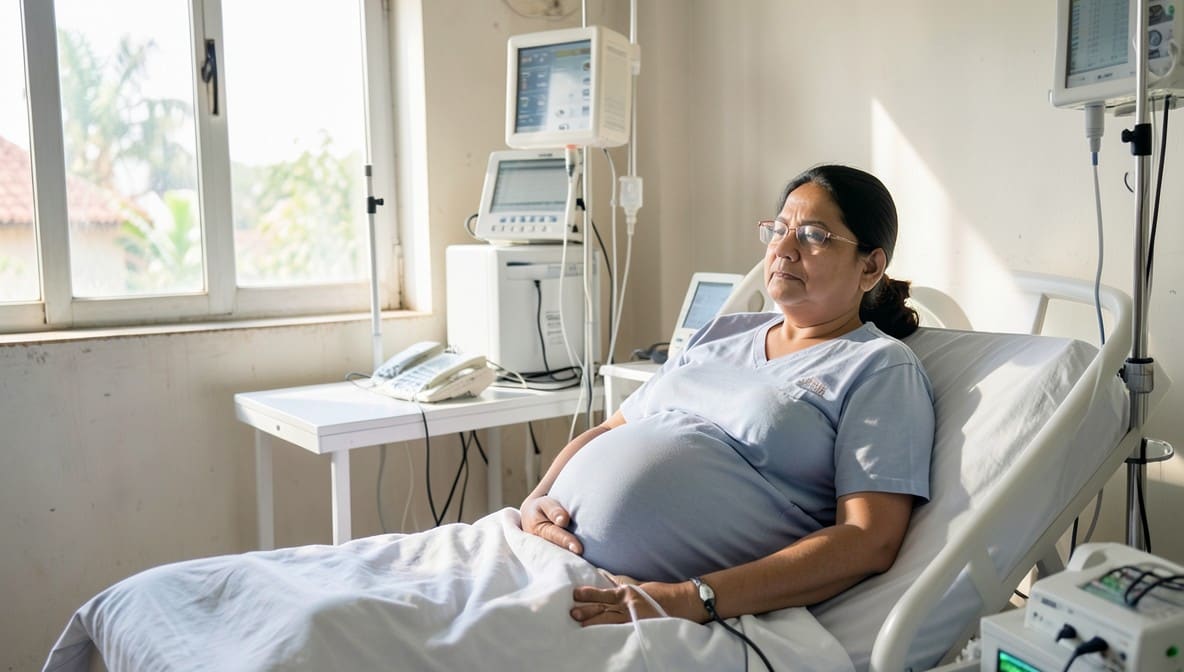
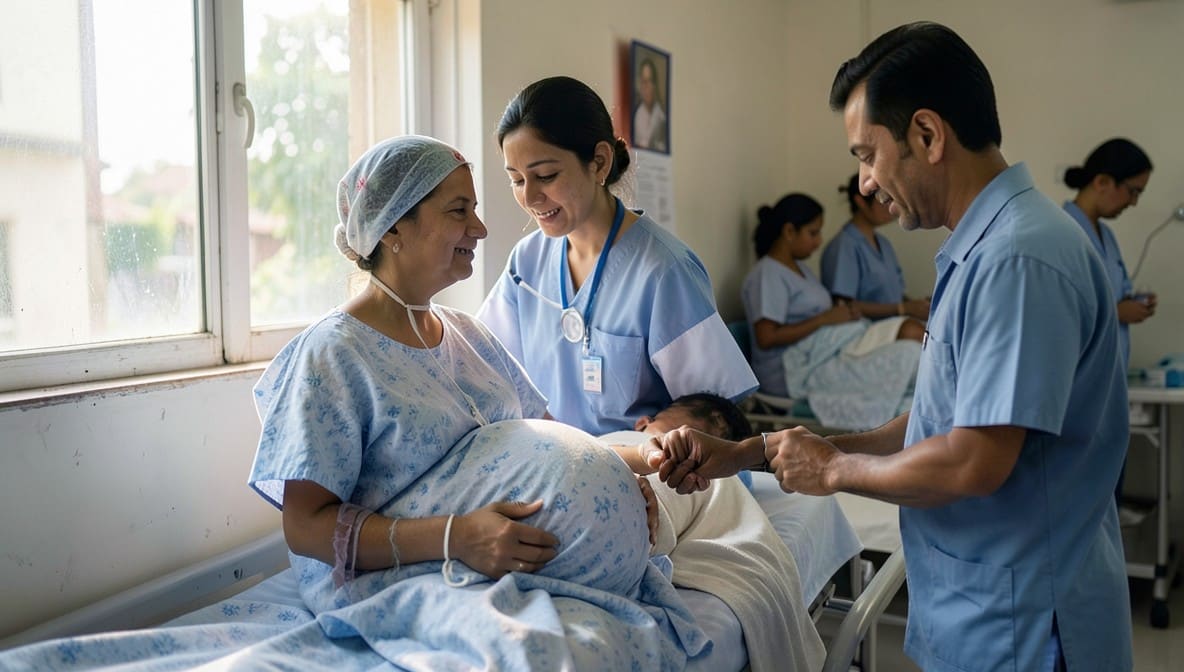
- His wife is currently pregnant with an expected date of delivery on or about 13.05.2026.
- The petitioner filed the present bail application under Section 483 of the BNSS seeking interim release to be present during his wife’s delivery.
- A verification report dated 11.05.2026, submitted by the prosecution and accepted by the Court, confirmed the pregnancy and the imminent delivery date.
- No allegations of violence against the wife or domestic abuse were raised in the FIR or during proceedings.
Procedural History
- 2025: F.I.R. No. 493/2025 registered at P.S. Udaimandir, Jodhpur.
- Date of arrest: Not specified in judgment, but petitioner was in custody prior to 14.05.2026.
- 11.05.2026: Verification report submitted by the State confirming the wife’s pregnancy and expected delivery on 13.05.2026.
- 14.05.2026: Interim bail application filed under Section 483 BNSS.
- 14.05.2026: Hearing conducted and order passed by the High Court.
Relief Sought
The petitioner sought interim bail for a period sufficient to allow him to be present during his wife’s delivery, with a request for release subject to conditions ensuring his return to custody.
The Legal Issue
The central question was whether Section 483 of the Bharatiya Nagarik Suraksha Sanhita permits the grant of interim bail on humanitarian grounds arising from a spouse’s imminent childbirth, even when the accused is charged with serious non-bailable offences.
Arguments Presented
For the Petitioner
Mr. Balveer Singh Rathore, counsel for the petitioner, submitted that the petitioner’s presence during his wife’s delivery is a compelling humanitarian necessity. He emphasized that the verification report from the State confirmed the pregnancy and the medical urgency, and that the petitioner has no history of absconding or tampering with evidence. He relied on the principle of human dignity under Article 21 of the Constitution and the spirit of Section 483 BNSS, which empowers courts to grant interim relief in exceptional circumstances.
For the Respondent
Ms. Sonu Manawat, Public Prosecutor, did not oppose the application. She confirmed the accuracy of the verification report and acknowledged that the petitioner’s request was genuine and unchallenged by any adverse facts. She submitted that the State had no objection to interim bail subject to strict conditions.
The Court's Analysis
The Court observed that the verification report filed by the State was uncontroverted and established the factual basis for the petitioner’s request. It noted that the wife’s delivery was imminent, with the expected date falling within ten days of the application. The Court held that the right to be present during the birth of one’s child, while not a statutory right, is a deeply rooted human and familial interest protected under the broader ambit of personal liberty under Article 21.
"In view of the fact, certainly the petitioner deserves to be granted interim bail to be with her wife at the time of delivery."
The Court further emphasized that Section 483 BNSS, as a procedural provision, is designed to enable courts to act flexibly in exceptional situations to ensure justice is not only done but is seen to be done with compassion. The Court rejected the notion that the gravity of the alleged offences automatically disqualifies an accused from interim relief when humanitarian grounds are clearly established.
The Court also considered the absence of any allegation of domestic violence or threat to the wife, and the fact that the State itself had verified the petitioner’s claim. It concluded that the balance of convenience and equity strongly favored granting temporary relief.
The Verdict
The petitioner succeeded. The Court granted interim bail for a period of 30 days. The petitioner, Rahul Kachhawaha, is directed to be released upon furnishing a personal bond of Rs. 1,00,000 with two sound and solvent sureties, each in the sum of Rs. 50,000, one of whom must be a close relative. He must surrender before jail authorities within 24 hours of the expiry of the 30-day period unless extended by a competent court. He is prohibited from tampering with evidence, contacting witnesses, or leaving the State of Rajasthan without prior permission. Both the petitioner and sureties must keep mobile phones active and notify the Court of any change in contact details. The matter is listed for compliance report on 15.06.2026.
What This Means For Similar Cases
Humanitarian Grounds Can Override Gravity of Offence
- Practitioners may now invoke Section 483 BNSS to seek interim bail in cases involving imminent medical emergencies of immediate family members, including childbirth, critical illness, or death.
- The State’s verification report carries decisive weight; courts will not require independent medical proof if the prosecution confirms the facts.
Conditions Must Be Specific and Enforceable
- Bail conditions must be tailored to prevent abuse: surrender timelines, no-contact orders, travel restrictions, and communication protocols are now standard.
- Surety requirements must include at least one close relative to enhance accountability.
Procedural Flexibility Under BNSS Is Real
- Section 483 BNSS is not a mere procedural formality - it is a substantive tool for equitable justice.
- Courts are expected to act swiftly in such matters; delays in granting interim bail may violate Article 21.
No Precedent Required for Compassionate Relief
- This order establishes that humanitarian considerations under BNSS do not require citation of prior judgments; the facts themselves may justify relief.
- The burden shifts to the prosecution to demonstrate why relief should be denied, not to the accused to prove exceptional hardship.