The Rajasthan High Court has clarified that bail cannot be denied solely on the basis of the nature of the statute invoked when the factual matrix reveals no allegation of sexual violence or coercion. In this case, the court emphasized that the absence of a rape allegation and the prosecutrix’s voluntary conduct significantly alter the calculus of bail eligibility under non-bailable provisions.
Background & Facts
The Dispute
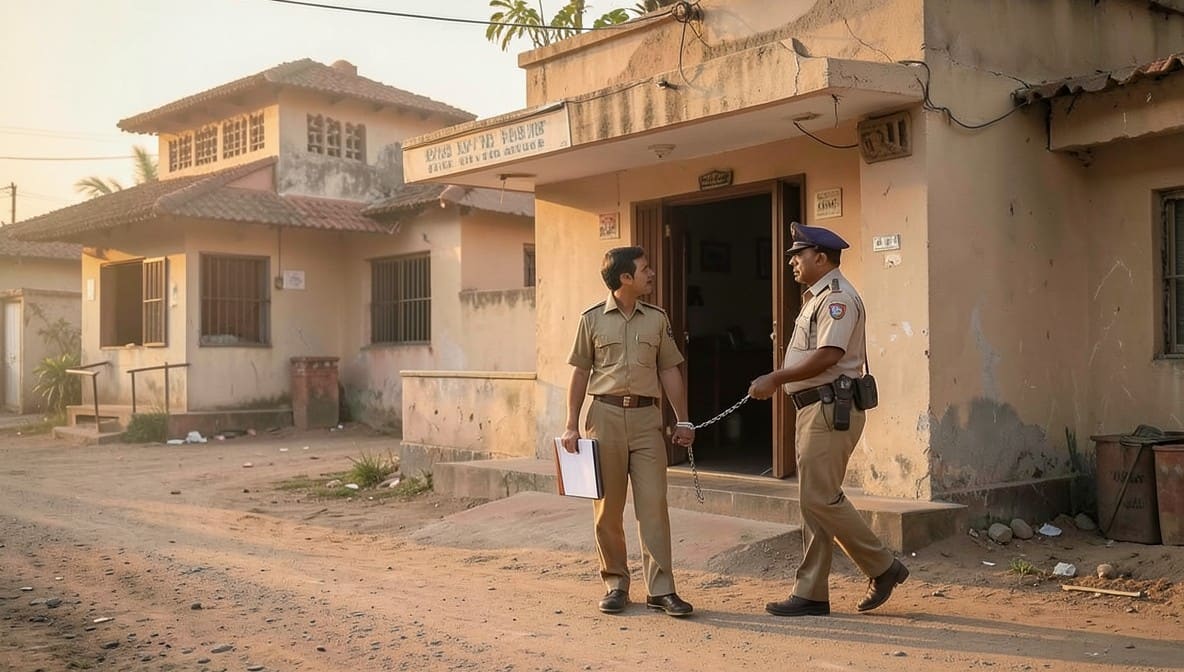
The petitioner, Sanjay S/o Bhaga Ram, aged 21, was arrested in connection with FIR No. 45/2026 registered at Police Station Kotwali, District Jalore, Rajasthan. The FIR invoked Sections 137(2) of the Bharatiya Nyaya Sanhita (BNS) and Section 84 of the Juvenile Justice (Care and Protection of Children) Act, 2015. The complainant, a female, alleged that the petitioner had wrongfully detained her and taken her to Bangalore and Udaipur without her family’s consent.
Key Facts
- The petitioner was arrested on 07.03.2026 and has remained in judicial custody since then
- The challan was filed on or before 14.05.2026, concluding the investigation
- No allegation of rape, sexual assault, or forcible confinement was made in the FIR or charge sheet
- The prosecutrix, in her statement recorded under Section 161 CrPC, admitted to having a friendly relationship with the petitioner
- She stated that she voluntarily accompanied the petitioner to Bangalore and later to Udaipur
- The petitioner is not alleged to have used force, threat, or deception to induce her travel
- The petitioner is a first-time accused with no prior criminal record
- The petitioner is a resident of Jalore and has strong local ties
Procedural History
- 07.03.2026: Petitioner arrested and lodged in Sub-Jail, Jalore
- Between 07.03.2026 and 14.05.2026: Investigation conducted and challan filed
- 14.05.2026: Bail application filed under Section 483 of BNSS (equivalent to Section 439 CrPC)
- 14.05.2026: Hearing conducted before the High Court, Jodhpur Bench
Relief Sought
The petitioner sought regular bail on the grounds that:
- The trial is likely to extend over a prolonged period
- No grave allegation of sexual violence exists
- There is no risk of flight or tampering with evidence
- He has been in custody for over two months without trial commencement
The Legal Issue
The central question was whether bail under Section 483 of the Bharatiya Nyaya Sanhita can be denied merely because the offence falls under a non-bailable provision, when the factual allegations do not involve sexual violence, coercion, or risk to public order, and the prosecutrix herself admits to voluntary association with the accused.
Arguments Presented
For the Petitioner
Learned counsel for the petitioner argued that:
- The offence under Section 137(2) of BNS pertains to wrongful confinement without violence or sexual intent
- Section 84 of the JJ Act applies only if the prosecutrix was a juvenile at the time of the incident, but no such claim was substantiated
- The prosecutrix’s own statement confirms she went with the petitioner willingly
- There is no allegation of abduction, rape, or threat
- The petitioner has no history of flight or criminal conduct
- Prolonged pre-trial detention without trial violates Article 21 of the Constitution
- Precedents in State of Rajasthan v. Jagdish and Rajesh Sharma v. State of U.P. support bail where the gravity of offence is not of a heinous nature
For the Respondent
The Public Prosecutor and counsel for the complainant opposed bail on the grounds that:
- The offences under BNS and JJ Act are non-bailable
- The accused had taken the prosecutrix away from her home without permission
- There is a potential risk of influencing witnesses or fleeing
- The matter involves moral turpitude and societal norms
- The court should not interfere at the pre-trial stage
The Court's Analysis
The Court examined the nature of the allegations and the evidentiary record. It noted that the charge sheet did not contain any allegation of rape, sexual assault, or use of force. The prosecutrix’s statement, recorded during investigation, explicitly stated that she accompanied the petitioner to Bangalore and Udaipur of her own free will.
"The prosecutrix, in her statements, submits of being friendly with the petitioner and went with him to Bangalore and then to Udaipur out of her own free will."
The Court held that the absence of any allegation of sexual violence or coercion fundamentally distinguishes this case from those involving offences under Sections 376 IPC or analogous provisions under BNS. The court further observed that the prosecution had not demonstrated any apprehension of the petitioner absconding or tampering with evidence.
The Court emphasized that bail is the rule and jail is the exception, particularly where the accused is not a flight risk and the allegations do not involve grave moral or physical harm. The court declined to express any opinion on the merits of the case but found that the conditions for grant of bail under Section 483 BNSS were satisfied.
The Verdict
The bail application was allowed. The petitioner, Sanjay S/o Bhaga Ram, shall be enlarged on bail upon furnishing a personal bond of Rs. 50,000 with two sureties of Rs. 25,000 each, to the satisfaction of the learned Magistrate. He shall appear before the trial court on all dates of hearing as and when required. The order is effective immediately.
What This Means For Similar Cases
Bail Is Not Automatically Denied in Non-Bailable Offences
- Practitioners must argue that the nature of the allegation - not merely the statute invoked - determines bail eligibility
- Where the prosecutrix admits to voluntary association and no sexual violence is alleged, courts must apply proportionality in bail decisions
- The ratio in Arnesh Kumar v. State of Bihar applies: gravity alone cannot override the presumption of innocence
Prosecutrix’s Voluntary Conduct Is Material
- Statements made during investigation under Section 161 CrPC are admissible for bail purposes
- If the complainant admits to consensual association, courts must weigh this against speculative fears of flight
- This precedent supports bail applications in cases under BNS Sections 137, 138, and similar provisions where intent to harm is absent
Pre-Trial Detention Must Be Justified
- Detention beyond 60 - 90 days without trial commencement requires strong justification
- Courts must record reasons for denial of bail, especially where no risk of evidence tampering or flight is shown
- Delay in trial does not justify continued incarceration without bail