The Rajasthan High Court has set aside a conviction for murder and grievous hurt after finding that the prosecution failed to establish guilt beyond reasonable doubt, primarily due to the collapse of key eyewitness testimony and critical gaps in medical and forensic evidence. This judgment reinforces the foundational principle that conviction cannot rest on suspicion, conjecture, or the testimony of witnesses who ultimately disown their earlier statements.
Background & Facts
The Dispute
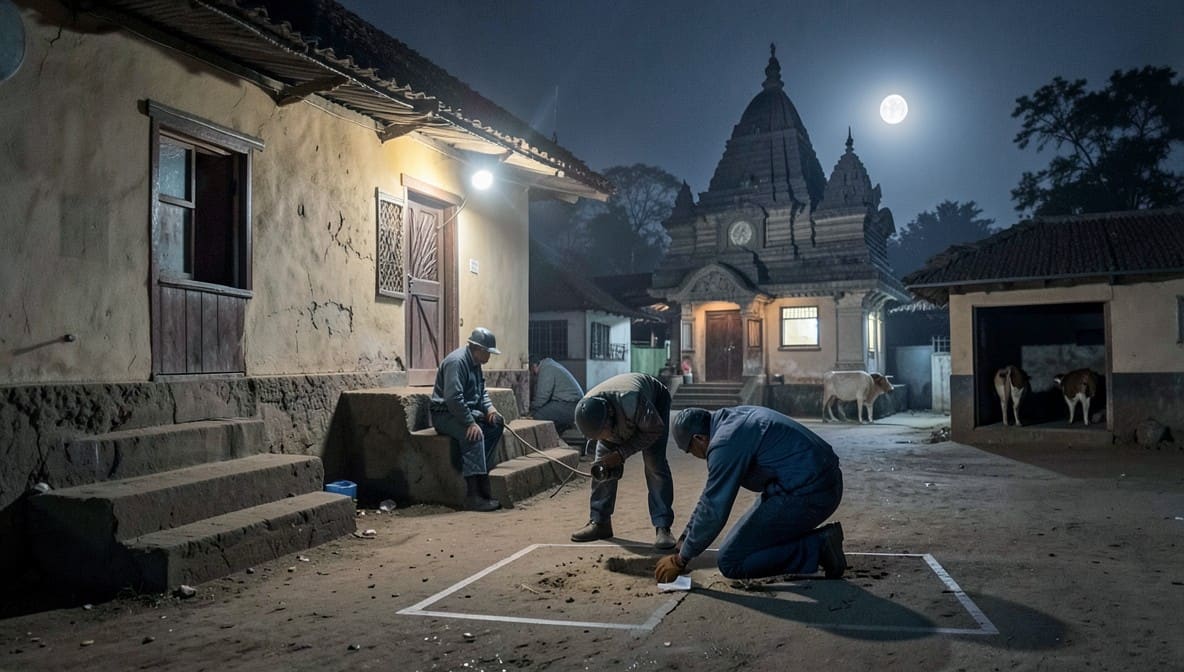
The accused-appellant, Bapuda @ Laxman, was convicted by the Additional Sessions Judge, Banswara, for offences under Sections 302, 326, and 323 of the Indian Penal Code arising from a violent altercation on the night of 12.10.2008. The prosecution alleged that the appellant, along with several others, attacked the family of the deceased Vithla and injured Laxman with swords and lathis, resulting in the severing of Vithla’s right forearm and a fatal head injury leading to his death the next day.
Key Facts
- The alleged occurrence took place on 12.10.2008 at approximately 8:00 PM in the village of Bari Siyatalai, District Banswara.
- The complainant, Harish S/o Laxman, filed an oral report at Mahatma Gandhi Hospital, Banswara, on the same night.
- FIR No. 473/2008 was registered on 12.10.2008 under Sections 323, 326, 307, and 149 IPC.
- Deceased Vithla succumbed to injuries on 13.10.2008 at 4:30 AM at Maharana Bhupal Hospital, Udaipur.
- The charge-sheet was filed on 28.02.2010 before the Chief Judicial Magistrate, Banswara.
- The case was committed to the Court of Sessions and later transferred to the Additional Sessions Judge (Fast Track), Banswara, and subsequently to the Additional Sessions Judge, Banswara, after the abolition of the Fast Track Court.
- The trial commenced and concluded with the framing of charges under Sections 148, 149, 302, 307, 323, and 326 IPC on 15.04.2013.
- The prosecution examined 23 witnesses and exhibited documents from Ex.P.1 to Ex.P.41.
- No defence evidence was led by the accused.
- The trial court delivered judgment on 03.06.2017, convicting the appellant and sentencing him to life imprisonment for murder, 10 years for grievous hurt, and one year for simple hurt.
Procedural History
- 12.10.2008: Alleged occurrence and FIR registration.
- 13.10.2008: Death of Vithla; charge under Section 302 IPC added.
- 28.02.2010: Charge-sheet filed.
- 15.04.2013: Charges framed.
- 03.06.2017: Conviction and sentencing by trial court.
- 03.06.2017: Accused-appellant files appeal under Section 374(2) CrPC.
- 12.05.2026: Arguments concluded.
- 16.05.2026: Judgment pronounced by Division Bench of Rajasthan High Court.
The Parties' Positions
For the Appellant: The prosecution case was built on the testimony of close relatives, all of whom were declared hostile. The medical evidence was incomplete due to non-production of the CT Scan report and indoor ticket. The recovery of the alleged weapon was doubtful, and no forensic report was produced. The investigation was marred by lapses, including failure to investigate the alleged motive of enmity.
For the Respondent (State): The trial court correctly appreciated the evidence and the conviction was based on the cumulative effect of ocular and medical testimony. The hostile witnesses were isolated anomalies and did not invalidate the entire prosecution case.
Relief Sought
The appellant sought acquittal on all charges, release from custody, and setting aside of the conviction and sentence dated 03.06.2017.
The Legal Issue
The central question was whether the prosecution had established the guilt of the accused-appellant beyond reasonable doubt, particularly in light of the collapse of multiple eyewitness testimonies, incomplete medical evidence, and absence of forensic corroboration.
Arguments Presented
For the Appellant
Learned counsel argued that the prosecution case was fatally undermined by the declaration of hostility of five key witnesses: PW-1 Harish (complainant), PW-2 Rupa (daughter of injured), PW-8 Shanti, PW-9 Ganga, and PW-12 Kali - all close relatives of the deceased and injured. These witnesses, in their trial testimony, completely resiled from their earlier statements and denied witnessing any assault by the accused. The court was further confronted with a medical opinion on the fatal head injury that relied on an unproduced CT Scan report and indoor ticket, rendering the diagnosis of a life-threatening injury speculative. The recovery of the alleged sword was from an open, accessible location, and no FSL report or blood group analysis was conducted. The Investigating Officer admitted to non-investigation of the motive mentioned in the FIR and failure to identify the weapon. The entire chain of evidence was broken, and the conviction was based on surmises.
For the Respondent
The Public Prosecutor contended that despite the hostile witnesses, the prosecution case was supported by the postmortem report, the testimony of the Investigating Officer, and the recovery memo. The hostile nature of some witnesses was not uncommon in rural criminal cases and did not automatically invalidate the entire prosecution narrative. The trial court had rightly relied on the medical evidence and the consistent core of the prosecution story.
The Court's Analysis
The Division Bench undertook a meticulous re-appreciation of the entire evidence and found that the prosecution’s case had collapsed under its own weight. The court emphasized that the testimony of PW-1 Harish, the complainant and star witness, underwent a complete reversal during re-examination on 18.05.2016, where he deposed that he did not know the accused, had not witnessed any assault, and had no knowledge of how the deceased sustained injuries. This testimony, the court held, struck at the very foundation of the prosecution narrative.
"The testimony of P.W.-1 Harish strikes at the very root of the prosecution case, seriously undermines its foundational version regarding the occurrence, and renders the genesis and manner of the alleged incident highly doubtful."
The court further noted that PW-2 Rupa, PW-8 Shanti, PW-9 Ganga, and PW-12 Kali - all intimate family members - also denied the prosecution version and admitted signing documents at the police station, casting doubt on the authenticity of recovery memos. Even the injured witness, PW-11 Laxman, admitted he could not identify the assailants due to darkness.
The medical evidence was found to be critically deficient. Dr. S.K. Bhatnagar, who opined that the head injury was life-threatening, admitted in cross-examination that his opinion was based on an unproduced CT Scan report and indoor ticket. The court held that without these primary documents, the diagnosis of a grievous injury under Section 307 IPC was speculative. The postmortem report, while confirming the fatal head injury and severed forearm, could not be linked to the accused due to the absence of forensic evidence - no blood group matching, no FSL report, and no scientific corroboration of the weapon’s use.
The Investigating Officer admitted that the alleged motive of enmity was not investigated, the recovered sword bore no distinguishing marks, and the recovery of the weapon was from an open place. The court observed that the prosecution had failed to establish a chain of evidence connecting the accused to the crime, and the absence of any independent witness further weakened the case.
The court reiterated the settled principle that suspicion, however grave, cannot substitute for legal proof. The burden of proof lies squarely on the prosecution, and failure to discharge it mandates acquittal.
The Verdict
The appeal was allowed. The judgment and sentence dated 03.06.2017 of the Additional Sessions Judge, Banswara, were set aside. The accused-appellant Bapuda @ Laxman was acquitted of all charges under Sections 302, 326, and 323 IPC and directed to be released forthwith, if not detained in any other case. The court directed the appellant to furnish a personal bond of Rs. 50,000 and a surety bond of the same amount before the trial court, effective for six months, to ensure his appearance before the Supreme Court in the event of a Special Leave Petition being filed.
What This Means For Similar Cases
Hostile Witnesses Can Defeat Prosecution Cases
- Practitioners must treat the declaration of hostility by close relatives as a critical red flag - such witnesses are often the most credible under normal circumstances, and their reversal severely undermines the prosecution’s narrative.
- Courts will not sustain convictions based on the testimony of hostile witnesses, even if other evidence exists, unless the prosecution can independently corroborate the core allegations.
Medical Evidence Must Be Fully Documented
- Opinions based on non-produced diagnostic reports (e.g., CT Scans, X-rays, hospital records) are inadmissible as conclusive proof of grievous injury under Sections 307 or 326 IPC.
- Prosecutors must ensure all medical records forming the basis of expert opinions are formally exhibited and verified.
Forensic and Scientific Evidence Is Non-Negotiable
-
In cases involving weapons or blood, the absence of an FSL report or serological testing creates a fatal gap in the chain of evidence.
-
Recovery of weapons from open areas without independent corroboration is insufficient to establish possession or use.
-
Prosecutors must prioritize forensic evidence collection and ensure all investigative lapses are addressed before filing charge sheets.
-
Defence counsel should aggressively challenge the reliability of recovery memos and medical opinions lacking primary documentation.