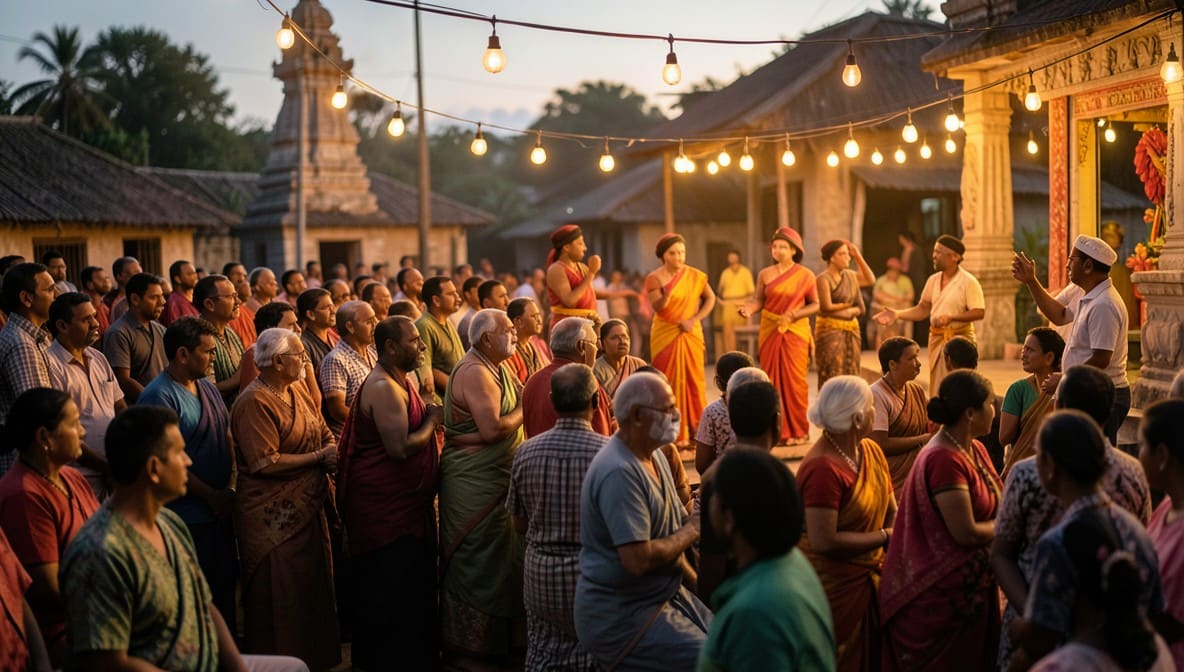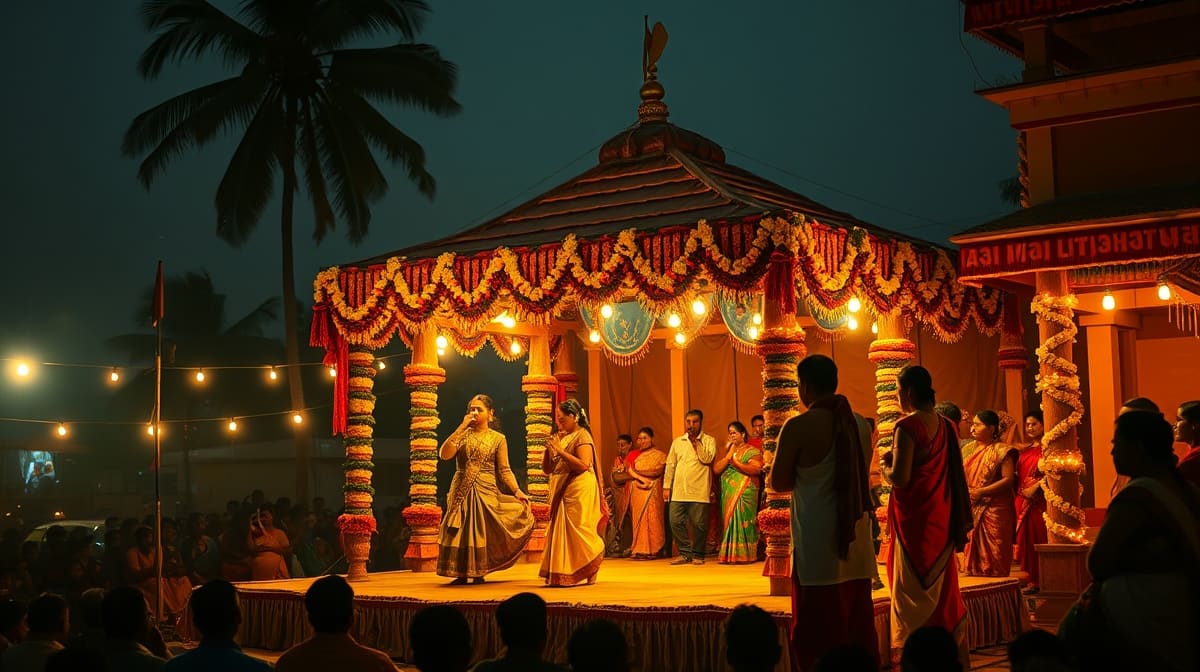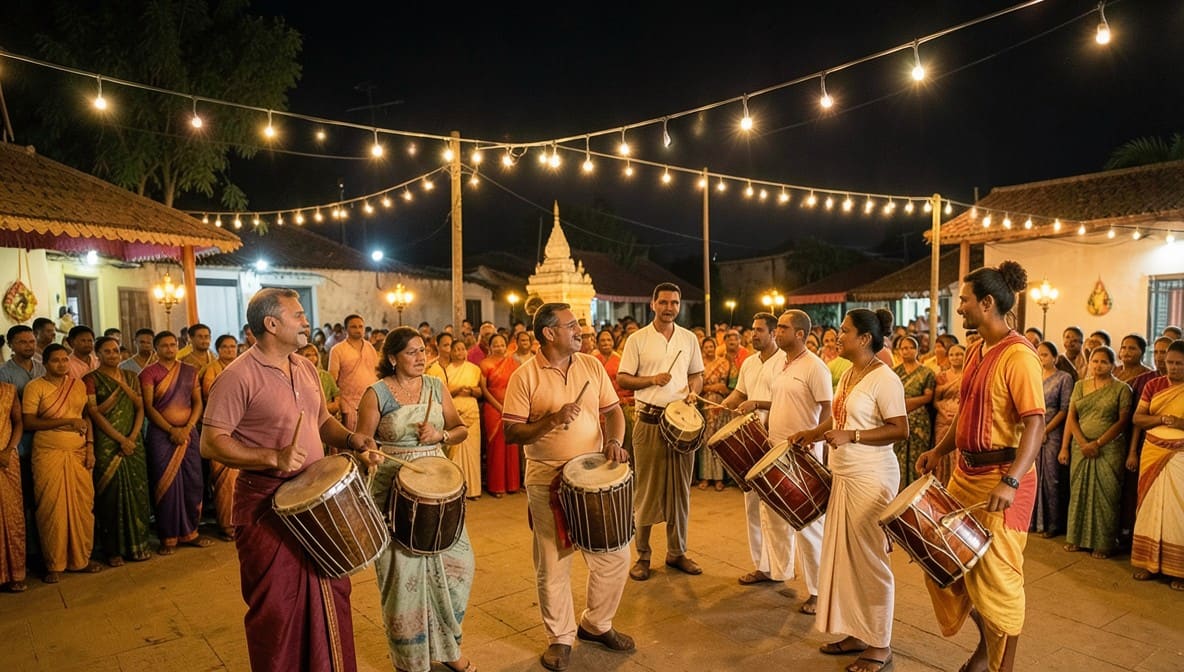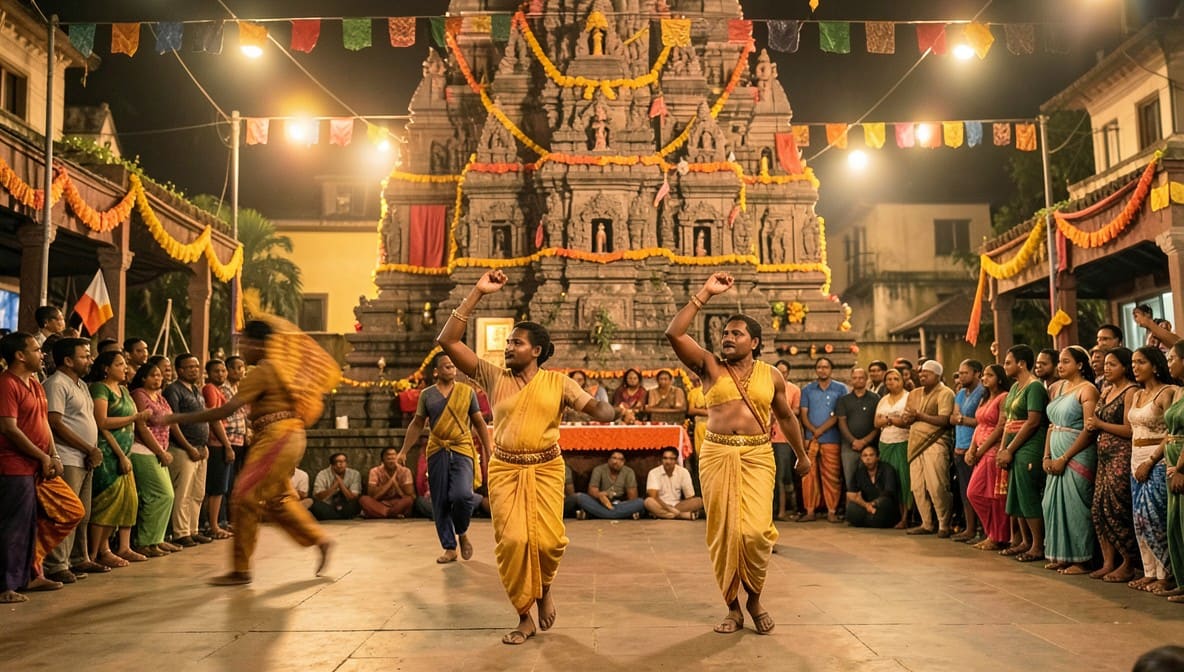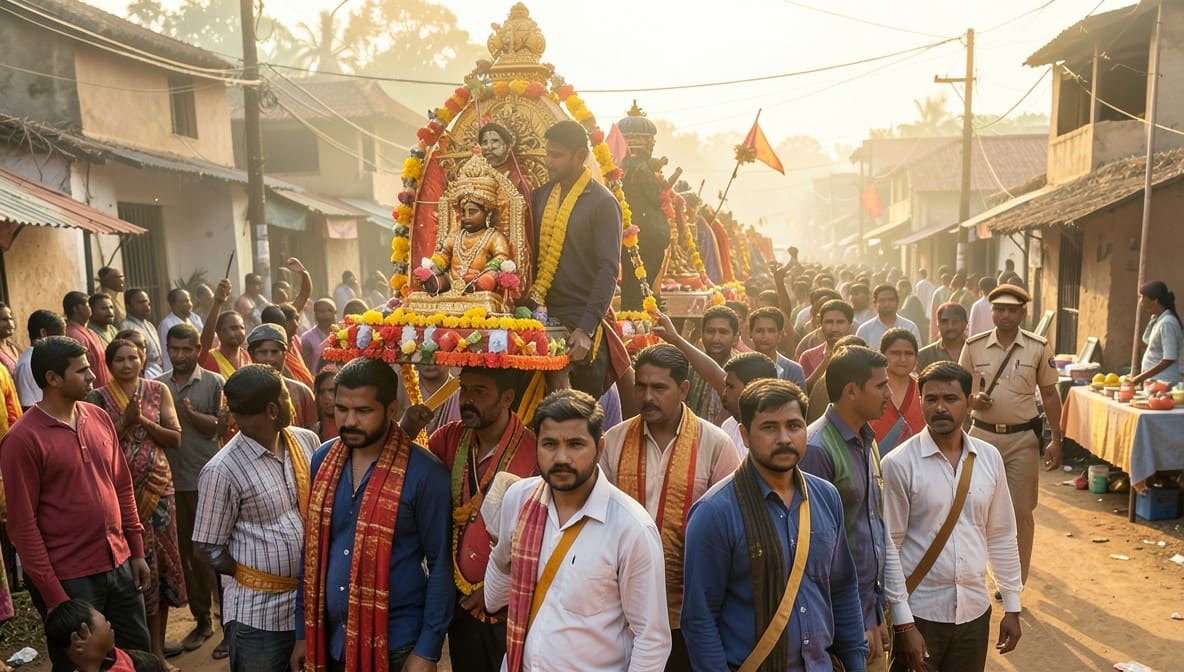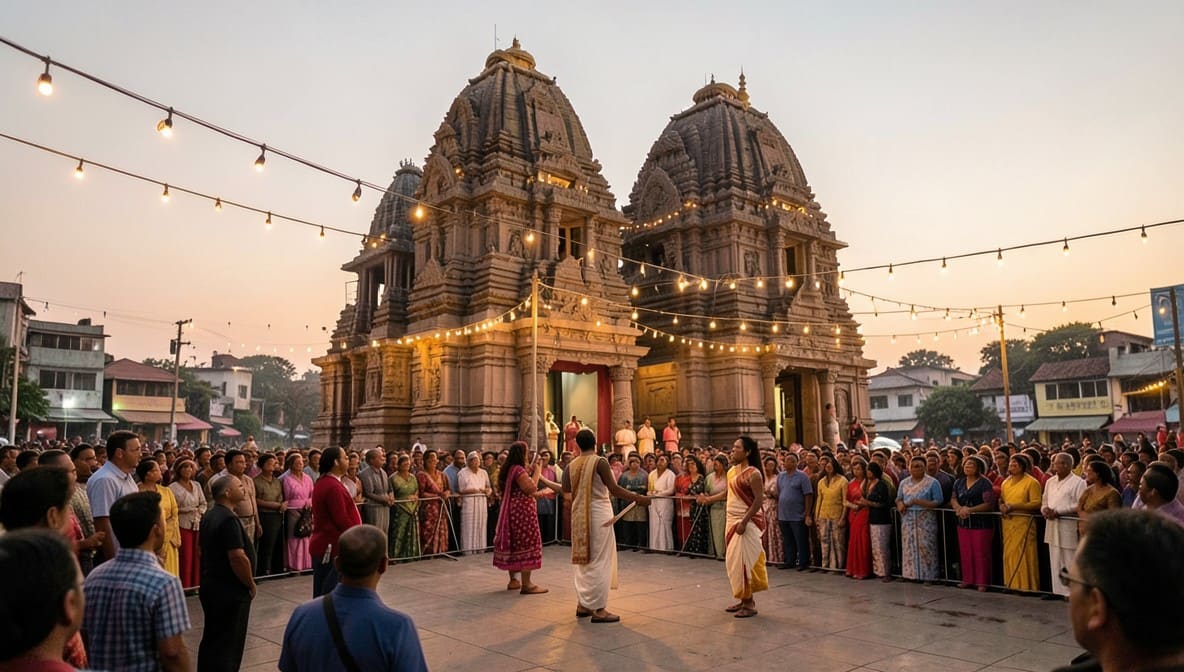
The Madurai Bench of the Madras High Court has clarified that while religious and cultural expressions at temples are constitutionally protected, such activities must be conducted within clearly defined boundaries to preserve public order, dignity, and communal harmony. The Court quashed an arbitrary denial of permission for a temple festival program and laid down detailed, enforceable conditions governing its conduct.
Background & Facts
The Dispute
The petitioner sought permission to conduct a DJ "Adal Padal" programme and customary temple festival function on 27.04.2026 at Arulmigu Sri Mariyamman Temple, Rajapalayam, Virudhunagar District. The programme was scheduled from 06.00 p.m. to 11.00 p.m. and was intended as a cultural celebration in connection with the annual temple festival. The 3rd respondent, the Inspector of Police, South Police Station, rejected the application by order dated 19.04.2026 (Proceedings No. 157/RIPS/RJPM/2026), without providing reasoned grounds.
Key Facts
- The petitioner is a member of the temple festival committee responsible for organizing annual cultural events
- The proposed programme included traditional and contemporary music performances with DJ elements
- The event was planned for 27.04.2026, a date of religious significance for the temple
- The petitioner submitted a formal application seeking police permission and security arrangements
- The police authority rejected the application on 19.04.2026 without citing specific legal provisions or factual concerns
- The petitioner filed the writ petition on 20.04.2026, seeking urgent relief given the imminent date of the event
Procedural History
- 15.04.2026: Formal application submitted to the Inspector of Police for permission and security
- 19.04.2026: Rejection order issued by the 3rd respondent without reasons
- 20.04.2026: Writ Petition (WP CRL.(MD). No.2367 of 2026) filed before the Madurai Bench of Madras High Court
- 24.04.2026: Hearing conducted; Court examined the rejection order and relevant police circulars
- 24.04.2026: Judgment delivered on the same day due to urgency
Relief Sought
The petitioner sought:
- Quashing of the rejection order dated 19.04.2026
- Direction to the respondents to grant permission for the DJ "Adal Padal" programme on 27.04.2026 from 06.00 p.m. to 11.00 p.m.
- Direction to provide necessary police protection for the event
The Legal Issue
The central question was whether the police authority could deny permission for a cultural programme at a temple solely on speculative grounds, without applying the principles of proportionality and reasonable restriction under Article 19(1)(a) of the Constitution, and whether such denial violated the right to practice religion and culture under Article 25.
Arguments Presented
For the Petitioner
The petitioner’s counsel, Mr. Bharathi S, argued that:
- The proposed programme was a traditional temple festival activity, integral to the cultural and religious identity of the community
- The rejection order was non-speaking and violated the principles of natural justice
- The Director General of Police had issued circulars dated 31.10.2018 and 09.04.2019 providing clear guidelines for granting permissions for cultural programmes, which were not followed
- The denial was arbitrary and disproportionate, especially given the imminent date of the event
- The right to express cultural traditions under Article 19(1)(a) and Article 25 cannot be curtailed without a compelling state interest
For the Respondent
The respondents, represented by the Government Advocate and Additional Public Prosecutor, did not contest the petition on substantive grounds. They acknowledged the absence of reasoned grounds in the rejection order and conceded that the circulars issued by the DGP provided a framework for evaluation. No specific threat to public order was cited.
The Court's Analysis
The Court observed that the rejection order dated 19.04.2026 was devoid of any reasoning, factual basis, or reference to any statutory provision or public safety concern. The Court emphasized that while the state has the power to impose reasonable restrictions on cultural activities under Article 19(2), such restrictions must be grounded in objective criteria and not be arbitrary.
"The right to celebrate cultural and religious festivals is an essential facet of freedom of expression and religious practice. Denial of permission without reasons, especially when the event is imminent and no specific threat has been demonstrated, amounts to an unreasonable restriction."
The Court noted the existence of two DGP circulars dated 31.10.2018 and 09.04.2019, which provided a structured framework for evaluating such applications. These circulars required police authorities to consider factors such as crowd management, noise levels, public safety, and content appropriateness - not blanket prohibitions.
The Court held that the police authority had failed to apply these guidelines and had acted in a manner inconsistent with the rule of law. The Court further observed that the petitioner’s request was not for unrestricted freedom but for a regulated cultural event within the precincts of a temple - a space traditionally recognized for such activities.
The Court declined to grant the full relief sought but substituted the rejection order with a set of specific, enforceable conditions to balance the right to cultural expression with the need for public order and decency.
The Verdict
The writ petition was allowed. The rejection order dated 19.04.2026 was quashed. The petitioner is permitted to conduct the DJ "Adal Padal" programme on 27.04.2026 from 07.00 p.m. to 10.00 p.m. at Arulmigu Sri Mariyamman Temple, Rajapalayam. The programme must comply with 14 detailed conditions covering timing, content, attire, music, alcohol prohibition, political neutrality, and police oversight. Violation of any condition shall attract legal action, including arrest of organizers. Police are empowered to halt the event if conditions are breached. No costs were awarded.
What This Means For Similar Cases
Permission Cannot Be Denied Without Reasoning
- Practitioners must now insist on written, reasoned orders for denial of cultural permits
- Blanket or non-speaking orders by police will be struck down as arbitrary
- Authorities must cite specific grounds under Article 19(2) or relevant circulars
Conditions Must Be Specific and Proportionate
- Courts will substitute arbitrary denials with narrowly tailored conditions, not blanket permissions
- Conditions must be clear, measurable, and directly linked to public order or decency concerns
- Prohibitions on "obscene" content or "double meaning" songs must be defined by context, not subjective interpretation
Police Circulars Are Binding Guidelines
-
DGP circulars on cultural events are not advisory - they form part of the administrative framework
-
Failure to follow them renders decisions liable to quashing
-
Practitioners should cite such circulars as mandatory procedural safeguards in all similar applications
-
Organizers must obtain prior written permission and maintain records of compliance
-
Any deviation from permitted conditions exposes organizers to criminal liability
-
Police must be present and empowered to intervene immediately if conditions are violated