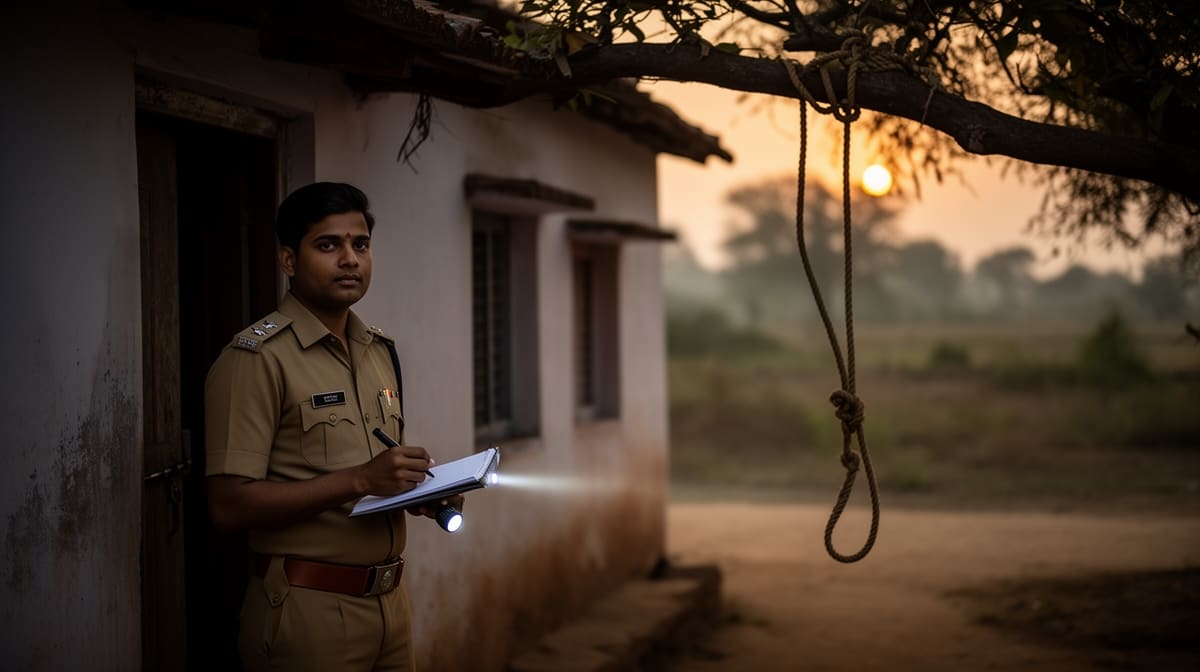
The Madras High Court has affirmed that law enforcement agencies have a legal duty to preserve CCTV footage when allegations of police misconduct are raised, even at the preliminary stage of representation. This order reinforces the principle that evidence integrity must be safeguarded before any investigation begins, ensuring procedural fairness and accountability.
Background & Facts
The Dispute
The petitioner, Mr. A. Arul Stephenson, a practicing advocate, alleged that he was manhandled by personnel of the Thiruvattar Police Station on 11.04.2026 at approximately 2:00 p.m. The incident occurred during his visit to the police station, reportedly in connection with a legitimate legal matter. He submitted a formal representation on 12.04.2026 to the Superintendent of Police, Kanyakumari District, requesting preservation of CCTV footage from 1:00 p.m. to 4:00 p.m. on the date of the incident.
Key Facts
- The petitioner visited the Thiruvattar Police Station on 11.04.2026 at approximately 2:00 p.m.
- He alleged physical assault by police personnel during his visit
- He filed a written representation on 12.04.2026 seeking preservation of CCTV footage
- The representation was not acknowledged or acted upon by the respondents
- The CCTV footage in question covers the period from 1:00 p.m. to 4:00 p.m. on 11.04.2026 at the Thiruvattar Police Station
- No investigation had been initiated at the time of filing the writ petition
Procedural History
- 11.04.2026: Alleged incident of manhandling at Thiruvattar Police Station
- 12.04.2026: Petitioner submits representation to Superintendent of Police, Kanyakumari District
- 20.04.2026: Writ Petition (WP CRL(MD) No.2191 of 2026) filed before Madras High Court, Madurai Bench
Relief Sought
The petitioner sought a writ of mandamus directing:
- The 1st respondent to preserve CCTV footage from 1:00 p.m. to 4:00 p.m. on 11.04.2026 at Thiruvattar Police Station
- The 1st respondent to consider the representation dated 12.04.2026
The Legal Issue
The central question was whether a police authority has a legal obligation to preserve CCTV footage upon receipt of a representation alleging misconduct, even in the absence of a formal complaint or registered FIR.
Arguments Presented
For the Petitioner
The petitioner’s counsel argued that the right to preserve evidence is inherent in the principles of natural justice and Article 21 of the Constitution. He relied on the duty of the state to maintain evidence that may be critical to establishing facts in potential proceedings, particularly where allegations involve abuse of power by state actors. He emphasized that destruction or non-preservation of such footage would irreparably prejudice the petitioner’s ability to seek redress.
For the Respondent
The Government Advocate did not contest the factual assertions or oppose the prayer. No counter-affidavit was filed, and no argument was advanced against the preservation of footage.
The Court's Analysis
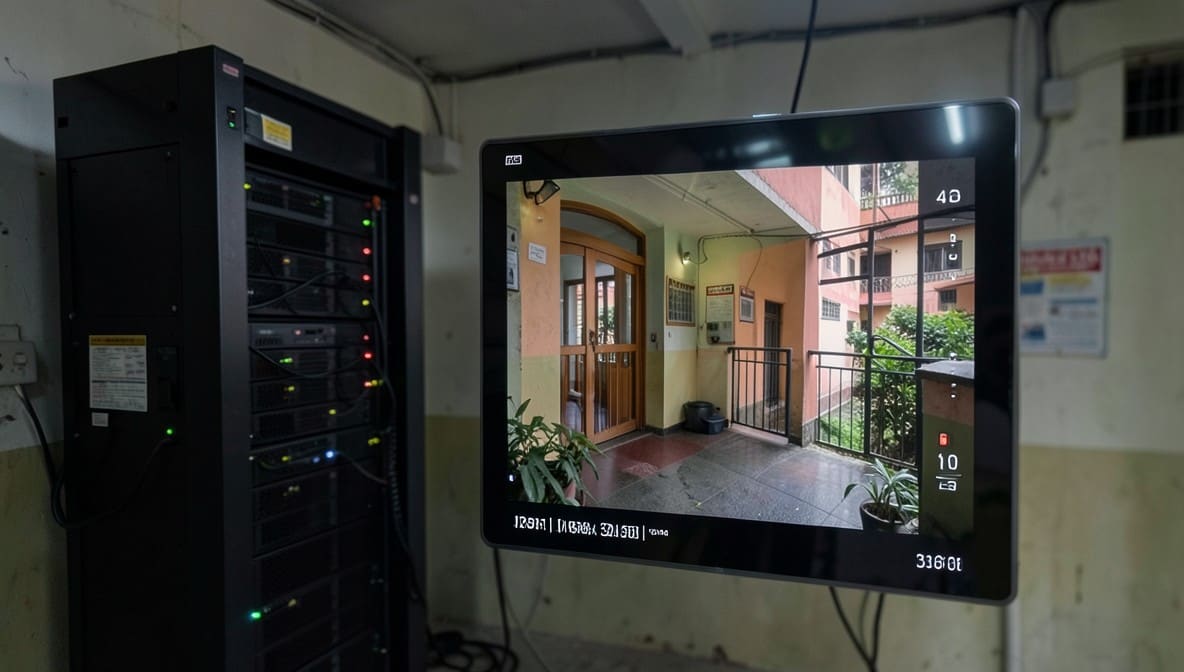
The Court observed that the relief sought was narrow, specific, and non-intrusive. It noted that the preservation of digital evidence such as CCTV footage is a minimal administrative step that does not interfere with ongoing investigations but safeguards the integrity of potential future proceedings. The Court emphasized that in cases involving allegations of police misconduct, the state has a heightened duty to ensure that evidence is not lost, destroyed, or overwritten.
"The preservation of CCTV footage is not an act of investigation but a step towards ensuring that the truth is not lost due to negligence or inadvertence."
The Court held that the petitioner’s representation, though informal, was sufficient to trigger the duty of preservation. The absence of a formal FIR does not absolve the police of their obligation to retain evidence that may be relevant to a potential complaint of human rights violation or abuse of authority.
The Verdict
The writ petition was allowed. The Court directed the 1st respondent, the Superintendent of Police, Kanyakumari District, to ensure that the CCTV footage of the Thiruvattar Police Station from 1:00 p.m. to 4:00 p.m. on 11.04.2026 is preserved in its original format without alteration or deletion. The Court further directed that the representation dated 12.04.2026 be formally considered by the 1st respondent. No costs were awarded. The order was issued on 20.04.2026.
What This Means For Similar Cases
Preservation Is Not Optional
- Practitioners must immediately file writ petitions seeking preservation of digital evidence when allegations of police misconduct arise, even before an FIR is registered
- The duty to preserve arises upon receipt of any credible representation, not just formal complaints
- Failure to preserve may lead to adverse inference in subsequent proceedings
Procedural Accountability Begins Early
- Police stations must implement protocols to automatically flag and freeze CCTV footage upon receipt of any allegation involving use of force or misconduct
- Digital evidence logs must be maintained with timestamps, access records, and custodial chain
- This ruling applies equally to allegations against private individuals if state facilities (e.g., police station cameras) capture the incident
No Need for Formal Complaint to Trigger Duty
- The Court rejected the notion that a formal complaint or FIR is a precondition for evidence preservation
- Any written representation, even from a lawyer, suffices to trigger the state’s duty under Article 21 and the principle of fair procedure
- This lowers the threshold for initiating accountability mechanisms in cases of police overreach