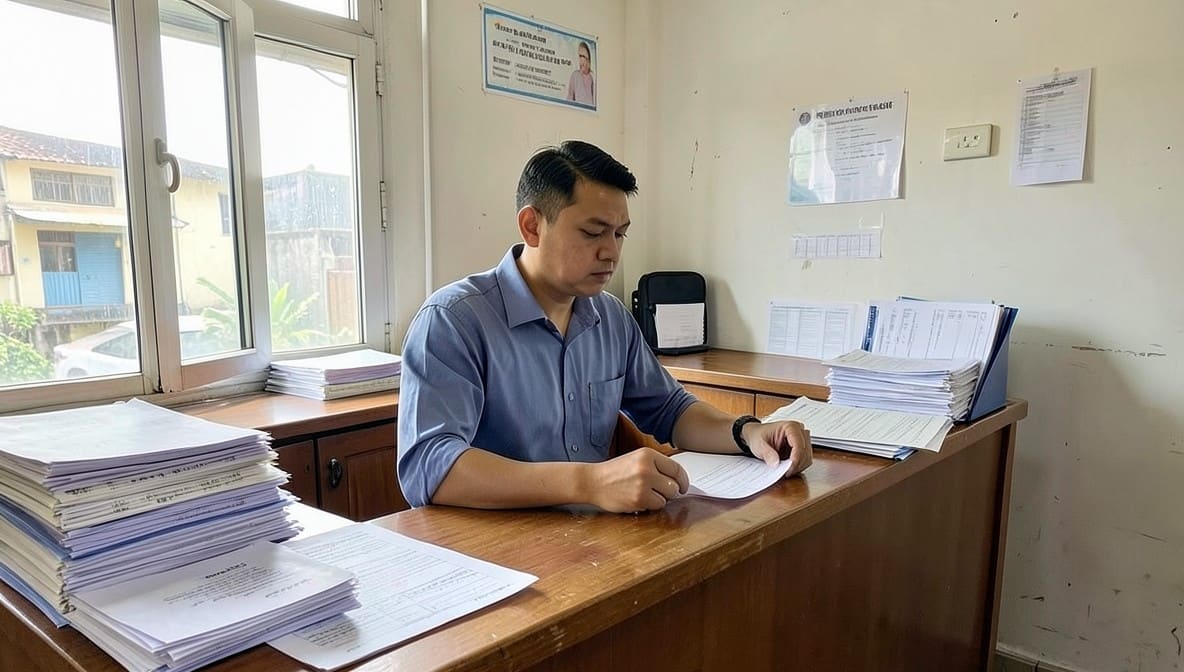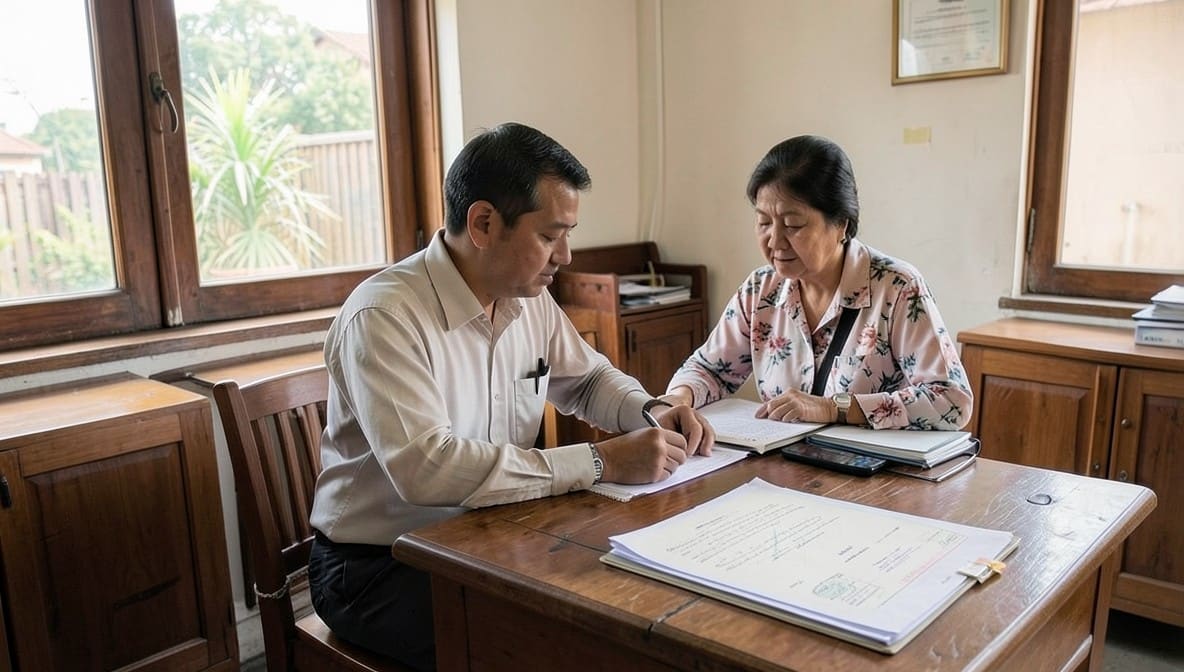
The Madras High Court has reaffirmed that the refusal to register a settlement deed solely on the grounds that the underlying will is unregistered and unprobated is legally unsustainable. In a clear affirmation of settled principles under the Indian Succession Act and Registration Act, the Court quashed a non-speaking order by a Sub-Registrar and mandated a fresh, lawful consideration of the deed’s registrability.
Background & Facts
The Dispute
The petitioner, Dr. R. Rajini, presented a Settlement Deed dated 10.02.2026 for registration before the Sub-Registrar, Madhuranthagam. The deed was executed pursuant to a Will dated 05.01.2020, which devised certain immovable property located in Madhuranthagam, Chengalpattu District, to the petitioner. The Sub-Registrar refused registration on 16.02.2026, issuing Refusal Check Slip No. RFL/Madhuranthagam/14/2026, citing that the parent document - the Will - was neither registered nor probated.
Key Facts
- The Settlement Deed was executed on 10.02.2026 and presented for registration on the same date
- The underlying Will was executed on 05.01.2020 and was not registered
- The Will was not probated, as probate is not mandatory for Wills in Chennai under Section 57 of the Indian Succession Act
- The property subject to the Settlement Deed is situated in Madhuranthagam, a non-metropolitan area where probate is not compulsory
- The petitioner submitted the original Will, the Settlement Deed, and supporting documents including identity and title proofs
- No opportunity of hearing was granted by the Sub-Registrar prior to issuing the refusal
Procedural History
- 10.02.2026: Settlement Deed presented for registration at Sub-Registrar’s Office, Madhuranthagam
- 16.02.2026: Refusal Check Slip No. RFL/Madhuranthagam/14/2026 issued without reasons or hearing
- 27.02.2026: Writ Petition No. 16343 of 2026 filed before the Madras High Court
- 27.04.2026: Hearing concluded and judgment delivered
The Parties' Positions
Petitioner’s Position: The refusal was illegal because: (1) registration of a Will is not mandatory under Section 17 of the Registration Act; (2) probate is not required for Wills in non-metropolitan areas under Section 57 of the Indian Succession Act; (3) the refusal was a non-speaking order violating principles of natural justice.
Respondent’s Position: The Special Government Pleader admitted notice but did not contest the legal position. No counter-affidavit or justification was filed beyond the refusal slip.
Relief Sought
The petitioner sought: (1) quashing of the refusal check slip dated 16.02.2026; (2) direction to register the Settlement Deed dated 10.02.2026; (3) costs.
The Legal Issue
The central question was whether a Sub-Registrar may refuse to register a Settlement Deed on the ground that the underlying Will is unregistered and unprobated, and whether such refusal without a hearing violates the principles of natural justice.
Arguments Presented
For the Petitioner
The petitioner relied on Section 17(2)(c) of the Registration Act, which explicitly excludes Wills from mandatory registration. Further, Section 57 of the Indian Succession Act provides that probate is not required for Wills executed within the limits of the Madras Presidency (now Tamil Nadu) unless the property is situated in a metropolitan city. Madhuranthagam is not a metropolitan area, and therefore probate is not mandatory. The refusal was a non-speaking order, devoid of reasoning, and passed without affording the petitioner an opportunity to be heard, violating Article 14 and Article 21 of the Constitution.
For the Respondent
The Special Government Pleader accepted notice but did not advance any substantive legal defense. No affidavit or justification was filed to support the refusal. The Court noted the absence of any statutory basis for the refusal.
The Court's Analysis
The Court examined the statutory framework governing Wills and registration. It held that Section 17(2)(c) of the Registration Act, 1908, clearly states that a Will need not be registered. The Court further cited Section 57 of the Indian Succession Act, 1925, which provides that probate is not required for Wills executed in areas outside the Presidency Towns of Madras, Calcutta, and Bombay. Madhuranthagam falls outside these limits.
"There is no legal requirement for a Will to be registered. The property is also situated in Madhuranthagam and therefore, a probate is also not required."
The Court emphasized that the refusal check slip was a non-speaking order, containing no reasoning, no reference to any statutory provision, and no consideration of the documents submitted. The absence of a hearing before issuing such a consequential order amounted to a violation of the principles of natural justice, particularly the rule of audi alteram partem.
The Court rejected the notion that a Sub-Registrar may act as a gatekeeper to determine the validity of a Will. The Registrar’s role is limited to verifying compliance with formal registration requirements - not adjudicating testamentary validity. The Court observed that any challenge to the Will’s authenticity must be raised in a civil court, not at the registration stage.
The Verdict
The writ petition was allowed. The impugned refusal check slip dated 16.02.2026 was quashed. The matter was remanded to the Sub-Registrar, Madhuranthagam, for fresh consideration. The petitioner was directed to submit a written explanation with supporting documents within two weeks of receiving a copy of this order. The Sub-Registrar was directed to decide the matter within three weeks thereafter, and if refusing registration, must issue a speaking order with reasons. No costs were awarded.
What This Means For Similar Cases
Probate Is Not a Prerequisite for Registration
- Practitioners may now confidently submit settlement deeds based on unprobated Wills in non-metropolitan areas without fear of registration refusal
- Sub-Registrars must be trained to distinguish between formal registration requirements and substantive validity issues
- Any refusal based on lack of probate in Tamil Nadu outside Presidency limits is legally untenable
Non-Speaking Orders Are Invalid
- Registration authorities must issue speaking orders with clear statutory or factual grounds for refusal
- Failure to hear the party before refusal constitutes a violation of natural justice and is grounds for quashing
- Writ petitions under Article 226 are maintainable against non-speaking registration refusals
Duty of Sub-Registrars Is Ministerial, Not Adjudicatory
- Sub-Registrars are not empowered to determine the validity of Wills or testaments
- Their function is limited to verifying execution, identity, and compliance with Section 17
- Challenges to the authenticity of a Will must be pursued in civil courts, not through registration refusal