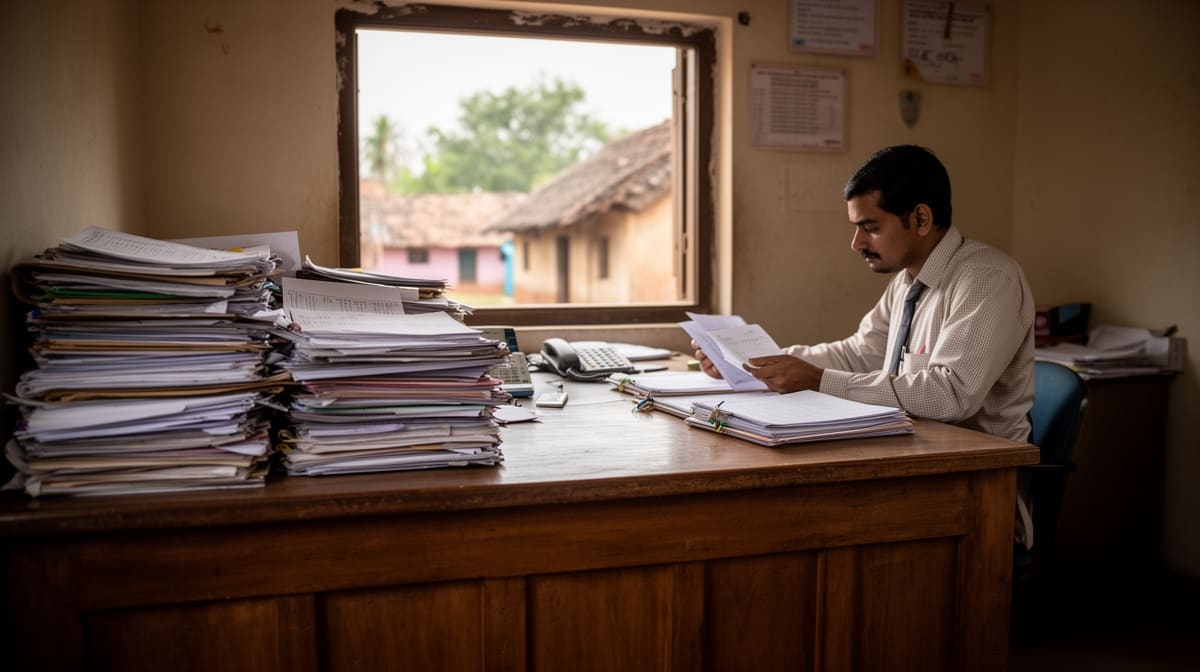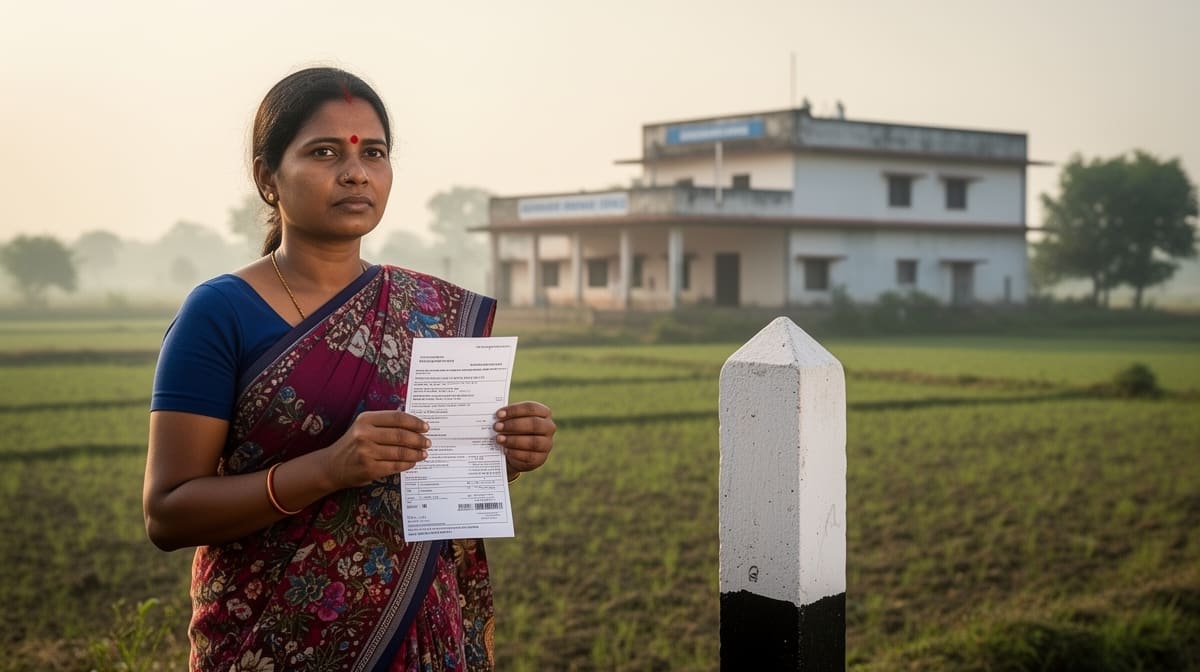
The Madras High Court has reaffirmed that prolonged administrative inaction on applications for patta issuance cannot extinguish legitimate claims to land ownership under revenue law. In a decisive intervention, the Court ordered the Tahsildar to decide pending applications within a fixed timeframe, reinforcing the principle that state machinery must act promptly on statutorily mandated duties.
Background & Facts
The Dispute
The petitioners, comprising eleven individuals including Maragatham, Jegan, Suresh Kumar, Sudha, Murugan, Ganesh, Poongothai, Sumathi, Ananthi, Sandhiya, and Prakash, sought issuance of patta (title deed) in their names for agricultural land situated in Survey Nos. 675 and 676, No. 26, Vilangadupakkam, Ponneri Taluk, Tiruvallur District. The total extent of the property claimed is 2.60.0 hectares. The petitioners alleged that despite submitting a formal representation on 11.03.2026, the revenue authorities had failed to take any action on their application, leaving their land rights in legal limbo.
Key Facts
- The petitioners are lawful occupants or claimants of the land described in Survey Nos. 675 and 676
- The property is located in Ponneri Taluk, Tiruvallur District, Tamil Nadu
- The petitioners submitted a written representation dated 11.03.2026 seeking issuance of house site patta
- The representation included supporting documents such as possession proofs, revenue receipts, and survey records
- No response, inquiry, or order was issued by any of the respondents within a reasonable time
- The petitioners did not seek immediate grant of patta but only directed the authorities to consider their application on merits
Procedural History
- 11.03.2026: Petitioners submitted formal representation to the Tahsildar, Ponneri Taluk, seeking patta issuance
- No response received from any respondent within 30 days or any reasonable period thereafter
- 15.04.2026: Writ Petition No. 16402 of 2026 filed before the Madras High Court under Article 226 of the Constitution
- 17.04.2026: W.M.P. No. 17610 of 2026 filed seeking interim relief, later withdrawn subject to court fee payment
- 27.04.2026: Hearing before the Hon’ble Mr. Justice Abdul Quddhose
The Parties' Positions
Petitioners: Contended that the failure to act on their representation violated their right to property under Article 300A of the Constitution and the statutory duty of revenue officers under the Tamil Nadu Land Revenue Code. They emphasized that their claim was supported by documentary evidence and that delay was not attributable to them.
Respondents: Did not file any counter-affidavit or written submission. The Government Advocate appeared only to accept notice and did not contest the factual averments.
Relief Sought
The petitioners sought a Writ of Mandamus directing the respondents to:
- Consider their representation dated 11.03.2026 on merits
- Issue patta in their names for Survey Nos. 675 and 676
- Complete the process in accordance with law and within a reasonable time
The Legal Issue
The central question was whether the prolonged inaction by revenue authorities on a duly submitted patta application constitutes a failure to perform a statutory duty, thereby justifying the issuance of a Writ of Mandamus under Article 226 of the Constitution.
Arguments Presented
For the Petitioner
The petitioners relied on the settled principle that when a statutory duty is imposed on a public authority and it fails to discharge it without lawful excuse, the High Court may issue a writ of mandamus to compel performance. They cited State of U.P. v. Renusagar Power Co. to argue that administrative silence in the face of a clear legal obligation amounts to a violation of the rule of law. They emphasized that their application was complete, supported by documents, and that no legal bar existed to issuance of patta.
For the Respondent
The Government Advocate did not advance any substantive counter-argument. He merely accepted notice and did not dispute the factual or legal basis of the petition. No objection was raised regarding maintainability, limitation, or merits.
The Court's Analysis
The Court observed that the petitioners had fulfilled their obligation by submitting a complete representation with supporting documents. The respondents, as public authorities entrusted with the statutory duty of maintaining land records and issuing pattas under the Tamil Nadu Land Revenue Code, were under a non-discretionary obligation to examine such applications and decide them within a reasonable time.
"The failure to consider a representation, especially when supported by documents and where no adverse material has been brought on record, amounts to a dereliction of statutory duty."
The Court noted that the respondents had not even initiated any inquiry, issued notice to neighboring landholders, or recorded any reason for non-action. Such inaction, the Court held, cannot be permitted to perpetuate uncertainty over land rights. The Court emphasized that mandamus lies not to decide the merits of the claim, but to compel the authority to perform its duty and consider the application fairly and lawfully.
The Court further clarified that it was not expressing any opinion on whether the petitioners were entitled to patta, but only on the necessity of the authority discharging its procedural obligation.
The Verdict
The writ petition was disposed of by directing the fourth respondent, the Tahsildar, Ponneri Taluk, to pass final orders on the petitioners’ representation dated 11.03.2026 within 12 weeks from the date of receipt of a copy of this order. The Tahsildar was directed to consider the supporting documents, hear all necessary parties, and decide the matter in accordance with law. There shall be no order as to costs.
What This Means For Similar Cases
Administrative Silence Is Not a Decision
- Practitioners must file writ petitions when revenue authorities fail to act on patta applications beyond 60 days
- Courts will not tolerate indefinite delay in statutory processes affecting property rights
- The burden shifts to the authority to justify inaction, not to the applicant to chase the department
Mandamus Is the Proper Remedy for Non-Discretionary Duties
- Writ of mandamus is maintainable even if the final decision is uncertain, provided the duty to decide is clear
- Courts will not require exhaustion of internal remedies where the authority has not even initiated proceedings
- Supporting documents submitted with the representation are sufficient to trigger the duty to adjudicate
Procedural Fairness Trumps Bureaucratic Inertia
- Revenue officers must initiate inquiries, serve notices, and record reasons for rejection
- Failure to follow due process invalidates any eventual order, even if substantively correct
- Petitioners should preserve all correspondence and submission receipts as evidence of diligence