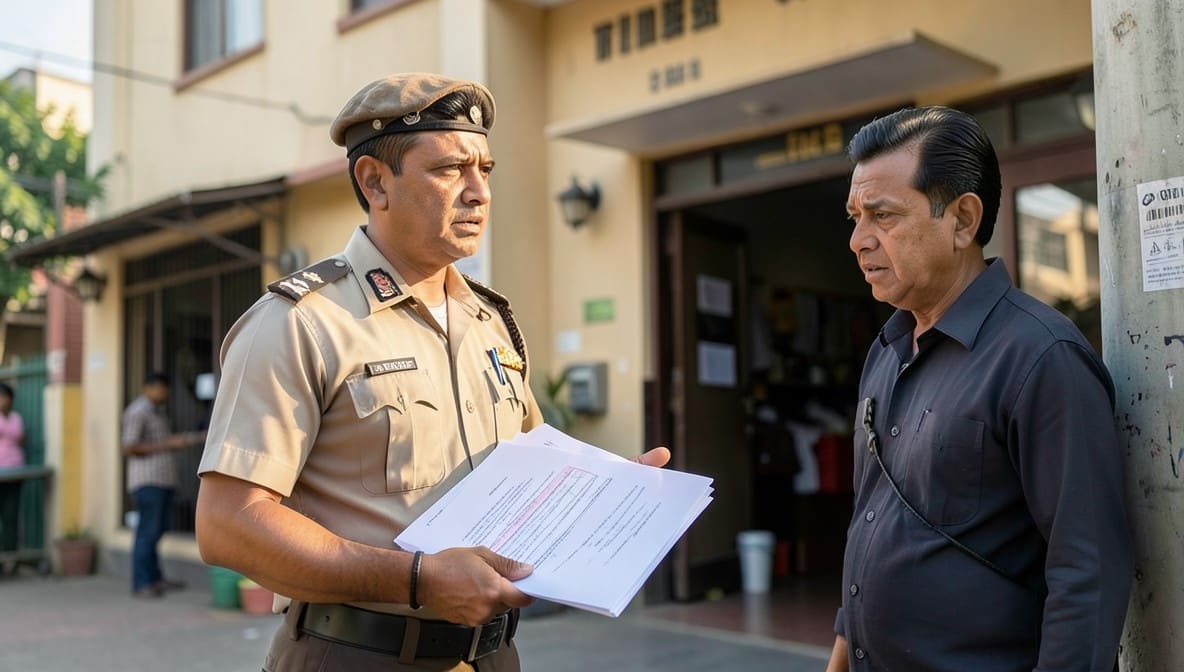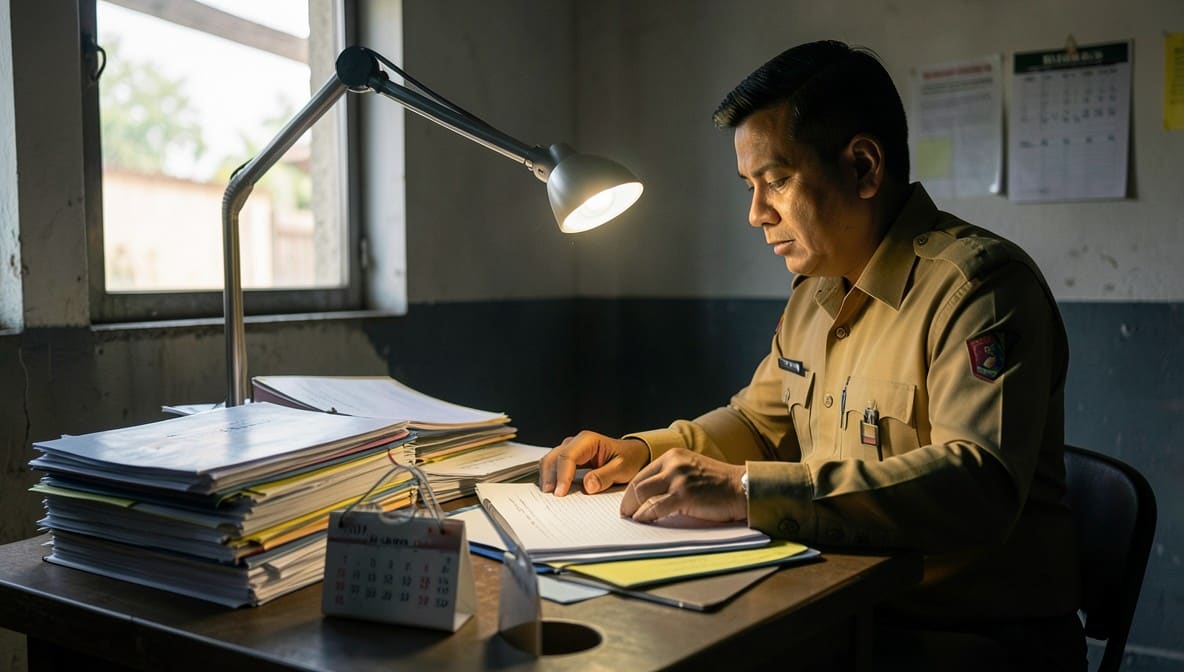
The Madras High Court has reaffirmed the state’s non-negotiable duty to pursue justice in homicide cases, even when investigations have languished for years. In a decisive order, the Court directed the police to complete the probe in a 2018 murder case within six months, rejecting the notion that stagnation equates to closure.
Background & Facts
The Dispute
The petitioner, Thenmozhi, filed a criminal original petition under Section 528 of the Bharatiya Nagarik Suraksha Sanhita (BNSS) seeking direction to the Salem police to resume and complete the investigation into the murder of her brother, Mr. Veerakumar. The crime, registered as Crime No. 73/2018, involved the alleged killing of the deceased inside his electrical and hardware shop on Pelur Main Road near Ayadyapattinam Ramar Temple on the night of 10.04.2018. The body was discovered on 11.04.2018, prompting the petitioner to lodge a formal complaint under Section 302 IPC.
Key Facts
- The deceased, Mr. Veerakumar, was the owner of a small hardware shop and was found murdered inside the premises.
- The petitioner, his sister, resided in a portion of the same house and relied on rental income from the other portion for livelihood.
- The initial investigation was conducted by the Karipatty Police Station, Salem.
- On 27.08.2020, the police submitted a report stating that the case had been "dropped" due to lack of clues or traceable accused, despite examination of witnesses, suspects, and call detail records.
- The petitioner, dissatisfied with the closure, filed an RTI application, which confirmed the case had been shelved without any formal closure order or judicial sanction.
- No charge sheet was filed, and no final report was submitted to the Magistrate.
Procedural History
- 11.04.2018: Crime No. 73/2018 registered under Section 302 IPC.
- 27.08.2020: Police submitted a report to the Magistrate stating the case was dropped due to lack of evidence.
- 2021 - 2025: No further investigative steps taken; case remained dormant.
- 2026: Petitioner filed Criminal Original Petition No. 7112 of 2026 before the Madras High Court.
- 20.04.2026: Respondents filed a status report indicating the case had been reopened.
The Parties' Positions
For the Petitioner: The learned counsel argued that the police’s decision to drop the case without judicial approval was illegal and violated the victim’s right to justice under Article 21. The petitioner emphasized that the investigation had not been exhausted - witnesses were examined, forensic leads existed, and potential enemies of the deceased had not been fully probed. The closure was arbitrary and amounted to abdication of statutory duty.
For the Respondents: The Additional Public Prosecutor acknowledged the delay but submitted that the case had been reopened on 05.03.2026. The status report stated that the investigation was now active, with renewed efforts to identify suspects, review prior evidence, interview informants, and examine possible motives including financial disputes or personal enmity.
Relief Sought
The petitioner sought a direction to the police to complete the investigation and file a final report under Section 173 BNSS without further delay, and to ensure that the probe was conducted with due diligence.
The Legal Issue
The central question was whether the police may unilaterally drop a murder investigation without judicial oversight, and whether the High Court can compel the completion of a stalled probe under Section 528 BNSS.
Arguments Presented
For the Petitioner
The petitioner relied on the constitutional obligation under Article 21 to protect life and personal liberty, which includes the state’s duty to investigate serious crimes. The counsel cited State of Punjab v. Baldev Singh and K. Veeraswami v. Union of India to argue that murder investigations cannot be shelved on mere absence of immediate leads. The failure to file a final report or seek closure before a Magistrate rendered the 2020 report legally invalid. The petitioner also invoked Siddharth v. State of U.P., where the Supreme Court held that delay in investigation in heinous crimes amounts to denial of justice.
For the Respondent
The Additional Public Prosecutor conceded the delay but emphasized that the case was not closed but merely dormant. The status report submitted to the Court demonstrated renewed activity: re-examination of witnesses, review of call records, and engagement of informants. The prosecution argued that judicial intervention was premature since the investigation had been revived and was progressing.
The Court's Analysis
The Court acknowledged the gravity of the offence - murder under Section 302 IPC - and noted that the state’s duty to investigate such crimes is not contingent on immediate success but on sustained, good-faith effort. The Court observed that the police’s 2020 report, which declared the case "dropped," was not a final report under Section 173 BNSS, nor was it submitted to the Magistrate for approval. Therefore, the investigation remained legally pending.
"The police cannot be permitted to treat a murder case as closed merely because the accused has not been identified at an early stage. The duty to investigate does not expire with the passage of time or the absence of immediate leads."
The Court further held that while courts must respect the investigative process, they also have the power under Section 528 BNSS to ensure that justice is not delayed indefinitely. The Court rejected the argument that reopening the case was sufficient, noting that reopening without a concrete timeline was meaningless. The Court emphasized that the right to justice for the victim’s family is not abstract - it demands tangible progress.
The Court reviewed the status report and found it credible in its assertion of renewed activity. However, it stressed that credibility must be coupled with accountability. The Court therefore imposed a strict deadline to prevent further stagnation.
The Verdict
The petitioner succeeded. The Madras High Court directed the second respondent police to complete the investigation in Crime No. 73/2018 and file the final report under Section 173 BNSS within six months from the date of the order (i.e., by 20.10.2026). The Court explicitly stated that failure to comply would invite contempt proceedings. No costs were awarded.
What This Means For Similar Cases
Investigation Cannot Be Shelved Without Judicial Scrutiny
- Practitioners must challenge any police closure of murder cases via informal reports or internal notes.
- A case is not closed unless a final report is filed before the Magistrate under Section 173 BNSS.
- Any unilateral decision to "drop" a case under Section 302 IPC is legally void and subject to judicial review.
Courts Can Impose Deadlines on Police Investigations
- High Courts may, under Section 528 BNSS, set enforceable timelines for completion of investigations in heinous crimes.
- A mere assurance of "reopening" is insufficient - courts will demand concrete deadlines.
- This precedent empowers victims’ families to seek judicial intervention when investigations stall beyond two years.
Duty to Investigate Is Continuous and Non-Discretionary
- The police’s duty to investigate murder is not discretionary; it is a constitutional obligation under Article 21.
- Lack of leads does not absolve the investigating agency - it obligates them to explore all avenues, including informants, forensic re-examination, and motive analysis.
- This judgment reinforces that justice delayed is justice denied, even in unsolved cases.