Karnataka High Court judgments

570 Karnataka High Court judgments explained in plain English: what was decided, the law applied and why it matters. Page 23 of 24.

Notification 41/2017 GST | Direct Supply to Registered Recipient Mandatory for Concessional Rate; Third-Party Delivery Invalidates Exemption : Karnataka HC
Case Law Analysis
|Karnataka High Court

Notification 41/2017 GST | Direct Supply to Registered Recipient Mandatory for Concessional Rate; Third-Party Delivery Invalidates Exemption : Karnataka HC

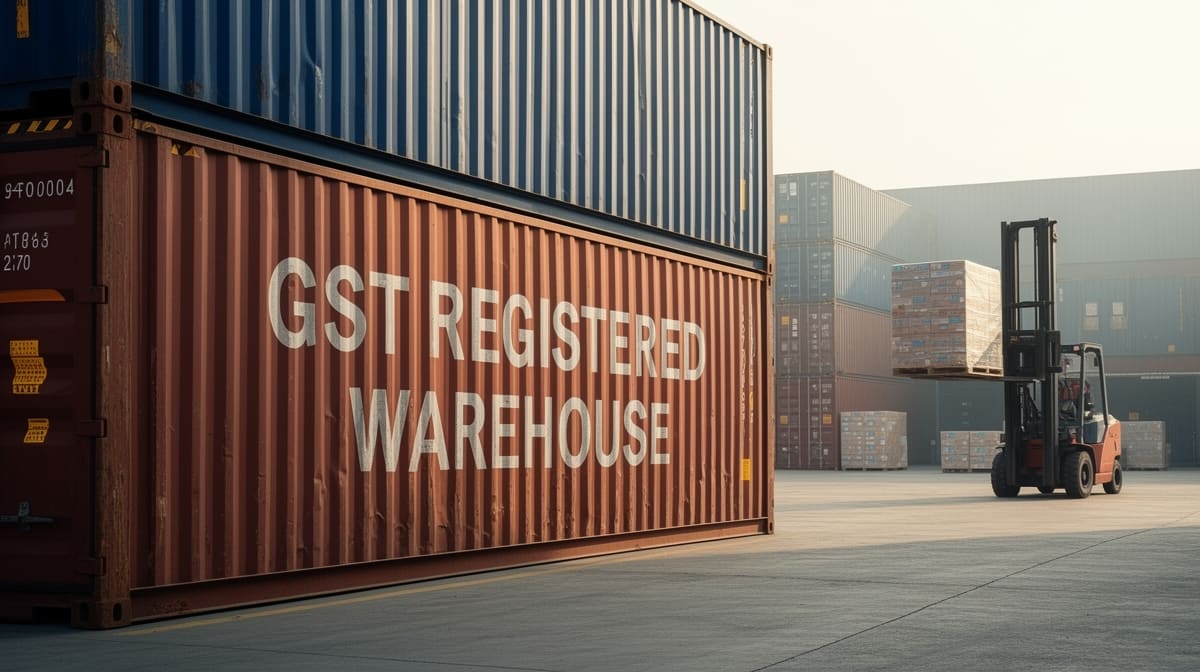
The Karnataka High Court ruled that GST exemption under Notification 41/2017 is contingent on direct supply to the registered recipient or their registered warehouse. Delivery to third parties-even at the recipient’s instruction-disqualifies the supplier from the concessional rate, underscoring the strict compliance required for tax exemptions under GST law.

Umadevi Exception Reaffirmed | 30 Years of Continuous Service Entitles Daily Wage Employees to Regularization Despite Procedural Lapses : Karnataka HC
Case Law Analysis
|Karnataka High Court

Umadevi Exception Reaffirmed | 30 Years of Continuous Service Entitles Daily Wage Employees to Regularization Despite Procedural Lapses : Karnataka HC

The Karnataka High Court ruled that daily wage employees with 30 years of continuous service in a sanctioned post are entitled to regularization under the Umadevi exception, even without formal recruitment. The State cannot deny relief after decades of reliance on the employee's work, reinforcing constitutional protections under Articles 14 and 16 for long-serving contractual workers.

Oral Partition Valid Under Hindu Succession Act | Subsequent Documentary Evidence Suffices to Prove Division : Kar HC
Case Law Analysis
|Karnataka High Court

Oral Partition Valid Under Hindu Succession Act | Subsequent Documentary Evidence Suffices to Prove Division : Kar HC

Karnataka High Court rules that an oral partition among coparceners, later documented, is legally valid under the Hindu Succession Act. The court modified the trial court decree to grant 1/6th shares to legal heirs, emphasizing that substance prevails over form in family property disputes, offering clarity for coparceners relying on unwritten agreements.

Ombudsman's Clean Chit No Bar to Departmental Enquiry Under CCA Rules | Karnataka HC Upholds Preponderance of Probabilities Standard
Case Law Analysis
|Karnataka High Court

Ombudsman's Clean Chit No Bar to Departmental Enquiry Under CCA Rules | Karnataka HC Upholds Preponderance of Probabilities Standard

The Karnataka High Court ruled that an ombudsman's exoneration does not preclude disciplinary action under the CCA Rules. Disciplinary penalties are valid if supported by a preponderance of probabilities, even without criminal-level proof, reinforcing the autonomy of administrative proceedings from quasi-judicial findings.

BNS Section 108 | Mere Words 'Go and Die' Without Proof of Intent or Coercion Not Sufficient for Abetment of Suicide : Karnataka HC
Case Law Analysis
|Karnataka High Court

BNS Section 108 | Mere Words 'Go and Die' Without Proof of Intent or Coercion Not Sufficient for Abetment of Suicide : Karnataka HC

The Karnataka High Court ruled that casual remarks like 'go and die' do not constitute criminal instigation under BNS Section 108 unless accompanied by proof of intent to provoke suicide or coercive conduct. The decision underscores that bail remains the rule, and pre-trial detention requires substantive evidence of abetment beyond mere words.

Section 436 CrPC | Cash Surety as Bail Condition Violates Supreme Court Directions : Karnataka HC Quashes ₹2.5 Lakh Demand
Case Law Analysis
|Karnataka High Court

Section 436 CrPC | Cash Surety as Bail Condition Violates Supreme Court Directions : Karnataka HC Quashes ₹2.5 Lakh Demand

The Karnataka High Court reiterated that imposing cash surety for bail under Section 436 CrPC contravenes binding Supreme Court rulings in Gajanan Gore and Prantik Kumar, which prohibit financial conditions as a prerequisite for liberty. The court set aside a ₹2.5 lakh cash surety order in a Section 138 NI Act case, reinforcing that bail must be granted on legal merit alone, not economic capacity.

BNSS Section 483 | Absconding Accused Entitled to Bail When Trial Nears Completion and No Witness Tampering Risk : Karnataka HC
Case Law Analysis
|Karnataka High Court

BNSS Section 483 | Absconding Accused Entitled to Bail When Trial Nears Completion and No Witness Tampering Risk : Karnataka HC

Karnataka HC ruled that prolonged absence during trial does not automatically bar bail if the trial is nearly complete and the accused demonstrates no risk of witness tampering or flight. The court emphasized that bail remains the rule, not the exception, under BNSS Section 483, provided undertakings mitigate potential risks. This sets a precedent for balancing trial efficiency with the presumption of innocence in criminal proceedings.

Article 21 | Delay in Interim Maintenance Beyond Two Years Violates Right to Speedy Justice: Karnataka HC Directs Disposal in Four Weeks
Case Law Analysis
|Karnataka High Court

Article 21 | Delay in Interim Maintenance Beyond Two Years Violates Right to Speedy Justice: Karnataka HC Directs Disposal in Four Weeks

The Karnataka High Court ruled that delaying interim maintenance applications for over two years infringes Article 21, mandating economic security for dependents. The court directed the Family Court to dispose of the pending application within four weeks, emphasizing that procedural delays cannot override fundamental rights.

Section 25-F Industrial Disputes Act | Non-Compliance Voids Retrenchment; Reinstatement with 50% Backwages Mandatory : Karnataka HC
Case Law Analysis
|Karnataka High Court

Section 25-F Industrial Disputes Act | Non-Compliance Voids Retrenchment; Reinstatement with 50% Backwages Mandatory : Karnataka HC

Karnataka High Court rules that retrenchment under the Industrial Disputes Act without strict compliance with Section 25-F is void ab initio, entitling the workman to reinstatement. The Court awarded 50% backwages, balancing pandemic hardship and employer's partial good faith, setting a precedent for procedural fairness in employment terminations.

Natural Justice Mandates Notice & Hearing Before Eviction from Temple Land | Due Process Violations Void Revenue Actions : Karnataka High Court
Case Law Analysis
|Karnataka High Court

Natural Justice Mandates Notice & Hearing Before Eviction from Temple Land | Due Process Violations Void Revenue Actions : Karnataka High Court

The Karnataka High Court ruled that long-term occupants of temple land cannot be evicted based solely on mutated revenue records without prior notice and a fair hearing. The judgment reinforces that administrative actions, even by the government, must comply with principles of natural justice to protect property rights under Article 300-A.

Section 80P Income Tax Act | Co-operative Society Entitled to Deduction Despite Non-Response to Show-Cause Notice : Karnataka HC Upholds Bona Fide Lapse Defence
Case Law Analysis
|Karnataka High Court

Section 80P Income Tax Act | Co-operative Society Entitled to Deduction Despite Non-Response to Show-Cause Notice : Karnataka HC Upholds Bona Fide Lapse Defence

Karnataka High Court ruled that a co-operative society's failure to respond to a show-cause notice does not automatically negate its statutory deduction under Section 80P of the Income Tax Act, if a bona fide lapse is demonstrated and prior similar income was accepted. The ruling reinforces that procedural non-compliance alone cannot override substantive tax benefits for eligible entities.

Mere Possession of Mobile Phone in CBSE Exam Hall Triggers Cancellation of Current and Next Year's Exams | Category-3 Penalty Upheld : Karnataka High Court
Case Law Analysis
|Karnataka High Court

Mere Possession of Mobile Phone in CBSE Exam Hall Triggers Cancellation of Current and Next Year's Exams | Category-3 Penalty Upheld : Karnataka High Court

The Karnataka High Court has affirmed that even unutilized possession of a mobile phone during a CBSE examination constitutes unfair means under Category-3 penalties, resulting in automatic cancellation of the current and subsequent year's exams. This ruling eliminates judicial discretion to mitigate penalties, reinforcing a zero-tolerance stance that impacts thousands of students and schools across India.