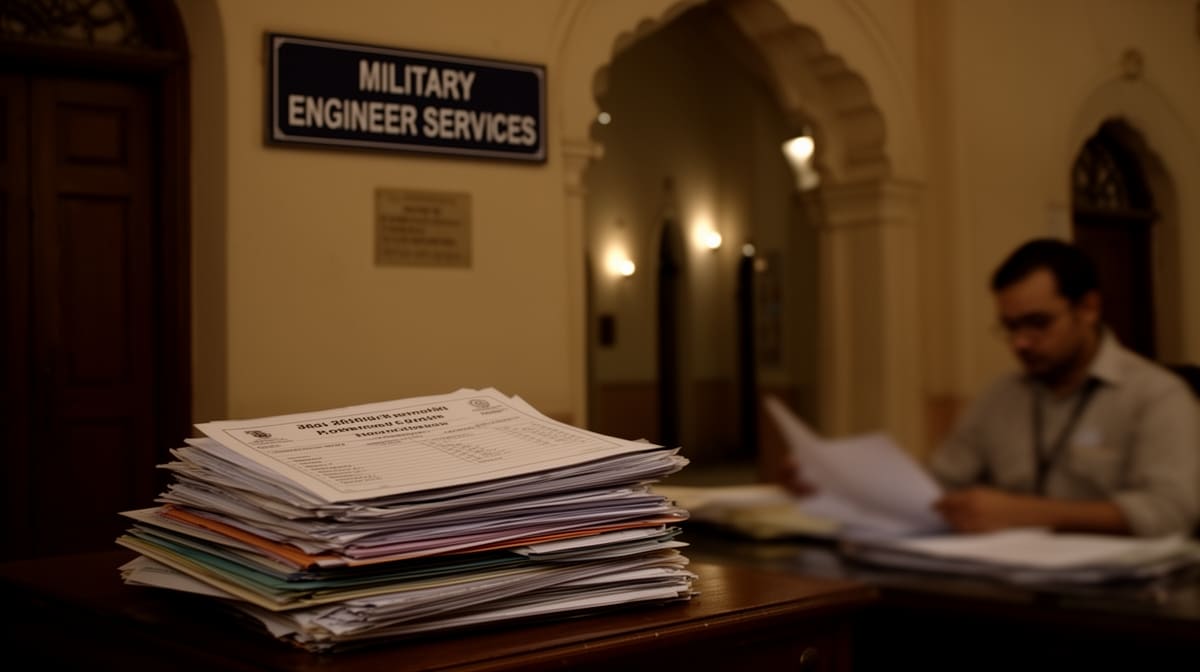
The Karnataka High Court has clarified that in civil service promotions, mandatory qualification requirements supersede seniority-based entitlements. This judgment establishes a critical doctrinal boundary: seniority alone cannot compel promotion if statutory pre-conditions remain unmet.
Background & Facts
The Dispute
The petitioner, Shashikala P., was appointed as a Typist in 1997 and promoted to Stenographer in 2007. Respondent No. 3, P. Mallesh, was appointed as a Typist in 2000 and promoted to Stenographer in 2008. Both were eligible for promotion to Office Superintendent, a post requiring completion of one year’s training as a First Division Assistant (FDA). Respondent No. 3 completed the FDA training in 2014 and was promoted that year. The petitioner, however, completed the same training only in March 2017. Despite being senior, she was promoted only after 2017, leading her to challenge the promotion of the junior officer as violative of seniority norms.
Procedural History
- 2014: Respondent No. 3 promoted to Office Superintendent after completing FDA training
- 2017: Petitioner completed FDA training and was promoted under Rule 32 of KCSR
- 2019: Departmental Promotion Committee (DPC) regularized petitioner’s promotion under Rule 42 of KCSR
- 2021: Endorsement issued rejecting petitioner’s claim for retrospective promotion from 2014
- 2022: Petitioner filed application before Karnataka State Administrative Tribunal
- 2023: Tribunal dismissed application, holding petitioner ineligible in 2014
- 2023: Writ petition filed before Karnataka High Court under Articles 226 and 227
Relief Sought
The petitioner sought quashing of the 2021 endorsement and a direction for her promotion to be made effective from 17.10.2014, the date Respondent No. 3 was promoted.
The Legal Issue
The central question was whether seniority in service alone entitles an employee to promotion to a higher cadre when a mandatory training qualification has not been fulfilled, and whether promotion of a junior officer in such circumstances constitutes a violation of the seniority list.
Arguments Presented
For the Petitioner
The petitioner’s counsel argued that she was senior in the cadre of Stenographer and that the promotion of a junior officer without considering her violated the principle of seniority-based promotion. He contended that the failure to depute her for FDA training was beyond her control and that penalizing her for administrative delay amounted to arbitrariness. Reliance was placed on State of Punjab v. Baldev Singh to argue that seniority must be respected unless there is a valid, objective disqualification.
For the Respondent/State
The State contended that promotion to Office Superintendent was governed by Rule 32 and Rule 42 of the Karnataka Civil Services Rules, 1957, which made FDA training a non-negotiable eligibility criterion. It was emphasized that eligibility is determined not by date of appointment but by fulfillment of statutory conditions. The State cited Union of India v. R. S. Sharma to affirm that mandatory qualifications override seniority in departmental promotions.
The Court's Analysis
The Court examined the interplay between seniority and mandatory eligibility criteria under the Karnataka Civil Services Rules. It held that while seniority is a foundational principle in civil service promotions, it operates only within the framework of statutory qualifications. The Court observed that the petitioner herself admitted in pleadings that FDA training was a compulsory condition for promotion.
"When completion of one year’s training as FDA is a mandatory qualification for promotion to the higher cadre of Office Superintendent, eligibility for consideration depends not merely on seniority, but also on possession of the requisite qualification."
The Court distinguished Baldev Singh by noting that in that case, the disqualification was arbitrary or discriminatory. Here, the requirement was statutory, uniformly applied, and published in the cadre rules. The Court further noted that the petitioner was promoted immediately upon fulfilling the condition in 2017 and later regularized in 2019, indicating no procedural delay or malafide intent. The Tribunal’s finding that the petitioner was ineligible in 2014 was therefore legally sound. The Court rejected the argument that administrative non-deputation excused statutory compliance, holding that such responsibility lies with the employee to ensure readiness for promotion.
The Verdict
The petitioner’s writ petition was dismissed. The Court held that mandatory training qualifications override seniority in departmental promotions under the Karnataka Civil Services Rules, and that promotion of a junior officer who fulfills all statutory conditions does not violate seniority norms.
What This Means For Similar Cases
Mandatory Qualifications Trump Seniority
- Practitioners must now argue that seniority is not an automatic entitlement where statutory pre-conditions exist
- Any claim for retrospective promotion must first establish that the claimant was eligible on the reference date
- Failure to complete mandatory training cannot be remedied by invoking seniority alone
Administrative Non-Deputation Is Not an Excuse
- Employees cannot claim injustice if they fail to complete mandatory training due to non-deputation
- The burden lies on the employee to proactively seek training opportunities or raise formal objections
- Departments are not obligated to depute every senior employee before promoting a junior who meets all criteria
DPC Regularization Validates Procedural Compliance
- Promotion under Rule 32 (temporary) followed by regularization under Rule 42 (permanent) is legally valid
- A subsequent DPC process cures any procedural irregularity in initial promotion
- Courts will not interfere if the final promotion is timely and in accordance with rules