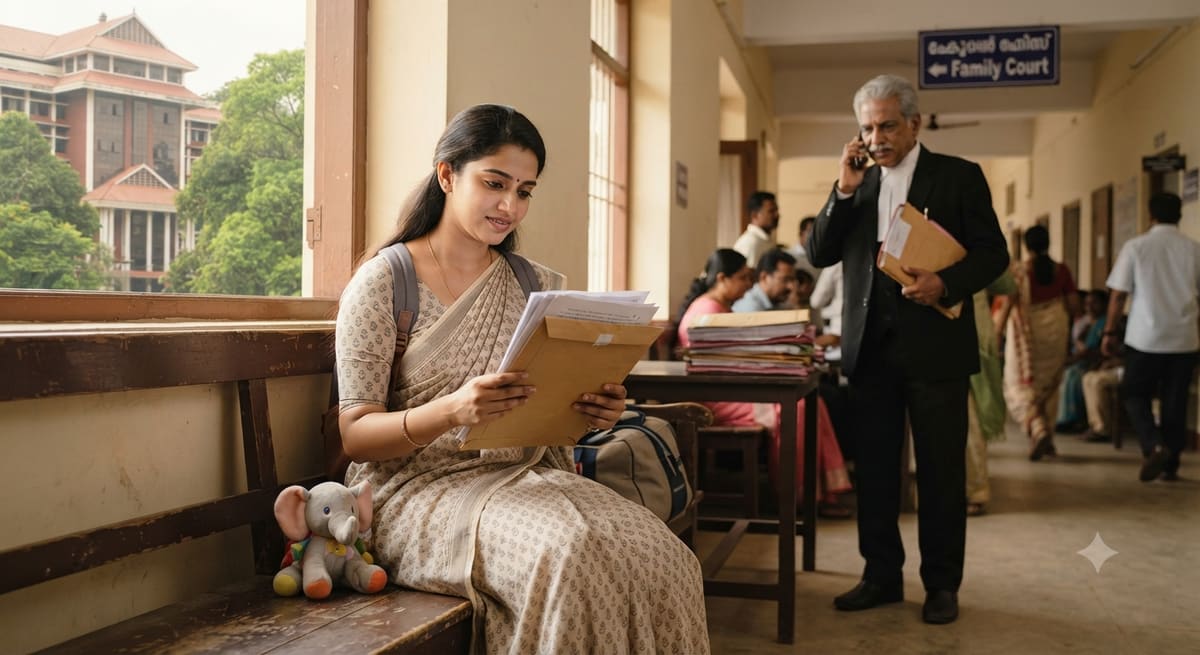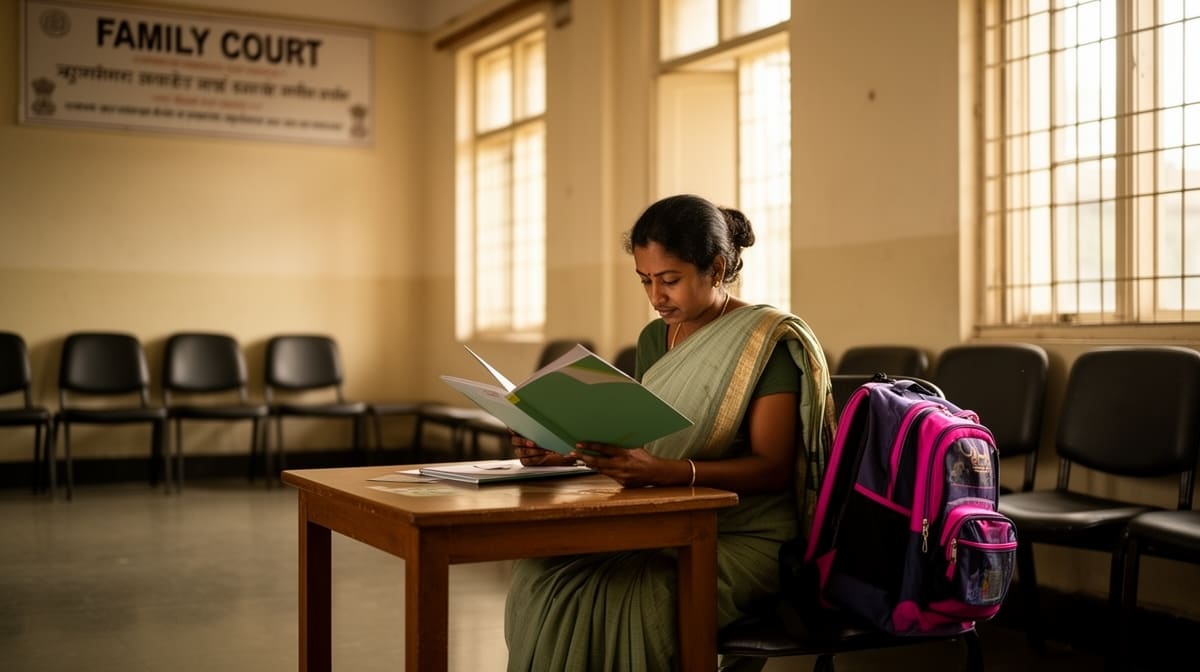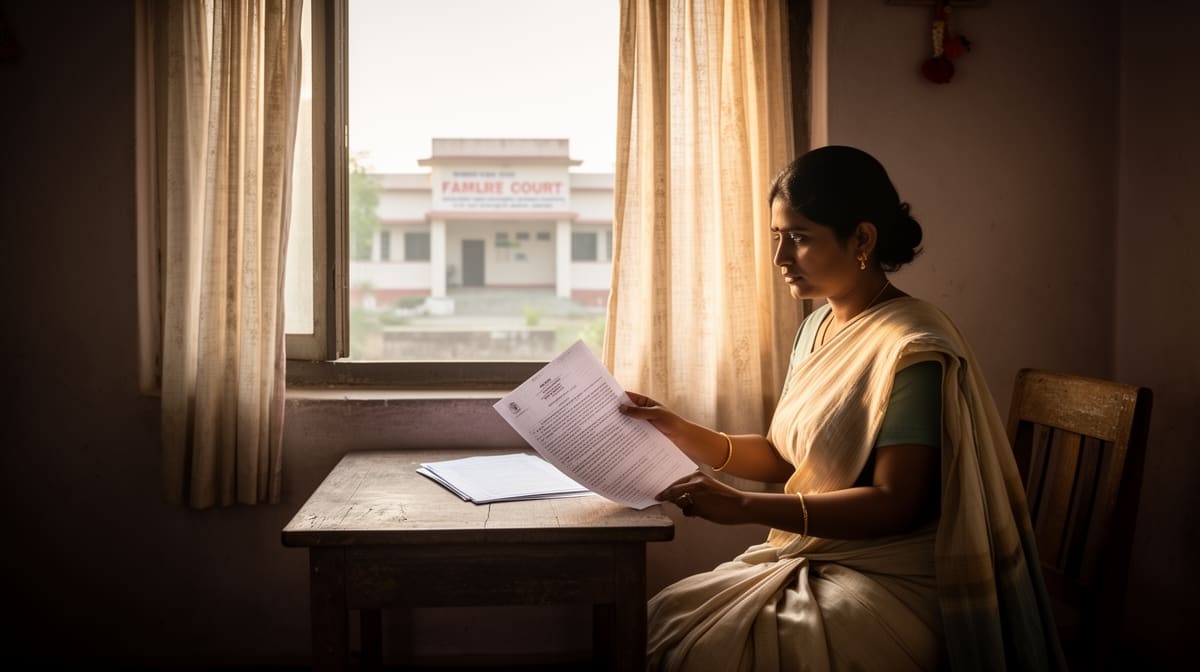
The Karnataka High Court has affirmed that when matrimonial disputes have been consistently litigated before a single Family Court, transferring subsequent proceedings to that forum is not merely convenient - it is a requirement of justice. This ruling reinforces the principle that judicial efficiency and litigant welfare must override territorial convenience when a pattern of litigation exists.
Background & Facts
The Dispute
The petitioner, Smt. Ratnamma @ Pooja, and the respondent, Shankarappa A. Hugar, were married in 2012. Their marriage deteriorated rapidly, triggering a series of legal proceedings starting in 2013. The respondent filed a divorce petition in 2024 before the Principal Senior Civil Judge and CJM in Mandya, seeking dissolution under Sections 13(1)(i-a) and 13(1)(i-b) of the Hindu Marriage Act, 1955, alleging cruelty and desertion.
Procedural History
The litigation history between the parties is extensive and centralized:
- 2013: First legal notice issued by respondent
- 2014: Respondent filed M.C. No. 73/2014 for divorce, later transferred to Family Court, Gadag
- 2015: This Court, in C.P. No. 100010/2015, ordered transfer of the 2014 petition to Gadag
- Subsequent years: Multiple petitions filed - including for restitution of conjugal rights, maintenance, and revision - each heard by the Family Court, Gadag
- 2024: Respondent filed M.C. No. 227/2024 in Mandya, bypassing the established forum
- 2025: Petitioner filed this Civil Petition under Section 24 read with Section 151 of the CPC seeking transfer
Relief Sought
The petitioner sought withdrawal and transfer of M.C. No. 227/2024 to the Family Court, Gadag, citing extreme financial hardship, chronic ill health, and credible fear of physical harm from the respondent and his family. She emphasized the 400-kilometre distance between her residence in Kadadi Village and Mandya.
The Legal Issue
The central question was whether Section 24 of the CPC permits or mandates transfer of a matrimonial proceeding to a Family Court that has previously handled all related litigation, particularly when the petitioner faces severe hardship and the respondent has no compelling reason to oppose the transfer.
Arguments Presented
For the Petitioner
The petitioner’s counsel argued that the Family Court, Gadag, had already developed familiarity with the parties’ history, witnesses, and evidence across multiple proceedings. Transfer was necessary to avoid multiplicity of litigation, reduce undue hardship on a vulnerable litigant, and uphold the spirit of Section 24, which empowers courts to transfer cases in the interest of justice. Reliance was placed on Smt. Sushma Sharma v. Smt. Renuka Devi and Rajesh Kumar v. Sunita, where transfer was granted to prevent harassment and ensure continuity.
For the Respondent
The respondent’s counsel did not file written objections and offered no substantive arguments despite being given ample opportunity. He merely asserted that, as a government teacher stationed in Mandya, attending court in Gadag would be inconvenient. No evidence was presented to contradict the petitioner’s claims of threat or financial distress.
The Court's Analysis
The Court examined the doctrine of judicial economy and the purpose of Family Courts under the Family Courts Act, 1984, which is to resolve matrimonial disputes expeditiously and with sensitivity. It noted that the respondent himself had previously litigated before the Family Court, Gadag, and had accepted its jurisdiction in 2015.
"The fact that the respondent himself initiated proceedings before the Family Court, Gadag, in 2014 and accepted its jurisdiction, renders his current objection to transfer untenable."
The Court emphasized that Section 24 CPC is not confined to technical jurisdictional defects but encompasses broader considerations of justice, convenience, and avoidance of harassment. The petitioner’s vulnerability - financial, physical, and psychological - was deemed material. The respondent’s claim of inconvenience was dismissed as speculative and inconsistent with his prior conduct.
The Court further held that allowing the case to proceed in Mandya would perpetuate a pattern of forum shopping and undermine the legislative intent behind establishing specialized Family Courts.
The Verdict
The petitioner succeeded. The Court held that transfer under Section 24 CPC is mandatory when a Family Court has been the consistent forum for all prior matrimonial litigation, and the petitioner faces demonstrable hardship. M.C. No. 227/2024 was transferred to the Family Court, Gadag, with directions for immediate appearance.
What This Means For Similar Cases
Transfer Is Not Discretionary When History Favors One Forum
- Practitioners must now argue that repeated litigation before a Family Court establishes de facto jurisdiction, even if the latest petition is filed elsewhere
- Courts cannot ignore prior proceedings when assessing convenience under Section 24 CPC
- A respondent’s mere claim of professional inconvenience is insufficient to override litigant hardship and judicial continuity
Vulnerability Trumps Territorial Convenience
- Petitioners citing financial hardship, health issues, or fear of violence must document these claims with affidavits or medical records
- Courts are now expected to treat such claims as prima facie valid unless contradicted by credible evidence
- Failure to oppose such petitions may result in automatic transfer, as the respondent’s silence was treated as acquiescence
Family Courts Are the Presumptive Forum for Matrimonial Disputes
- All divorce, maintenance, and restitution petitions should be filed in the Family Court where prior proceedings occurred
- Lawyers must conduct a thorough search of litigation history before filing in any court
- Filing in a non-Family Court after prior Family Court involvement may be challenged as forum shopping and result in transfer with costs