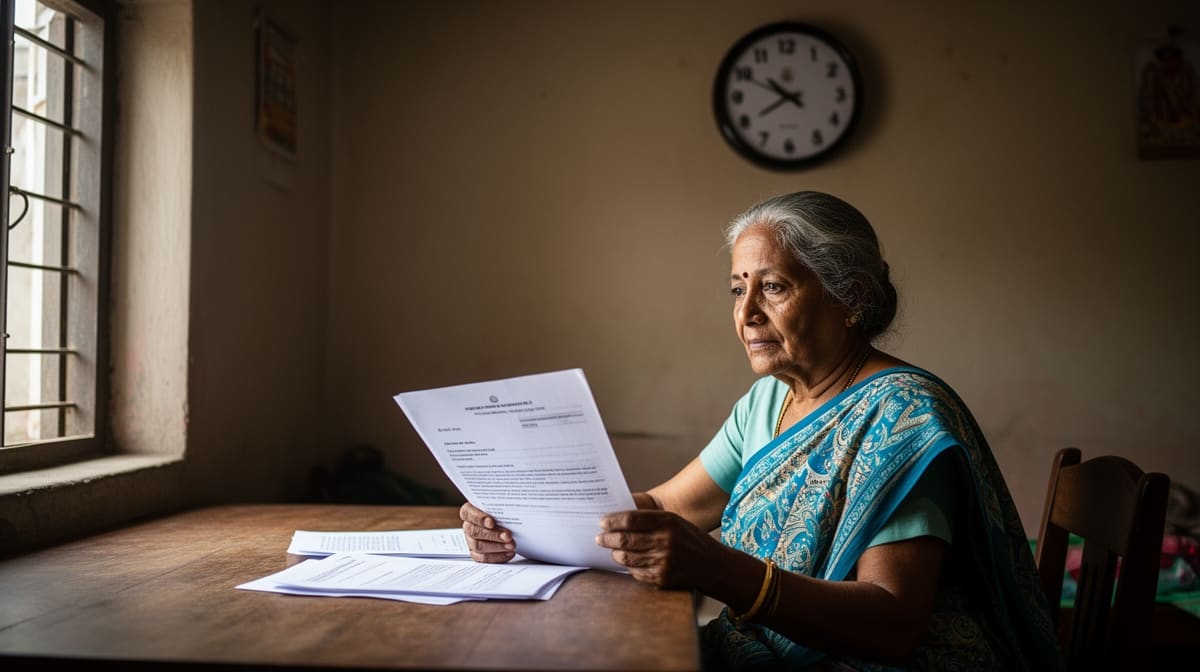
The Karnataka High Court has reaffirmed that undue delay in adjudicating interim maintenance applications under the Code of Criminal Procedure constitutes a violation of the fundamental right to life and personal liberty under Article 21. In a decisive order, the Court directed the Family Court to decide a two-year-pending application within four weeks, emphasizing that procedural stagnation cannot override the immediate economic security of litigants.
Background & Facts
The Dispute
The petitioner, Mrs. Reena Jaiswal, aged 68, filed Maintenance Case No. 7646 of 2023 before the II Additional Family Court in Bengaluru seeking maintenance from her estranged husband, the respondent. In 2024, she filed I.A. No. 4 seeking interim maintenance to meet her basic living expenses, given her advanced age and lack of independent income. Despite the urgent nature of the application, the Family Court took no substantive action for over two years, repeatedly adjourning the matter without setting a hearing date.
Procedural History
- 2023: Original maintenance case filed under Section 125 CrPC
- 2024: I.A. No. 4 filed seeking interim maintenance
- 2024 - 2025: Multiple adjournments granted without reasons or timelines
- February 5, 2026: Family Court adjourned I.A. No. 4 to February 27, 2025 - over a year away
- March 2026: Writ petition filed under Article 227 challenging the delay
Relief Sought
The petitioner sought: (i) setting aside the adjournment order; (ii) immediate disposal of I.A. No. 4; and (iii) direction for day-to-day trial of the main case within three months.
The Legal Issue
The central question was whether prolonged inaction on an interim maintenance application under Section 125 CrPC violates the right to speedy justice under Article 21 of the Constitution, and whether a High Court may intervene under its supervisory jurisdiction to enforce timely adjudication.
Arguments Presented
For the Petitioner
The petitioner’s counsel relied on Rajnesh v. Neha and Sunita Kishore v. Suresh Kumar to argue that interim maintenance is not a luxury but a constitutional necessity for vulnerable litigants, especially elderly women. He contended that delay in granting interim relief defeats the very purpose of Section 125 CrPC, which is designed to prevent destitution. The two-year pendency, he submitted, amounted to a denial of justice and warranted judicial intervention under Article 227.
For the Respondent
The respondent did not appear or file any written submission. The Court noted the absence of any counter-argument or justification for the delay, which was treated as acquiescence.
The Court's Analysis
The Court examined the nature of interim maintenance under Section 125 CrPC, noting that its purpose is to provide immediate financial relief pending final adjudication. The Court observed that delay in such applications transforms a protective mechanism into a tool of oppression.
"The purpose of interim maintenance is to ensure that the applicant is not driven to penury while awaiting the final decision. A delay of over two years in deciding such an application is not merely procedural negligence - it is a denial of justice."
The Court distinguished between procedural delays in final disposal and inordinate delay in interim relief, holding that the latter strikes at the core of natural justice and dignity of the individual. It cited State of U.P. v. Raj Narain to affirm that speedy justice is an essential component of Article 21, and that courts must act with urgency in matters affecting subsistence.
The Court further held that the Family Court’s failure to fix a hearing date or provide reasons for adjournment violated the principles laid down in K. Veeraswami v. Union of India regarding judicial accountability. The Court rejected the notion that the main case’s pendency could justify delaying interim relief, stating that the two proceedings are distinct and interdependent.
The Verdict
The petitioner succeeded. The Court held that delay in deciding interim maintenance applications violates Article 21 and directed the Family Court to decide I.A. No. 4 on or before March 26, 2026. No notice was issued to the respondent as no adverse order was passed against him, and all interim applications in the writ petition were closed.
What This Means For Similar Cases
Interim Maintenance Cannot Be Deferred Indefinitely
- Practitioners must now treat any delay exceeding six months in interim maintenance applications as a ground for writ intervention
- Courts must record reasons for every adjournment in maintenance matters
- Failure to decide within a reasonable time invites writ jurisdiction under Article 227
Article 21 Overrides Procedural Formalities
- The right to subsistence under Section 125 CrPC is not subordinate to the backlog of the trial court
- Judges must prioritize interim applications in family matters involving elderly, disabled, or economically vulnerable parties
- Delay alone, even without malafide intent, can constitute a violation of constitutional rights
Supervisory Jurisdiction Is a Remedy, Not a Last Resort
- High Courts must act proactively when trial courts fail to enforce statutory timelines
- Writ petitions under Article 227 are not merely for correcting errors but for enforcing constitutional obligations
- Practitioners should file writs promptly when interim relief is delayed beyond three months without justification