The Karnataka High Court has clarified a long-standing ambiguity in property transactions by affirming that a general power of attorney authorizing the sale of immovable property does not require registration if it does not create any interest in the agent. This ruling reinforces the validity of registered sale deeds executed by attorneys acting on behalf of principals, even where the underlying power of attorney is unregistered.
Background & Facts
The Dispute
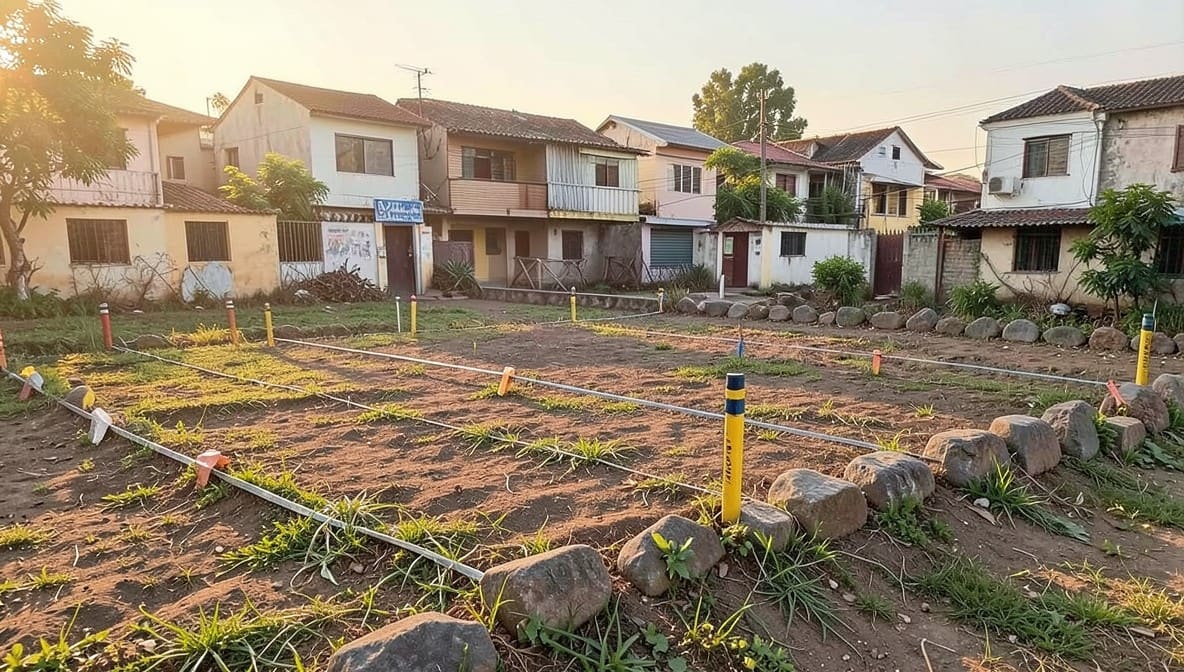
The dispute centers on three adjacent plots of land in Bengaluru, claimed by both plaintiffs and defendants through competing registered sale deeds. The plaintiffs acquired Sites A, B, and C through sale deeds executed by P.S. Maniyam, acting as attorney under two general powers of attorney (POAs) dated 06.01.1990 and 17.11.1989. The defendants acquired the same sites through registered sale deeds dated 27.02.2013 from the same original owners. The plaintiffs filed a suit for permanent injunction, alleging interference with their possession.
Procedural History
- 1991: Plaintiffs acquired Sites A and C via registered sale deeds executed by P.S. Maniyam under POA
- 2009: Plaintiff No.2 acquired Site B via registered sale deed pursuant to a decree for specific performance in O.S. No. 6532/2004
- 2013: Defendants acquired the same sites via registered sale deeds from the original owners
- 2018: Trial Court decreed the suit for permanent injunction in favor of plaintiffs
- 2026: Three appeals filed by defendants before Karnataka High Court
Relief Sought
The plaintiffs sought a permanent injunction restraining defendants from interfering with their possession. The defendants sought dismissal of the suit on grounds that the plaintiffs lacked title and possession, and that the POAs were invalid or cancelled.
The Legal Issue
The central question was whether an unregistered general power of attorney, which does not create any interest in the attorney but merely authorizes sale on behalf of the principal, can validly support a registered sale deed in favor of a third party.
Arguments Presented
For the Appellants
The appellants contended that the POAs dated 06.01.1990 and 17.11.1989 required registration under the Indian Stamp Act and Registration Act, as they were coupled with an agreement for sale and created an interest in the attorney. They relied on M.S. Ananthamurthy v. J. Manjula and Suraj Lamp v. State of Haryana to argue that unregistered POAs cannot convey title. They further claimed the 1990 POA was cancelled by a cancellation deed dated 12.03.1990, and that the plaintiffs failed to establish possession.
For the Respondents
The respondents argued that the POAs were purely agency instruments enabling the attorney to act on behalf of the principal, without creating any interest in the attorney. They cited Eureka Builders v. Gulabchand, Rame Gowda v. M. Varadappa Naidu, and Manik Majumder v. Dipak Kumar Saha to show that such POAs do not require registration. They emphasized that the sale deeds were duly registered, possession was established through electricity records and construction, and the cancellation deed lacked proof of service.
The Court's Analysis
The Court undertook a detailed examination of the nature of the powers of attorney and distinguished them from instruments creating proprietary interests. It held that the POAs in question were not coupled with interest, nor did they transfer any title or interest to P.S. Maniyam. The attorney merely acted as an agent to execute sale deeds on behalf of the original owners.
"The powers of attorney under scrutiny did not create any interest in the property in favour of the attorney/agent. It only enabled the attorney to alienate the property in addition to manage the property. By accepting the agency, the attorney was acting as per the instructions of the principal, on behalf of the principal."
The Court rejected the appellants’ reliance on Suraj Lamp, noting that case dealt with conveyance of title solely through unregistered POAs without any registered sale deed - a scenario absent here. The plaintiffs’ title was established through registered sale deeds, not the POAs alone.
Regarding cancellation, the Court found the alleged cancellation deed (Exhibit-D15) and affidavit (Exhibit-D75) insufficient. No evidence of service of notice on the attorney was produced, and the attorney was not examined. A self-serving affidavit by the agent cannot extinguish a principal’s authority.
On possession, the Court held that the plaintiffs established de facto possession through electricity connections, construction of a shed, and absence of any claim by defendants to have built the structure. The mere attempt to erect a wall did not amount to dispossession.
The Court also clarified that a suit for injunction simpliciter is maintainable even on vacant land if possession is established, citing Anathula Sudhakar v. P. Buchi Reddy. The trial court’s incidental finding on title was permissible because the issue was straightforward and not complex.
The Verdict
The appellants lost. The Karnataka High Court upheld the trial court’s decree for permanent injunction, holding that the plaintiffs had valid title through registered sale deeds executed by a lawful attorney under unregistered POAs, and had established possession. The Court affirmed that unregistered POAs authorizing sale, without creating interest in the agent, are legally valid.
What This Means For Similar Cases
Unregistered POAs Can Validate Registered Sale Deeds
- Practitioners may now rely on registered sale deeds executed by attorneys under unregistered general POAs, provided the POA does not create an interest in the attorney
- The burden shifts to the challenger to prove the POA created a proprietary interest or was revoked with proper notice
- Sale deeds executed by attorneys acting as agents remain valid even if the underlying POA is unregistered
Possession Can Be Proven Through Indirect Evidence
- Electricity bills, construction records, and absence of contrary claims by defendants can establish possession
- Mere attempts to encroach or divide property do not equate to dispossession unless actual ouster is proven
- Photographic and documentary evidence of physical control is sufficient in cases involving vacant land
Injunction Suits Are Not Defective for Lack of Declaration
- Courts may decide title issues incidentally in injunction suits if the matter is simple and straightforward
- Plaintiffs need not file a separate declaratory suit merely because the property is vacant
- The Anathula Sudhakar principle is reaffirmed: courts must avoid forcing litigants into costlier remedies when possession is clear