Himachal Pradesh High Court judgments

297 Himachal Pradesh High Court judgments explained in plain English: what was decided, the law applied and why it matters. Page 10 of 13.

Section 324 IPC | Human Teeth Not an 'Instrument' for Voluntarily Causing Hurt : HP HC Overturns Bite Injury Conviction
Case Law Analysis
|Himachal Pradesh High Court

Section 324 IPC | Human Teeth Not an 'Instrument' for Voluntarily Causing Hurt : HP HC Overturns Bite Injury Conviction

The Himachal Pradesh High Court ruled that human teeth do not qualify as an 'instrument' under Section 324 IPC, setting aside a conviction for biting while upholding charges of outraging modesty and simple hurt. The decision reinforces judicial precedent that bodily parts cannot be classified as weapons under this provision, impacting future cases involving similar injuries.

Probation of Offenders Act | Mandatory Probation for Elderly Offenders in Non-Premeditated Grievous Hurt Cases : HP HC
Case Law Analysis
|Himachal Pradesh High Court

Probation of Offenders Act | Mandatory Probation for Elderly Offenders in Non-Premeditated Grievous Hurt Cases : HP HC

The Himachal Pradesh High Court ruled that courts must mandatorily consider probation for elderly offenders with no prior criminal record, even in grievous hurt cases, if rehabilitation is warranted by health and family circumstances. This sets a precedent for reformative justice over incarceration for first-time elderly offenders.

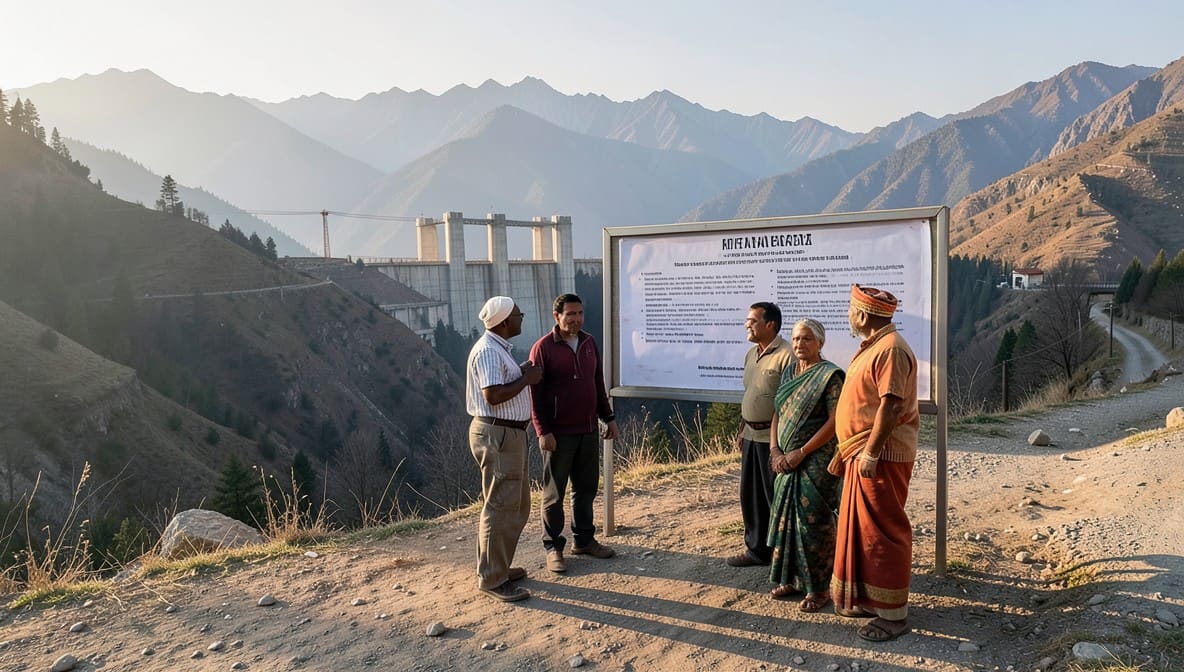
Resettlement MoUs Create Enforceable Employment Rights for Displaced Families, Including Non-Landowners : HP HC
Case Law Analysis
|Himachal Pradesh High Court

Resettlement MoUs Create Enforceable Employment Rights for Displaced Families, Including Non-Landowners : HP HC

Himachal Pradesh High Court rules that Memorandums of Understanding (MoUs) under resettlement schemes confer legally binding employment rights on displaced families, extending protections to non-landowners. The court directs the Deputy Commissioner to adjudicate claims within 12 weeks, reinforcing state accountability in rehabilitation policies.

Section 13-B HMA | Contested Divorce Petition Convertible to Mutual Consent Upon Full Alimony Settlement : Himachal Pradesh HC
Case Law Analysis
|Himachal Pradesh High Court

Section 13-B HMA | Contested Divorce Petition Convertible to Mutual Consent Upon Full Alimony Settlement : Himachal Pradesh HC

Himachal Pradesh High Court allows conversion of a contested divorce petition into mutual consent divorce under Section 13-B HMA upon full payment of Rs. 15 lakh alimony, reinforcing that mediated settlements with sworn affirmations can override procedural formalities. This ruling clarifies that courts may treat contested petitions as mutual consent upon settlement, provided both parties affirm the agreement on oath.

Contempt of Court | ₹5 Lakh Cost Imposed on State for Defying Tribunal Order on Service Regularization : HP HC
Case Law Analysis
|Himachal Pradesh High Court

Contempt of Court | ₹5 Lakh Cost Imposed on State for Defying Tribunal Order on Service Regularization : HP HC

HP High Court upheld a ₹5 lakh cost on the State for failing to implement a 2016 tribunal order directing retrospective service regularization from 2002 instead of 2006. The court emphasized that final judicial orders cannot be ignored for administrative convenience, setting a precedent for strict enforcement of tribunal directives.

Judicial Admission of Precedent Triggers Mandatory Regularization | Contractual Employees Entitled to Retroactive Benefits Under Equal Protection : HP HC
Case Law Analysis
|Himachal Pradesh High Court

Judicial Admission of Precedent Triggers Mandatory Regularization | Contractual Employees Entitled to Retroactive Benefits Under Equal Protection : HP HC

HP High Court rules that when the State admits a contractual employee's case mirrors a binding precedent, regularization with retroactive benefits is mandatory. The petitioner's six-year service was regularized with benefits dating back three years before filing, overriding pending SLP challenges.

Judicial Admission Binds State to Precedent | Regularization Mandated for Daily Wage Workers After 8 Years : HP HC
Case Law Analysis
|Himachal Pradesh High Court

Judicial Admission Binds State to Precedent | Regularization Mandated for Daily Wage Workers After 8 Years : HP HC

The Himachal Pradesh High Court ruled that the State’s judicial admission of similarity to the Sant Ram precedent obligates it to regularize daily wage workers after eight years of service, regardless of a pending Supreme Court status quo order. The decision reinforces the binding nature of judicial admissions in service law and ensures equal treatment for similarly situated employees.

NDPS Act | Failure to Secure Independent Witnesses During Contraband Recovery Vitiates Conviction : HP HC
Case Law Analysis
|Himachal Pradesh High Court

NDPS Act | Failure to Secure Independent Witnesses During Contraband Recovery Vitiates Conviction : HP HC

The Himachal Pradesh High Court acquitted an accused under the NDPS Act, ruling that the prosecution's failure to involve independent witnesses during contraband recovery-despite nearby habitation and passing vehicles-creates reasonable doubt. The judgment underscores that procedural compliance, including proper sealing and witness participation, is mandatory to sustain convictions under the Act.

Section 435 IPC | Compensation to Victim Does Not Quash FIR for Arson: Himachal Pradesh HC Upholds Non-Compoundable Nature
Case Law Analysis
|Himachal Pradesh High Court

Section 435 IPC | Compensation to Victim Does Not Quash FIR for Arson: Himachal Pradesh HC Upholds Non-Compoundable Nature

The Himachal Pradesh High Court ruled that payment of compensation to the victim does not extinguish criminal liability under Section 435 IPC, as arson is a non-compoundable offence affecting public order. The judgment reinforces that criminal proceedings cannot be quashed merely on the basis of settlement or compensation, preserving the sanctity of public prosecution.

Order 26 Rules 9 & 10A CPC | Revenue Expert Mandatory for Ancestral Land Disputes Involving Four-Generation Tracing : HP HC
Case Law Analysis
|Himachal Pradesh High Court

Order 26 Rules 9 & 10A CPC | Revenue Expert Mandatory for Ancestral Land Disputes Involving Four-Generation Tracing : HP HC

HP High Court rules that courts must appoint revenue experts under Order 26 Rules 9 and 10A CPC to trace ancestral land ownership across four generations in disputes involving consolidation and settlement operations. The ruling clarifies that expert appointment is not merely for evidence collection but for essential factual clarification, ensuring accurate adjudication of coparcenary rights.

Section 528 BNSS | FIR Quashing Permitted in Non-Heinous Offences Against Public Servants on Compromise : HP HC
Case Law Analysis
|Himachal Pradesh High Court

Section 528 BNSS | FIR Quashing Permitted in Non-Heinous Offences Against Public Servants on Compromise : HP HC

The Himachal Pradesh High Court held that criminal proceedings in non-heinous offences against public servants can be quashed under Section 528 BNSS if parties reach a mutual compromise, even when the victim is a government official. This ruling reinforces the court's inherent powers to prevent abuse of process where disputes are personal and not grave.

Article 14 | State Cannot Retract DPC Promotion Recommendations Arbitrarily : Himachal Pradesh HC
Case Law Analysis
|Himachal Pradesh High Court

Article 14 | State Cannot Retract DPC Promotion Recommendations Arbitrarily : Himachal Pradesh HC

Himachal Pradesh High Court rules that once a Departmental Promotion Committee (DPC) recommends a candidate for promotion, the State cannot arbitrarily withdraw eligibility, especially after appointing others on identical grounds. The judgment reinforces protection against administrative arbitrariness under Article 14, ensuring fairness in service law.

Order 41 Rule 21 CPC | Right to Hearing Under Natural Justice Trumps Advocate Strike Excuse : HP HC Sets Aside Ex-Parte Appellate Decree
Case Law Analysis
|Himachal Pradesh High Court

Order 41 Rule 21 CPC | Right to Hearing Under Natural Justice Trumps Advocate Strike Excuse : HP HC Sets Aside Ex-Parte Appellate Decree

The Himachal Pradesh High Court ruled that an appellate court cannot deny a party's right to hearing under the audi alteram partem principle, even during an advocate strike. The court set aside an ex-parte decree passed without notice, emphasizing that procedural fairness outweighs logistical delays in restoration applications.

Section 304-A IPC | Deterrent Sentencing Mandatory for Negligent Driving Causing Death : Himachal Pradesh HC Upholds Two-Year Imprisonment
Case Law Analysis
|Himachal Pradesh High Court

Section 304-A IPC | Deterrent Sentencing Mandatory for Negligent Driving Causing Death : Himachal Pradesh HC Upholds Two-Year Imprisonment

Himachal Pradesh High Court affirms that negligent driving leading to death under Section 304-A IPC warrants a deterrent sentence, rejecting the accused's challenge to concurrent findings of lower courts. The ruling underscores that admissions under Section 313 CrPC and established facts of reckless driving justify imprisonment, reinforcing road safety accountability.

Section 138 NI Act | Blank Cheques Issued for Non-Debt Purposes Do Not Trigger Presumption of Liability : HP HC
Case Law Analysis
|Himachal Pradesh High Court

Section 138 NI Act | Blank Cheques Issued for Non-Debt Purposes Do Not Trigger Presumption of Liability : HP HC

Himachal Pradesh High Court rules that blank cheques issued for household expenses, not debt, cannot invoke the presumption under Section 138 of the NI Act. The judgment underscores that the complainant must prove an underlying liability at the time of issuance to sustain a conviction, offering critical protection for accused in misuse cases.

CPC Order 7 Rule 14 & IEA Section 65(a) | Belated Evidence to Cure Lacunae Rejected as Abuse of Process : HP HC
Case Law Analysis
|Himachal Pradesh High Court

CPC Order 7 Rule 14 & IEA Section 65(a) | Belated Evidence to Cure Lacunae Rejected as Abuse of Process : HP HC

Himachal Pradesh High Court rules that litigants cannot exploit procedural provisions like CPC Order 7 Rule 14 and IEA Section 65(a) to introduce delayed evidence merely to fill gaps in their case. The judgment reinforces that secondary evidence cannot be used as a backdoor to remedy negligence or delay, impacting property dispute litigants and civil procedure strategy.

Section 142 Panchayati Raj Act | Recovery Order Before Final Adjudication Violates Natural Justice : Himachal Pradesh HC
Case Law Analysis
|Himachal Pradesh High Court

Section 142 Panchayati Raj Act | Recovery Order Before Final Adjudication Violates Natural Justice : Himachal Pradesh HC

The Himachal Pradesh High Court ruled that imposing financial penalties under Section 142 of the Panchayati Raj Act before concluding adjudication on a show-cause notice breaches principles of natural justice. The court emphasized that premature recovery orders against local body officials are procedurally unfair and legally untenable.

Order 41 Rule 27 CPC | Additional Evidence in Appeal Rejected Without Strict Due Diligence or Pleading Consistency : HP HC
Case Law Analysis
|Himachal Pradesh High Court

Order 41 Rule 27 CPC | Additional Evidence in Appeal Rejected Without Strict Due Diligence or Pleading Consistency : HP HC

HP High Court reinforces that appellate courts cannot permit additional evidence under Order 41 Rule 27 CPC unless the party demonstrates strict due diligence and consistency in pleadings. The ruling underscores that 'complete justice' cannot override statutory conditions, impacting litigants seeking to introduce new evidence post-delay.

Section 499 IPC | Truth & Public Interest as Absolute Defences in Defamation: Himachal Pradesh HC Upholds Journalist’s Right to Publish on Public Servant’s Financial Dealings
Case Law Analysis
|Himachal Pradesh High Court

Section 499 IPC | Truth & Public Interest as Absolute Defences in Defamation: Himachal Pradesh HC Upholds Journalist’s Right to Publish on Public Servant’s Financial Dealings

The Himachal Pradesh High Court reaffirmed that truth and public good are absolute defences under Section 499 IPC, dismissing a criminal defamation complaint against a journalist. The court held that publishing truthful information about a public servant’s financial dealings, in good faith and for public interest, does not constitute defamation, especially when the official withheld requested details.

CrPC Section 227 | Prima Facie Case Suffices for Framing Charges; Digital Evidence Linkage Without Physical Recovery Valid : HP HC
Case Law Analysis
|Himachal Pradesh High Court

CrPC Section 227 | Prima Facie Case Suffices for Framing Charges; Digital Evidence Linkage Without Physical Recovery Valid : HP HC

HP High Court clarifies that framing charges under CrPC 227 requires only a prima facie case, not corroboration by recovered evidence. Witness testimony linking an accused to digital content-even if the original video is not recovered from their device-is sufficient to proceed with charges under POCSO and IT Act.

Article 14 | Arbitrary Deputation Without Extra Remuneration Violates Equal Protection: Himachal Pradesh HC
Case Law Analysis
|Himachal Pradesh High Court

Article 14 | Arbitrary Deputation Without Extra Remuneration Violates Equal Protection: Himachal Pradesh HC

The Himachal Pradesh High Court ruled that deputing a government employee to a distant location without additional compensation is arbitrary and violates Article 14, as it lacks reasonable classification. The judgment underscores that public employment transfers must align with constitutional guarantees of equality, affecting service law and administrative practices.

Section 446 CrPC | Financial Hardship & Sincere Efforts Justify Surety Penalty Reduction : Himachal Pradesh HC
Case Law Analysis
|Himachal Pradesh High Court

Section 446 CrPC | Financial Hardship & Sincere Efforts Justify Surety Penalty Reduction : Himachal Pradesh HC

The Himachal Pradesh High Court ruled that courts must consider a surety's financial hardship and sincere efforts to produce the accused when exercising discretion under Section 446 CrPC. The Court reduced a Rs. 1,00,000 penalty to Rs. 10,000, emphasizing that appellate courts can intervene even after forfeiture to ensure fairness in bail bond enforcement.