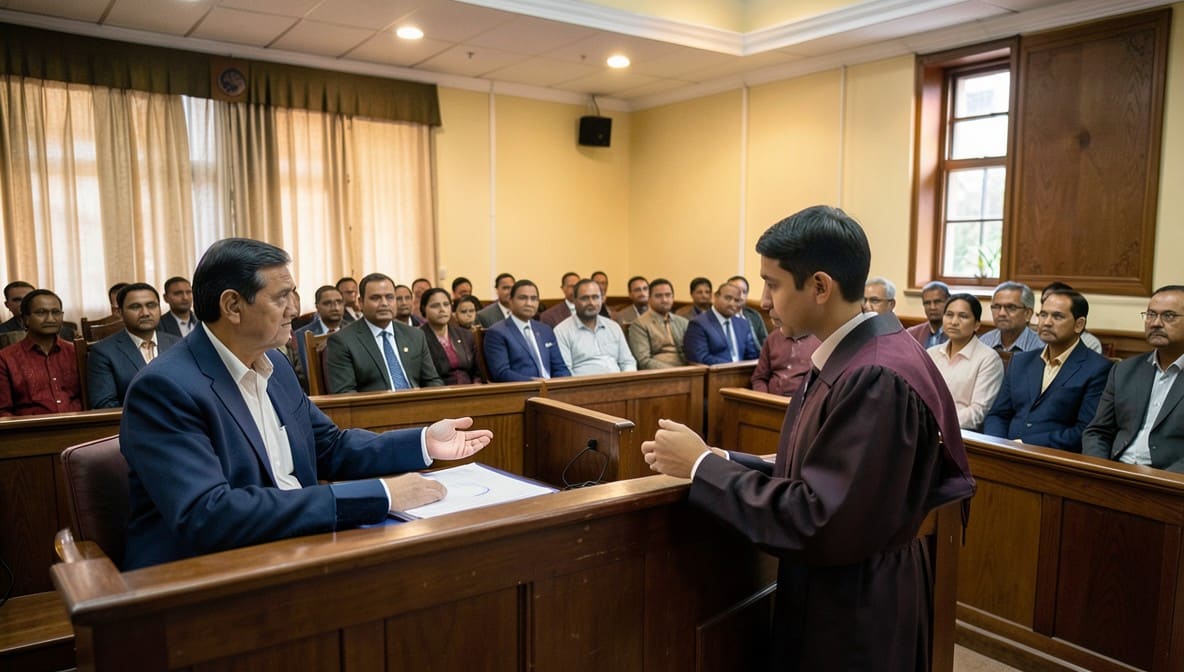
The Himachal Pradesh High Court has reaffirmed that state authorities cannot ignore final tribunal orders on service regularization, even after a decade of non-compliance. The Court imposed a ₹5 lakh cost on the State for willful defiance of a 2016 order directing regularization with retrospective effect, emphasizing that administrative convenience cannot override judicial mandates.
Background & Facts
The Dispute
The dispute arose from the non-implementation of a 2016 order by the erstwhile State Administrative Tribunal, which directed the regularization of the respondent’s service with retrospective effect from the date he commenced service in 1994, following completion of eight years. The State, however, implemented the order only in 2006, denying the respondent consequential benefits for the period 1994 to 2006.
Key Facts
- The respondent, Gejam Ram, was appointed on a contractual basis on 01.01.1994 in the Department of Horticulture, Himachal Pradesh.
- He completed eight years of continuous service by 31.12.2001.
- As per departmental policy, service beyond eight years was to be considered for regularization.
- On 27.08.2015, the State issued an order refusing regularization, citing lack of sanction.
- The respondent filed an Original Application before the State Administrative Tribunal.
- On 31.03.2016, the Tribunal quashed the 27.08.2015 order and directed the State to reconsider the respondent’s case for regularization with effect from completion of eight years of service (i.e., from 2002) with all consequential benefits.
- On 10.06.2016, the then Director of Horticulture issued an order regularizing the respondent’s service w.e.f. 05.12.2006, ignoring the Tribunal’s direction for retrospective effect from 2002.
- The respondent filed a contempt petition before the Tribunal, which was later transferred to the High Court as COPC(T) No. 130 of 2020.
- The State filed a writ petition (CWP No. 2809 of 2020) in 2020 challenging the 2016 Tribunal order, but misrepresented compliance by claiming the 2016 order had been implemented, leading to its dismissal as infructuous.
- On 04.11.2023, the High Court, in the contempt proceedings, held that officials (appellants No. 7 and 8) had shown defiance and directed them to appear for further proceedings.
- The State filed an appeal against the 04.11.2023 order, which was dismissed on 09.07.2025 with a caution against repetition.
- On 17.12.2025, the learned Single Judge imposed a cost of ₹5,00,000 on the State, to be recovered from the erring officials.
Procedural History
- 01.01.1994: Respondent appointed on contractual basis
- 31.12.2001: Completion of eight years of service
- 27.08.2015: State order refusing regularization
- 31.03.2016: Tribunal order quashing 27.08.2015 order and directing regularization w.e.f. 2002 with all consequential benefits
- 10.06.2016: State issues regularization order w.e.f. 05.12.2006
- 2017 - 2019: Respondent files multiple representations, all rejected
- 2020: Contempt petition filed before Tribunal, transferred to High Court as COPC(T) No. 130 of 2020
- 2020: State files CWP No. 2809 of 2020, falsely claiming compliance; dismissed as infructuous
- 04.11.2023: High Court summons erring officials for contempt
- 09.07.2025: LPA No. 229 of 2023 dismissed; State cautioned
- 17.12.2025: Single Judge imposes ₹5 lakh cost on State
- 23.03.2026: Division Bench dismisses appeal
The Parties' Positions
The State contended that the 2016 Tribunal order was not binding as it conflicted with policy, and that regularization from 2002 would set a precedent affecting other cases. The respondent argued that the Tribunal’s order was final and binding, and the State’s deliberate delay and misrepresentation constituted contempt.
Relief Sought
The respondent sought enforcement of the 2016 Tribunal order, inclusion of service from 1994 to 2001 as qualifying service for pension and increments, and recovery of arrears with interest. The State sought to set aside the cost order of ₹5 lakh.
The Legal Issue
The central question was whether a state authority can evade compliance with a final tribunal order directing service regularization with retrospective effect, and whether imposition of cost on the State and its erring officials for such defiance is legally sustainable.
Arguments Presented
For the Appellants
The Advocate General argued that the appeal filed by the first six retired officers was unauthorized, as no power of attorney or authorization was provided. He further contended that the Tribunal’s 2016 order was not binding because it conflicted with departmental policy, and that the State had acted in good faith by regularizing service in 2006. He also claimed that the cost imposition was excessive and punitive, and that the State had already complied by issuing the 2016 order.
For the Respondent
The Senior Advocate argued that the Tribunal’s 2016 order was final and binding under Article 226 and Section 19 of the Administrative Tribunals Act, 1985. He emphasized that the State’s misrepresentation in CWP No. 2809 of 2020 - claiming compliance when it had not occurred - constituted fraud on the Court. He relied on the 2023 contempt order and the 2025 dismissal of the LPA to show a pattern of defiance, justifying the cost imposition.
The Court's Analysis
The Court observed that the Tribunal’s order dated 31.03.2016 was clear, unambiguous, and final. The relevant portion directed: "...the respondents are directed to re-consider the case of the applicant for regularization on completion of 8 years service with all consequential benefits." The Court held that the State’s implementation of the order with effect from 2006, instead of 2002, was not compliance but defiance.
"Once specific directions had been issued in the case of an employee on account of a specific order, the argument raised by learned Advocate General that the case would be a precedent as such, cannot be countenanced as the directions had to be complied with in view of the order already passed by the Tribunal, and having become final."
The Court noted that the State had deliberately misled the Court in CWP No. 2809 of 2020 by falsely asserting compliance, thereby obtaining an order dismissing the petition as infructuous. This conduct, the Court held, amounted to abuse of process and contempt. The fact that the State had been previously cautioned in 2025 for similar conduct further aggravated the situation.
The Court rejected the challenge to the cost order, holding that the Single Judge had acted within his powers under Section 19(2) of the Administrative Tribunals Act and Section 12 of the Contempt of Courts Act, 1971. The cost was not punitive but compensatory, intended to deter future non-compliance and to restore the dignity of judicial orders.
The Court also held that the appeal filed by the first six retired officers was not maintainable, as they had no authority to file it through the Advocate General’s office. Their remedy, if any, lay in filing an independent appeal once a cause of action arose upon actual recovery proceedings.
The Verdict
The appeal was dismissed. The High Court upheld the cost order of ₹5,00,000 imposed by the Single Judge on the State of Himachal Pradesh, to be recovered from the erring officials responsible for non-compliance. The Court directed that the recovery process be initiated within six weeks from the date of judgment. All pending applications were disposed of. The Court emphasized that the State’s obligation to comply with final tribunal orders is non-negotiable and that deliberate delay or misrepresentation will attract cost and contempt consequences.
What This Means For Similar Cases
Final Tribunal Orders Are Binding, Not Advisory
- Practitioners must treat tribunal orders under the Administrative Tribunals Act as final and enforceable, even if they conflict with departmental policy.
- Any attempt to circumvent such orders through delayed or partial compliance will be treated as contempt.
- State departments must verify compliance with tribunal orders before representing to courts that orders have been implemented.
Cost Imposition Is a Valid Deterrent Against State Defiance
- Courts may impose substantial costs on state entities for willful non-compliance, even if no specific statutory provision mandates it.
- Costs may be recovered from individual officials found responsible for the defiance, not just the State.
- Repeated defiance, even after prior warnings, justifies higher cost imposition.
Misrepresentation to Court Is a Grave Offence
- Filing a petition claiming compliance when it has not occurred constitutes fraud on the Court.
- Such conduct can lead to dismissal of petitions, cost imposition, and contempt proceedings.
- Advocates must verify factual assertions before filing petitions on behalf of government clients.