The High Court of Himachal Pradesh has clarified that the stage of framing charges under Section 227 of the Code of Criminal Procedure demands only a prima facie case, not conclusive proof or corroboration through recovered digital evidence. This ruling reinforces the procedural boundary between discharge and trial, offering critical guidance to prosecutors and defense counsel in cases involving digital media and child sexual offences.
Background & Facts
The Dispute
The petitioner, Robinjeet Singh, was named as an accused in a case involving the dissemination of a video depicting the sexual molestation of a 14-year-old girl. The incident occurred on 02.10.2023 at the shop of Sandesh Dogra, who allegedly touched the victim’s breasts and removed her clothing. The act was recorded by Gaurav @ Gogi, who forwarded the video to the petitioner. The petitioner, in turn, forwarded it to the Panchayat Pradhan, who reported it to the police.
Key Facts
- The victim was 14 years old at the time of the incident on 02.10.2023
- The video was recorded by Gaurav @ Gogi on his mobile phone on 02.10.2023
- Gaurav forwarded the video to Robinjeet Singh (petitioner) on or around 03.10.2023
- Robinjeet Singh forwarded the video to the Panchayat Pradhan on or around 04.10.2023
- The Panchayat Pradhan showed the video to the victim’s mother on 05.10.2023
- FIR was registered on 05.10.2023 under Section 67B of the IT Act, 2000 and Section 21 of the POCSO Act
- Mobile phones of Gaurav, Anand @ Nandu, and Robinjeet Singh were seized on 06.10.2023
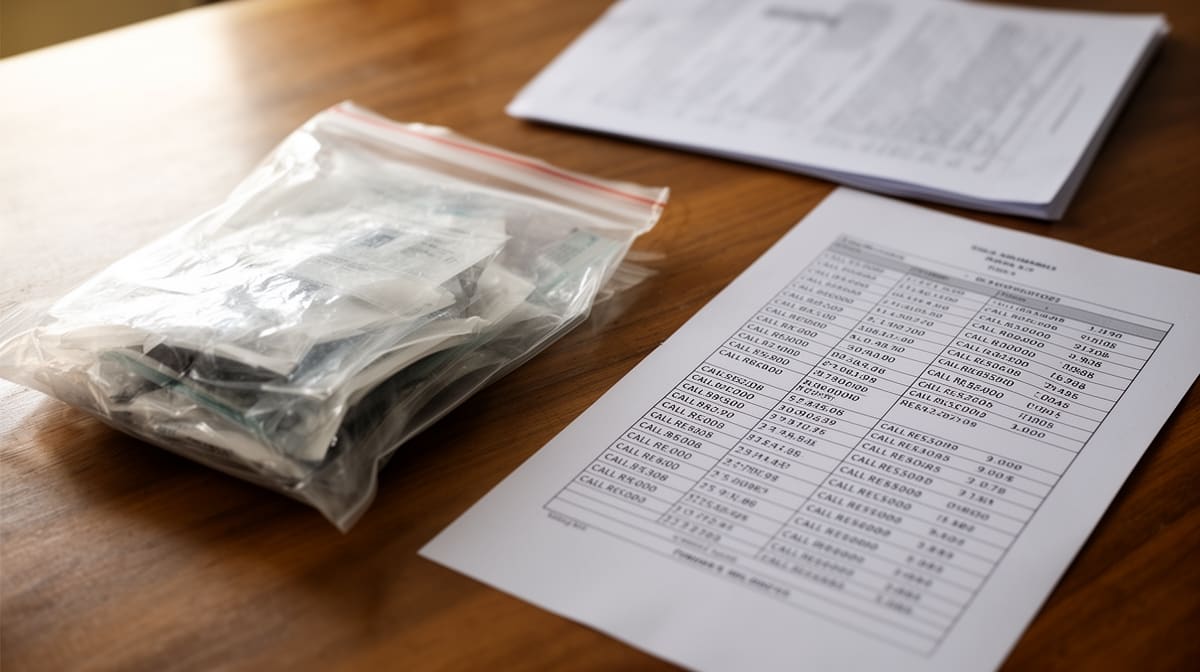
- The forensic report confirmed the video was present on memory cards (Q-1, Q-2, Q-3) produced by the Panchayat Pradhan
- No video was recovered from the mobile phones of Gaurav, Anand, or the petitioner
- The Panchayat Pradhan testified that the video was sent to her by Robinjeet Singh
Procedural History
- 02.10.2023: Alleged sexual molestation of minor victim
- 05.10.2023: FIR registered by police after video was shown to victim’s mother
- 06.10.2023: Seizure of mobile phones of Gaurav, Anand, and Robinjeet Singh
- 15.11.2023: Charge sheet filed against Sandesh Dogra, Robinjeet Singh, Gaurav @ Gogi, and Anand @ Nandu
- 20.07.2024: Gaurav @ Gogi applied for discharge under Section 227 CrPC
- 25.11.2025: Special Judge, Una, discharged Gaurav @ Gogi on grounds that no video was recovered from his phone; framed charges against Sandesh Dogra and Robinjeet Singh
- 10.03.2026: Revision petition heard by Division Bench of HP High Court
- 20.03.2026: Judgment reserved and delivered dismissing the revision
Relief Sought
The petitioner sought quashing of the order dated 25.11.2025 framing charges against him, arguing that since no video was recovered from his mobile phone, and co-accused Gaurav was discharged on similar grounds, he too should be discharged.
The Legal Issue
The central question was whether the absence of recovered digital evidence from the petitioner’s mobile phone negates the existence of a prima facie case under Section 227 CrPC, when witness testimony directly links him to the dissemination of the video.
Arguments Presented
For the Petitioner
The petitioner’s counsel argued that since no video was recovered from his mobile phone, and the co-accused Gaurav was discharged on the same ground - lack of recovered evidence - the petitioner could not be treated differently. He contended that the prosecution’s case was based solely on uncorroborated oral testimony, which is insufficient to frame charges. He relied on the principle that charges cannot be framed on speculative or unsubstantiated allegations.
For the Respondent/State
The Additional Advocate General submitted that the charge sheet contained specific allegations that the petitioner received and forwarded the video, as corroborated by the Panchayat Pradhan’s testimony. The absence of recovered data from the petitioner’s phone does not negate the existence of a prima facie case, especially where the video was recovered from other sources and the chain of transmission is clearly stated. The court, he argued, must not engage in premature evaluation of evidentiary reliability at the framing stage.
The Court's Analysis
The Court undertook a detailed review of the Supreme Court’s jurisprudence on the scope of Section 227 CrPC. It emphasized that the stage of framing charges is not a trial, nor is it an opportunity for the court to assess the credibility or probative value of evidence. The Court cited Vishnu Kumar Shukla v. State of U.P. to affirm that the court must only determine whether there is sufficient material to initiate a trial.
"It is impermissible to examine the material threadbare to determine whether the accused is likely to be convicted or not."
The Court further relied on Ram Prakash Chadha v. State of U.P. to clarify that while the court may sift and weigh evidence for the limited purpose of determining a prima facie case, it cannot assess the improbability of testimony or reject evidence as unreliable. Such an exercise would encroach upon the domain of trial under Section 232 CrPC.
The Court noted that the Panchayat Pradhan’s testimony, though uncorroborated by recovered data from the petitioner’s phone, was not inherently improbable. The video was recovered from memory cards she produced, and her account of receiving it from the petitioner was consistent with the chain of events described in the charge sheet. The Court held:
"The mere fact that the statement of Pradhan is not corroborated by the recovery of the video in the mobile phone will not help the petitioner. It is a question of the appreciation of evidence whether the statement of Pradhan can be relied upon or not."
The Court also cited Tuhin Kumar Biswas v. State of W.B. to affirm that a grave suspicion, supported by material on record, is sufficient to frame charges. The fact that the petitioner’s phone yielded no data does not extinguish the possibility that the video was transferred via Bluetooth, cloud, or other means. The Court further observed that the Panchayat Pradhan’s phone remains available for forensic examination to corroborate her testimony.
The Court explicitly declined to comment on the discharge of Gaurav @ Gogi, noting that he was not before the Court in this revision.
The Verdict
The revision petition was dismissed. The Court upheld the order dated 25.11.2025 framing charges against the petitioner under Section 67B of the IT Act, 2000 and Section 21 of the POCSO Act. The Court held that the existence of a prima facie case was established through witness testimony and the recovered video, irrespective of the absence of digital evidence from the petitioner’s mobile phone. No monetary relief or direction was granted, as the matter proceeds to trial.
What This Means For Similar Cases
Prima Facie Case Trumps Absence of Recovered Digital Evidence
- Practitioners must argue that the absence of recovered data from an accused’s device does not automatically warrant discharge under Section 227 CrPC
- Witness testimony linking an accused to digital content, even if uncorroborated by device forensics, can sustain a prima facie case
- Prosecution need not prove the exact technical pathway of transmission at the framing stage
Discharge of Co-Accused Does Not Bind the Court in Respect of Others
- Discharge of one accused on evidentiary grounds does not compel discharge of another accused, even if similarly situated
- Each accused must be evaluated on the material specifically connecting them to the offence
- Courts must avoid parity-based reasoning when factual links differ between accused
Forensic Limitations Are Not Grounds for Premature Discharge
- Forensic inability to extract data from a device is not equivalent to absence of evidence
- Courts must not conflate evidentiary gaps with absence of a case
- The possibility of alternative transmission methods (Bluetooth, cloud, external storage) must be acknowledged at the framing stage