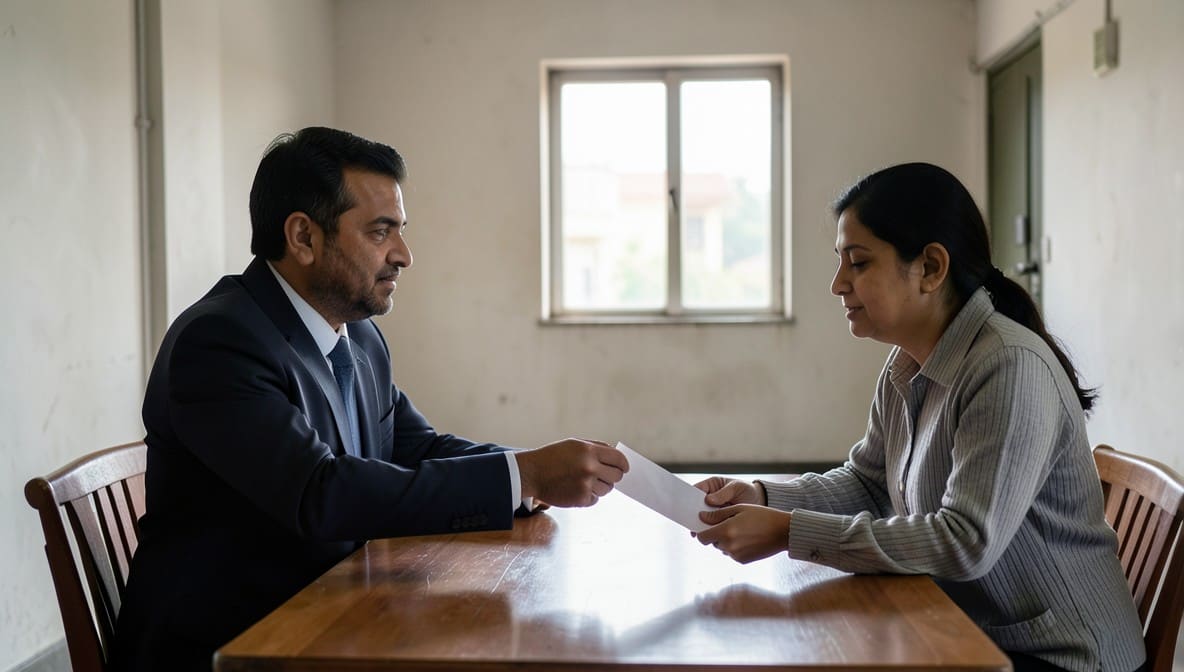
The Himachal Pradesh High Court has affirmed that a marriage dissolved by mutual consent under Section 13-B of the Hindu Marriage Act, 1955, is valid and enforceable once the agreed financial settlement is fully discharged, even if the original petition was filed under Section 13 for contested divorce. This judgment underscores the court’s willingness to uphold amicable resolutions and prioritize finality in matrimonial disputes.
Background & Facts
The Dispute
The appellant, Tsering, filed a petition for dissolution of marriage under Section 13 of the Hindu Marriage Act, 1955, before the Family Court, Kullu, seeking divorce on grounds of irretrievable breakdown and incompatibility. The petition, bearing Regd. No. 161 of 2019, was dismissed on 04.01.2025. Aggrieved, the appellant filed the present appeal before the High Court.
Key Facts
- The marriage between Tsering and Chander Kanta was solemnized on 23.06.2007 according to Hindu rites and rituals
- The parties ceased to live together as husband and wife from the year 2015 due to irreconcilable differences
- No children were born from the marriage
- The appellant filed the original divorce petition in 2019, alleging breakdown of marital relationship
- The Family Court dismissed the petition on 04.01.2025, finding insufficient evidence to grant divorce under Section 13
- During the pendency of the appeal, the matter was referred to mediation by the High Court
- Mediation was conducted by Mr. Rajesh Kumar, Advocate/Mediator, between 2025 and early 2026
- The parties reached a settlement on mutual consent divorce under Section 13-B of the Act
- The appellant agreed to pay Rs.15,00,000 (Rupees Fifteen Lakh) as full and final settlement of maintenance and permanent alimony
- The payment was made in three instalments:
- Rs.2,00,000 on 14.01.2026
- Rs.5,50,000 on 15.01.2026
- Rs.7,50,000 on 13.03.2026
- Both parties affirmed in sworn statements on 23.03.2026 that the payment was received in full, voluntarily, and without coercion
- Neither party sought to revive any prior allegations made during the contested proceedings
Procedural History
- 23.06.2007: Marriage solemnized
- 2015: Parties began living separately
- 2019: Original divorce petition filed before Family Court, Kullu (Regd. No. 161 of 2019)
- 04.01.2025: Family Court dismissed petition under Section 13 HMA
- 2025: Appeal filed before Himachal Pradesh High Court (FAO (FC) No. 70 of 2025)
- Late 2025 - Early 2026: Matter referred to mediation by the High Court
- 14.01.2026: First instalment of Rs.2,00,000 paid
- 15.01.2026: Second instalment of Rs.5,50,000 paid
- 13.03.2026: Final instalment of Rs.7,50,000 paid
- 23.03.2026: Sworn statements recorded by the High Court; Mediator’s report submitted
The Parties' Positions
The appellant sought dissolution of marriage on grounds of irretrievable breakdown, but after the Family Court’s dismissal, pursued mediation. He affirmed willingness to pay Rs.15 lakh as alimony and expressed no desire to pursue contested litigation further. The respondent, initially the respondent in the contested petition, accepted the settlement, confirmed receipt of the full amount, and expressed no objection to mutual divorce.
Relief Sought
The appellant sought dissolution of marriage. Upon settlement, the relief was modified to seek a decree of divorce by mutual consent under Section 13-B HMA, with the alimony payment treated as full and final settlement.
The Legal Issue
The central question was whether a marriage can be dissolved by mutual consent under Section 13-B of the Hindu Marriage Act, 1955, when the original petition was filed under Section 13, and whether the court may treat the petition as converted upon full payment of agreed alimony and mutual affirmation by both parties.
Arguments Presented
For the Appellant
The appellant, appearing in person with counsel, submitted that the parties had voluntarily and amicably resolved all disputes, including financial obligations, through mediation. He emphasized that the entire sum of Rs.15,00,000 had been paid in three instalments, with receipts and sworn statements confirming full compliance. He argued that the spirit of Section 13-B - to facilitate consensual dissolution - was fully satisfied, and the court should not insist on procedural rigidity when substantive justice has been achieved.
For the Respondent
The respondent, also appearing in person with counsel, corroborated the appellant’s submissions. She confirmed receipt of the full alimony amount, affirmed her free consent to mutual divorce, and stated she had no further claims against the appellant. She supported the conversion of the petition into one under Section 13-B and urged the court to grant the decree to bring finality to the matter.
The Court's Analysis
The Court observed that while the original petition was filed under Section 13, the parties had, during the pendency of the appeal, voluntarily resolved all disputes through mediation and reached a comprehensive settlement. The court noted that Section 13-B permits divorce by mutual consent if both parties have lived separately for at least one year, are unable to live together, and have mutually agreed to dissolve the marriage.
"The parties have not only expressed their mutual consent to dissolve the marriage but have also fulfilled the financial obligation agreed upon as a condition precedent to such consent. The payment of Rs.15,00,000 as full and final settlement of maintenance and alimony has been made in three instalments, with both parties affirming under oath that no coercion or undue influence was exerted."
The Court held that the procedural posture of the original petition is immaterial where the parties have genuinely converged on mutual consent. The court has inherent power under Section 151 of the Code of Civil Procedure to treat a petition as one under Section 13-B when the conditions are met, especially in the interest of justice and to prevent protracted litigation. The court further emphasized that the mediation process, conducted by a learned mediator, was transparent and voluntary, and the settlement was not only fair but fully executed.
The Court rejected any notion that a petition under Section 13 cannot be converted into one under Section 13-B. It held that the legislature’s intent in enacting Section 13-B was to encourage amicable resolutions, and courts must facilitate, not obstruct, such outcomes.
The Verdict
The appeal was disposed of in terms of the settlement. The marriage between Tsering and Chander Kanta was dissolved by mutual consent under Section 13-B of the Hindu Marriage Act, 1955, with immediate effect. The decree of divorce was granted. The payment of Rs.15,00,000 as permanent alimony was held to be full and final, with no further claims permissible. All pending applications were dismissed. The court directed the Family Court, Kullu, to issue the decree of divorce within seven days.
What This Means For Similar Cases
Settlement Finality Overrides Procedural Origin
- Practitioners may now confidently seek conversion of contested divorce petitions into mutual consent petitions under Section 13-B HMA if parties reach a full settlement, even after adverse lower court orders
- Courts are empowered to treat such petitions as converted upon proof of mutual consent and full performance of settlement terms
- The burden shifts to the opposing party to prove coercion or fraud if they later challenge the settlement
Mediation as a Valid Pathway to Divorce
- Mediated settlements in matrimonial appeals are now recognized as binding and enforceable by the High Court
- Courts will actively encourage and endorse mediation outcomes, especially where alimony is fully paid and both parties affirm consent under oath
- Lawyers should draft settlement agreements with explicit payment schedules and sworn affidavits to ensure enforceability
Alimony Payment Must Be Documented and Verified
- Lump-sum alimony payments must be made in verifiable instalments with receipts
- Sworn statements before the court confirming receipt and voluntariness are critical to prevent future challenges
- Failure to document payment may render the settlement vulnerable to later revocation claims