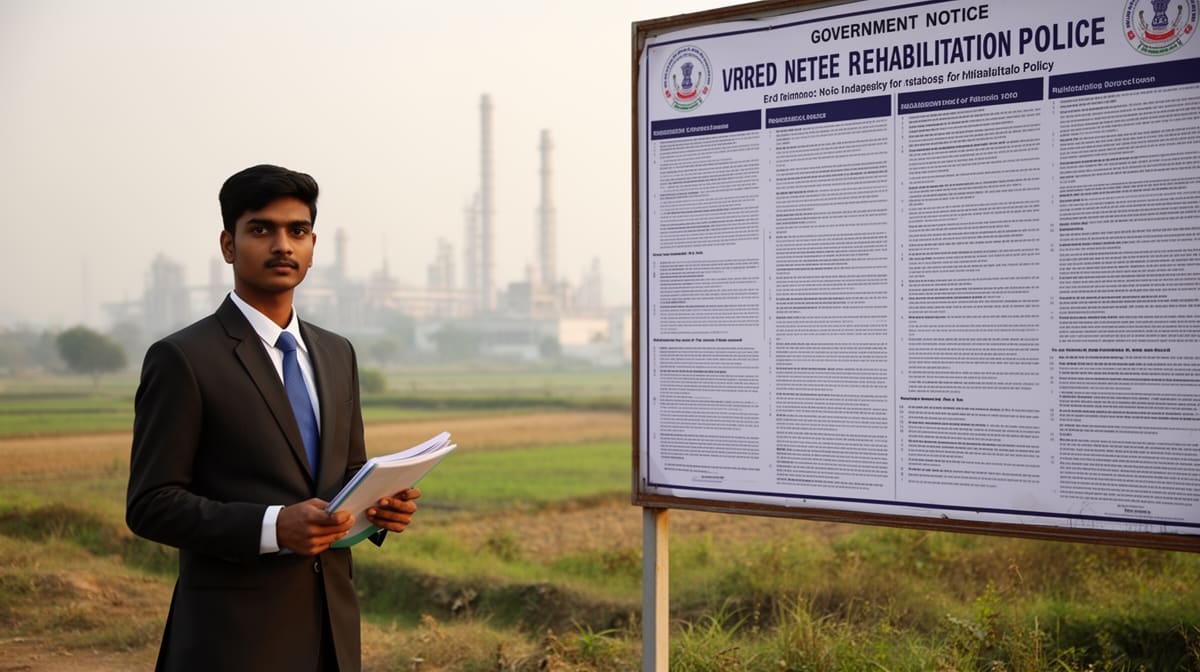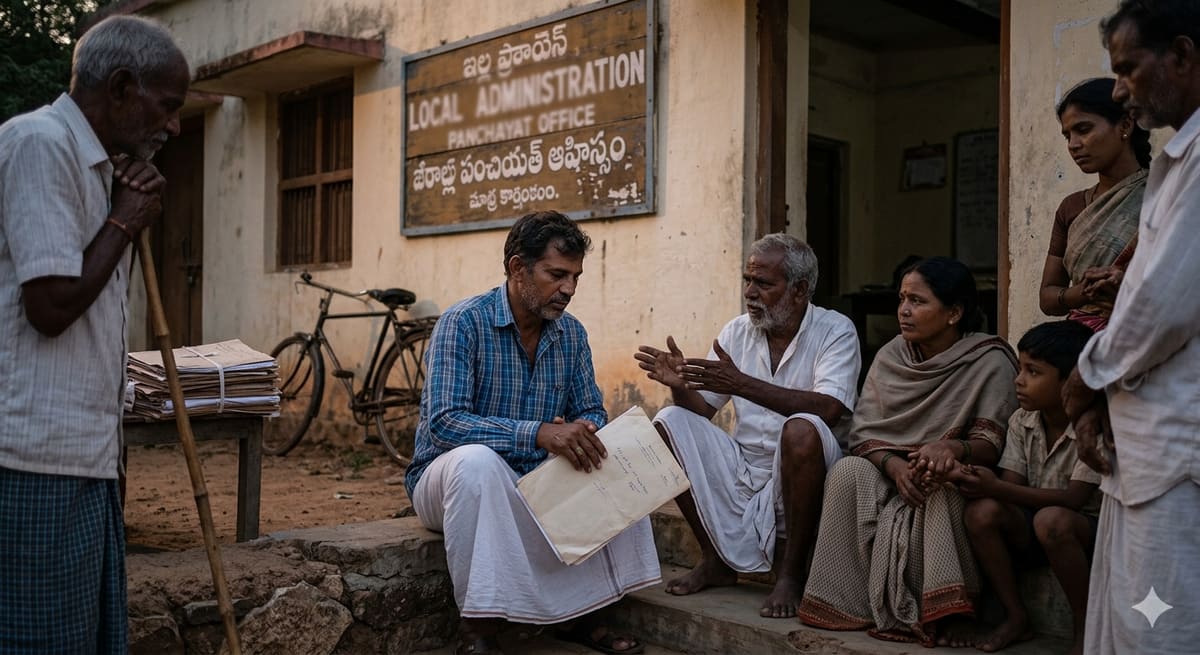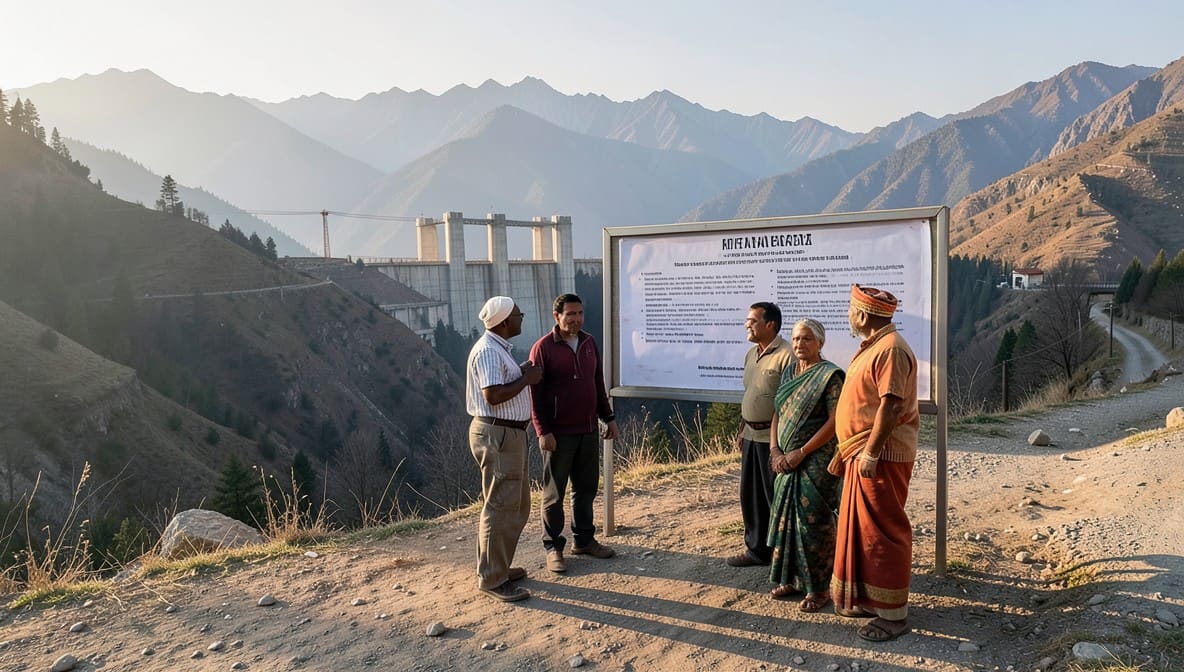
The Himachal Pradesh High Court has affirmed that binding employment commitments made by the State in Memoranda of Understanding with private project proponents are enforceable legal obligations under resettlement schemes. This judgment clarifies that such promises, when incorporated into statutory schemes, create rights for displaced families that cannot be ignored or diluted by subsequent administrative convenience.
Background & Facts
The Dispute
The petitioners, all residents of Kinnaur district, seek employment in the hydroelectric power project developed by private respondents under a resettlement framework established by the State of Himachal Pradesh. They allege breach of contractual and statutory obligations arising from a Memorandum of Understanding (MoU) dated 23.09.2004 and the subsequent Resettlement & Rehabilitation Scheme notified on 11.06.2007. The petitioners claim they belong to families whose land was acquired for the project and are entitled to employment under Clause 18 of the MoU, which mandates preference for displaced persons in project-related jobs.
Key Facts
- The State of Himachal Pradesh entered into a Memorandum of Understanding (MoU) with private project proponents on 23.09.2004 (Annexure P-1).
- Clause 18 of the MoU stipulated that the company shall provide employment to one member from each displaced or adversely affected family during construction and operation of the project.
- An Implementation Agreement was executed on 28.01.2006, reiterating the employment obligations under Clauses 5.5.5 and 5.5.9.
- On 11.06.2007, the State notified the Resettlement & Rehabilitation Scheme (Annexure P-2), designating the Deputy Commissioner, Kinnaur, as the Administrator for implementation.
- Clause 3 of the Scheme explicitly provided for employment opportunities for project-affected families.
- The petitioner Surjan Kumar and others are not landowners; their land was owned by their fathers, who received compensation.
- The project was commissioned and began commercial operations in 2021.
- The petitioners were not offered employment despite being identified as affected persons.
Procedural History
- 23.09.2004: MoU executed between State and private project proponents.
- 28.01.2006: Implementation Agreement signed.
- 11.06.2007: Resettlement & Rehabilitation Scheme notified.
- 17.08.2013: Meeting chaired by Deputy Speaker of H.P. Vidhan Sabha; consensus reached to employ 21 persons, provide monthly compensation to 113 persons, and remunerate 39 non-acquired landholders.
- 29.12.2021: Meeting chaired by Sub-Divisional Officer (Civil), Nichar; 36 additional persons were employed, and affected gram panchayats agreed to forego further employment demands.
- 2023: Writ petitions (CWP Nos. 8972 - 8982 of 2023 and CWP Nos. 214 - 216 of 2024) filed before the High Court seeking employment.
- 23.03.2026: Judgment delivered by Justice Jyotsna Rewal Dua.
The Parties' Positions
For the Petitioners: The MoU and Scheme created enforceable rights. Employment was not a charitable grant but a statutory obligation tied to land acquisition. The petitioners, as members of displaced families, are entitled to employment under Clause 18 of the MoU and Clause 3 of the Scheme. The State’s failure to enforce compliance violates the principle of legitimate expectation.
For the Respondents (State): The petitioners are not landowners and were not directly displaced. Compensation was paid to landowners. Employment was offered based on consensus reached in meetings of 17.08.2013 and 29.12.2021, which limited employment to 57 persons (21 + 36). Further claims are barred by the finality of those agreements.
For the Project Proponents: Employment obligations were fulfilled as per the 2013 and 2021 meetings. The project commenced in 2021 and has since operated with a fixed workforce. No further employment can be mandated without disrupting operational efficiency.
Relief Sought
The petitioners seek a direction to the State and private respondents to provide employment in the hydroelectric project to each petitioner as a member of a displaced family, in accordance with Clause 18 of the MoU and Clause 3 of the Resettlement & Rehabilitation Scheme.
The Legal Issue
Whether a binding employment commitment made by the State in a Memorandum of Understanding, incorporated into a statutory Resettlement & Rehabilitation Scheme, creates enforceable rights for displaced families, even if they are not landowners, and whether such obligations can be unilaterally modified by subsequent administrative meetings?
Arguments Presented
For the Petitioner
The petitioners relied on the principle that when the State enters into a public commitment through a statutory scheme, it cannot renege on it arbitrarily. They cited State of H.P. v. Krishan Lal to argue that resettlement obligations are not mere policy but carry legal weight. The MoU and Scheme were published and notified under statutory authority, creating a legitimate expectation. The fact that petitioners are not landowners is irrelevant - Clause 18 of the MoU refers to "displaced or adversely affected families," not just landowners. The 2021 meeting cannot override a prior statutory obligation.
For the Respondent
The State contended that employment was never an automatic right but a discretionary benefit. The 2013 and 2021 meetings, attended by affected representatives, constituted a final settlement. The petitioners were not identified in those consensus lists. The State cannot be compelled to create jobs beyond the agreed numbers without violating fiscal prudence and project viability. The MoU is a contractual instrument between the State and private entities, not a direct grant to individuals.
The Court's Analysis
The Court examined the nature of the MoU and the Resettlement & Rehabilitation Scheme. It observed that the MoU was not a private contract but a public instrument executed by the State for the purpose of implementing a statutory resettlement framework. The Scheme, notified under the State’s administrative authority, designated the Deputy Commissioner as Administrator with specific duties under Clause 1.4. The Court held that such schemes are designed to mitigate the social impact of development projects and are not optional.
"The Resettlement & Rehabilitation Scheme, once notified, assumes the character of a public instrument binding on the State and its agencies. The obligation to provide employment to affected families is not a discretionary grant but a compensatory measure for loss of livelihood."
The Court rejected the argument that only landowners are entitled to employment. Clause 18 of the MoU explicitly refers to "displaced families or adversely affected" persons. The petitioners, as members of such families, fall within the ambit of beneficiaries. The Court further noted that the 2021 meeting, while recorded in minutes, did not constitute a statutory amendment or repeal of the Scheme. Administrative consensus cannot override a notified scheme.
The Court emphasized that the State, as the architect of the Scheme, has a duty to ensure compliance. The project proponents, having agreed to the MoU, are bound by its terms. The failure to implement employment obligations constitutes a violation of the right to livelihood under Article 21 of the Constitution.
The Verdict
The writ petitions are disposed of with the direction that the Deputy Commissioner, District Kinnaur, acting as Administrator under the Resettlement & Rehabilitation Scheme, shall examine the grievances of all petitioners within twelve weeks from today. The Administrator shall associate all stakeholders, including the project proponents, affected gram panchayats, and petitioners, and determine eligibility for employment in accordance with the MoU dated 23.09.2004 and the Scheme notified on 11.06.2007. All pending applications are dismissed as infructuous.
What This Means For Similar Cases
Resettlement Schemes Are Legally Binding
- Practitioners must treat notified resettlement schemes as enforceable legal instruments, not policy guidelines.
- Any deviation from scheme terms requires formal amendment - not mere administrative consensus.
Employment Rights Extend Beyond Landowners
- Beneficiaries include all "displaced or adversely affected" families, regardless of land ownership.
- Legal claims can be filed by family members even if compensation was paid to the landowner.
State Must Enforce Private Obligations
-
When the State enters into MoUs with private entities for public projects, it assumes a duty to ensure compliance.
-
Failure to monitor or enforce such obligations exposes the State to judicial intervention under Article 21 and Article 14.
-
Always verify whether resettlement commitments are incorporated into a notified scheme.
-
File writ petitions where employment is denied despite inclusion in MoU or Scheme.
-
Demand that the Administrator (usually Deputy Commissioner) conduct a fair, transparent inquiry before rejecting claims.