The Patna High Court has reaffirmed that procedural fairness is non-negotiable in administrative actions affecting livelihoods, particularly in the distribution of essential commodities. In a significant ruling, the Court set aside the cancellation of a Public Distribution System (PDS) shop license due to the licensing authority’s failure to comply with mandatory procedural safeguards under the Bihar Targeted Public Distribution System (Control) Order, 2016.
Background & Facts
The Dispute
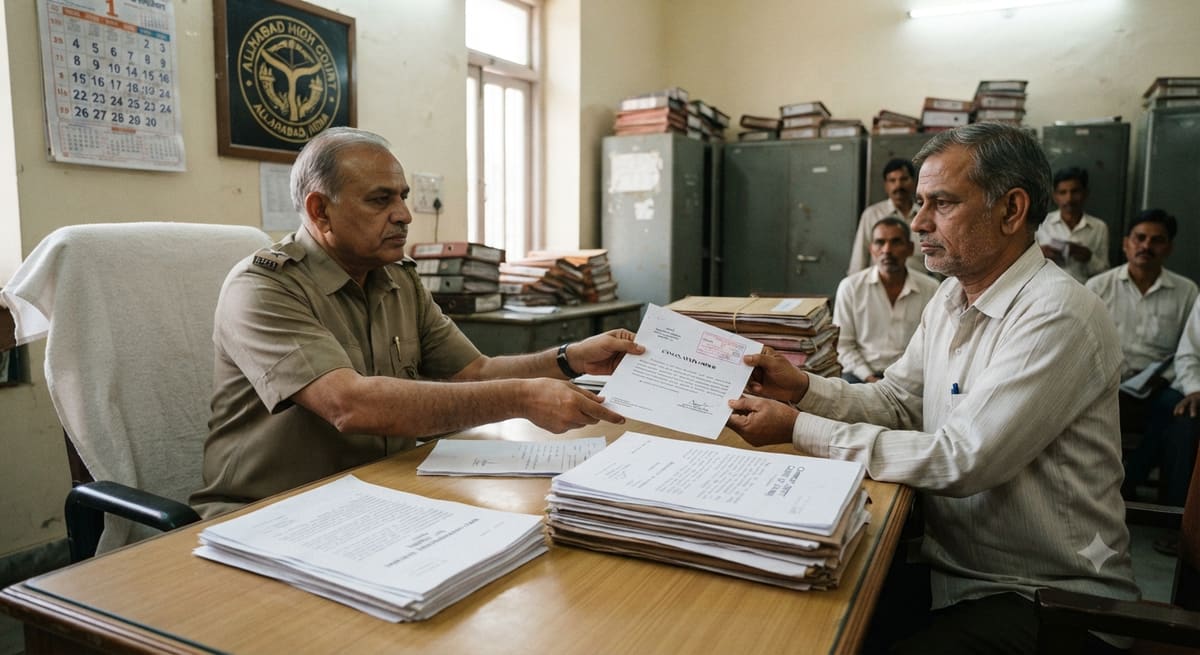
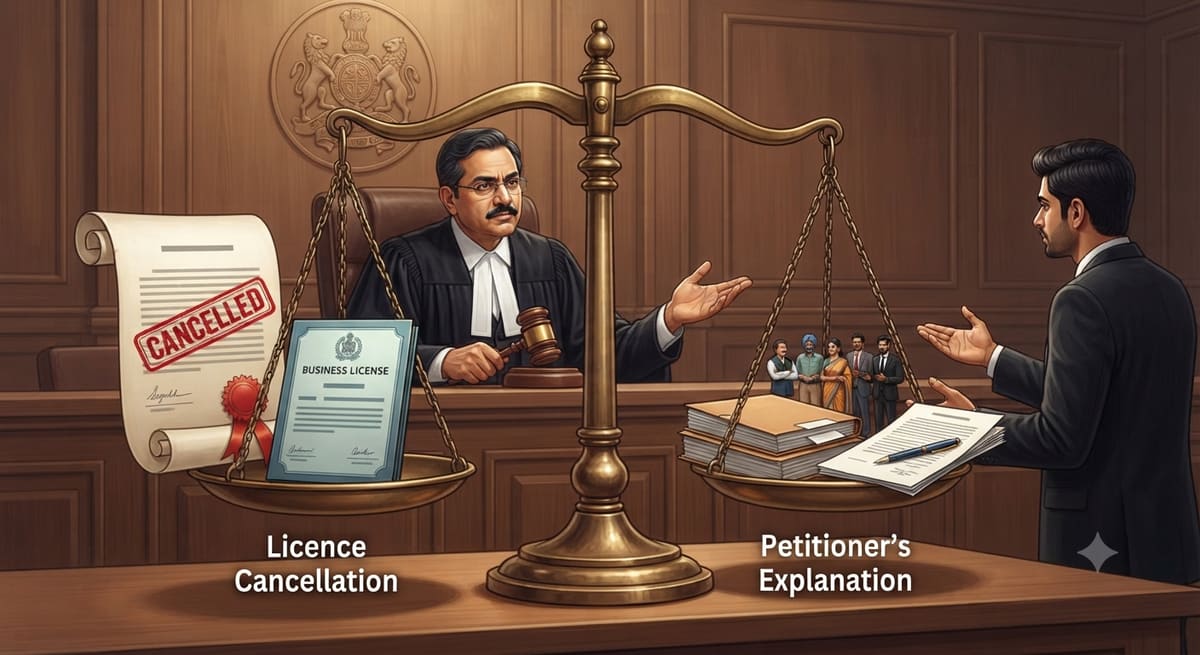
The petitioner, Bansi Das, operated a Public Distribution System (PDS) retail shop under License No. BGS(R) 28/2016 in Begusarai, Bihar. On 27.04.2026, the Sub-Divisional Officer (SDO), Respondent No. 4, issued an order cancelling the petitioner’s PDS license without providing a copy of the underlying enquiry report or stating the proposed action of cancellation in the show-cause notice. The order was based on vague, unverified allegations of irregularities including non-issuance of cash memos, under-distribution of food grains, and failure to maintain stock records. No specific consumer complaints were cited.
Key Facts
- The petitioner held a valid PDS license since 2016 under License No. BGS(R) 28/2016.
- On or before 27.04.2026, the SDO issued a show-cause notice (Annexure-P/5) alleging general misconduct without specifying the nature of violations or identifying affected consumers.
- The show-cause notice did not mention that cancellation of the license was the proposed action.
- No copy of the District Level Committee’s enquiry report was enclosed with the notice.
- The petitioner filed an appeal against the cancellation order, which was dismissed mechanically by the appellate authority without addressing the procedural defects.
- The petitioner’s livelihood and access to essential commodities for over 1,000 households were directly impacted by the cancellation.
Procedural History
- 27.04.2026: Sub-Divisional Officer issued order cancelling PDS license (Annexure-P/5).
- Before 27.04.2026: Show-cause notice issued without enquiry report or proposed action.
- Post-27.04.2026: Petitioner filed appeal before appellate authority; appeal dismissed without reasoned order.
- 22.06.2026: Writ Petition (CWJC No. 8748 of 2026) filed before Patna High Court.
- 25.06.2026: Oral order delivered by Justice A. Abhishek Reddy.
The Parties' Positions
For the Petitioner: Argued that the show-cause notice violated Order 27(ii) of the Bihar Targeted Public Distribution System (Control) Order, 2016, which mandates that the notice must clearly state the proposed action and include the enquiry report. Relied on CWJC No. 253 of 2014 and CWJC No. 21202 of 2021 to establish that failure to comply renders the notice legally invalid and violates the principle of natural justice.
For the Respondents: Contended that the writ petition was not maintainable as the petitioner had an alternative remedy of filing a revision before the Commissioner. Did not dispute the procedural omissions but argued that the petitioner’s conduct warranted cancellation.
Relief Sought
The petitioner sought:
- Quashing of the cancellation order dated 27.04.2026.
- A writ of mandamus directing restoration of the PDS license and resumption of monthly food grain allotments.
- A direction to issue a fresh show-cause notice in compliance with Order 27(ii) of the Control Order, 2016.
The Legal Issue
The central question was whether Order 27(ii) of the Bihar Targeted Public Distribution System (Control) Order, 2016 requires the licensing authority to explicitly state the proposed action of license cancellation in the show-cause notice and to furnish a copy of the enquiry report, and whether failure to do so violates the principles of natural justice.
Arguments Presented
For the Petitioner
The petitioner’s counsel relied on two binding precedents of the Patna High Court. In CWJC No. 253 of 2014, the Court held that non-supply of the enquiry report prejudices the licensee’s ability to respond meaningfully, rendering the order unsustainable. In CWJC No. 21202 of 2021, the Full Bench held that failure to mention the proposed action of cancellation in the show-cause notice renders it legally defective, as it denies the licensee a fair opportunity to defend against the specific penalty sought. The counsel emphasized that the allegations were sweeping, anonymous, and unsupported by evidence, and that the appellate authority had failed to apply its mind.
For the Respondent
The State argued that the writ petition was not maintainable due to the existence of an alternative remedy under the Control Order - filing a revision before the Commissioner. However, the Court rejected this contention, noting that where fundamental rights to livelihood and procedural fairness are at stake, the writ jurisdiction under Article 226 remains available regardless of alternative remedies.
The Court's Analysis
The Court conducted a detailed review of Order 27(ii) of the Bihar TPDSC Order, 2016, which governs the procedure for cancellation of PDS licenses. The provision requires the licensing authority to issue a show-cause notice and provide the licensee an opportunity to be heard. The Court emphasized that the right to be heard is meaningless unless the notice clearly informs the licensee of the nature of the allegations and the proposed consequence.
"It is mandatory for a licensing authority issuing a notice under order 27(ii) to a licensee to mention that there is a proposal for cancellation of his license, failing which such notice cannot be treated to be a valid notice of giving sufficient opportunity to the licensee to state his case under order 27(ii) of the BTPDS Control Order."
The Court further held that the absence of the enquiry report deprived the petitioner of the ability to challenge the factual basis of the allegations. The Court cited CWJC No. 253 of 2014 to underscore that even if no reply is filed, the authority must demonstrate application of mind - which was entirely absent here. The appellate authority’s mechanical dismissal of the appeal compounded the violation.
The Court rejected the argument that an alternative remedy barred writ jurisdiction, noting that when procedural justice is violated, the High Court’s power under Article 226 is not ousted. The Court concluded that the impugned order was not merely erroneous but fundamentally illegal.
The Verdict
The writ petition was allowed. The cancellation order dated 27.04.2026 issued by the Sub-Divisional Officer was set aside. The matter was remanded to the Sub-Divisional Officer to issue a fresh show-cause notice strictly in compliance with Order 27(ii) of the Bihar TPDSC Order, 2016, enclosing a copy of the enquiry report and clearly stating the proposed action of cancellation. The petitioner shall be given a reasonable opportunity to submit a reply. A personal hearing must be granted before any final order is passed. The entire process must be completed within eight weeks from the date of receipt of this order. Any order passed must be communicated to the petitioner.
What This Means For Similar Cases
Procedural Compliance Is Non-Negotiable
- Practitioners must challenge any PDS license cancellation where the show-cause notice omits the proposed action or lacks the enquiry report.
- Courts will not uphold administrative orders based on vague or anonymous allegations, even if no reply is filed.
Alternative Remedies Do Not Bar Writ Jurisdiction in Natural Justice Violations
- The existence of a revision remedy under statutory rules does not prevent a writ petition when fundamental procedural rights are breached.
- Writ courts retain jurisdiction to correct manifest illegality in administrative actions affecting livelihoods.
Licensing Authorities Must Act with Reasoned Application of Mind
-
Mechanical dismissal of appeals or failure to engage with procedural defects renders orders indefensible.
-
Authorities must record reasons addressing the licensee’s arguments and the evidence relied upon.
-
Always verify that show-cause notices under Order 27(ii) explicitly state the proposed penalty.
-
Demand and retain copies of all enquiry reports before any licensing action.
-
File writ petitions promptly where procedural fairness is compromised - even if statutory revision is available.