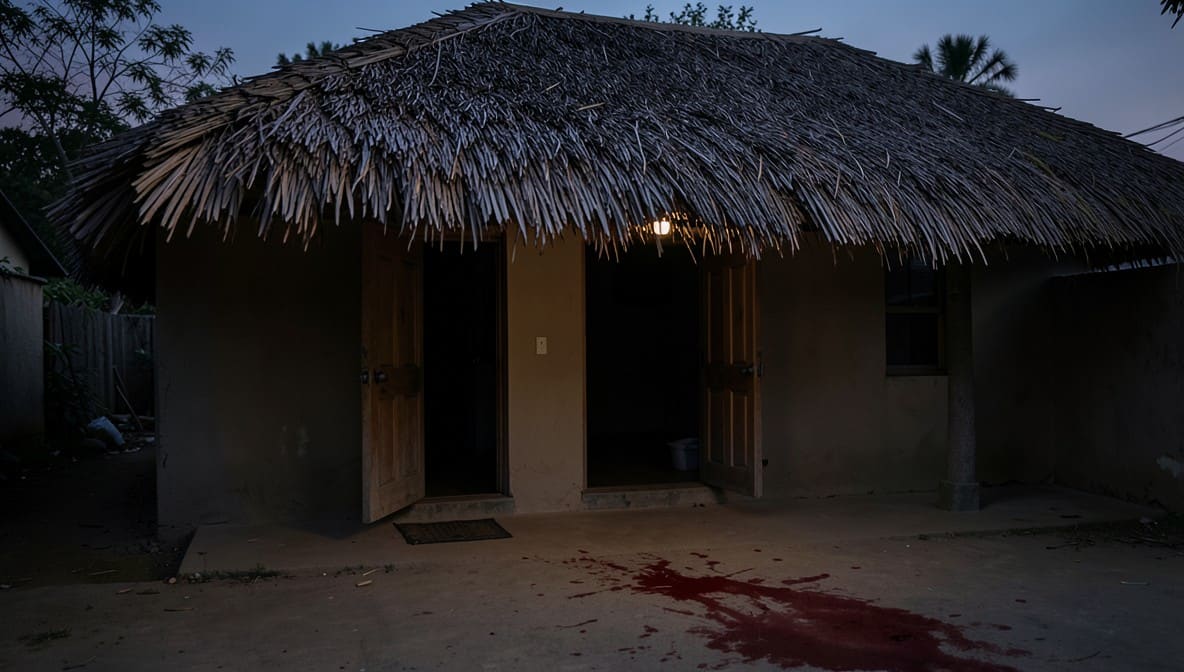
The Gauhati High Court recently delivered a significant judgment in Pranjal Bhowmik v. State of Assam, affirming a conviction under Section 302 of the Indian Penal Code (IPC). The case hinged on the credibility of a sole eye-witness and the application of the last seen theory, despite procedural irregularities in the First Information Report (FIR) and General Diary (GD) entry. The judgment underscores the weight of direct testimony in criminal trials and the limited scope of appellate review in factual determinations.
Background & Facts
The Dispute
The case pertains to the death of Arup Kalita, who went missing on the night of 19.05.2010 after having dinner at the house of PW-12. His body was discovered on 21.05.2010 in a pond near the house of the accused, Haradhan Bhowmik. The appellant, Pranjal Bhowmik, along with his brothers Chandan Bhowmik and Babul Bhowmik, and their father Haradhan Bhowmik, were initially charge-sheeted under Sections 120B/302/201/34 IPC. However, the trial court acquitted all accused except Pranjal Bhowmik, who was convicted under Section 302 IPC and sentenced to rigorous imprisonment for life with a fine of Rs. 10,000, in default, to undergo rigorous imprisonment for three months.
Key Facts
- 19.05.2010: Arup Kalita had dinner at PW-12’s house and left at around 11 p.m. after receiving a phone call.
- 19.05.2010, 11:45 p.m.: PW-11, a tenant in Haradhan Bhowmik’s house, witnessed the appellant assaulting Arup Kalita on the head with a wooden batten. Babul Bhowmik and Haradhan Bhowmik were present but did not intervene.
- 20.05.2010: PW-11 informed PW-2 (brother of the deceased) about the assault. PW-2 filed a missing report (GD Entry No. 486) at Missamari Police Station at 8:10 p.m., but did not mention the assault or the appellant’s name.
- 21.05.2010: The body of Arup Kalita was recovered from a pond near Haradhan Bhowmik’s house at around 11 a.m. PW-2 filed an FIR at 3:30 p.m., naming Chandan Bhowmik and Babul Bhowmik as assailants but omitting the appellant’s name.
- Post-mortem findings: PW-1 (Doctor) found a single incised injury on the occipital scalp of the deceased, sufficient to cause death. The injury was consistent with a sharp wooden object.
- Investigation: The police seized a wooden batten, a blood-stained dao, a black shirt belonging to the deceased, and a mobile phone from Haradhan Bhowmik’s house.
Procedural History
- 20.05.2010: GD Entry No. 486 registered based on PW-2’s missing report.
- 21.05.2010: FIR filed by PW-2 (Missamari PS Case No. 29/2010) under Sections 302/201/34 IPC.
- Charge-sheet: Filed against five accused (including the appellant) under Sections 120B/302/201/34 IPC. Sangita Bhowmik was discharged for want of evidence.
- Trial: The trial court acquitted Chandan Bhowmik, Babul Bhowmik, and Haradhan Bhowmik but convicted the appellant under Section 302 IPC.
- 13.08.2019: Impugned judgment passed by the Sessions Judge, Sonitpur.
- Crl.A./388/2019: Appeal filed before the Gauhati High Court.
The Parties' Positions
For the Appellant
- The appellant’s counsel argued that the prosecution’s case rested solely on PW-11’s testimony, which was an afterthought. The GD Entry and FIR did not mention the appellant’s name, implying PW-11 had not witnessed the assault.
- Even if the assault was proven, the appellant lacked the intention or knowledge to cause death, as only one blow was inflicted. The conviction under Section 302 IPC was unsustainable and should be reduced to Section 304 Part-II IPC.
- PW-11 had a motive to falsely implicate the appellant, as he was in love with the deceased’s sister.
For the Respondent
- The prosecution contended that the non-mention of the appellant’s name in the GD Entry and FIR did not discredit PW-11’s testimony, as PW-2 (the informant) was not the eye-witness.
- The appellant’s intention and knowledge to kill the deceased were evident from the act of tying the deceased’s legs and throwing the body into a pond to ensure death.
- Under Section 106 of the Evidence Act, the appellant failed to explain how he parted company with the deceased, which strengthened the prosecution’s case.
- A potential motive was the deceased having lent Rs. 40,000 to Monoranjan Bhowmik (appellant’s brother) for a marriage.
The Legal Issue
The central questions before the court were:
- Whether the conviction under Section 302 IPC was sustainable based on the sole testimony of PW-11, despite procedural gaps in the FIR and GD Entry.
- Whether the appellant’s act of assaulting the deceased with a single blow on the head attracted Section 302 IPC or Section 304 Part-II IPC, given the absence of established motive.
Arguments Presented
For the Appellant
- The GD Entry (No. 486) and FIR did not mention the appellant’s name, casting doubt on PW-11’s credibility. The omission suggested PW-11 had not witnessed the assault.
- The prosecution failed to establish a motive for the crime, weakening the case under Section 302 IPC.
- The single injury on the deceased’s head did not conclusively prove intention to kill, and the conviction should be reduced to Section 304 Part-II IPC.
For the Respondent
- The GD Entry and FIR were authored by PW-2, not PW-11, and their omissions did not discredit PW-11’s testimony.
- The appellant’s intention and knowledge were evident from the act of tying the deceased’s legs and disposing of the body in a pond.
- Under Section 106 of the Evidence Act, the appellant’s failure to explain his actions was an additional link in the chain of circumstantial evidence.
- The prosecution was not required to prove motive when an eye-witness (PW-11) was available.
The Court's Analysis
The High Court meticulously examined the evidence and legal principles to uphold the conviction:
-
Credibility of PW-11’s Testimony:
- The court noted that PW-11’s testimony was consistent across his statements under Section 161 Cr.P.C and Section 164 Cr.P.C, as well as his deposition before the trial court.
- The absence of the appellant’s name in the GD Entry and FIR was attributed to inadvertence and did not imply PW-11’s testimony was false.
- The court relied on Govindaraju @ Govinda v. State [(2012) 4 SCC 722], which held that the testimony of a sole witness must be cogent and reliable, fitting into the chain of events. PW-11’s evidence met this standard.
"The evidence of a sole witness should be cogent, reliable and must essentially fit into the chain of events that have been stated by the Prosecution."
-
Last Seen Theory and Section 106 of the Evidence Act:
- The court applied the last seen theory, noting that the appellant was the last person seen assaulting the deceased. The burden shifted to the appellant to explain how he parted company with the deceased.
- The court cited Rajendra v. State (NCT of Delhi) [(2019) 10 SCC 623], which held that the accused must furnish a reasonable explanation for parting company with the deceased. The appellant’s failure to do so strengthened the prosecution’s case.
- The court also relied on Mohd. Firoz v. State of Madhya Pradesh [(2022) 3 SCC (Cri) 165], which emphasized that the accused’s failure to explain circumstances within his special knowledge could be an additional link in the chain of evidence.
"Section 106 of the Evidence Act only lays down the rule that when an accused does not throw any light upon facts which are especially within his/her knowledge and cannot support any theory or hypothesis compatible with his innocence, the Court can consider his failure to adduce an explanation as an additional link which completes the chain of incriminating circumstances."
-
Cause of Death and Intention:
- PW-1 (Doctor) opined that the single injury on the deceased’s head was sufficient to cause death. The court noted that the stomach of the deceased was full of food, indicating death occurred within 4-6 hours of the meal (i.e., shortly after the assault).
- The court rejected the appellant’s argument that the single blow did not prove intention to kill. It relied on Pulicherla Nagaraju v. State of A.P. [(2006) 11 SCC 444], which outlined factors to determine intention, including the nature of the weapon, the part of the body targeted, and the force employed.
- The act of tying the deceased’s legs and disposing of the body in a pond demonstrated intention and knowledge to ensure death, precluding the application of Section 304 Part-II IPC.
"The above facts, in our view, can only reinforce our view that there was intention on the part of the appellant to kill the deceased."
-
Motive:
- The court held that motive was not essential when an eye-witness (PW-11) was available. It relied on Sheo Shankar Singh v. State of Jharkhand [(2011) 3 SCC 654], which stated that proof of motive recedes into the background in such cases.
The Verdict
The Gauhati High Court dismissed the appeal, upholding the conviction of the appellant under Section 302 IPC. The court affirmed the sentence of rigorous imprisonment for life with a fine of Rs. 10,000, in default, to undergo rigorous imprisonment for three months. The judgment reaffirmed the trial court’s finding that the appellant’s assault on the deceased was the cause of death and that the appellant possessed the intention and knowledge to cause death.
What This Means For Similar Cases
Sole Eye-Witness Testimony Can Sustain Conviction
- Courts may rely on the testimony of a single eye-witness if it is cogent, reliable, and consistent with other evidence. Procedural gaps (e.g., omissions in FIR/GD Entry) do not automatically discredit such testimony.
- Practitioners should emphasize the quality of evidence over quantity, especially when the witness’s account fits into the chain of events.
Last Seen Theory and Section 106 of the Evidence Act
- The last seen theory places a burden on the accused to explain how they parted company with the deceased. Failure to provide a reasonable explanation can be an additional link in circumstantial evidence.
- Section 106 of the Evidence Act does not shift the burden of proof to the accused but requires them to furnish an explanation for facts within their special knowledge. Non-compliance can strengthen the prosecution’s case.
Intention and Knowledge in Homicide Cases
- Single blow cases can attract Section 302 IPC if the injury is inflicted on a vital part of the body with a dangerous weapon. Courts will consider factors like the nature of the weapon, the force used, and subsequent acts (e.g., disposing of the body).
- The absence of motive does not weaken the prosecution’s case when direct evidence (e.g., eye-witness testimony) is available.
Practical Takeaways for Practitioners
- For Prosecution: Focus on establishing the credibility of eye-witnesses and ensuring their testimony is consistent across statements (Section 161 Cr.P.C, Section 164 Cr.P.C, and trial deposition). Highlight the last seen theory and the accused’s failure to explain circumstances under Section 106.
- For Defence: Challenge the reliability of sole eye-witness testimony by pointing to inconsistencies, procedural gaps, or potential motives for false implication. Argue for Section 304 Part-II IPC if the evidence suggests lack of intention to kill.
- For Trial Courts: Scrutinize the quality of evidence and avoid acquittals based solely on procedural irregularities if the substantive evidence is reliable.