The Gauhati High Court has reaffirmed that the availability of a statutory appellate mechanism under the Assam Right to Public Services Act, 2012, bars the invocation of writ jurisdiction under Article 226 for delays in public service delivery, unless the remedy is demonstrably illusory or ineffective.
Background & Facts
The Dispute
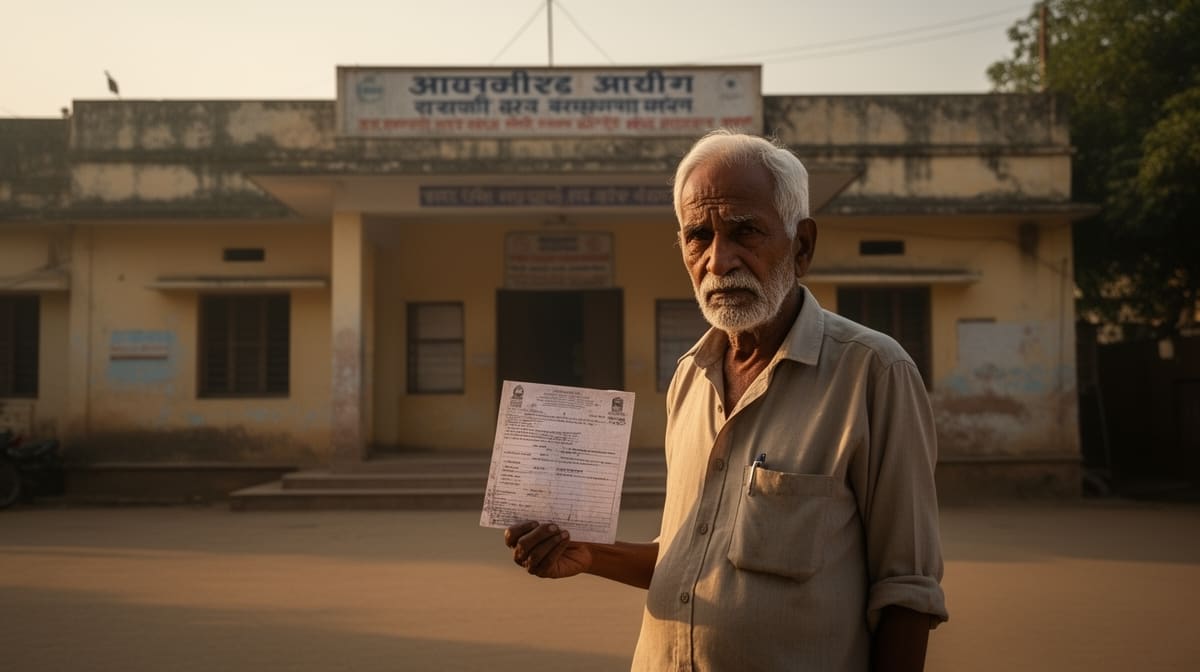
The four petitioners, residents of Sontushpur village in Dhubri district, Assam, claim that their predecessors-in-interest have been in continuous, peaceful occupation of land covered by Dag No. 206/178 for approximately fifty years. They have used the land for homestead and plantation purposes. Being landless, they applied for formal allotment of the land, which was granted through multiple Allotment Certificates (Annexures 1, 1A, 1B, 1C, 1D). Subsequently, they applied for the conversion of these Allotment Certificates into Periodic Pattas under the notified public service scheme.
Key Facts
- The petitioners submitted applications for conversion on 07.12.2024, 26.11.2024, and 09.12.2024.
- Applications were acknowledged via receipts (Annexures 4, 4A, 4B, 4C).
- The service ‘Conversion of Allotment Certificate to Periodic Patta’ was notified under the Assam Right to Public Services Act, 2012, via Government Notification dated 09.07.2024, published in the Official Gazette on 12.07.2024.
- The stipulated timeline for disposal of such applications is 90 days from the date of application.
- As of the filing of the writ petition, more than 90 days had elapsed without any decision or speaking order being issued.
- The petitioners allege no communication, no rejection, and no grant of the service.
- They fear imminent eviction from the land, though no formal eviction notice has been produced.
Procedural History
- 09.07.2024: Notification issued by Revenue & Disaster Management Department, Government of Assam, notifying ‘Conversion of Allotment Certificate to Periodic Patta’ as a public service under the Assam Right to Public Services Act, 2012.
- 12.07.2024: Notification published in the Official Gazette.
- 26.11.2024, 07.12.2024, 09.12.2024: Petitioners submitted applications for conversion.
- Approx. 25.02.2025: 90-day statutory period expired for the earliest application.
- 25.06.2026: Writ Petition (WP(C)/2889/2026) filed before the Gauhati High Court.
The Parties' Positions
Petitioners: Argued that the state’s failure to dispose of their applications within 90 days constitutes a violation of their statutory right under the Assam Right to Public Services Act, 2012. They claimed that the absence of a speaking order and prolonged inaction amounts to administrative apathy and threatens their livelihood and security of tenure.
Respondents: Did not contest the factual timeline but argued that the petitioners have an alternative, adequate, and statutory remedy under Section 8 of the Act, which must be exhausted before approaching the High Court.
Relief Sought
The petitioners sought a writ of mandamus directing the respondents to:
- Grant the conversion of Allotment Certificates to Periodic Pattas within a stipulated time;
- Issue a speaking order explaining the delay or refusal;
- Restrain any eviction proceedings;
- Declare the inaction as violative of Article 14 and 21 of the Constitution.
The Legal Issue
Whether the High Court can entertain a writ petition under Article 226 when an adequate and statutory remedy under the Assam Right to Public Services Act, 2012, is available and has not been exhausted?
Arguments Presented
For the Petitioner
Counsel for the petitioners contended that the prolonged inaction - spanning over six months beyond the 90-day deadline - amounts to a violation of the statutory right to timely service. They argued that the absence of any communication or order, coupled with the threat of eviction, renders the statutory remedy ineffective. They relied on the principle that when a statutory right is violated through inaction, the writ jurisdiction becomes a necessary safeguard under Articles 14 and 21.
For the Respondent
The Standing Counsel for the State contended that the Assam Right to Public Services Act, 2012, provides a comprehensive, self-contained mechanism for redressal, including first and second appeals before the Director of Land Records & Surveys and the RTPS Commission. The Act mandates speaking orders and provides timelines for appellate disposal. The petitioners have not approached the First Appellate Authority, and therefore, the writ petition is premature and barred by the doctrine of alternative remedy.
The Court's Analysis
The Court examined the structure and intent of the Assam Right to Public Services Act, 2012, particularly Sections 4, 8, and 9. It noted that the legislature deliberately created a tiered appellate structure with defined timelines and obligations on public servants to issue speaking orders. The Court emphasized that the Act was enacted to ensure accountability and efficiency in public service delivery, and its provisions are not merely directory but mandatory.
"The existence of a statutory appellate mechanism, with clear timelines and procedural safeguards, precludes the invocation of writ jurisdiction under Article 226, unless the remedy is shown to be illusory or wholly inadequate."
The Court observed that the petitioners have not filed any appeal before the First Appellate Authority - the Director of Land Records & Surveys - as permitted under Section 8. The Act explicitly allows for condonation of delay if sufficient cause is shown, and the Appellate Authority is mandated to pass a speaking order. The Court held that the petitioners’ apprehension of eviction, while serious, does not negate the existence of an adequate remedy. The First Appellate Authority, upon being approached, is empowered to grant interim relief, including restraining eviction pending disposal.
The Court further clarified that the doctrine of exhaustion of statutory remedies is well-established in administrative law. The High Court’s writ jurisdiction is not a substitute for statutory forums unless the remedy is ineffective, vexatious, or contrary to natural justice. None of these exceptions were made out in the present case.
The Verdict
The writ petition was dismissed without prejudice to the petitioners’ right to file an appeal under Section 8 of the Assam Right to Public Services Act, 2012. The petitioners are directed to file their appeal before the First Appellate Authority, the Director of Land Records & Surveys, Assam, within thirty days from the date of this judgment. The Appellate Authority shall dispose of the appeal within the stipulated 30-day period under Section 8, and shall consider any prayer for interim relief, including restraint against eviction, on its merits. The appeal shall be decided by a speaking order, as mandated by the Act.
What This Means For Similar Cases
Statutory Remedies Must Be Exhausted First
- Practitioners must verify whether a statutory appellate mechanism exists before filing a writ petition under Article 226.
- Delay in public service delivery alone does not render the statutory remedy inadequate; the burden lies on the petitioner to prove futility.
Interim Relief Is Available Under Statutory Appeals
- Petitioners seeking interim protection (e.g., against eviction) must raise it before the First Appellate Authority under Section 8, not in writ proceedings.
- The Appellate Authority has express power to grant interim orders, making writ petitions for interim relief unnecessary.
Speaking Orders Are Mandatory
- Authorities cannot remain silent. Failure to issue a speaking order within the stipulated time is a violation of the Act and grounds for appeal.
- Courts will not entertain writ petitions merely because a decision is delayed - only if the statutory process is deliberately obstructed or rendered meaningless.