The Gauhati High Court has affirmed that mere minor inconsistencies in witness testimony do not invalidate a conviction under the NDPS Act where the prosecution establishes conscious possession beyond reasonable doubt. The judgment reinforces that procedural compliance must be assessed holistically, and technical defects without evidence of prejudice cannot vitiate a case grounded in credible recovery and forensic confirmation.
Background & Facts
The Dispute
The appellant, Shri Lalzarzova alias Zarzova, was prosecuted for possession of 324 grams of heroin with intent to deliver, under Section 21(c) read with Section 8(c) of the Narcotic Drugs and Psychotropic Substances Act, 1985. The case arose from a covert operation by the Excise and Narcotics Department of Mizoram, triggered by intelligence received from the 46th Assam Rifles regarding large-scale trafficking in the Kolasib area.
Key Facts
On 19.03.2021, Sub-Inspector F. Lalnuntluanga received secret information about heroin trafficking along the Serkhan-Bagha Road, 8 km from Bukpui, within Kolasib district.
On 20.03.2021 at approximately 4:30 p.m., the Excise team, including two civilian witnesses, intercepted the appellant and co-accused Lalduhawma near the roadside.
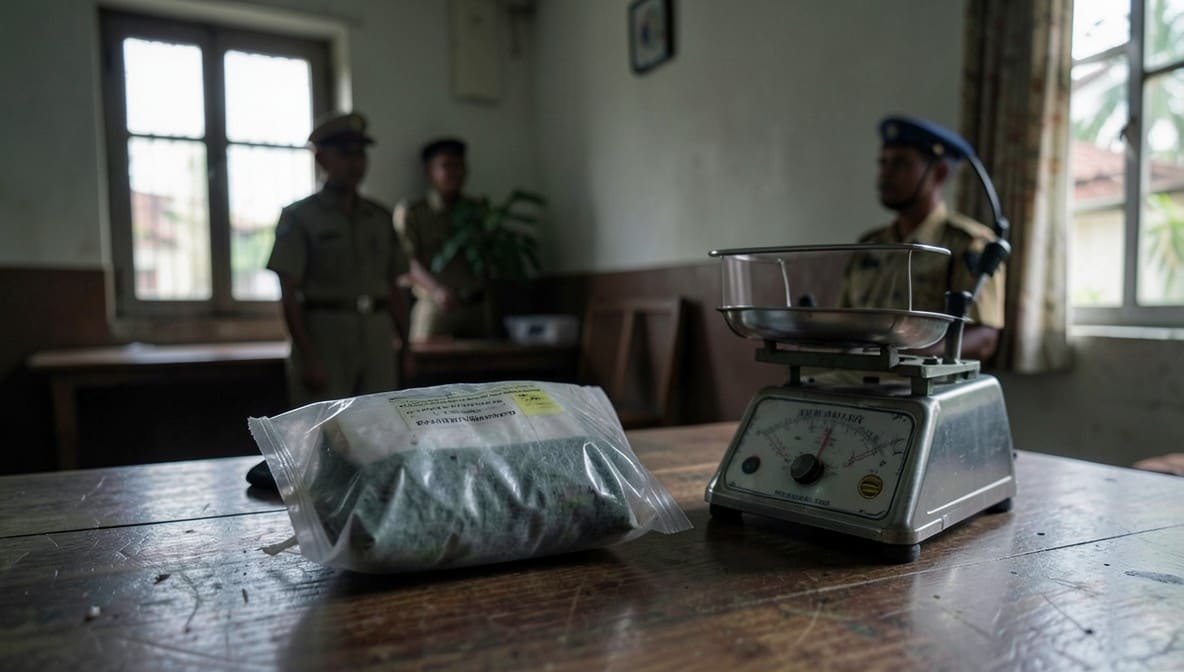
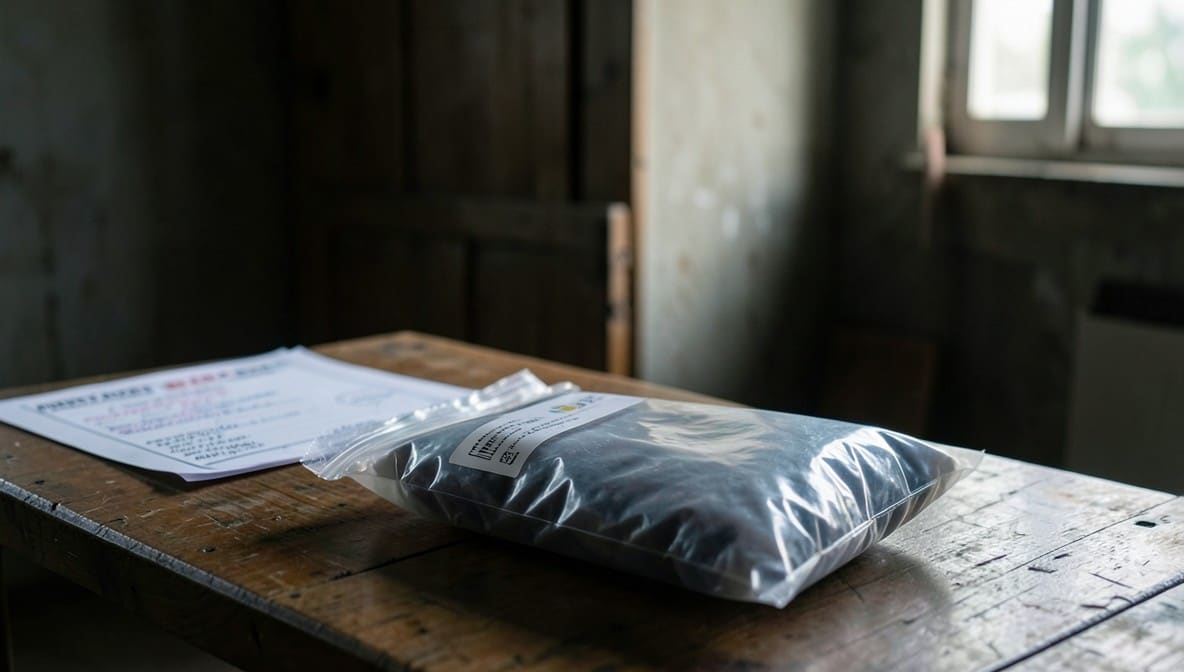
A black backpack containing 26 soap cases wrapped in white polythene, each holding a sample of yellowish powder, was recovered from the appellant’s possession.
The substance was suspected to be heroin and weighed 324 grams.
The co-accused, Lalduhawma, was present but no contraband was recovered from him.
The appellant was allegedly acting as a courier for a third party, Rohlupuii, who had entrusted him with the package for delivery to NEEPCO.
A decoy customer, traveling in a Renault Kwid, was part of the operation; the appellant was seen in proximity to the vehicle at the time of arrest.
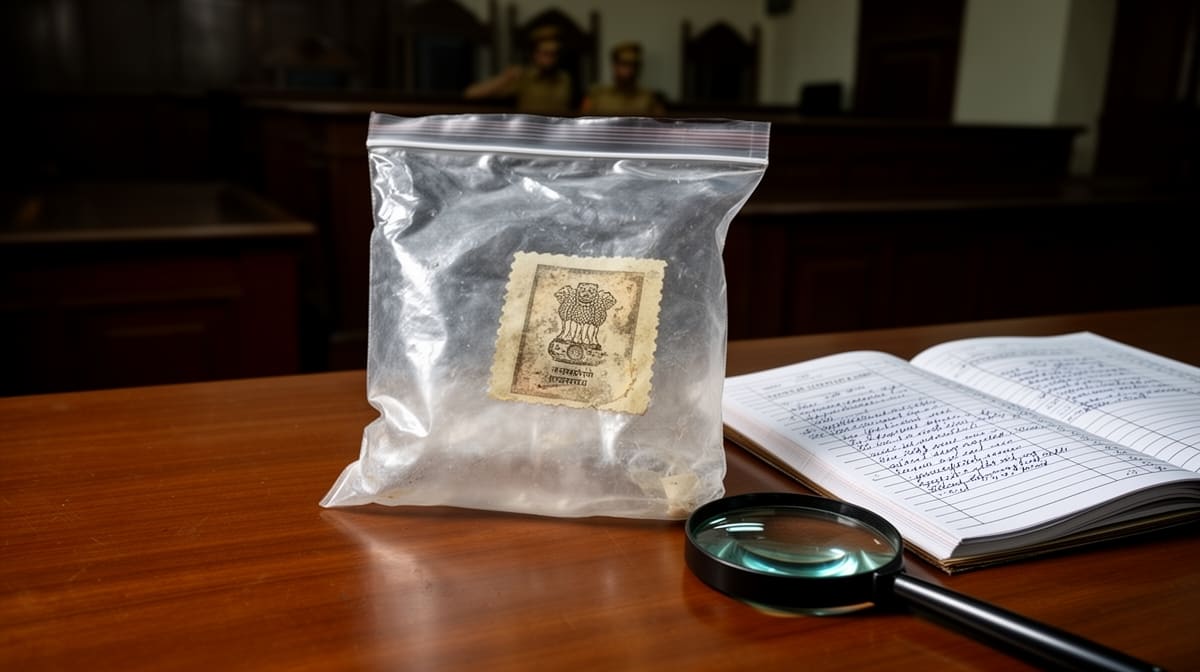
The seized material was sealed, photographed, and sampled before Judicial Magistrate First Class (JMFC), Kolasib, on 20.03.2021.
Forensic Science Laboratory, Aizawl, confirmed on 25.03.2021 that the substance was heroin with 77% purity w/w.
The case was registered as Kolasib Excise Case No. EX-KLB/30/2021 on 21.03.2021.
The appellant was medically examined under Section 53 Cr.P.C. on 20.03.2021 and cleared of COVID-19.
The appellant’s wife (DW-1) and nephew (DW-2) testified that he was unaware of the contents and was merely hired to deliver the package.
Procedural History
19.03.2021: Secret intelligence received by SI F. Lalnuntluanga from 46th Assam Rifles.
20.03.2021: Arrest and seizure conducted at Bukpui, Ralbawm Ram; case registered on 21.03.2021.
25.03.2021: FSL report received confirming heroin with 77% purity.
08.04.2022: Charges framed under Section 21(c) NDPS Act by Fast Track Court, Kolasib.
09.04.2024: Fast Track Court convicted appellant Lalzarzova and acquitted co-accused Lalduhawma.
25.06.2026: Criminal Appeal (J) No. 15/2025 heard and decided by Gauhati High Court.
The Parties' Positions
For the Appellant
Argued that the recovery was not from his physical possession but from a vehicle.
Contended that Section 50 of the NDPS Act was violated as he was not informed of his right to be searched before a Magistrate or Gazetted Officer.
Highlighted contradictions between PW-3 and PW-4 regarding whether the heroin was seized from the vehicle or directly from the appellant.
Asserted that the defense of unawareness (DW-1’s testimony) was credible and uncorroborated by prosecution.
Relied on Khet Singh v. Union of India (2002) 4 SCC 380 and Noor Aga v. State of Punjab (2010) 3 SCC (Cri) 748 to argue that procedural lapses and evidentiary contradictions vitiate the prosecution case.
For the Respondent
Maintained that no search was conducted; the contraband was recovered in flagrante delicto from the appellant’s possession.
Argued that Section 50 NDPS Act does not apply where there is no search but direct recovery from possession.
Emphasized that the decoy operation was lawful and the appellant was caught in the act of delivery.
Stated that minor inconsistencies in witness statements were immaterial and did not affect the core recovery.
Cited the FSL report, judicial sealing, and photographic evidence as conclusive proof of compliance.
Relief Sought
The appellant sought quashing of the conviction and sentence under Section 21(c) NDPS Act, arguing that the trial court’s findings were legally unsustainable due to procedural violations and evidentiary contradictions. He requested acquittal or, alternatively, remand for re-trial.
The Legal Issue
The central question was whether conscious possession under Section 21(c) of the NDPS Act can be established when the accused claims unawareness of the contraband’s nature, and whether minor contradictions in witness testimony or alleged non-compliance with Section 50 of the NDPS Act invalidate a conviction where the substance was recovered directly from the accused during a lawful operation.
Arguments Presented
For the Appellant
The learned Senior Counsel argued that the prosecution failed to prove conscious possession because the appellant was merely a courier acting under instructions from a third party, Rohlupuii, without knowledge of the contents. He emphasized that PW-3 and PW-4 contradicted each other on whether the heroin was recovered from the vehicle or directly from the appellant’s person, creating reasonable doubt. He further contended that the failure to inform the appellant of his right under Section 50 NDPS Act rendered the recovery inadmissible, citing Khet Singh. He also argued that the defense of innocent delivery, supported by DW-1, was not rebutted by the prosecution, and the burden of proving mens rea remained with the state under Section 35 NDPS Act.
For the Respondent
The Public Prosecutor countered that no search was conducted; the contraband was seized directly from the appellant’s custody during an ongoing delivery attempt, making Section 50 inapplicable. She argued that the decoy operation was lawful and the appellant was caught red-handed. She highlighted the FSL report, judicial sealing, and photographic evidence as proof of procedural integrity. She maintained that the contradictions between PW-3 and PW-4 were minor and immaterial, as both agreed the appellant was holding the backpack at the time of arrest. She relied on Noor Aga to argue that only material discrepancies invalidate a case, and here, the core facts remained unchallenged.
The Court's Analysis
The Court undertook a meticulous review of the evidence, focusing on the nature of recovery, procedural compliance, and the credibility of the defense. It observed that the appellant was not subjected to a search; rather, the contraband was recovered from his physical possession during the act of delivery. The Court held that Section 50 of the NDPS Act applies only when a search is conducted, and since the recovery was incidental to arrest in flagrante delicto, the provision was not triggered. The Court stated:
"The contention of non-compliance with Section 50 of the NDPS Act is negated and the view and the conclusion of the learned Fast Track Court is confirmed."
The Court further examined the contradictions between PW-3 and PW-4. While PW-3 claimed the heroin was recovered from inside the Renault Kwid, PW-4 stated it was seized directly from the appellant’s hands. The Court found these discrepancies to be "negligible" and not fatal, noting that both witnesses agreed the appellant was holding the backpack and was in proximity to the vehicle at the time of arrest. The Court emphasized:
"The fact remained that the seized articles have been seized from the appellant and he was inside the vehicle along with the decoy customer."
The Court rejected the defense of unawareness, noting that the appellant’s claim - that he was delivering a sealed package for payment without knowing its contents - was unsupported by any corroborative evidence. The Court observed that the story lacked specificity: no details were provided about the recipient at NEEPCO, the nature of the payment, or the identity of Rohlupuii beyond the uncorroborated testimony of the appellant’s wife. The Court concluded:
"It is difficult to understand that if a person gives some packets to be delivered to NEEPCO and the person who delivers the same did not know or did not ask anything about the contents of the packet."
The Court also distinguished Khet Singh and Noor Aga, holding that those cases involved clear procedural violations or material contradictions that undermined the entire chain of evidence. Here, the prosecution established a continuous, documented chain of custody, forensic confirmation, and judicial oversight. The Court affirmed that the burden under Section 35 NDPS Act is not absolute; the prosecution must first establish possession, after which the burden shifts. In this case, possession was clearly established.
The Verdict
The appeal was dismissed. The conviction and sentence under Section 21(c) of the NDPS Act were upheld. The appellant was directed to undergo rigorous imprisonment for ten years and pay a fine of Rs. 1,00,000, with an additional one year of rigorous imprisonment in default of payment. The trial court records were ordered to be sent back. The co-accused, Lalduhawma, remained acquitted as the Court found no evidence linking him to possession.
What This Means For Similar Cases
Possession Trumps Alleged Unawareness
Practitioners must now argue that a claim of "unawareness" under the NDPS Act is insufficient without corroboration, especially when the accused is caught in the act of delivery.
Courts will weigh the plausibility of the defense against the physical circumstances of recovery.
Mere assertion of innocence by a family member, without independent evidence, will not rebut the prosecution’s case.
Section 50 NDPS Act Does Not Apply to Flagrante Delicto Recoveries
If contraband is recovered directly from the accused during an ongoing transaction or delivery, without a prior search, Section 50 NDPS Act is inapplicable.
Prosecutors should clearly plead and prove the nature of recovery - whether it was incidental to arrest or the result of a search.
Defense counsel must distinguish between search-based and recovery-based cases when invoking Section 50.
Minor Evidentiary Inconsistencies Are Not Fatal
Courts will not invalidate convictions for minor contradictions in witness accounts if the core facts of possession and recovery remain consistent.
The focus must be on whether the discrepancies affect the reliability of the central evidence (e.g., FSL report, chain of custody).
Photographs, judicial sealing, and forensic reports remain decisive in overcoming testimonial inconsistencies.