High Courts judgments

10232 High Courts judgments explained in plain English: what was decided, the law applied and why it matters. Page 54 of 427.

Visitation Rights | Court May Relocate Visitation Venue to Minor's Educational Hub for Welfare: Bombay HC
Case Law Analysis
|Bombay High Court

Visitation Rights | Court May Relocate Visitation Venue to Minor's Educational Hub for Welfare: Bombay HC

The Bombay High Court modified a visitation order to shift the venue from Jaisingpur to Rahata, prioritizing the minor children's educational stability and reducing logistical burden on the custodial parent. This reinforces that visitation arrangements must adapt to the child's daily life, not just procedural convenience, setting a practical standard for family courts handling cross-jurisdictional custody disputes.

Status Quo Orders in Commercial Suits | Trial Court Must Decide Injunction Application Before Writ Court Intervenes : Bombay HC
Case Law Analysis
|Bombay High Court

Status Quo Orders in Commercial Suits | Trial Court Must Decide Injunction Application Before Writ Court Intervenes : Bombay HC

The Bombay High Court has directed trial courts to resolve pending injunction applications in commercial suits before any writ petition challenging status quo orders can be heard. This preserves the hierarchical integrity of civil litigation, prevents premature judicial interference, and ensures that interim relief is decided on merits by the court of first instance, not appellate writ jurisdiction.

NDPS Act Section 37 | Bail Granted When Contraband Reclassified from MDMA to Methamphetamine, Reducing Quantity to Intermediate Tier : Kerala HC
Case Law Analysis
|Kerala High Court

NDPS Act Section 37 | Bail Granted When Contraband Reclassified from MDMA to Methamphetamine, Reducing Quantity to Intermediate Tier : Kerala HC

The Kerala High Court granted bail after forensic analysis revealed the seized substance was methamphetamine, not MDMA, reducing the quantity from commercial to intermediate under the NDPS Act. This removes the mandatory bail bar under Section 37, affirming that precise chemical identification - not police allegations - determines statutory thresholds and bail eligibility in drug cases.

SARFAESI Act Section 13 | Court May Permit Installment-Based Loan Regularization to Halt Asset Recovery: Kerala HC
Case Law Analysis
|Kerala High Court

SARFAESI Act Section 13 | Court May Permit Installment-Based Loan Regularization to Halt Asset Recovery: Kerala HC

The Kerala High Court has ruled that banks may allow borrowers to clear SARFAESI-triggered arrears in structured installments, provided they continue regular EMIs, effectively suspending coercive recovery actions. This sets a precedent for judicial intervention in debt restructuring where borrowers demonstrate willingness to repay, balancing creditor rights with borrower dignity under Article 21.

Section 4(6)(a) Payment of Gratuity Act | Forfeiture of Gratuity Requires Quantified Loss & Separate Show-Cause Notice : Bombay HC
Case Law Analysis
|Bombay High Court

Section 4(6)(a) Payment of Gratuity Act | Forfeiture of Gratuity Requires Quantified Loss & Separate Show-Cause Notice : Bombay HC

Bombay High Court reinforces that forfeiture of gratuity under Section 4(6)(a) of the Payment of Gratuity Act mandates a quantified financial loss and a distinct show-cause notice, ensuring compliance with natural justice. The ruling sets a precedent that employers cannot forfeit gratuity without adhering to these procedural safeguards, impacting all gratuity forfeiture disputes under labour law.

Section 11A Industrial Disputes Act | Compensation Over Reinstatement Justified for Unintentional Absenteeism : Karnataka HC Upholds Rs. 1 Lakh Award
Case Law Analysis
|Karnataka High Court

Section 11A Industrial Disputes Act | Compensation Over Reinstatement Justified for Unintentional Absenteeism : Karnataka HC Upholds Rs. 1 Lakh Award

Karnataka High Court affirms that compensation under Section 11A of the Industrial Disputes Act can be awarded even for unintentional absenteeism, prioritizing equitable relief over reinstatement. The ruling underscores courts' discretion to balance employer discipline with employee rights, setting a precedent for similar disputes.

Article 21 & Right to Education | MBBS Student Cannot Be Denied Exam Appearance Due to Fee Arrears : AP HC
Case Law Analysis
|Andhra Pradesh High Court

Article 21 & Right to Education | MBBS Student Cannot Be Denied Exam Appearance Due to Fee Arrears : AP HC

Andhra Pradesh High Court reinforces that denying a student the right to appear for exams due to tuition fee arrears violates Articles 14 and 21 of the Constitution. The court directed the university to permit the student to take supplementary exams while mandating fee payment within three months, balancing institutional interests with fundamental rights.

Article 226 | State Must Consider Religious Festival Representation Without Arbitrary Delay : AP HC Directs Mandamus for Timely Permission
Case Law Analysis
|Andhra Pradesh High Court

Article 226 | State Must Consider Religious Festival Representation Without Arbitrary Delay : AP HC Directs Mandamus for Timely Permission

Andhra Pradesh High Court rules that state authorities must consider representations for religious festival permissions without undue delay, balancing public order with constitutional rights under Articles 14, 21, and 25. The court directed police to grant permission with necessary safeguards, reinforcing the duty to avoid arbitrary denial of religious freedoms.

Section 32 Indian Evidence Act | Dying Declaration Without Medical Fitness Certificate Inadmissible: Karnataka HC Acquits in Dowry Death Case
Case Law Analysis
|Karnataka High Court

Section 32 Indian Evidence Act | Dying Declaration Without Medical Fitness Certificate Inadmissible: Karnataka HC Acquits in Dowry Death Case

Karnataka High Court ruled that a dying declaration lacking a medical certificate attesting to the declarant's fitness is inadmissible as substantive evidence. The acquittal in this dowry death case underscores the prosecution's burden to establish the declarant's mental soundness at the time of the statement, reinforcing evidentiary standards under Section 32 of the Indian Evidence Act.

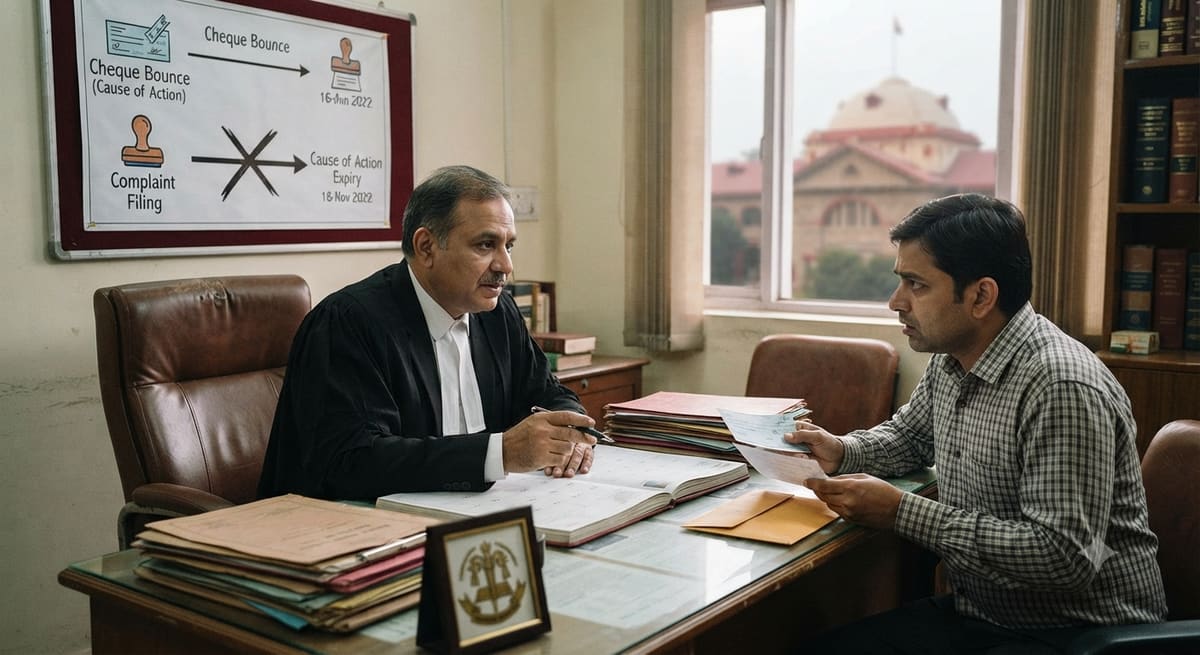
Section 154 CrPC | Cross-Complaints and Premature Trial Stage Bar Writ for Compensation Against Police : Bombay HC
Case Law Analysis
|Bombay High Court

Section 154 CrPC | Cross-Complaints and Premature Trial Stage Bar Writ for Compensation Against Police : Bombay HC

Bombay High Court rules that compensation and disciplinary action against police for delayed FIR registration under Section 154 CrPC cannot be granted via writ when cross-complaints exist and the trial is premature. The judgment underscores that judicial relief for police inaction is unsustainable without final adjudication of competing complaints.

Section 6 PIT NDPS Act | Severability of Grounds Saves Preventive Detention Order Even If One Ground Fails : AP HC
Case Law Analysis
|Andhra Pradesh High Court

Section 6 PIT NDPS Act | Severability of Grounds Saves Preventive Detention Order Even If One Ground Fails : AP HC

The Andhra Pradesh High Court held that a preventive detention order under the PIT NDPS Act remains valid if at least one ground satisfies legal requirements, even if others are invalid. This ruling reinforces the severability principle, ensuring detention orders are not automatically quashed for partial deficiencies, impacting detainees and law enforcement agencies.

Rule 9 Karnataka Selection Rules | Retrospective Application of Sports Quota Eligibility Mandates Fresh Representation : Karnataka HC
Case Law Analysis
|Karnataka High Court

Rule 9 Karnataka Selection Rules | Retrospective Application of Sports Quota Eligibility Mandates Fresh Representation : Karnataka HC

Karnataka High Court directs fresh consideration for CET-2026 admissions under amended Rule 9, emphasizing natural justice and retrospective effect of sports quota eligibility. The ruling mandates procedural fairness for candidates previously deemed ineligible, impacting UGCET aspirants relying on sports reservations.

Section 23 Land Acquisition Act | Bombay HC Upholds 20% Deduction for Development Charges in Public Purpose Acquisitions : Bombay HC
Case Law Analysis
|Bombay High Court

Section 23 Land Acquisition Act | Bombay HC Upholds 20% Deduction for Development Charges in Public Purpose Acquisitions : Bombay HC

Bombay High Court affirms that a 20% deduction for development charges in land acquisition compensation is justified under Section 23 of the Land Acquisition Act for public purpose projects like schools. The ruling mandates strict comparability of sale instances and rejects escalation claims without concrete proof, setting a precedent for compensation principles in infrastructure acquisitions.

Article 14 & 16 | 19-Year Temporary Employee Entitled to Regularization Under Supreme Court Precedents : AP HC Issues Mandamus
Case Law Analysis
|Andhra Pradesh High Court

Article 14 & 16 | 19-Year Temporary Employee Entitled to Regularization Under Supreme Court Precedents : AP HC Issues Mandamus

The Andhra Pradesh High Court directed state authorities to consider regularization of a watchman with 19 years of continuous service, reinforcing that long-term temporary employees cannot be denied constitutional rights under Articles 14 and 16. The ruling mandates compliance with Supreme Court precedents, ensuring fair treatment in public employment and setting a precedent for similar cases across government departments.