High Courts judgments

10232 High Courts judgments explained in plain English: what was decided, the law applied and why it matters. Page 53 of 427.

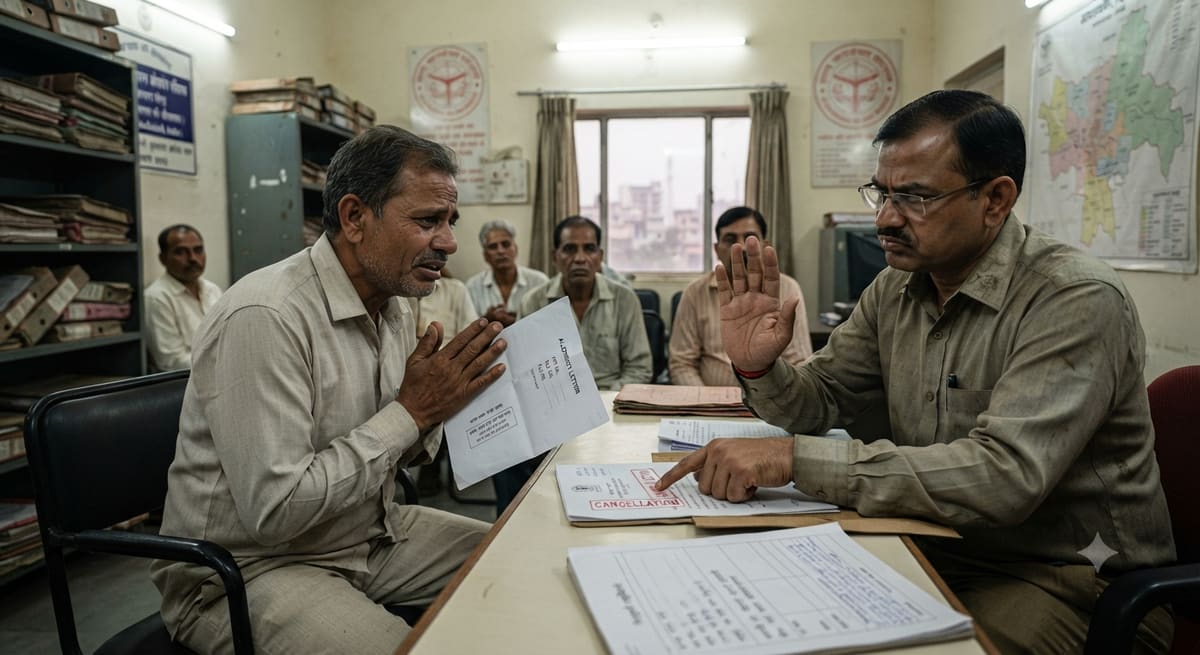
Natural Justice | Cancellation of Flat Allotment Without Hearing Violates Right to Fair Procedure: Allahabad HC
Case Law Analysis
|Allahabad High Court

Natural Justice | Cancellation of Flat Allotment Without Hearing Violates Right to Fair Procedure: Allahabad HC

The Allahabad High Court has ruled that housing authorities cannot cancel flat allotments after payment has been made without providing the allottee a meaningful opportunity to be heard. This sets a critical precedent for public housing bodies, affirming that substantive rights accrue upon allotment and procedural fairness is non-negotiable - even in administrative schemes offering discounts.

Maternity Leave | Second Leave Entitled After Appointment Even If First Child Born Pre-Service : Allahabad HC
Case Law Analysis
|Allahabad High Court

Maternity Leave | Second Leave Entitled After Appointment Even If First Child Born Pre-Service : Allahabad HC

The Allahabad High Court has ruled that public sector employees are entitled to two maternity leaves under service rules, regardless of whether their first child was born before joining service. This clarifies a critical ambiguity in public employment benefits and affirms gender equity in administrative leave policies for female teachers and government staff.

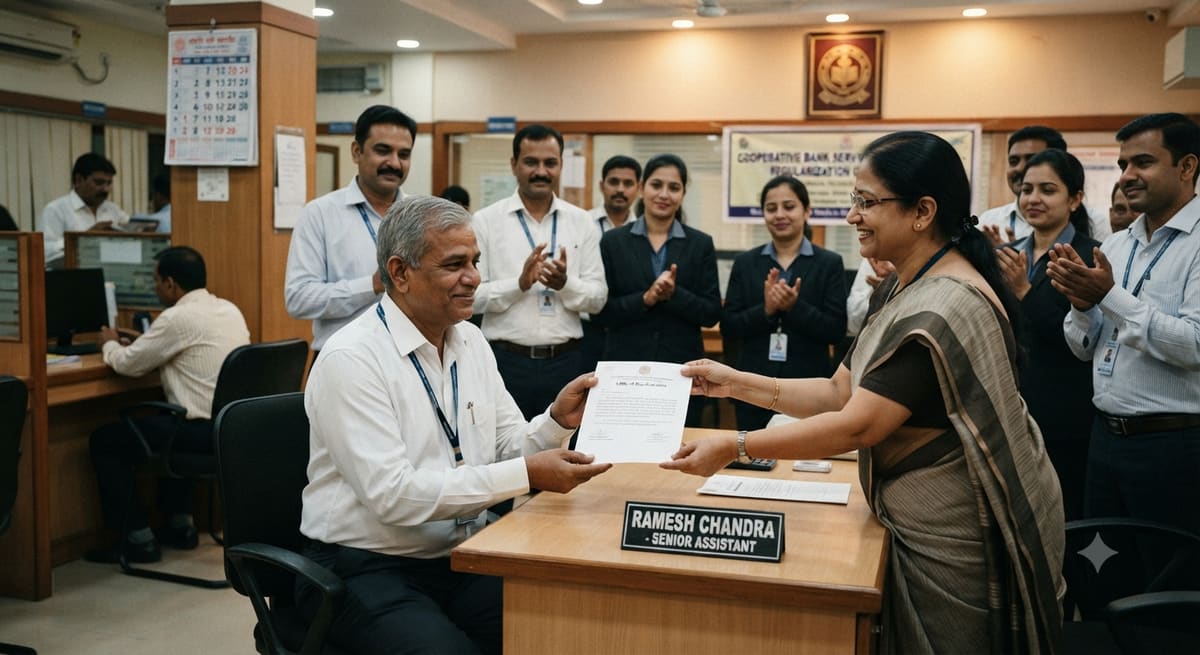
Service Confirmation | Prolonged Service Without Misconduct Entitles Cooperative Bank Employees to Regularization: Allahabad HC
Case Law Analysis
|Allahabad High Court

Service Confirmation | Prolonged Service Without Misconduct Entitles Cooperative Bank Employees to Regularization: Allahabad HC

The Allahabad High Court has ruled that employees of cooperative banks who have served for over a decade without any proven misconduct cannot be denied confirmation solely due to unrelated administrative investigations. This reinforces the doctrine of proportionality and natural justice in service law, setting a critical precedent for thousands of contractual and temporary staff in cooperative financial institutions across Uttar Pradesh.

Order VIII Rule 1 CPC | 30-Day Written Statement Deadline Commences Only After Summons Service : Bombay HC
Case Law Analysis
|Bombay High Court

Order VIII Rule 1 CPC | 30-Day Written Statement Deadline Commences Only After Summons Service : Bombay HC

Bombay High Court clarifies that the 30-day period to file a written statement under Order VIII Rule 1 CPC begins only upon proper service of summons or express waiver, not mere appearance or interim replies. The ruling sets aside trial court orders rejecting condonation of delay, reinforcing strict compliance with procedural timelines for defendants in civil suits.

Section 101 MCS Act | Maintenance Charges Without General Body Resolution Invalid: Bombay HC Quashes Recovery Certificates
Case Law Analysis
|Bombay High Court

Section 101 MCS Act | Maintenance Charges Without General Body Resolution Invalid: Bombay HC Quashes Recovery Certificates

Bombay High Court rules that co-operative societies cannot levy maintenance charges without a prior General Body resolution under Section 101 of the Maharashtra Co-operative Societies Act. The court set aside recovery certificates and directed recalculation of charges based on contemporaneous documents, reinforcing procedural compliance for co-operative housing societies.

Void Orders Under Maharashtra Land Revenue Code | No Limitation Period for Challenging Jurisdictional Nullity : Bombay HC
Case Law Analysis
|Bombay High Court

Void Orders Under Maharashtra Land Revenue Code | No Limitation Period for Challenging Jurisdictional Nullity : Bombay HC

Bombay High Court rules that orders passed without jurisdiction or against deceased persons are void ab initio and can be challenged at any time, regardless of delay. The judgment reinforces that condonation of delay does not apply to jurisdictional nullities, impacting land revenue disputes and tribal rights cases under the Maharashtra Land Revenue Code.

Jurisdictional Nullity & Liberal Condonation | Bombay HC Upholds 34-Year Delay in Land Revenue Appeal to Prevent Illegality
Case Law Analysis
|Bombay High Court

Jurisdictional Nullity & Liberal Condonation | Bombay HC Upholds 34-Year Delay in Land Revenue Appeal to Prevent Illegality

Bombay High Court rules that void orders-passed without jurisdiction or against deceased persons-warrant liberal condonation of delay, even if inordinate (34 years), to prevent perpetuation of illegality. The judgment underscores that jurisdictional nullity overrides procedural timelines in revenue disputes under the Maharashtra Land Revenue Code.

Section 201 IPC Conviction Upheld Despite Acquittal Under Section 302 IPC | Bombay HC Sets Distinct Evidentiary Thresholds for Murder vs. Evidence Destruction
Case Law Analysis
|Bombay High Court

Section 201 IPC Conviction Upheld Despite Acquittal Under Section 302 IPC | Bombay HC Sets Distinct Evidentiary Thresholds for Murder vs. Evidence Destruction

Bombay High Court acquits the appellant of murder charges under Section 302 IPC due to gaps in circumstantial evidence but sustains conviction under Section 201 IPC for destroying evidence. The ruling underscores that while murder requires stringent proof beyond reasonable doubt, destruction of evidence can be established with a lower evidentiary standard, impacting criminal trial strategies.

Strict Liability Under Tort Law | Bombay HC Imposes 75% Liability on Railways for Unmanned Crossing Death, Awards Rs. 3.8 Crore Compensation : Bombay HC
Case Law Analysis
|Bombay High Court

Strict Liability Under Tort Law | Bombay HC Imposes 75% Liability on Railways for Unmanned Crossing Death, Awards Rs. 3.8 Crore Compensation : Bombay HC

Bombay High Court holds the Railways strictly liable for 75% of damages in a fatal accident at an unmanned railway crossing, awarding Rs. 3.8 crores to the victims' family. The ruling reinforces institutional accountability under tort law for failing to ensure safety at level crossings, setting a precedent for future compensation claims.

Firearm Licence Rejection | Subjective Satisfaction Based on Pending Criminal Proceedings & Unpaid Recovery Orders Not Perverse : Allahabad HC
Case Law Analysis
|Allahabad High Court

Firearm Licence Rejection | Subjective Satisfaction Based on Pending Criminal Proceedings & Unpaid Recovery Orders Not Perverse : Allahabad HC

The Allahabad High Court upholds that licensing authorities may deny firearm permits based on pending criminal cases and unresolved financial recovery orders, even if interim stays exist-emphasizing that firearm licensing is a privilege, not a right, and subjective assessments grounded in material evidence are beyond judicial interference absent perversity. This sets a critical precedent for public safety-based discretion in arms licensing across India.

Compassionate Appointment | Rejection Without Reasoned Order or Hearing Violates Natural Justice : Allahabad HC
Case Law Analysis
|Allahabad High Court

Compassionate Appointment | Rejection Without Reasoned Order or Hearing Violates Natural Justice : Allahabad HC

The Allahabad High Court has quashed the rejection of a compassionate appointment claim where the government merely marked the application as 'Rejected' on the Manav Sampada portal without any speaking order or opportunity to be heard. This ruling establishes that administrative silence in welfare-based appointments is a violation of Article 14 and natural justice, compelling authorities to provide transparent, reasoned decisions to dependents of deceased government servants.

Section 24 CPC | Transfer Application Not Maintainable Where Section 115 CPC Provides Alternative Remedy : Allahabad HC
Case Law Analysis
|Allahabad High Court

Section 24 CPC | Transfer Application Not Maintainable Where Section 115 CPC Provides Alternative Remedy : Allahabad HC

The Allahabad High Court has ruled that a transfer application under Section 24 CPC cannot be entertained if a revision remedy under Section 115 CPC is available, reinforcing that procedural alternatives must be exhausted before invoking extraordinary jurisdiction. This clarifies the hierarchy of remedies for litigants challenging interlocutory orders in civil suits across Uttar Pradesh.

Anticipatory Bail Granted When No Specific Role Established in Land Encroachment Case | Allahabad HC Affirms Arnesh Kumar Principles
Case Law Analysis
|Allahabad High Court

Anticipatory Bail Granted When No Specific Role Established in Land Encroachment Case | Allahabad HC Affirms Arnesh Kumar Principles

The Allahabad High Court granted anticipatory bail to four applicants falsely implicated in a land encroachment case, emphasizing that vague allegations without specific roles or recovered evidence cannot justify pre-trial detention. This reinforces that blanket accusations in village disputes, especially where co-accused have been released, fail to meet the threshold for arrest under BNSS Section 482, aligning with Arnesh Kumar’s safeguards against arbitrary detention.

Section 482 CrPC | Criminal Proceedings Quashed After Full Compliance with Commercial Settlement: Allahabad HC
Case Law Analysis
|Allahabad High Court

Section 482 CrPC | Criminal Proceedings Quashed After Full Compliance with Commercial Settlement: Allahabad HC

The Allahabad High Court has ruled that criminal proceedings under Sections 406, 323, 427, and 506 IPC may be quashed when parties to a commercial dispute have fully implemented a court-verified settlement, establishing that settlement finality in civil matters can override ongoing criminal prosecution if no public interest is compromised. This sets a clear precedent for businesses and individuals resolving commercial conflicts without fear of lingering criminal liability.

Officiating Headmaster Handover | No Statutory Power to Appoint Ad Hoc Principal Without Committee of Management : Allahabad HC
Case Law Analysis
|Allahabad High Court

Officiating Headmaster Handover | No Statutory Power to Appoint Ad Hoc Principal Without Committee of Management : Allahabad HC

The Allahabad High Court quashed orders directing an officiating headmaster to surrender charge to an ad hoc principal, ruling that government officials cannot assume the statutory functions of a non-existent Committee of Management. This sets a critical precedent for school governance: administrative actions in educational institutions require compliance with statutory bodies, not unilateral directives.

Compassionate Appointment Policy | HC Grants 3-Month Extension to MoD to Frame OFB Employee Family Policy, Defers Contempt Proceedings : Allahabad HC
Case Law Analysis
|Allahabad High Court

Compassionate Appointment Policy | HC Grants 3-Month Extension to MoD to Frame OFB Employee Family Policy, Defers Contempt Proceedings : Allahabad HC

The Allahabad High Court has extended the deadline for the Ministry of Defence to frame a compassionate appointment policy for families of deceased OFB employees by three months, deferring contempt proceedings to ensure compliance. This ruling reinforces the state’s non-negotiable welfare obligation toward dependents of deceased public sector workers, even after corporatization, and sets a precedent for timely implementation of judicial directives in administrative welfare matters.

Bail Granted Under BNSS & POCSO | Material Contradictions in Victim Testimony and Delayed DNA Report Justify Non-Custodial Trial : Allahabad HC
Case Law Analysis
|Allahabad High Court

Bail Granted Under BNSS & POCSO | Material Contradictions in Victim Testimony and Delayed DNA Report Justify Non-Custodial Trial : Allahabad HC

The Allahabad High Court granted bail in a POCSO and BNSS case after finding irreconcilable contradictions between the victim’s Section 180 and 183 BNSS statements, coupled with a delayed forensic DNA report despite court orders. This reinforces that procedural delays and testimonial inconsistencies, not just gravity of offense, can override presumptive denial of bail in sexual offense cases involving minors.

Mukhyamantri Krishak Durghatna Kalyan Yojna | Active Farming Qualifies for Benefits Regardless of Breadwinner Status : Allahabad HC
Case Law Analysis
|Allahabad High Court

Mukhyamantri Krishak Durghatna Kalyan Yojna | Active Farming Qualifies for Benefits Regardless of Breadwinner Status : Allahabad HC

The Allahabad High Court has ruled that a farmer’s eligibility under the state’s accident welfare scheme is determined by active agricultural labor, not household income role. This sets a critical precedent for thousands of small and marginal farmers whose labor sustains family farms but who are often excluded by bureaucratic interpretations of 'breadwinner'.

Article 21 Right to Health | Bail Granted to 65-Year-Old with Critical Heart Condition Amid No Overt Act on CCTV and Pending Charge Framing : Bombay HC
Case Law Analysis
|Bombay High Court

Article 21 Right to Health | Bail Granted to 65-Year-Old with Critical Heart Condition Amid No Overt Act on CCTV and Pending Charge Framing : Bombay HC

The Bombay High Court granted bail to a 65-year-old accused with a critical heart condition, emphasizing that prolonged pre-trial detention violates the right to health under Article 21 when no overt act is visible in CCTV footage and charge framing remains pending. This ruling reinforces that medical vulnerability and lack of direct involvement must weigh heavily in bail decisions, even in serious Arms Act cases.

Bail Granted for 15-Year Pending Investigation Without Charge Framing | Article 21 Right to Speedy Trial Invoked : Allahabad HC
Case Law Analysis
|Allahabad High Court

Bail Granted for 15-Year Pending Investigation Without Charge Framing | Article 21 Right to Speedy Trial Invoked : Allahabad HC

The Allahabad High Court granted bail to an accused after 15 years of uncompleted investigation and no charge sheet filed, affirming that excessive pre-trial delay violates the right to speedy trial under Article 21. This reinforces that prolonged investigative stagnation, irrespective of offense severity, justifies release when the state fails to advance the case, benefiting accused persons in stalled financial fraud cases nationwide.

SC/ST (P.A.) Act Sections 3(1)(r)-(s) | Offence Requires Public View and Casteist Intent to Humiliate: Allahabad HC
|Allahabad High Court

SC/ST (P.A.) Act Sections 3(1)(r)-(s) | Offence Requires Public View and Casteist Intent to Humiliate: Allahabad HC

The Allahabad High Court holds that prosecution under Sections 3(1)(r) and 3(1)(s) of the SC/ST (P.A.) Act requires the abusive act to occur in public view with clear casteist intent to humiliate. Private abuse inside a residence, even if caste-based, does not meet this threshold-sharpening the legal standard for invoking the Act and protecting against overreach in non-public incidents.

Section 14 SARFAESI Act | Magistrates May Not Adjudicate Borrower Affidavits - Role Is Strictly Ministerial : Bombay HC
Case Law Analysis
|Bombay High Court

Section 14 SARFAESI Act | Magistrates May Not Adjudicate Borrower Affidavits - Role Is Strictly Ministerial : Bombay HC

The Bombay High Court has ruled that Magistrates handling Section 14 SARFAESI applications must act in a purely ministerial capacity, with no authority to entertain borrower affidavits or conduct adjudication. This closes a procedural loophole that delayed enforcement and reinforces secured creditors' statutory right to swift asset recovery without judicial delay.

Contractual Interest Rates Must Be Literally Text-Bound | Bombay HC Stays Lok Adalat Award Imposing 9%/15% Monthly Interest Contrary to Tripartite Agreement: Bombay HC
|Bombay High Court

Contractual Interest Rates Must Be Literally Text-Bound | Bombay HC Stays Lok Adalat Award Imposing 9%/15% Monthly Interest Contrary to Tripartite Agreement: Bombay HC

The Bombay High Court set aside a Lok Adalat award imposing 9% and 15% monthly interest on an insurance claim, ruling that such an interpretation directly contradicts the unambiguous language of the tripartite agreement, which only references 9% and 15% without specifying monthly compounding. This reinforces that contractual interpretation in insurance disputes must adhere strictly to textual precision, not speculative extrapolation - a critical warning to arbitral forums and insurers alike.