The Bombay High Court has reaffirmed that refuge areas in buildings, as designated under the Maharashtra Regional and Town Planning Act, 1966 (MRTP Act), cannot be privately encroached upon or converted into exclusive use spaces, even if a housing society passes resolutions to that effect. The judgment underscores the primacy of municipal approvals and statutory compliance over internal society decisions, particularly when public safety is at stake.
Background & Facts
The Dispute
The petitioner, a retired Deputy Commissioner of Police (IPS) and senior citizen, occupies Flat No. 802 in Bullet Co-operative Housing Society, Dadar (East), Mumbai. The dispute centers on a terrace adjacent to his flat, which the Municipal Corporation of Greater Mumbai (MCGM) designated as a refuge area under the MRTP Act. The petitioner, however, claims exclusive possession of this terrace pursuant to a society resolution passed in 1996, acknowledging his efforts in procuring the land and developing the building.
Key Facts
-
Land Allotment & Construction:
- The society, comprising gazetted police officers, obtained a leasehold plot from the BMC in 1995 for constructing a residential building.
- The building, sanctioned on 30.08.1995, comprises eight floors with a refuge area designated on the terrace above the 8th floor.
- A No Objection Certificate (NOC) from the Chief Fire Officer (CFO) dated 20.10.1995 stipulated that the terrace would serve as a refuge area, with the society responsible for maintaining fire safety measures.
- The Occupation Certificate was granted on 24.04.1999, and flat owners took possession from 01.05.1995.
-
Society Resolution:
- On 10.09.1996, the society passed a resolution allowing the petitioner and another member (Mr. Sudhakar Suradkar, occupant of Flat No. 801) to use the terraces adjoining their flats as a token of appreciation for their contributions.
- The petitioner relies on this resolution to claim exclusive possession of the terrace adjacent to Flat No. 802.
-
Municipal Notices & Compliance:
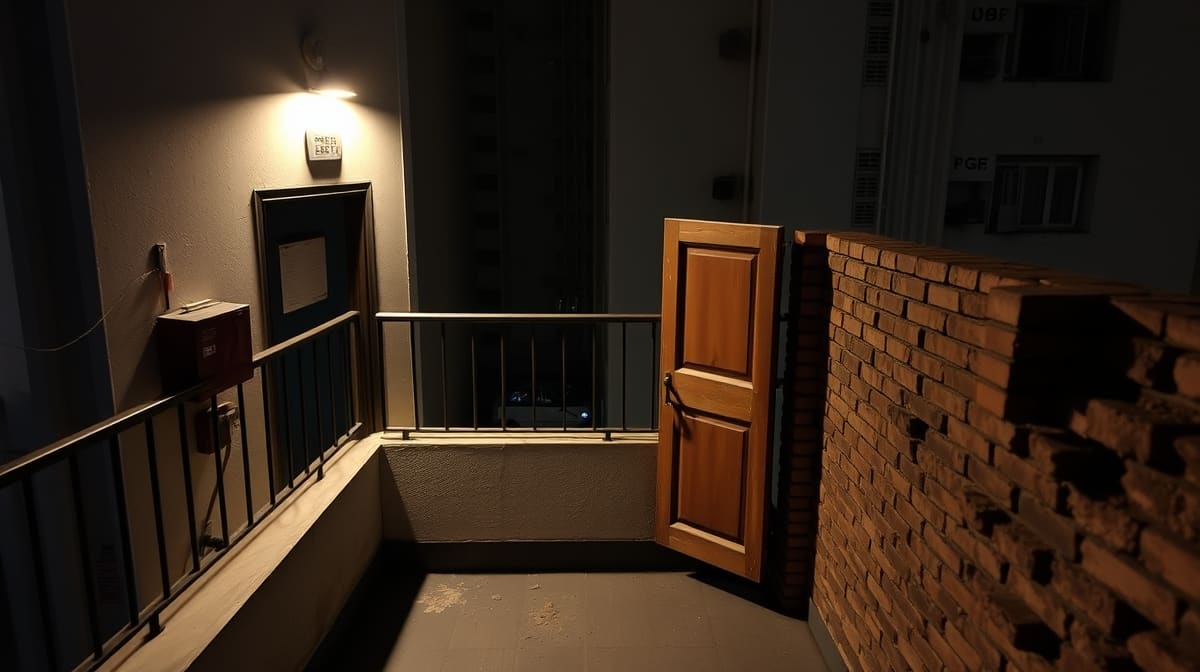
- Following complaints from society members about misuse of the refuge area, the Assistant Engineer (B & F) F/North Ward (Respondent No. 3) issued a notice under Section 53(1) of the MRTP Act on 29.08.2018, directing the petitioner to remove a wooden door blocking access to the terrace (reserved as a refuge area) and to restore the area to its sanctioned use.
- The petitioner responded to the notice but failed to comply with the requirements, including submitting a ‘no action pending certificate’ from the Assistant Commissioner.
- On 10.10.2018, Respondent No. 3 passed an order deeming the petitioner’s proposal as non-compliant and initiated proceedings under Section 53(7) of the MRTP Act, leading to the registration of C.R. No. 130 of 2018 at Matunga Police Station.
-
Procedural History:
- 26.11.2018: The High Court granted interim relief, staying the execution of the order dated 10.10.2018.
- 15.07.2019: The Chief Fire Officer confirmed in writing that the terrace above the 8th floor was designated as the refuge area.
- 17.01.2019: The MCGM issued a communication rejecting the petitioner’s proposal to regularize the terrace as a private area, citing non-compliance with deficiencies and lack of a general body resolution or CFO NOC for relocating the refuge area.
- 07.12.2018 & 16.01.2019: Subsequent proposals by the petitioner’s architect were rejected for failing to meet Ease of Doing Business (EODB) requirements.
-
Relief Sought: The petitioner sought:
- Quashing of the notice dated 29.08.2018 and the order dated 10.10.2018.
- A declaration that the terrace adjacent to Flat No. 802 is not a refuge area and is in his exclusive possession pursuant to the society’s resolution.
The Legal Issue
The central question before the Court was whether a housing society’s resolution can override the statutory designation of a refuge area under the MRTP Act, and whether the petitioner’s exclusive possession of the terrace, based on such a resolution, is legally tenable.
Arguments Presented
For the Petitioner
- The terrace adjacent to Flat No. 802 was never designated as a refuge area in the sanctioned plans or revised plans. The refuge area was only the terrace above the 8th floor, as confirmed by the NOC dated 20.10.1995 and the completion certificate dated 15.07.2002.
- The society’s resolution dated 10.09.1996 granted the petitioner exclusive possession of the terrace, and he has been in occupation since the construction of the building.
- The impugned notice dated 29.08.2018 did not mention the existence of a full-length glass window between Flat No. 802 and the terrace, which has existed since the building’s construction. Thus, the petitioner cannot now be directed to remove it.
- The petitioner’s architect inadvertently modified the plan, marking the pocket terraces as refuge areas without approval. The petitioner sought to rectify this mistake by submitting proposals for regularization.
For the Respondents
- The completion certificate dated 15.07.2002 clearly designates the terraces adjacent to Flat Nos. 801 and 802 as refuge areas, and this designation was certified by the Executive Engineer of the MCGM.
- The petitioner encroached upon the refuge area by constructing a brick masonry wall and a wooden door, blocking access to the terrace. While the occupant of Flat No. 801 complied with the notice and restored access, the petitioner failed to do so.
- The NOC dated 20.10.1995 ambiguously stated that the terrace of the building would be treated as a refuge area, but the completion certificate clarified that the terraces adjacent to Flat Nos. 801 and 802 were the designated refuge areas.
- The petitioner’s proposal to regularize the refuge area as a private terrace was rejected multiple times due to non-compliance with statutory requirements, including the lack of a general body resolution or CFO NOC for relocating the refuge area.
- The petitioner suppressed material facts, including his subsequent proposals for regularization after the impugned order dated 10.10.2018, which were also rejected.
For the Intervenors
- The intervenors, who are members of the society, contended that the petitioner misused his position as Chairman to pass resolutions in his favor, ignoring objections from other members.
- The refuge areas are critical for public safety, and their encroachment jeopardizes the lives of society members in emergencies (e.g., fire incidents).
- The petitioner’s defiant stand and failure to comply with the notice demonstrate his lack of bona fides.
The Court's Analysis
The Court conducted a detailed examination of the documentary evidence, including the society’s resolutions, municipal approvals, and the petitioner’s proposals for regularization. Key observations included:
-
Society Resolution Cannot Confer Title:
- The petitioner relied on the society’s resolution dated 10.09.1996 to claim exclusive possession of the terrace. However, the Court noted that the resolution did not explicitly grant ownership or exclusive possession of the terrace. Instead, it merely acknowledged the petitioner’s efforts by allotting him a "terrace flat."
- The Sale Deed of Flat No. 802 did not include the terrace, confirming that the petitioner had no legal title to it.
- The Court held that society resolutions cannot override statutory designations, especially when public safety is involved.
-
Statutory Designation of Refuge Area:
- The NOC dated 20.10.1995 from the Chief Fire Officer stipulated that the terrace would be treated as a refuge area, but it did not specify which terrace (above the 7th or 8th floor).
- The completion certificate dated 15.07.2002 clarified that the terraces adjacent to Flat Nos. 801 and 802 were designated as refuge areas. This certificate was not challenged by the petitioner, and its validity remained intact.
- The Court emphasized that municipal approvals prevail over internal society decisions, particularly when they pertain to public safety and statutory compliance.
-
Petitioner’s Non-Compliance and Suppression of Facts:
- The petitioner’s failure to comply with the notice and his subsequent proposals for regularization demonstrated his lack of bona fides.
- The Court noted that the petitioner suppressed material facts, including his repeated rejections for regularization after the impugned order dated 10.10.2018. These proposals were rejected due to non-compliance with statutory requirements, such as the lack of a general body resolution or CFO NOC for relocating the refuge area.
- The Court observed that the petitioner’s defiant stand and misrepresentation of facts weakened his case.
-
Comparison with Co-Occupant:
- The occupant of Flat No. 801, Mr. Sudhakar Suradkar, complied with the notice and restored access to the refuge area. The Court contrasted this with the petitioner’s non-compliance, further undermining his claims.
"The very fact that the petitioner through his architect has submitted a proposal to regularise the ‘terrace’ adjoining his flat by treating the ‘refuge area’ as ‘terrace’, itself gives rise to the obvious conclusion that, the area adjacent to his flat was approved as refuge area, which has been obstructed by him, and now a request is made to treat it as ‘terrace’ and accordingly he has submitted proposal to the Municipal Corporation."
The Verdict
The Court dismissed the writ petition, holding that the petitioner failed to make out a case for interference with the impugned notice dated 29.08.2018 and the order dated 10.10.2018. The Court concluded:
- The terrace adjacent to Flat No. 802 is a refuge area as per the sanctioned plan and completion certificate, and the petitioner’s exclusive possession claim based on the society’s resolution is legally untenable.
- The petitioner’s encroachment on the refuge area and non-compliance with municipal notices violated the MRTP Act and public safety norms.
- The Chamber Summons and Notice of Motion were also disposed of accordingly.
Interim relief granted earlier was extended for four weeks from the date of the judgment to enable the petitioner to approach the Supreme Court.
What This Means For Similar Cases
Statutory Compliance Overrides Society Resolutions
- Housing societies cannot pass resolutions that contravene statutory designations, especially when public safety is involved. Refuge areas, fire safety norms, and other municipal regulations prevail over internal society decisions.
- Practitioners must ensure that society resolutions align with municipal approvals and statutory provisions. Any attempt to encroach upon statutorily designated areas (e.g., refuge areas, common spaces) will be legally unsustainable.
Municipal Approvals Are Conclusive
- Completion certificates and occupation certificates issued by municipal authorities are conclusive evidence of statutory compliance. Any ambiguity in earlier approvals (e.g., NOCs) is clarified by subsequent municipal documents.
- Property owners cannot rely on ambiguous approvals to justify encroachments. Municipal authorities have the final say in interpreting statutory designations, and their decisions are binding unless successfully challenged in court.
Non-Compliance Leads to Criminal Liability
- Under Section 53(7) of the MRTP Act, failure to comply with municipal notices can lead to criminal proceedings. Property owners must strictly adhere to notices and seek legal remedies if aggrieved, rather than adopting a defiant stand.
- Regularization proposals must comply with all statutory requirements, including general body resolutions and NOCs from relevant authorities. Non-compliance will result in rejection and potential legal consequences.
Public Safety Trumps Private Claims
- Refuge areas and other statutorily designated spaces are critical for public safety. Courts will not entertain private claims that jeopardize the safety of other residents, even if such claims are based on society resolutions or long-standing possession.
- Property owners must prioritize statutory compliance over private convenience. Encroachments on refuge areas or other safety-designated spaces will be viewed strictly by courts.