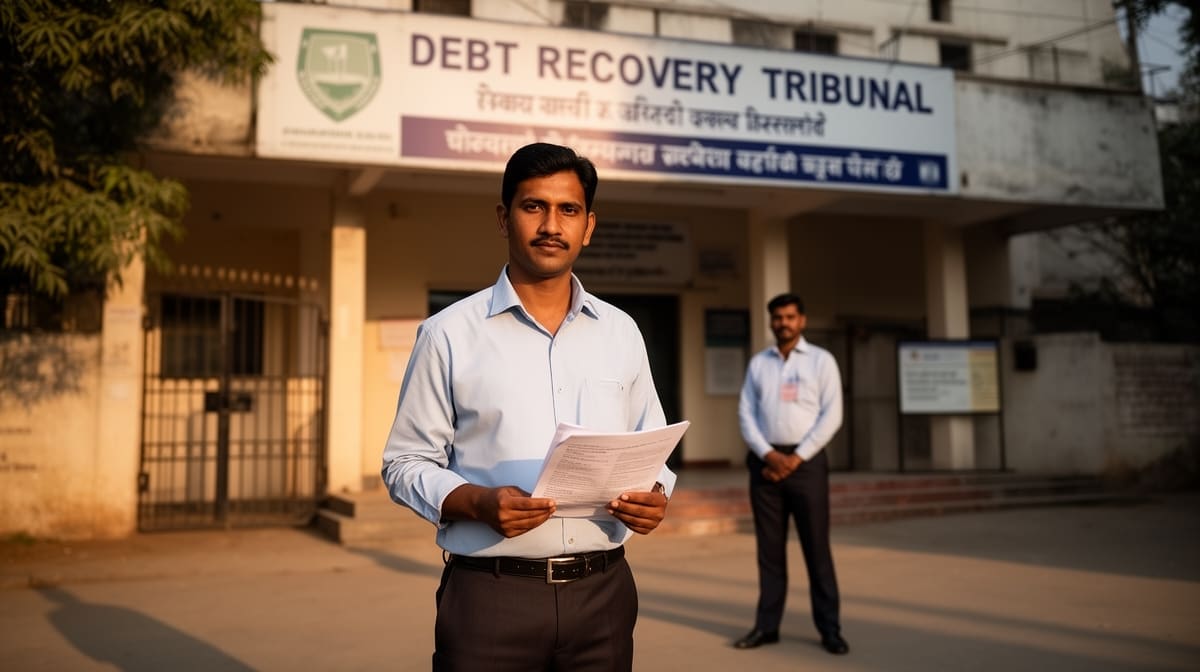
The Karnataka High Court has reaffirmed the principle that writ jurisdiction under Article 226 of the Constitution cannot be invoked to bypass statutory remedies, particularly when specialized tribunals like the Debt Recovery Tribunal (DRT) are established to adjudicate disputes under statutes such as the Securitisation and Reconstruction of Financial Assets and Enforcement of Security Interest Act, 2002 (SARFAESI Act). The judgment underscores the necessity of exhausting statutory remedies before approaching the High Court, aligning with the Supreme Court's observations in United Bank of India v. Satyawati Tondon.
Background & Facts
The Dispute
The petitioners - Mr. Chandra, Mr. Surya, and Mrs. Prema - are borrowers who defaulted on a loan advanced by M/s. Equitas Small Finance Bank Ltd. (the respondent). The bank initiated proceedings under Section 14 of the SARFAESI Act before the III Additional Senior Civil Judge and Chief Judicial Magistrate (CJM), Mysuru, seeking assistance for taking possession of the secured asset. The CJM allowed the bank’s petition vide order dated 29.12.2023, prompting the petitioners to challenge the order before the High Court under Articles 226 and 227 of the Constitution.
Key Facts
- The respondent bank filed Crl.Misc.No.247/2023 under Section 14 SARFAESI Act before the CJM, Mysuru, seeking assistance for enforcement of security interest.
- The CJM passed an order on 29.12.2023 allowing the bank’s petition.
- The petitioners filed the present writ petition challenging the CJM’s order, seeking:
- Quashing of the impugned order (Annexure-A).
- A direction to the jurisdictional police not to interfere with Section 14 proceedings until disposal of the writ petition.
- Ancillary reliefs in the interest of justice.
Procedural History
- 29.12.2023: CJM, Mysuru, allowed the bank’s petition under Section 14 SARFAESI Act in Crl.Misc.No.247/2023.
- 2024: Petitioners filed Writ Petition No. 6915 of 2024 before the Karnataka High Court challenging the CJM’s order.
- 07.07.2026: The High Court dismissed the writ petition, holding that statutory remedies before the DRT must be exhausted first.
Relief Sought
The petitioners sought:
- Quashing of the CJM’s order dated 29.12.2023.
- A direction to the jurisdictional police to refrain from interfering with Section 14 proceedings until the writ petition’s disposal.
- Any other relief deemed fit by the Court.
The Legal Issue
The central question was whether the High Court could entertain a writ petition under Article 226 challenging an order passed under Section 14 of the SARFAESI Act, when an alternate statutory remedy - an appeal before the Debt Recovery Tribunal (DRT) - was available to the petitioners.
Arguments Presented
For the Petitioners
The petitioners’ counsel was absent during the hearing, and no formal arguments were recorded on their behalf. However, the reliefs sought imply an attempt to bypass the statutory remedy of appealing before the DRT and directly challenge the Section 14 order under writ jurisdiction.
For the Respondent
Smt. S. Veena, counsel for the respondent bank, argued:
- The petitioners had an alternate statutory remedy under the SARFAESI Act - an appeal before the DRT - which they failed to exhaust.
- Article 226 is not intended to circumvent statutory procedures, especially when specialized tribunals are established to adjudicate such disputes.
- The Supreme Court, in United Bank of India v. Satyawati Tondon, had cautioned High Courts against entertaining writ petitions in matters where statutory remedies exist, as it adversely impacts the rights of financial institutions to recover dues.
The Court's Analysis
The Court relied on well-settled principles governing the exercise of writ jurisdiction under Article 226. Key observations include:
-
Statutory Remedies Must Be Exhausted: The Court emphasized that when a statute prescribes a specific remedy or procedure for enforcing a right or liability, that remedy must be exhausted before invoking Article 226. The SARFAESI Act provides for an appeal before the DRT, and the petitioners had not availed of this remedy.
"When a right or liability is created by a statute which itself prescribes the remedy or procedure for enforcing the right or liability, resort must be had to that particular statutory remedy before seeking the discretionary remedy under Article 226."
-
Writ Jurisdiction Is Discretionary and Extraordinary: The Court noted that Article 226 is a discretionary remedy and should not be invoked unless the statutory remedies are ill-suited to meet the demands of an extraordinary situation. The petitioners had not demonstrated any such exceptional circumstances warranting the High Court’s intervention.
-
Supreme Court’s Caution in United Bank of India v. Satyawati Tondon: The Court referred to the Supreme Court’s observations in United Bank of India v. Satyawati Tondon, where it was held that High Courts should exercise caution while entertaining writ petitions in matters under the SARFAESI Act, as it undermines the statutory framework for recovery of dues by banks and financial institutions.
"The Apex Court has also observed in the case of United Bank of India v. Satyawati Tondon and Others that the High Courts continue to ignore the availability of statutory remedies under the DRT and SARFAESI Act and exercised jurisdiction under Article 226 for passing orders which have serious adverse impact on the right of the Banks and other financial institutions to recover their dues. We hope and trust that in future the High Courts will exercise their discretion in such matters with great caution, care and circumspection."
-
No Exceptional Circumstances Justifying Intervention: The Court found no merit in the petitioners’ plea, as they had failed to establish any exceptional circumstances that would justify bypassing the statutory remedy before the DRT.
The Verdict
The Karnataka High Court dismissed the writ petition (WP No. 6915 of 2024), holding that:
- The petitioners had an alternate statutory remedy - an appeal before the DRT - which they had not exhausted.
- Article 226 could not be invoked to circumvent the statutory procedure prescribed under the SARFAESI Act.
- Any interim orders, if granted, stood discharged upon dismissal of the writ petition.
- Pending interlocutory applications, if any, were disposed of.
What This Means For Similar Cases
Exhaustion of Statutory Remedies Is Mandatory Before Invoking Article 226
- Practitioners must ensure that all statutory remedies under the relevant statute (e.g., SARFAESI Act, RBI Act, or DRT Act) are exhausted before approaching the High Court under Article 226.
- The judgment reinforces that writ jurisdiction is not a substitute for statutory appeals, especially when specialized tribunals like the DRT are established to adjudicate such disputes.
High Courts Will Exercise Caution in Entertaining SARFAESI Act Writ Petitions
- Following the Supreme Court’s observations in United Bank of India v. Satyawati Tondon, High Courts are likely to decline jurisdiction under Article 226 in matters where statutory remedies exist, unless exceptional circumstances are demonstrated.
- Financial institutions can rely on this judgment to resist frivolous writ petitions that seek to bypass the DRT or other statutory forums.
Practical Implications for Borrowers and Financial Institutions
- Borrowers must be aware that challenging Section 14 orders under Article 226 is unlikely to succeed unless they can establish exceptional circumstances (e.g., jurisdictional errors, violation of natural justice).
- Financial institutions can cite this judgment to oppose writ petitions filed by borrowers seeking to delay recovery proceedings under the SARFAESI Act.
- DRT Appeals remain the primary forum for challenging Section 14 orders, and parties must adhere to the statutory timeline for filing appeals.