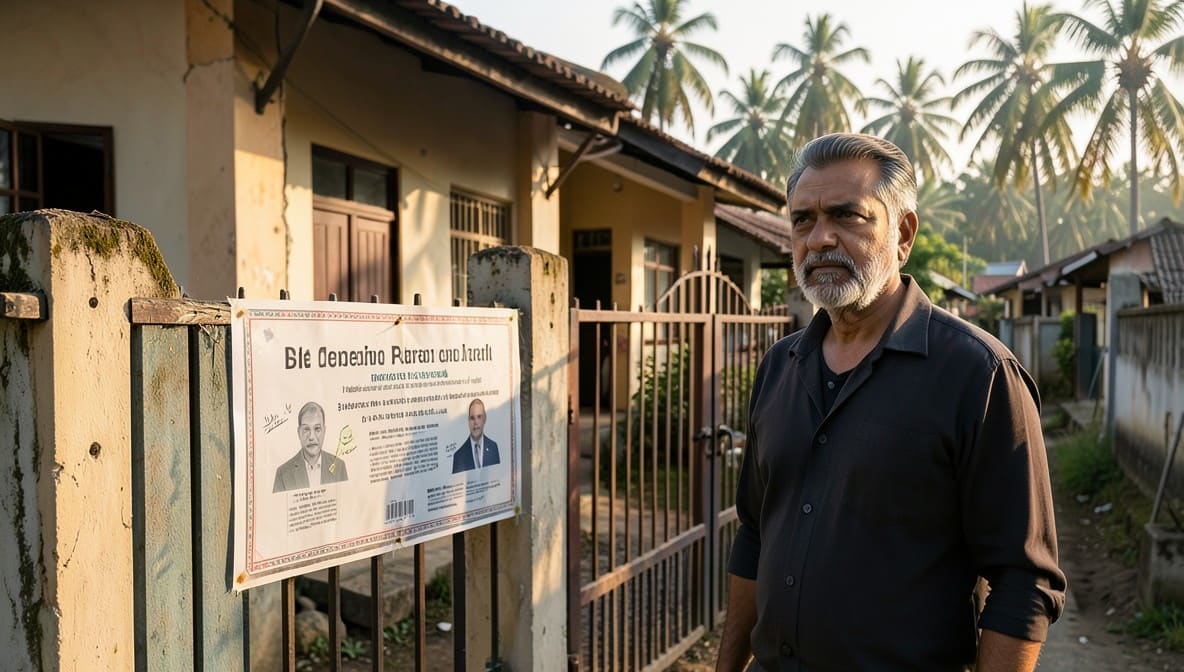
The Kerala High Court has provided a pragmatic resolution to a SARFAESI Act enforcement proceeding by permitting a borrower to regularize a defaulted loan through structured installments, thereby preventing the immediate seizure of secured assets. This order reinforces judicial restraint in favor of repayment feasibility over coercive recovery, offering a clear pathway for borrowers to avoid dispossession.
Background & Facts
The Dispute
The petitioner, Ranipillai, aged 53, is a borrower who defaulted on a secured loan extended by the Kerala State Co-operative Bank (Kerala Bank). The bank, acting under the Securitisation and Reconstruction of Financial Assets and Enforcement of Security Interest Act, 2002 (SARFAESI Act), initiated coercive recovery proceedings against the petitioner’s secured asset. The petitioner, unable to discharge the entire outstanding amount at once, approached the High Court seeking relief from immediate enforcement.
Key Facts
- The petitioner received a demand notice under Section 13(2) of the SARFAESI Act dated 05.02.2026 (Exhibit P1)
- A follow-up message was sent by the branch manager on 13.02.2026 (Exhibit P2), reiterating the bank’s intent to proceed with asset seizure
- As of the date of the petition, the total overdue amount stood at Rs. 3,22,024/- (Rupees three lakhs twenty two thousand and twenty four only)
- The petitioner has not contested the existence of the default or the validity of the security interest
- No prior application for restructuring or settlement was filed before the Debt Recovery Tribunal or the bank’s internal grievance mechanism
Procedural History
- 05.02.2026: First notice issued under Section 13(2) of the SARFAESI Act
- 13.02.2026: Second communication sent via SMS by the branch manager
- Between February and June 2026: Petitioner made no payment and no formal settlement offer was submitted
- 09.07.2026: Writ Petition (WP(C) No. 6679 of 2026) filed before the High Court of Kerala seeking stay on coercive action
Relief Sought
The petitioner sought a stay on the bank’s enforcement proceedings under the SARFAESI Act and requested an opportunity to repay the overdue amount in manageable installments to avoid asset dispossession.
The Legal Issue
The central question was whether the High Court, under its writ jurisdiction, may permit a borrower to regularize a defaulted secured loan through structured installments under the SARFAESI Act, even in the absence of a prior application to the Debt Recovery Tribunal, where the bank consents to such a mechanism.
Arguments Presented
For the Petitioner
The petitioner’s counsel argued that the borrower is willing and capable of repaying the dues but lacks the liquidity to discharge the entire amount at once. He emphasized that the petitioner has no history of wilful default and that allowing installment payments would serve the interests of both parties. He cited the principle of proportionality and the court’s inherent power to prevent abuse of process under Article 226 of the Constitution.
For the Respondent
The bank’s counsel conceded that the bank had no objection to the petitioner clearing the dues in installments. He confirmed that the outstanding amount as of the hearing date was Rs. 3,22,024/- and that the bank stood to benefit from recovery through structured payments rather than costly and time-consuming asset realization. He submitted that the bank was willing to regularize the account upon compliance with a court-monitored repayment plan.
The Court's Analysis
The Court observed that while the SARFAESI Act empowers secured creditors to enforce security interests without court intervention, it does not mandate immediate dispossession. The Court emphasized that the Act is not a tool for punitive recovery but a mechanism for efficient debt realization. The Court noted that the bank, as the secured creditor, had voluntarily consented to installment-based repayment - a significant factor indicating commercial pragmatism and absence of mala fides.
"The object of the SARFAESI Act is not to deprive the borrower of his property at the earliest opportunity, but to ensure timely recovery of dues in a manner that balances the rights of both creditor and debtor."
The Court further held that judicial intervention under Article 226 is warranted where the enforcement action is disproportionate or where a mutually agreeable resolution is feasible. The petitioner’s willingness to pay, coupled with the bank’s consent, created a compelling case for equitable relief. The Court rejected the notion that procedural rigidity must override practical justice when both parties align on a solution.
The Verdict
The writ petition was allowed. The Court directed:
(i) The petitioner shall remit Rs. 60,000/- (Rupees sixty thousand only) on or before 25th July 2026;
(ii) The balance overdue amount of Rs. 2,62,024/- with interest shall be paid in six equal monthly installments, commencing August 2026, with each installment due on or before the last day of every month;
(iii) The petitioner shall continue to pay all regular EMIs/instalments as originally contracted, in addition to the above installments;
(iv) If the petitioner complies with all payment obligations, the bank shall regularize the loan account and withdraw all enforcement proceedings;
(v) In the event of default in any installment, the bank shall be at liberty to resume coercive action under the SARFAESI Act without further notice or court intervention.
What This Means For Similar Cases
Installment Plans Are Judicially Recognized Under SARFAESI
- Practitioners may now cite this judgment to seek court-monitored repayment plans in SARFAESI proceedings, even before a DRT application is filed
- Banks’ consent to restructuring significantly strengthens the petitioner’s position in writ petitions
- Courts may intervene to prevent disproportionate enforcement where repayment capacity exists
Procedural Flexibility Overrides Rigid Enforcement
-
The mere initiation of SARFAESI proceedings does not preclude judicial intervention for settlement
-
Borrowers must demonstrate genuine willingness and capacity to repay - not just financial hardship
-
Courts will favor solutions that preserve the asset and ensure recovery, rather than immediate liquidation
-
Always document bank consent to restructuring in writing
-
File writ petitions early, before asset possession or auction notices are issued
-
Propose concrete, phased repayment schedules with clear milestones