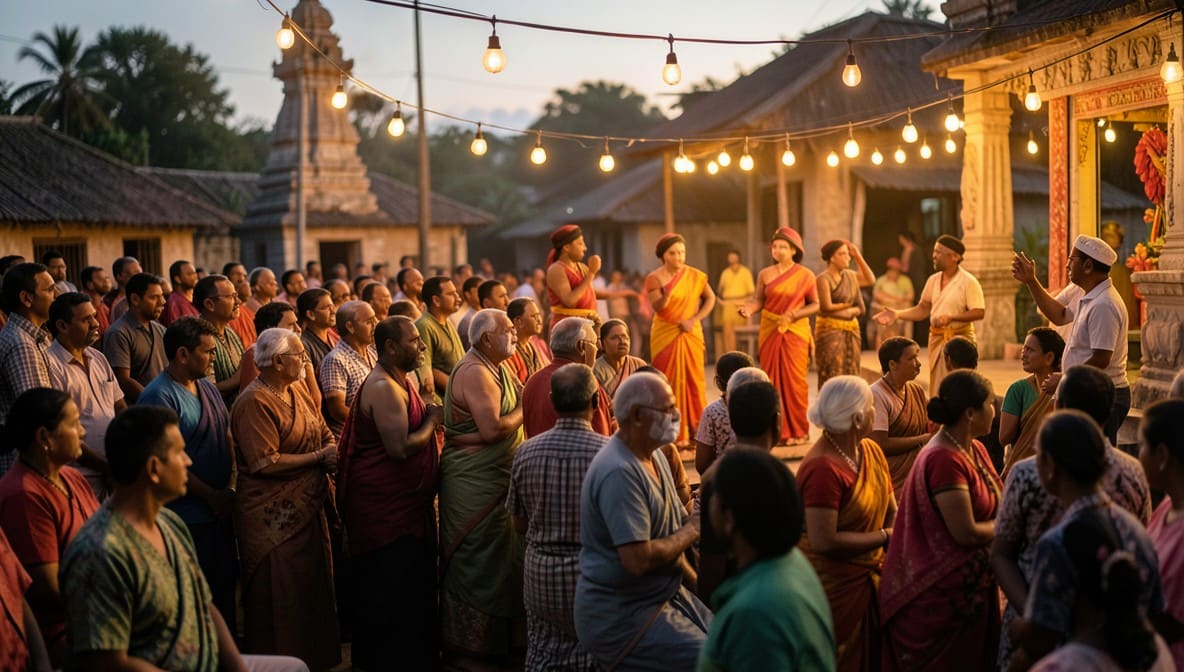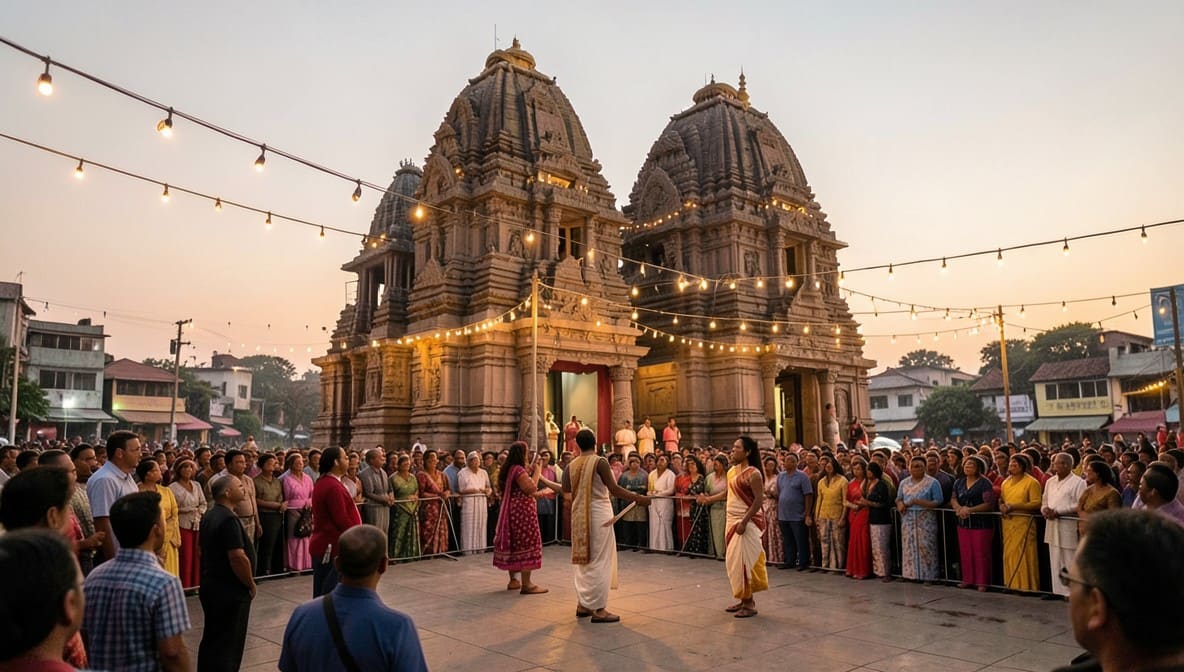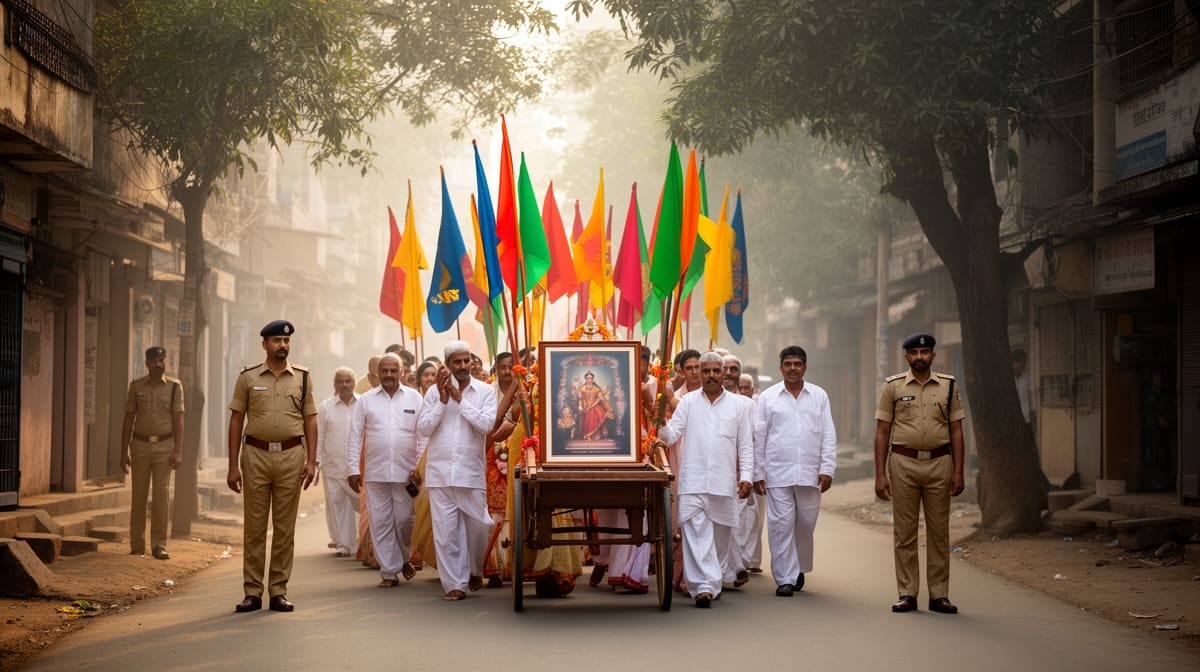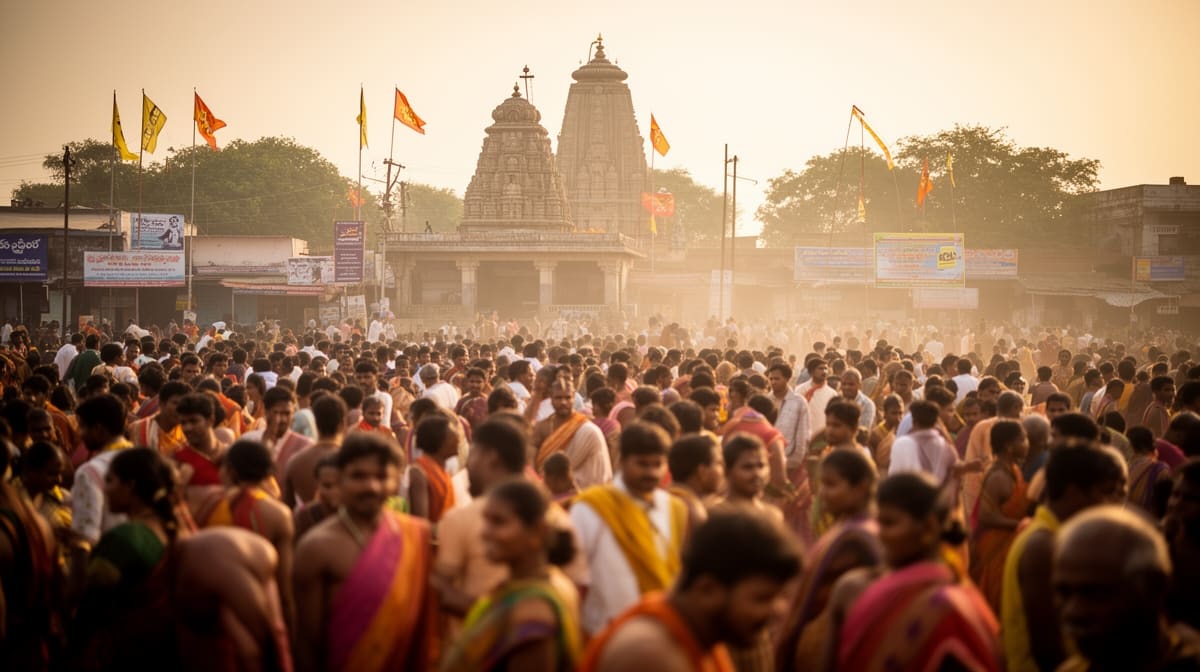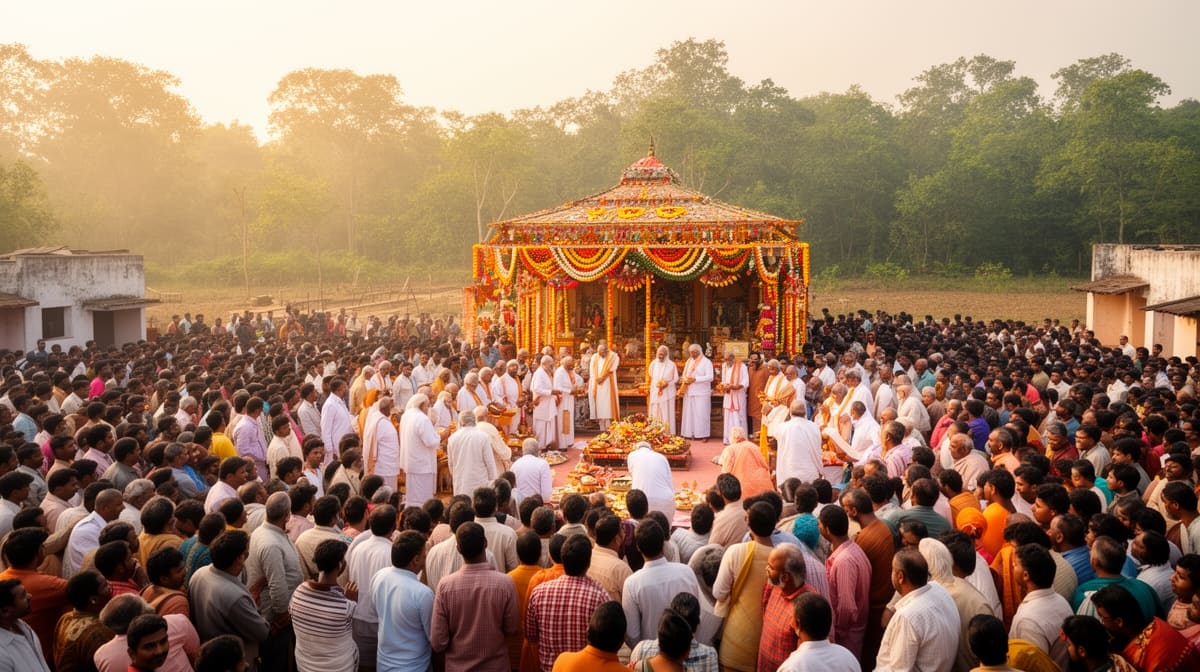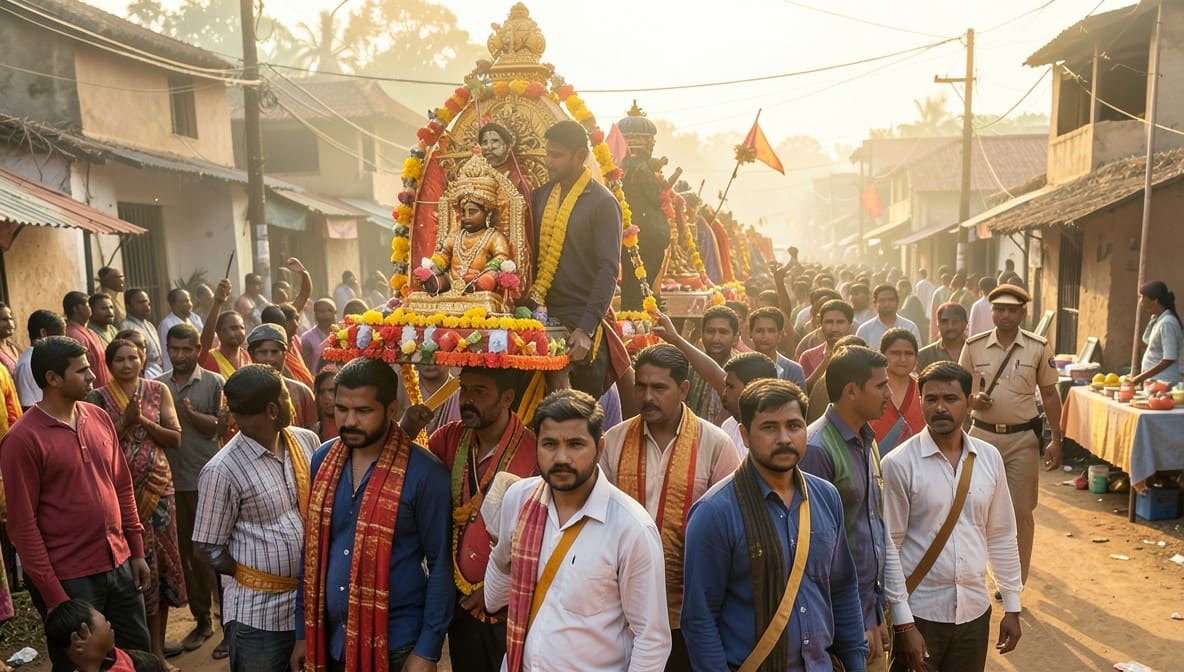
The Andhra Pradesh High Court has reiterated that the state cannot arbitrarily delay or deny permission for religious and cultural festivals, directing police authorities to consider a representation for conducting a local Jatara Mahotsavam with necessary safeguards. The judgment underscores the balance between public order and fundamental rights under Articles 14, 21, and 25 of the Constitution, while imposing strict conditions to prevent obscenity, communal discord, or political propaganda during the event.
Background & Facts
The Dispute
The petitioner, Bobba Ram Esh Chowdary, sought permission from the local police authorities to conduct the Sri Sri Sri Maremma Mavulamma Ammavarla Jatara Mahotsavam, a religious, customary, and cultural festival, from 12.07.2026 to 14.07.2026 at Achanta Vemavaram, West Godavari District. Despite submitting a representation on 26.06.2026, the authorities failed to respond, prompting the petitioner to approach the High Court under Article 226 of the Constitution.
Key Facts
- The petitioner is a resident of Achanta Vemavaram and a member of the festival organizing committee.
- The festival, a traditional Jatara Mahotsavam, involves religious, customary, and cultural programmes.
- The petitioner submitted a representation on 26.06.2026 seeking permission and police protection for the event.
- The representation remained pending as of 08.07.2026, the date of the judgment.
- The petitioner relied on the precedent set in Maremma Poleramma Varla Jathara Utsava Committee, Kavitam v. State of Andhra Pradesh ((2020) 2 ALT 295), where the High Court laid down guidelines for granting permissions for such festivals.
Procedural History
- 26.06.2026: Petitioner submits representation to local police authorities.
- 08.07.2026: Writ Petition (WP No. 18206/2026) filed before the Andhra Pradesh High Court.
- 08.07.2026: High Court disposes of the petition with directions to the police.
Relief Sought
The petitioner sought:
- A writ of mandamus declaring the inaction of the respondents as illegal, arbitrary, and violative of Articles 14, 21, and 25 of the Constitution.
- Directions to the respondents to consider the representation dated 26.06.2026 and grant permission for the festival, along with necessary police protection.
- Imposition of reasonable conditions, as laid down in the precedent Maremma Poleramma Varla Jathara Utsava Committee, Kavitam.
The Legal Issue
The central question was whether the inaction of the state authorities in considering a representation for conducting a religious and cultural festival amounts to a violation of fundamental rights under Articles 14, 21, and 25 of the Constitution, and if so, what conditions can be imposed to balance public order with religious freedom.
Arguments Presented
For the Petitioner
- The petitioner contended that the delay in considering the representation was arbitrary and violated his right to religious freedom under Article 25 and right to equality under Article 14.
- He relied on the precedent Maremma Poleramma Varla Jathara Utsava Committee, Kavitam v. State of Andhra Pradesh ((2020) 2 ALT 295), where the High Court had laid down guidelines for granting permissions for such festivals.
- The petitioner argued that the police could not unilaterally impose conditions without considering the representation.
For the Respondent
- The Assistant Government Pleader for Home submitted, based on written instructions from the Sub-Inspector of Police, Achanta Police Station, that the police had no objection to granting permission but sought to impose certain conditions to maintain public order.
The Court's Analysis
The Court observed that the right to conduct religious and cultural festivals is protected under Articles 14, 21, and 25 of the Constitution. However, this right is not absolute and must be balanced with public order, morality, and health. The Court noted that while the police authorities had the power to impose conditions, they could not arbitrarily delay or deny permission without valid reasons.
The Court relied on the precedent Maremma Poleramma Varla Jathara Utsava Committee, Kavitam v. State of Andhra Pradesh ((2020) 2 ALT 295), which had laid down guidelines for granting permissions for such festivals. The Court emphasized that any conditions imposed must be reasonable and not unduly restrictive of the petitioner's fundamental rights.
"In the light of the above facts and circumstances, respondent-police are directed to consider the petitioner’s representation dated 26.06.2026 and accord permission and provide necessary police protection for the cultural and other programmes that are being conducted during the Sri Sri Sri Maremma Mavulamma Ammavarla Jatara Mahotsavam at Achanta Vemavaram, Achanta Mandal, West Godavari District from 12.07.2026 to 14.07.2026 on the following conditions..."
The Court then enumerated six specific conditions to ensure that the festival did not lead to public disorder, obscenity, or communal discord.
The Verdict
The Court disposed of the writ petition with the following directions:
- The respondent-police authorities were directed to consider the petitioner’s representation dated 26.06.2026 and grant permission for the festival from 12.07.2026 to 14.07.2026.
- The permission was subject to six conditions imposed by the Court, including:
- Prohibition of obscene dances or vulgar programmes.
- Video-graphing of the programmes at the petitioner’s expense.
- Prohibition of political, religious, communal, or caste-based content in dances or songs.
- Prohibition of flex boards supporting political parties or communal leaders.
- Authority for the police to stop performances in case of violations.
- Requirement for the petitioner to furnish a letter of undertaking adhering to the conditions.
- The Assistant Government Pleader for Home was directed to communicate the gist of the order to the concerned police authorities for effective implementation.
- No costs were awarded.
- Interlocutory applications, if any, were closed.
What This Means For Similar Cases
State Cannot Arbitrarily Delay Consideration of Representations
- The judgment reinforces that state authorities cannot indefinitely delay or ignore representations for conducting religious or cultural events. Such inaction can be challenged under Article 226 as a violation of Articles 14 and 21.
- Practitioners should argue that any delay in responding to representations must be reasonable and justified, failing which the courts may intervene to direct consideration.
Conditions Must Be Reasonable and Non-Discriminatory
- While the state can impose conditions to maintain public order, these must be reasonable, non-discriminatory, and proportionate to the objective sought.
- Obscenity or vulgarity can be prohibited, but blanket bans on cultural expressions may violate Article 25.
- Video-graphing at the organizer’s expense is permissible, but excessive surveillance without justification may be challenged.
- Political or communal content can be restricted, but neutral religious or cultural expressions must be protected.
Precedent for Future Festival Permissions
- The judgment relies on Maremma Poleramma Varla Jathara Utsava Committee, Kavitam v. State of Andhra Pradesh ((2020) 2 ALT 295), which serves as a key precedent for similar cases.
- Organizers of religious or cultural festivals can cite this judgment to challenge arbitrary denials or delays in permissions and seek police protection under Article 25.
- Authorities must ensure that conditions imposed do not unnecessarily restrict the right to conduct such events, as long as public order is not compromised.