Bombay High Court judgments

2134 Bombay High Court judgments explained in plain English: what was decided, the law applied and why it matters. Page 54 of 89.

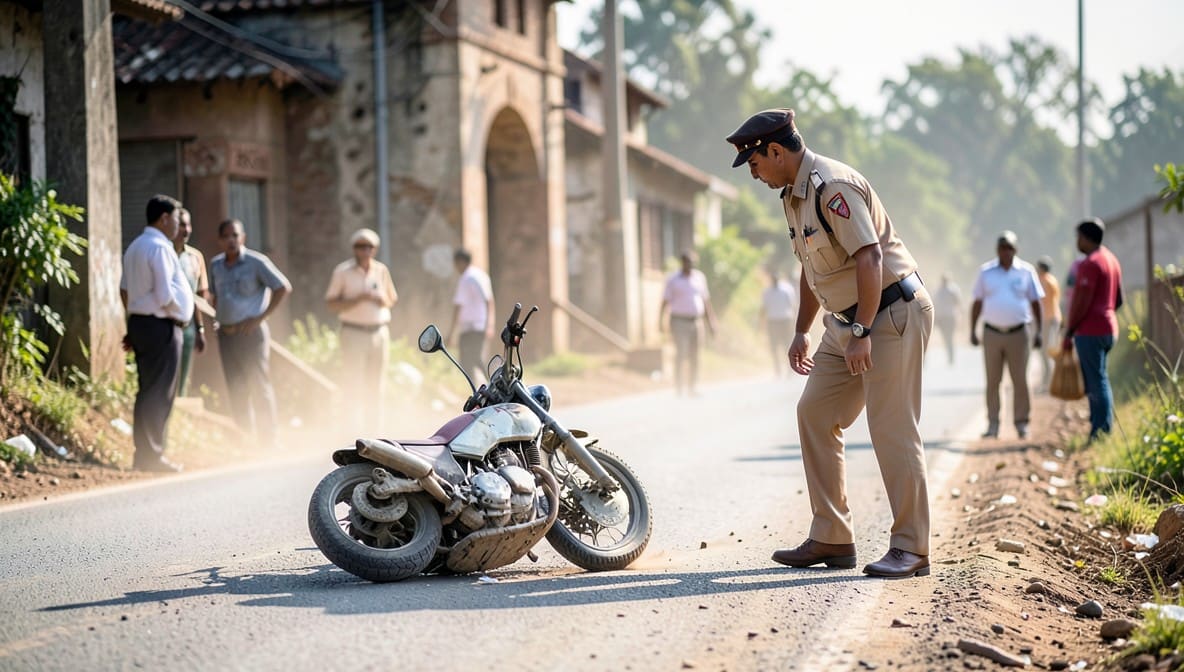
Section 166 MV Act | Owner Liable for Negligent Driving Absent Third-Party Evidence : Bombay HC Upholds ₹5 Lakh Compensation for Pillion Rider Death
Case Law Analysis
|Bombay High Court

Section 166 MV Act | Owner Liable for Negligent Driving Absent Third-Party Evidence : Bombay HC Upholds ₹5 Lakh Compensation for Pillion Rider Death

Bombay HC reaffirms that the registered owner of a vehicle is presumptively liable for negligent driving under Section 166 of the Motor Vehicles Act unless evidence proves a third-party cause. The ruling mandates compensation even in the absence of direct proof of the owner’s fault, reinforcing strict liability in motor accident claims.

Remission Entitlement Under Govt Resolution 03.06.2017 | Convicts Outside Six Excluded Categories Must Be Granted Benefit : Bombay HC (Nagpur Bench)
Case Law Analysis
|Bombay High Court

Remission Entitlement Under Govt Resolution 03.06.2017 | Convicts Outside Six Excluded Categories Must Be Granted Benefit : Bombay HC (Nagpur Bench)

The Bombay High Court has ruled that convicts not falling within the six statutorily excluded categories under the Maharashtra Government’s 03.06.2017 resolution are legally entitled to remission benefits for Dr. Ambedkar’s 125th birth anniversary. This clarifies that denial of remission based on judicial discretion, rather than the resolution’s explicit exclusions, violates administrative law principles and affects thousands of eligible prisoners.

Land Acquisition Act | Irrigated Land Entitles to Double Market Value Compensation : Bombay HC Sets Binding Precedent
Case Law Analysis
|Bombay High Court

Land Acquisition Act | Irrigated Land Entitles to Double Market Value Compensation : Bombay HC Sets Binding Precedent

Bombay High Court rules that irrigated land acquired under the Land Acquisition Act must be compensated at double the rate of dry land, based on evidence of irrigation facilities. This judgment establishes a clear legal standard for market value calculation, directly impacting landowners and acquiring authorities in compensation disputes.

Civil Court Decree Supersedes Revenue Mutation | Final Title Adjudication Cannot Be Overridden by Land Records : Bombay HC
Case Law Analysis
|Bombay High Court

Civil Court Decree Supersedes Revenue Mutation | Final Title Adjudication Cannot Be Overridden by Land Records : Bombay HC

The Bombay High Court has ruled that a final civil decree establishing title to property cannot be nullified by subsequent revenue mutation entries, reinforcing that revenue authorities lack jurisdiction to adjudicate ownership disputes. This decision protects property rights secured through judicial process and prevents administrative overreach in land title matters.

Employee's Compensation Act | Contractual Workers Entitled to Compensation if Employment Nexus Proven, Even Without Formal Appointment Docs: Bombay HC
Case Law Analysis
|Bombay High Court

Employee's Compensation Act | Contractual Workers Entitled to Compensation if Employment Nexus Proven, Even Without Formal Appointment Docs: Bombay HC

The Bombay High Court affirmed that contractual workers killed in work-related accidents are entitled to compensation under the Employee's Compensation Act, even in the absence of formal appointment letters or salary records, if the employment nexus is established through circumstantial evidence. This ruling expands employer liability and protects vulnerable informal workers by prioritizing factual employment over documentary formalities.

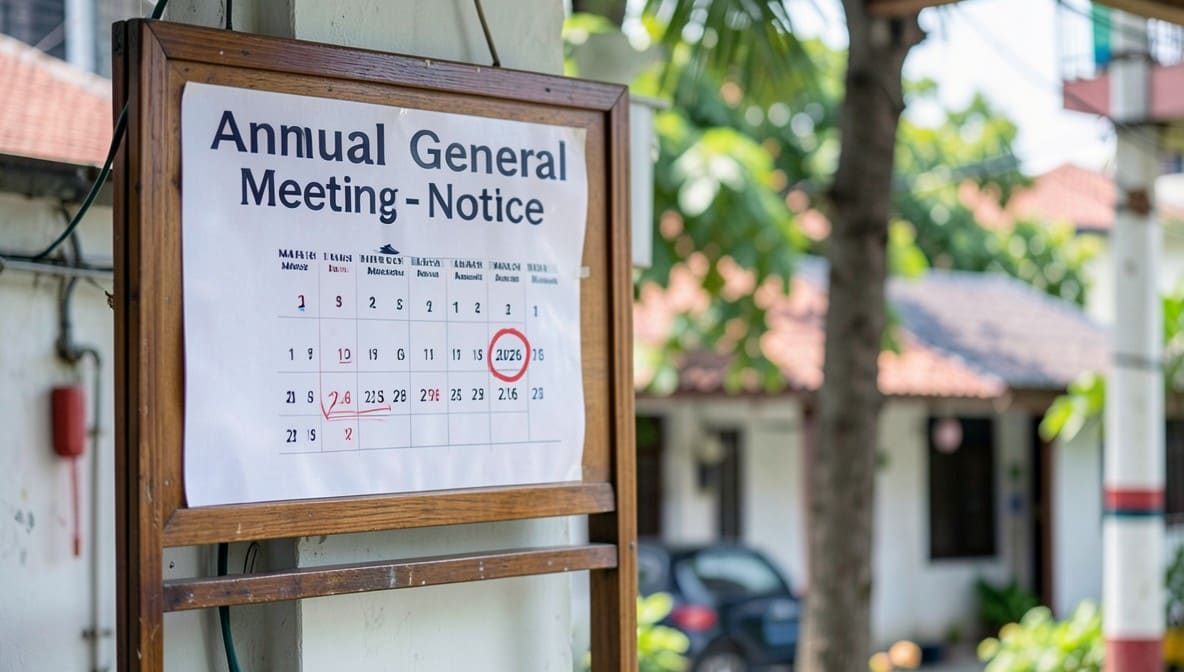
Section 75(5) Maharashtra Co-operative Societies Act | Three-Year AGM Non-Compliance Irreversible Despite Document Handover Delays : Bombay HC
Case Law Analysis
|Bombay High Court

Section 75(5) Maharashtra Co-operative Societies Act | Three-Year AGM Non-Compliance Irreversible Despite Document Handover Delays : Bombay HC

Bombay High Court rules that a cooperative society's failure to hold Annual General Meetings for three consecutive years cannot be excused by delays in document handover, reinforcing strict statutory compliance under Section 75(5) of the Maharashtra Co-operative Societies Act. The judgment underscores that administrative difficulties do not absolve managing committees of their recurring legal obligations, impacting all cooperative societies in Maharashtra.

Section 3 Works of Defence Act, 1903 | Declaration Lapses If Compensation Not Awarded Within Three Years : Bombay HC
Case Law Analysis
|Bombay High Court

Section 3 Works of Defence Act, 1903 | Declaration Lapses If Compensation Not Awarded Within Three Years : Bombay HC

Bombay High Court rules that a declaration under Section 3 of the Works of Defence Act, 1903, automatically lapses if compensation proceedings are not initiated within three years. The judgment reinforces landowners' rights against indefinite government restrictions without timely compensation, setting a critical precedent for similar disputes.

Provisional Appointment Pending ST Verification | Umadevi Doctrine Applies to Graduate Teachers: Bombay HC
Case Law Analysis
|Bombay High Court

Provisional Appointment Pending ST Verification | Umadevi Doctrine Applies to Graduate Teachers: Bombay HC

The Bombay High Court has ruled that candidates awaiting verification of their Scheduled Tribe status may be granted provisional appointments as government teachers under the Umadevi doctrine, provided they cooperate fully with the scrutiny committee. This ensures service continuity without prejudicing the outcome of caste certification, protecting constitutional rights to reservation while upholding procedural integrity.

Order VI Rule 17 CPC | Amendment to Include Ancestral Properties in Partition Suit Mandatory for Complete Adjudication : Bombay HC
Case Law Analysis
|Bombay High Court

Order VI Rule 17 CPC | Amendment to Include Ancestral Properties in Partition Suit Mandatory for Complete Adjudication : Bombay HC

Bombay High Court rules that amendments to pleadings under Order VI Rule 17 CPC to include ancestral properties in a partition suit are essential for a comprehensive adjudication. The court held that such amendments do not alter the suit's nature and must be allowed to ensure all disputed properties are addressed, preventing multiplicity of litigation.

Insurance Cover Note Dispute | Insurer Must Prove Forgery via Criminal Action or Inspector Testimony : Bombay HC Upholds ₹3.86 Lakh Compensation
Case Law Analysis
|Bombay High Court

Insurance Cover Note Dispute | Insurer Must Prove Forgery via Criminal Action or Inspector Testimony : Bombay HC Upholds ₹3.86 Lakh Compensation

Bombay HC rules that an insurance company cannot unilaterally reject a cover note as fake without initiating criminal proceedings or producing the concerned inspector. The court affirmed the MACT's award, emphasizing that mere discrepancies in inspector codes do not invalidate coverage unless proven through legal action.

Section 306 IPC | Absence of Direct Instigation + Mental Illness Negates Prima Facie Case for Abetment of Suicide : Bombay HC (Nagpur Bench)
Case Law Analysis
|Bombay High Court

Section 306 IPC | Absence of Direct Instigation + Mental Illness Negates Prima Facie Case for Abetment of Suicide : Bombay HC (Nagpur Bench)

The Bombay High Court quashed an FIR under Section 306 IPC, holding that mere familial discord and passive support for a spouse’s relationship, without active encouragement or direct incitement to suicide, cannot establish abetment - especially when the deceased suffered from documented mental illness. This ruling reinforces that mens rea must be concrete, not inferred from strained family dynamics, and protects individuals from criminalization of emotional entanglements without overt culpable conduct.

Order XVIII Rule 3A CPC | Implied Court Permission Validates Party's Affidavit Evidence After POA Holder's Testimony : Bombay HC
Case Law Analysis
|Bombay High Court

Order XVIII Rule 3A CPC | Implied Court Permission Validates Party's Affidavit Evidence After POA Holder's Testimony : Bombay HC

Bombay High Court rules that Order XVIII Rule 3A of the CPC is directory, not mandatory, allowing a party to submit affidavit evidence in their personal capacity even after their power of attorney holder has testified, provided the court's implied permission exists. This holding clarifies procedural flexibility in civil evidence, impacting litigants and practitioners in contract and business disputes.

Proportionality in Service Discipline | Attempted Misappropriation Without Actual Loss Justifies Demotion, Not Dismissal: Bombay HC
Case Law Analysis
|Bombay High Court

Proportionality in Service Discipline | Attempted Misappropriation Without Actual Loss Justifies Demotion, Not Dismissal: Bombay HC

The Bombay High Court ruled that an air traffic controller's attempt to misappropriate government property, followed by voluntary restitution, warrants a proportional penalty of demotion rather than dismissal. This sets a critical precedent for disciplinary authorities to weigh intent, conduct, and remedial action when imposing penalties on public employees, reinforcing that absence of actual loss must mitigate punishment.

Section 6 Mathadi Act | Tripartite Board Mandatory for Adjudication; Single-Member Order Void: Bombay HC
Case Law Analysis
|Bombay High Court

Section 6 Mathadi Act | Tripartite Board Mandatory for Adjudication; Single-Member Order Void: Bombay HC

The Bombay High Court has ruled that any order under the Maharashtra Mathadi Act must be issued only by a constitutionally mandated tripartite board, rendering single-member decisions legally invalid. This sets a binding precedent for all labour adjudications under the Act, ensuring statutory compliance and procedural fairness for thousands of manual workers in Maharashtra.

Plaintiff Cannot Summon Defendant as Witness | Adverse Inference Permitted Under Indian Evidence Act : Bombay HC
Case Law Analysis
|Bombay High Court

Plaintiff Cannot Summon Defendant as Witness | Adverse Inference Permitted Under Indian Evidence Act : Bombay HC

The Bombay High Court has ruled that plaintiffs cannot compel defendants to testify on their behalf, as such practice undermines adversarial fairness and improperly shifts the burden of proof. If a defendant refuses to testify despite being summoned, courts may draw an adverse inference - reinforcing the principle that each party must prove their own case without coercing the opposing side to act as a witness.

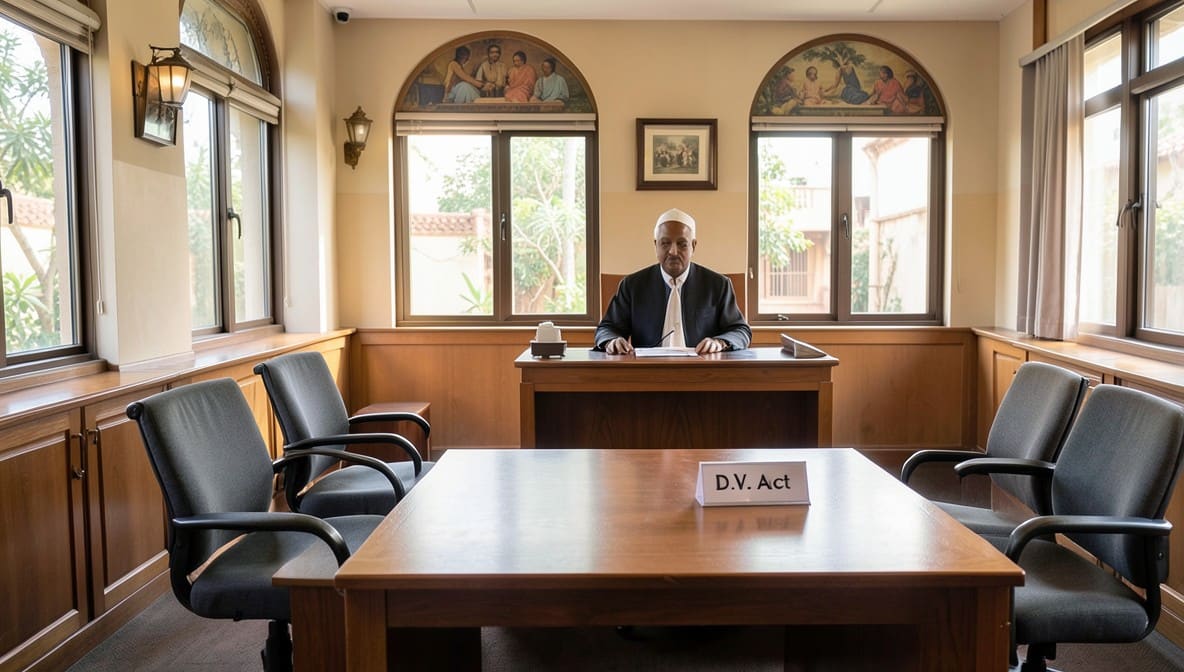
Section 24 CPC & DV Act | Transfer of Domestic Violence Proceedings Must Prioritize Wife’s Convenience & Avoid Multiplicity : Bombay HC Nagpur Bench
Case Law Analysis
|Bombay High Court

Section 24 CPC & DV Act | Transfer of Domestic Violence Proceedings Must Prioritize Wife’s Convenience & Avoid Multiplicity : Bombay HC Nagpur Bench

Bombay HC Nagpur Bench allows transfer of Domestic Violence proceedings from Gadchiroli to Nagpur Family Court, holding that the wife’s convenience and avoidance of multiplicity of proceedings outweigh territorial proximity. The ruling reinforces that DV Act proceedings should be consolidated where the wife resides, even if initially filed elsewhere.

Section 204 CrPC | Magistrate Must Record Judicial Application of Mind Before Issuing Process Under 498A/406 IPC : Bombay HC Quashes Mechanical Summoning
Case Law Analysis
|Bombay High Court

Section 204 CrPC | Magistrate Must Record Judicial Application of Mind Before Issuing Process Under 498A/406 IPC : Bombay HC Quashes Mechanical Summoning

Bombay High Court underscores that Magistrates cannot issue process under Sections 498A and 406 IPC without demonstrating a prima facie evaluation of allegations, even if detailed reasoning is not required. The ruling mandates judicial scrutiny to prevent arbitrary summoning, reinforcing fair trial safeguards for accused in matrimonial disputes.

Patent Refusal Under Section 15 Patents Act | Non-Speaking Orders Violate Natural Justice & Patent Office Manual: Bombay HC
Case Law Analysis
|Bombay High Court

Patent Refusal Under Section 15 Patents Act | Non-Speaking Orders Violate Natural Justice & Patent Office Manual: Bombay HC

Bombay HC quashed a patent refusal order for failing to provide independent reasoning or address the applicant’s submissions, violating natural justice principles. The court mandated a holistic assessment under the Patent Office Manual, emphasizing that novelty and inventive step objections must be explicitly notified and reasoned.

Section 34 Arbitration Act | Cause of Action for Limitation Accrues on Certification of Final Bill, Not Later Denial : Bombay HC
Case Law Analysis
|Bombay High Court

Section 34 Arbitration Act | Cause of Action for Limitation Accrues on Certification of Final Bill, Not Later Denial : Bombay HC

Bombay High Court rules that the limitation period for arbitration claims under the Arbitration and Conciliation Act begins upon certification of the final bill, not upon its subsequent denial. The court emphasized that Section 18 acknowledgment requires a proven, unambiguous admission, reinforcing strict adherence to contractual timelines in commercial disputes.