The Bombay High Court has affirmed that an insurance company cannot challenge the authenticity of a cover note in a motor accident compensation claim without taking concrete legal steps to substantiate its allegations. The judgment reinforces the principle that speculative defenses, unsupported by procedural action, cannot defeat a claimant’s right to compensation under the Motor Vehicles Act.
Background & Facts
The Dispute
On 22nd April 2001, the applicant, Haji Hasan Ali Mohammed Dokadia, was crossing the Mumbai-Ahmedabad Highway at Pelhar Village, Thane District, when he was struck by a motor vehicle bearing registration number MH-04-H-9556. The vehicle, traveling at excessive speed from Mumbai towards Gujarat, caused catastrophic injuries leading to the amputation of his right leg below the knee and severe injury to his left leg. The driver was apprehended by local residents at the scene.
Key Facts
- The applicant filed a claim petition before the Motor Accident Claims Tribunal (MACT), Mumbai, seeking compensation for permanent disability and medical expenses.
- The vehicle was insured under a cover note issued by The New India Assurance Co. Ltd.
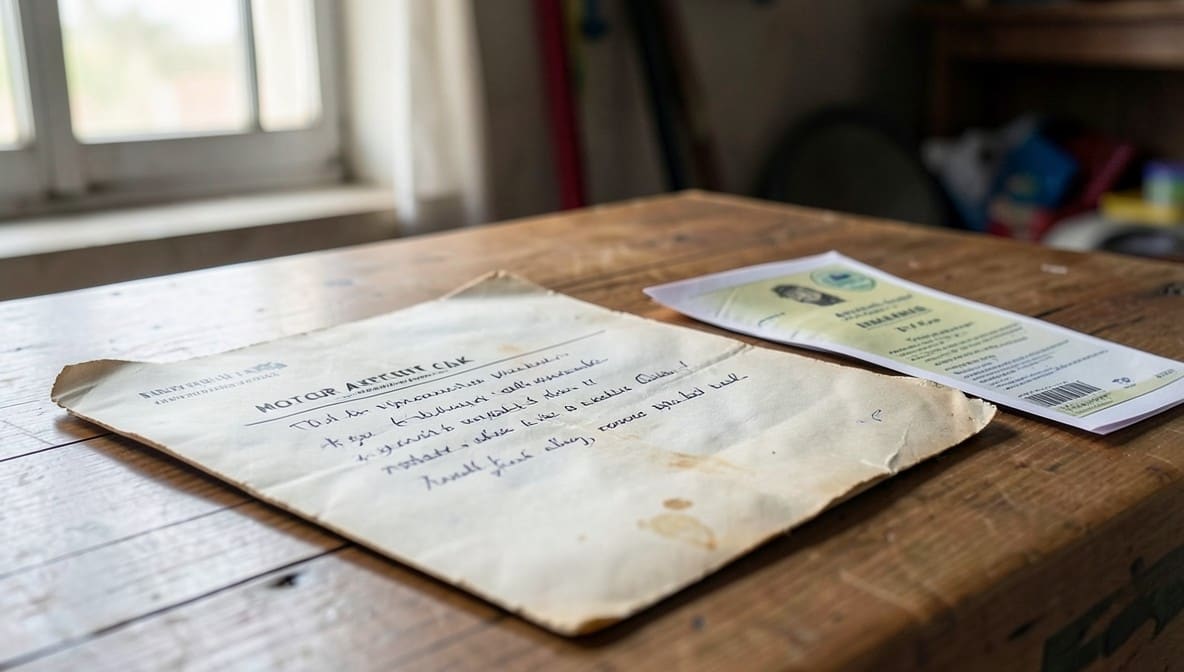
- The insurance company contested liability, alleging that the cover note was forged and not issued by the insurer.
- The cover note bore the correct branch code but an incorrect inspector code.
- The insurer did not produce Mr. V. G. Pawar, the inspector allegedly responsible for issuing the cover note.
- No criminal complaint was filed against the inspector, despite his retirement.
- The insurer did not initiate any criminal proceedings against any employee or third party for alleged forgery.
Procedural History
- 22.04.2001: Accident occurred at Pelhar Village, Thane.
- 2002: Claim petition filed before MACT, Mumbai.
- 18.04.2013: MACT, Mumbai passed order directing joint and several payment of Rs. 3,85,666/- with interest at 7.5% by the owner and insurer.
- 2013: Appeal filed before Bombay High Court (First Appeal (St.) No. 34046 of 2013).
- 07.03.2014: Civil Application No. 3763 of 2014 filed seeking stay of MACT order.
- 23.03.2026: Final hearing conducted at admission stage before Bombay High Court.
The Parties' Positions
The applicant, through his counsel, argued that the insurer’s challenge to the cover note was unsubstantiated and amounted to a dilatory tactic. The insurer, represented by Mr. Deelip R. Mahadik, contended that the cover note was fraudulent and could not bind the company.
Relief Sought
The applicant sought enforcement of the MACT’s award of Rs. 3,85,666/- with 7.5% interest. The insurer sought setting aside of the order on grounds of alleged fraud in the cover note.
The Legal Issue
Can an insurance company successfully deny liability under a motor insurance cover note solely on the basis of an unproven allegation of forgery, without initiating criminal proceedings or producing the concerned official?
Arguments Presented
For the Appellant
The appellant argued that the cover note was fabricated, citing discrepancies in the inspector code. It contended that the MACT erred in accepting the document without corroboration from the issuing inspector. The insurer claimed it had no knowledge of the cover note’s issuance and that the policy was not validly issued under its system.
For the Respondent
The respondents argued that the insurer’s failure to take any legal action - criminal or administrative - against the inspector or any employee undermined its credibility. They emphasized that the insurer had ample opportunity to investigate and prove forgery but chose inaction, thereby acquiescing to the validity of the cover note.
The Court's Analysis
The Court examined the insurer’s conduct over a period of more than two decades, from the date of the accident in 2001 to the date of judgment in 2026. It noted that the insurer had not filed any criminal complaint against the inspector, Mr. V. G. Pawar, despite knowing the alleged discrepancy since the filing of the written statement. The Court observed that the insurer did not even attempt to verify the authenticity of the cover note through internal audit or disciplinary action.
"The insurance company ought to have taken some criminal action when the written statement was filed, raising this issue. The impugned order was passed in 2013, but no action was taken even then. Even today in 2026, at least after the order of the MACT, the insurance company should have taken some criminal action, if their contentions were correct."
The Court held that the insurer’s passive stance amounted to an implied acceptance of the cover note’s validity. The absence of any formal proceedings, whether criminal or departmental, rendered the insurer’s allegations speculative and legally unsustainable. The MACT’s reasoning - that the burden of disproving the document lay with the insurer - was found to be legally sound.
The Court further emphasized that in claims under the Motor Vehicles Act, the objective is to ensure swift and effective compensation to victims. Allowing insurers to raise unverified allegations of fraud without procedural backing would undermine this statutory purpose.
The Verdict
The appeal was dismissed. The Bombay High Court upheld the MACT’s order dated 18th April 2013, directing the insurer and vehicle owner to pay Rs. 3,85,666/- jointly and severally, with interest at 7.5% from the date of filing the claim petition until realization. The statutory deposit made in the High Court was directed to be transferred to the MACT, Mumbai. The Court noted the applicant’s death and directed his legal heirs to file an appropriate application before the MACT for adjustment of the award in their favor.
What This Means For Similar Cases
Insurance Fraud Allegations Require Procedural Rigor
- Practitioners must now treat allegations of forged cover notes as affirmative defenses requiring concrete proof, not mere assertions.
- Insurers who fail to initiate criminal proceedings or produce the issuing official within a reasonable time risk having their defense dismissed as frivolous.
Burden of Disproving Insurance Validity Lies with the Insurer
- In MACT proceedings, once a cover note is produced, the burden shifts to the insurer to prove its invalidity through documented action.
- Mere technical discrepancies (e.g., incorrect inspector code) without corroborative evidence of fraud are insufficient to defeat a claim.
Delay Undermines Credibility in Insurance Claims
- Unexplained delays in challenging insurance documents - spanning years or decades - will be viewed as acquiescence.
- Courts will not permit insurers to benefit from their own inaction, especially when claimants have suffered permanent injury.