The Bombay High Court has clarified a fundamental principle of civil procedure: a plaintiff cannot compel the defendant to testify in support of the plaintiff’s case. This ruling reinforces the adversarial nature of civil litigation and safeguards the defendant’s right to remain silent without penalty beyond the permissible inference.
Background & Facts
The Dispute
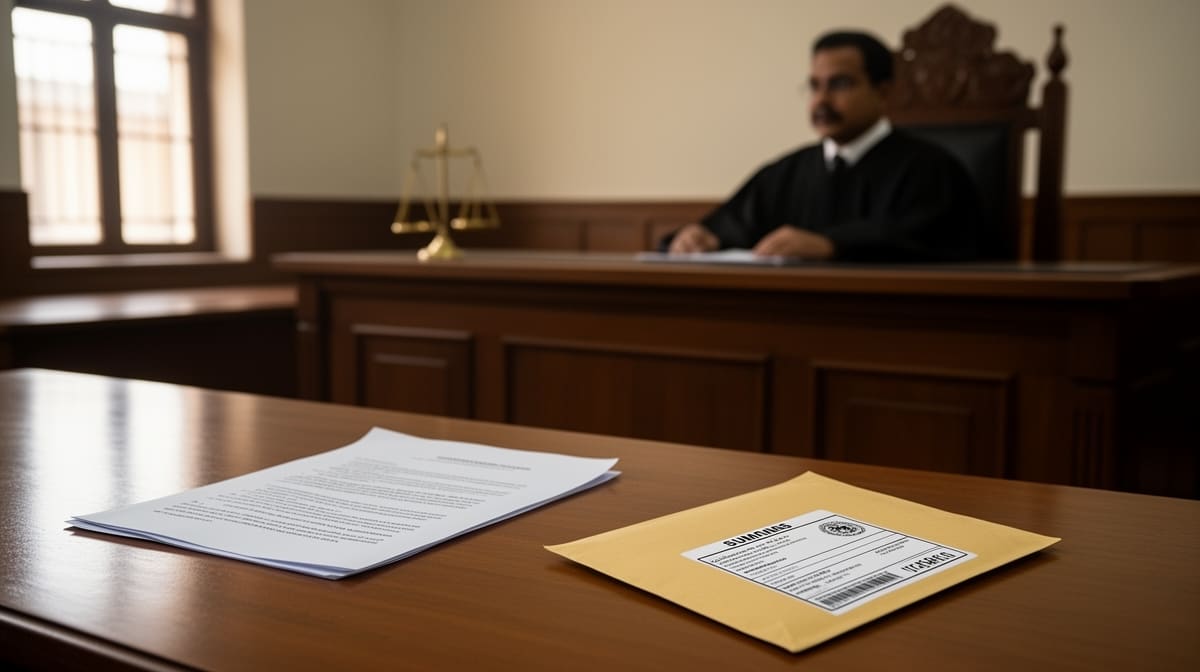
The petitioner, Godavari Biorefineries Limited, was named as a defendant in Regular Civil Suit No. 93 of 2013 filed by the respondents, Dnyandeshwar Bhikaji Kale and others. The suit sought compensation for the death of the respondents’ son, Sandip Kale, who was allegedly employed by the petitioner at the time of the incident. The respondents sought to call the petitioner’s manager as a witness to support their claims, despite the petitioner being a party to the suit.
Key Facts
- The incident leading to the suit occurred during Sandip Kale’s employment with the petitioner-company
- The respondents filed an application under Order XVI Rule 1 of the Code of Civil Procedure, 1908 seeking issuance of witness summons to the petitioner’s manager
- The application was allowed by the Trial Court on 17.11.2016
- The petitioner filed an application (Exhibit-42) seeking recall of the summons, arguing that a defendant cannot be compelled to testify for the plaintiff
- The Trial Court rejected the petitioner’s application on 17.11.2016
- The petitioner filed the present writ petition on 25.05.2017 before the Bombay High Court, Aurangabad Bench
Procedural History
- 2013: Regular Civil Suit No. 93 of 2013 filed by respondents against petitioner
- Prior to 17.11.2016: Respondents applied for summons to petitioner’s manager as witness
- 17.11.2016: Trial Court allowed respondents’ application and rejected petitioner’s objection (Exhibit-42)
- 25.05.2017: Writ Petition No. 5230 of 2017 filed before Bombay High Court
- 23.03.2026: Judgment delivered by the High Court
Relief Sought
The petitioner sought quashing of the Trial Court’s order dated 17.11.2016, setting aside the witness summons issued to its manager, and a declaration that a defendant cannot be compelled to testify for the plaintiff.
The Legal Issue
Can a plaintiff in a civil suit compel the defendant to appear as a witness in support of the plaintiff’s case under Order XVI Rule 1 of the Code of Civil Procedure, 1908?
Arguments Presented
For the Petitioner
The petitioner relied on Suresh s/o Sahebrao Tawale v. Uttam s/o Shankar Ghadge and Ors., 2012 (5) ALL M.R. 880, particularly paragraphs 5 and 6, which held that the practice of calling a defendant as a witness for the plaintiff is condemnable. The petitioner argued that the defendant is not an independent witness but a party with a direct interest in the outcome. The Privy Council in Mahunt Shatrugan Das and the Lahore High Court had consistently held that such a practice embarrasses judicial investigation. The petitioner further contended that if a defendant chooses not to testify, the court may draw an adverse inference under Section 114, Illustration (g) of the Indian Evidence Act, 1872, without needing to summon the defendant.
For the Respondent
The respondents argued that the manager of the petitioner was a key witness to the events surrounding the death of Sandip Kale, and that the petitioner’s refusal to testify hindered the plaintiffs’ ability to prove their case. They contended that the summons was not issued to compel the defendant to support the plaintiff’s case, but to elicit relevant facts from a person with direct knowledge of the incident.
The Court's Analysis
The Court examined the nature of the parties’ roles in civil litigation and the scope of Order XVI Rule 1 CPC, which permits the court to issue summons to any person who may have knowledge of the facts in issue. The Court emphasized that while a court may summon any person as a witness, it cannot compel a party to testify in support of the opposing party’s case.
"As rightly contended by the Counsel for the petitioner the Privy Council, in the case of Mahunt Shatrugan Das (supra), has held that the practice of calling the defendant, as a witness to give evidence on behalf of the plaintiff, is condemnable. In such case the plaintiff must be treated as a person who puts the defendant forward as a witness of truth."
The Court noted that the defendant is not a neutral witness but a party with a vested interest in the outcome. The law presumes that a party will testify in support of their own case. If the defendant chooses not to enter the witness box, the court may draw an adverse inference under Section 114, Illustration (g) of the Indian Evidence Act, 1872. Compelling the defendant to testify for the plaintiff undermines this balance and creates a procedural anomaly.
The Court distinguished Ramdas Dhondibhu Pokharkar, cited by the respondents, where a bank employee was summoned to identify a signature - a purely factual identification, not testimony in support of the plaintiff’s case. In the present case, the summons was issued to the defendant’s manager to substantiate the plaintiff’s claim of negligence and liability, which amounted to using the defendant as a witness for the plaintiff.
The Court concluded that no provision in the CPC permits a plaintiff to call the defendant as a witness in support of their case. The Trial Court’s order was therefore legally unsustainable.
The Verdict
The writ petition was allowed. The order dated 17.11.2016 passed by the 2nd Joint Civil Judge, Junior Division, Kopargaon, summoning the petitioner’s manager as a witness for the respondents, was quashed and set aside. The Court clarified that the Trial Court may still draw an adverse inference against the petitioner if it chooses not to testify, in accordance with Section 114, Illustration (g) of the Indian Evidence Act, 1872. All pending applications in the suit were disposed of.
What This Means For Similar Cases
Defendant Cannot Be Forced to Testify for Plaintiff
- Practitioners must not file applications seeking to summon opposing parties as witnesses in support of their own case
- If a defendant refuses to testify, the correct remedy is to seek an adverse inference, not a summons
- Any application to summon a defendant as a witness for the plaintiff is liable to be dismissed outright
Adverse Inference Remains a Viable Tool
- Courts retain the power to draw adverse inference under Section 114, Illustration (g) of the Indian Evidence Act, 1872 if a defendant with relevant knowledge declines to testify
- This preserves the defendant’s right to silence while ensuring fairness to the plaintiff
- Legal strategy should focus on highlighting the defendant’s failure to testify, not on procedural compulsion
Clarification on Witness Summoning Powers
- Order XVI Rule 1 CPC applies to third parties with knowledge, not to parties to the suit
- Summoning a party as a witness for the opposing side creates a conflict of interest and procedural imbalance
- Courts must scrutinize applications for witness summons to ensure they do not circumvent the adversarial framework