The Bombay High Court has clarified that state-level remission policies must be applied strictly according to their enumerated exclusions, affirming that convicts not falling within specified prohibited categories are entitled to benefit by default. This ruling reinforces the principle that administrative discretion cannot override clear statutory or policy-based entitlements.
Background & Facts
The Dispute
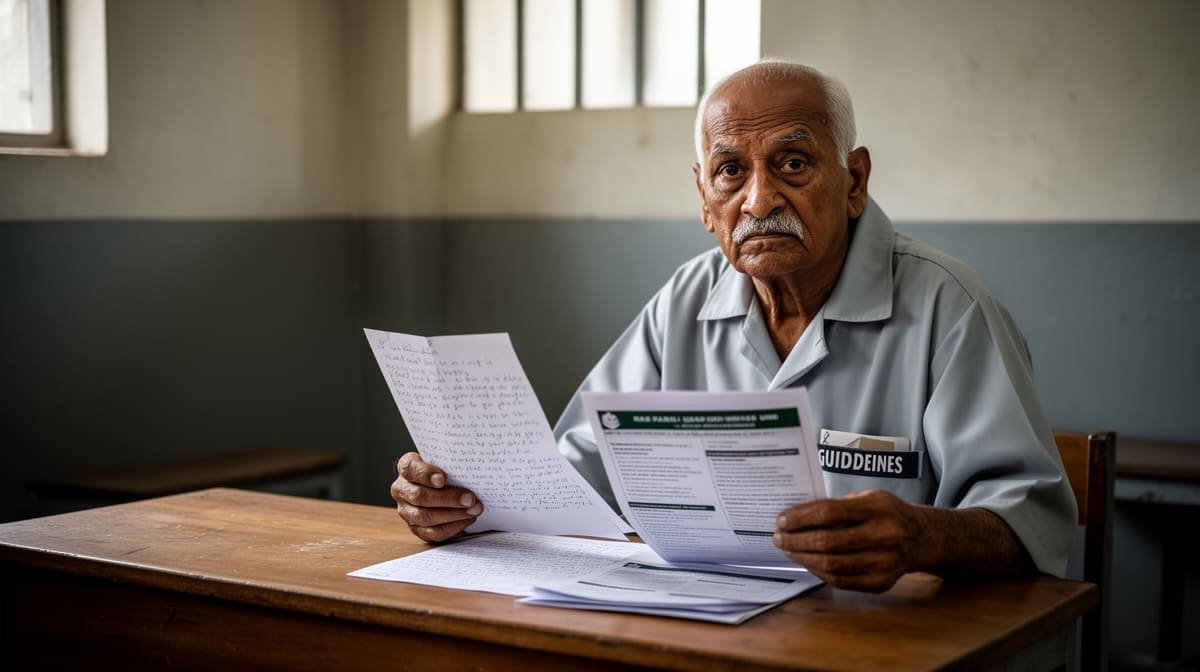
The petitioner, Virendra Dhanraj Yadav, seeks the benefit of remission under the Government Resolution dated 03.06.2017, issued by the State of Maharashtra to commemorate the 125th Birth Anniversary of Dr. Babasaheb Ambedkar. The resolution provides for remission of sentence based on the duration of imprisonment, with specific exclusions for convicts under six enumerated categories. The petitioner was convicted under Section 376G of the Indian Penal Code, 1860, and contends that his offence does not fall within any of the excluded categories.
Key Facts
- The petitioner was convicted by the Sessions Court, Nagpur, on 01.11.2006 for an offence under Section 376G IPC.
- His appeal against conviction was dismissed by the High Court on 07.01.2019.
- He was released on bail during the pendency of appeal but was taken back into custody after the dismissal of his appeal.
- The Government Resolution dated 03.06.2017 was to be implemented with effect from 14.04.2016.
- The resolution provides for remission of 7 days for sentences up to 3 months, and up to three months for sentences exceeding five years or life imprisonment.
- The resolution explicitly excludes convicts falling under six categories, including those convicted under Section 376G IPC.
- The Sessions Court, in its opinion dated 26.04.2023, held that the petitioner was not entitled to remission, despite acknowledging that his conviction did not fall within any of the six excluded categories.
Procedural History
- 01.11.2006: Conviction by Sessions Court, Nagpur, under Section 376G IPC.
- 07.01.2019: High Court dismissed petitioner’s appeal.
- 14.04.2016: Effective date of implementation of Government Resolution dated 03.06.2017.
- 26.04.2023: Sessions Court issued opinion denying remission, despite finding petitioner outside excluded categories.
- 23.03.2026: Criminal Writ Petition No. 153/2026 filed before Bombay High Court, Nagpur Bench.
The Parties' Positions
Petitioner: Argued that since his conviction under Section 376G IPC is not listed among the six excluded categories in the Government Resolution, he is entitled to remission by default. He contended that the Sessions Court’s opinion was legally erroneous and contrary to the express terms of the policy.
Respondent State: Did not contest the applicability of the resolution but relied on the Sessions Court’s opinion that the petitioner, being convicted of a heinous offence, should be excluded de facto, despite the absence of such a provision in the resolution.
Relief Sought
The petitioner sought a direction to the State to grant him remission benefit under the Government Resolution dated 03.06.2017, and to set aside the erroneous opinion of the Sessions Court dated 26.04.2023.
The Legal Issue
The central question was whether a convict who does not fall within any of the six explicitly excluded categories under the Government Resolution dated 03.06.2017 can be denied remission on the basis of judicial discretion or subjective assessment of the offence’s gravity.
Arguments Presented
For the Petitioner
Counsel for the petitioner relied on the express language of the Government Resolution, which states that remission shall be denied only to convicts falling within the six specified categories. He argued that the Sessions Court’s opinion, which denied remission despite the petitioner not being in any of those categories, was legally unsustainable and amounted to judicial overreach. He cited the principle of expressio unius est exclusio alterius - the inclusion of specific exclusions implies the exclusion of all others.
For the Respondent
The Additional Public Prosecutor did not dispute the text of the resolution but submitted that the Sessions Court’s opinion was based on the nature of the offence under Section 376G IPC, which is grave and heinous. The State’s position was that the Sessions Court’s view, though not explicitly supported by the resolution, was in the interest of public policy and should be upheld.
The Court's Analysis
The Court examined the Government Resolution dated 03.06.2017 and found that it contains a clear, exhaustive list of six categories of convicts excluded from remission. The resolution does not contain any residual clause granting discretionary power to deny remission to convicts outside these categories. The Sessions Court’s opinion, which denied remission on the ground that the petitioner’s offence was heinous, directly contradicted the policy’s text.
"The opinion runs contrary to the decision of the State Government. It is, therefore, unsustainable."
The Court emphasized that administrative policies, once issued with clear conditions, bind all subordinate authorities. The Sessions Court, as a judicial body, had no authority to impose additional restrictions not enumerated in the policy. The Court held that the principle of legality requires that benefits be granted unless expressly withheld. Denial of remission on grounds not stated in the resolution violates the doctrine of legitimate expectation and the rule of law.
The Court further noted that the State Government, not the Sessions Court, is the competent authority to determine eligibility under its own policy. The Sessions Court’s opinion was therefore an unauthorized exercise of administrative discretion.
The Verdict
The writ petition was allowed. The Court set aside the opinion dated 26.04.2023 of the Sessions Court. Respondent No.2 is directed to reconsider the petitioner’s claim for remission in accordance with the Government Resolution dated 03.06.2017 and extend the benefit if no other legal impediment exists. The decision shall be taken within four weeks from the date of judgment. No costs are awarded.
What This Means For Similar Cases
Remission Benefits Are Presumptive for Non-Excluded Convicts
- Practitioners must argue that any denial of remission under a policy must be strictly confined to the categories explicitly listed.
- Judicial or administrative denial based on offence severity, public sentiment, or moral judgment is impermissible if the policy does not authorize it.
Administrative Policies Bind Subordinate Authorities
- Lower courts and prison authorities cannot impose additional conditions beyond those specified in a government resolution.
- The expressio unius principle applies: if a policy lists exclusions, all others are included by implication.
Procedural Compliance Is Non-Negotiable
- Petitioners in similar cases should file writs challenging unauthorized denials within the limitation period.
- The four-week deadline set by the Court establishes a precedent for timely adjudication of remission claims.