Bombay High Court judgments

2134 Bombay High Court judgments explained in plain English: what was decided, the law applied and why it matters. Page 51 of 89.

Section 82 Registration Act | Mere Clerical Error Without Fraudulent Intent Not Punishable: Bombay HC Quashes Prosecution
Case Law Analysis
|Bombay High Court

Section 82 Registration Act | Mere Clerical Error Without Fraudulent Intent Not Punishable: Bombay HC Quashes Prosecution

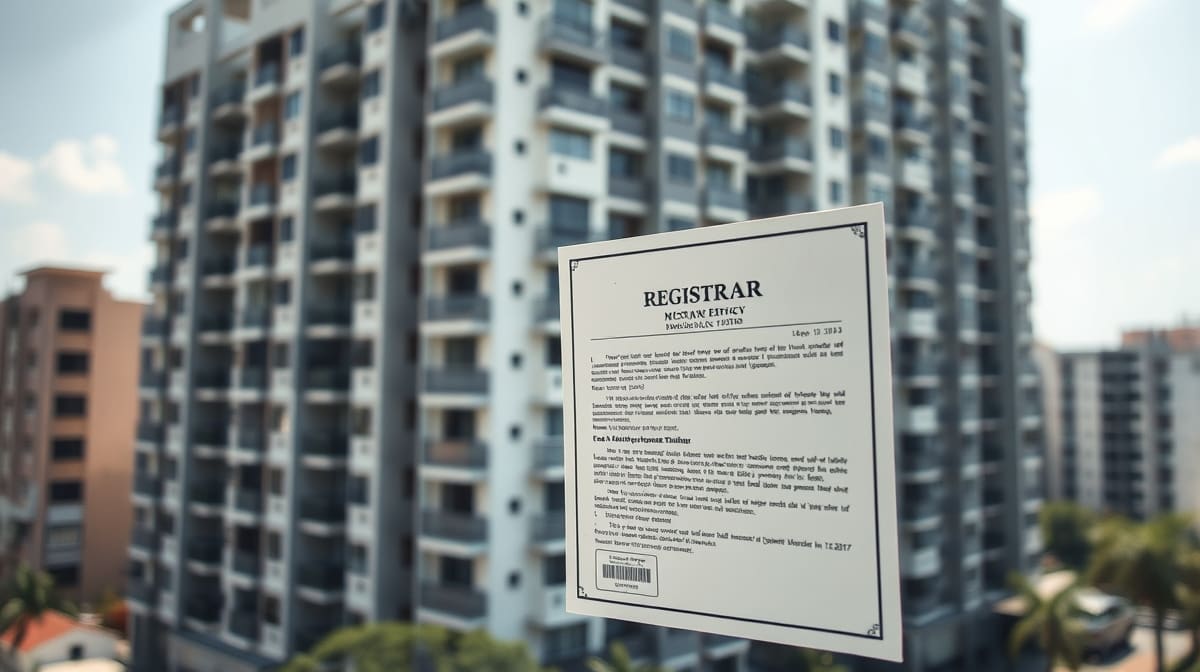
Bombay High Court rules that a clerical error in area description in a registration document does not constitute an offence under Section 82 of the Registration Act if there is no intent to evade stamp duty. The ruling underscores that criminal liability requires proof of mens rea, protecting parties from prosecution for inadvertent mistakes.

Section 482 CrPC | Bombay HC Quashes FIR in Redevelopment Dispute, Reinforcing Civil-Criminal Distinction
Case Law Analysis
|Bombay High Court

Section 482 CrPC | Bombay HC Quashes FIR in Redevelopment Dispute, Reinforcing Civil-Criminal Distinction

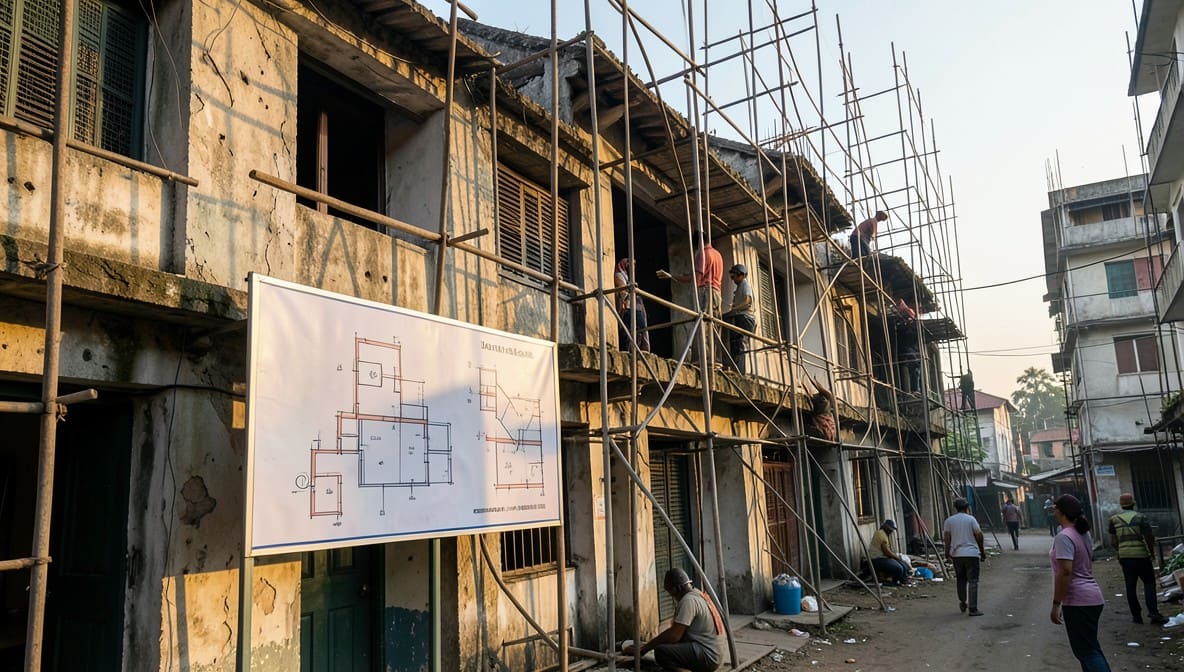
Bombay High Court invokes Section 482 CrPC to quash an FIR where allegations of cheating and forgery stemmed from a redevelopment dispute, emphasizing that private civil grievances cannot be criminalized. The ruling clarifies that criminal proceedings are unwarranted when the core dispute revolves around contractual obligations or allotment disagreements, offering relief to developers and parties entangled in similar civil disputes.

Sections 65 & 66 Maharashtra Tenancy Act | Statutory Inquiry Mandatory Before Land Acquisition: Bombay HC Quashes Order for Due Process Violation
Case Law Analysis
|Bombay High Court

Sections 65 & 66 Maharashtra Tenancy Act | Statutory Inquiry Mandatory Before Land Acquisition: Bombay HC Quashes Order for Due Process Violation

Bombay High Court rules that land acquisition under the Maharashtra Tenancy Act requires strict compliance with Sections 65 and 66, mandating a statutory inquiry before any acquisition. The court quashed the acquisition order, emphasizing that procedural fairness is non-negotiable, and mere declaration without inquiry is insufficient to deprive landowners of their property rights.

John Doe Injunction Against Ransomware Actors Threatening Data Leak | IT Act & IPC Apply to Cyber Extortion: Bombay HC
Case Law Analysis
|Bombay High Court

John Doe Injunction Against Ransomware Actors Threatening Data Leak | IT Act & IPC Apply to Cyber Extortion: Bombay HC

The Bombay High Court granted an ad-interim John Doe injunction to block ransomware actors threatening to expose 1TB of confidential client data, affirming that digital extortion falls within the scope of the IT Act and IPC. This sets a critical precedent for businesses facing cyber ransom threats, enabling swift legal intervention before data is leaked.

Section 100(1)(b) RP Act | Non-Disclosure of Partnership Firm Tax Liabilities in Form 26 Affidavit Constitutes Corrupt Practice : Bombay HC
Case Law Analysis
|Bombay High Court

Section 100(1)(b) RP Act | Non-Disclosure of Partnership Firm Tax Liabilities in Form 26 Affidavit Constitutes Corrupt Practice : Bombay HC

Bombay High Court rules that concealing a partnership firm's tax liabilities in the mandatory Form 26 affidavit under the Representation of the People Act, 1951, amounts to a corrupt practice, warranting trial. The judgment underscores the strict disclosure obligations for election candidates, impacting electoral transparency and accountability.

Section 376(2)(j) & (l) IPC | Mild Intellectual Disability Vitiates Consent in Rape Cases: Bombay HC Upholds Conviction Based on DNA & Expert Testimony
Case Law Analysis
|Bombay High Court

Section 376(2)(j) & (l) IPC | Mild Intellectual Disability Vitiates Consent in Rape Cases: Bombay HC Upholds Conviction Based on DNA & Expert Testimony

Bombay High Court rules that mild intellectual disability negates valid consent under Section 376(2)(j) and (l) IPC, even if the victim performs daily chores. The court relied on conclusive DNA evidence and expert testimony to dismiss the appeal, reinforcing that cognitive impairment invalidates consent in rape cases.

Section 302 IPC | Possession of Stolen Property Alone Insufficient to Prove Murder Without Full Chain of Circumstantial Evidence : Bombay HC
Case Law Analysis
|Bombay High Court

Section 302 IPC | Possession of Stolen Property Alone Insufficient to Prove Murder Without Full Chain of Circumstantial Evidence : Bombay HC

The Bombay High Court overturned a life sentence, holding that recovery of the victim’s belongings from the accused cannot substitute for a coherent, unbroken chain of circumstantial evidence linking the accused to the act of murder. This reinforces that in cases relying solely on circumstantial evidence, every link must be proven beyond reasonable doubt - a critical safeguard for accused persons in homicide trials.

Section 64 Contract Act | Developer’s FSI Purchase Price Must Be Restored Upon Termination of Redevelopment Agreement : Bombay HC
Case Law Analysis
|Bombay High Court

Section 64 Contract Act | Developer’s FSI Purchase Price Must Be Restored Upon Termination of Redevelopment Agreement : Bombay HC

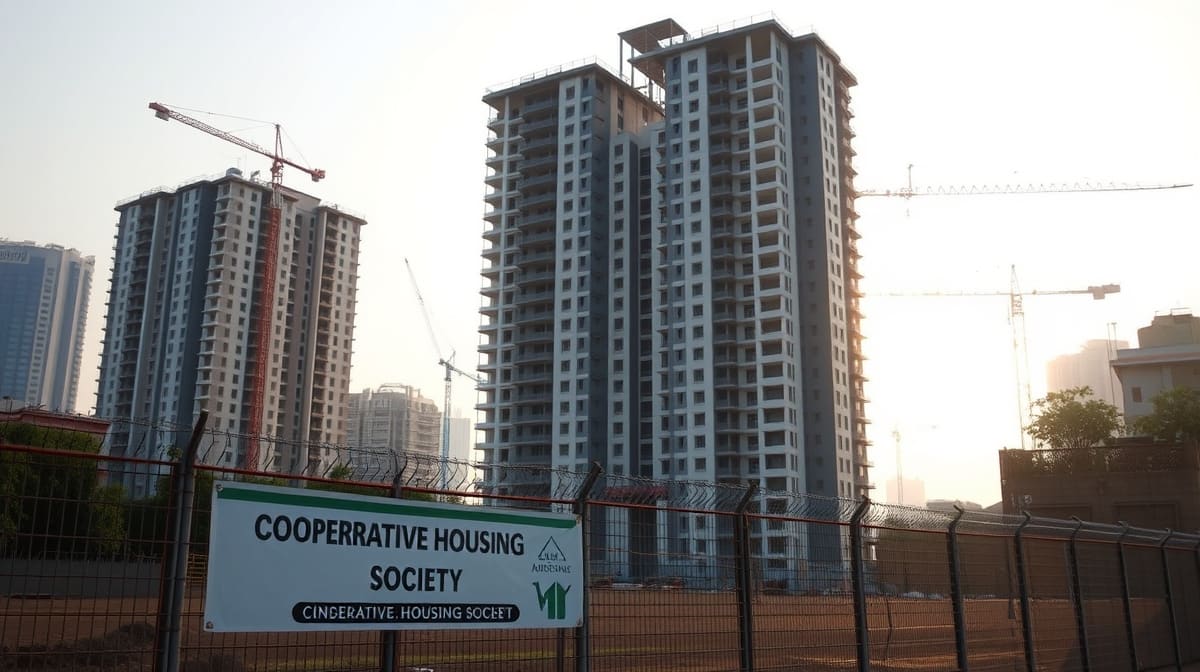
Bombay High Court rules that termination of a redevelopment agreement does not entitle the developer to retain the FSI purchase price, as Section 64 of the Contract Act mandates restitution to prevent unjust enrichment. The society is directed to refund Rs. 7.08 crore to the developer, reinforcing contractual fairness in property disputes.

Natural Justice Mandate | Slum Rehabilitation Authority Must Hear Property Owners Before Declaration : Bombay HC
Case Law Analysis
|Bombay High Court

Natural Justice Mandate | Slum Rehabilitation Authority Must Hear Property Owners Before Declaration : Bombay HC

Bombay High Court stayed a slum rehabilitation declaration after finding the Slum Rehabilitation Authority violated principles of natural justice by failing to afford property owners a hearing. The ruling reinforces that administrative actions impacting proprietary rights must comply with audi alteram partem, setting a precedent for procedural fairness in slum rehabilitation schemes.

Circumstantial Evidence Alone Insufficient for Bail Denial After Investigation Closure | BNS Sections 318, 336, 340 | Bombay HC
Case Law Analysis
|Bombay High Court

Circumstantial Evidence Alone Insufficient for Bail Denial After Investigation Closure | BNS Sections 318, 336, 340 | Bombay HC

The Bombay High Court granted bail in a forgery and fraud case under the Bharatiya Nyaya Sanhita, holding that once the investigation is complete, mere circumstantial evidence - including inadmissible confessions and call records - cannot justify continued detention. This reinforces that bail cannot be withheld solely on speculative links when no direct evidence ties the accused to the conspiracy, setting a critical precedent for non-bailable offences under BNS with seven-year maximum punishment.

Article 191 | Office in APMC Not an 'Office of Profit' Disqualifying Election Candidacy : Bombay HC
Case Law Analysis
|Bombay High Court

Article 191 | Office in APMC Not an 'Office of Profit' Disqualifying Election Candidacy : Bombay HC

The Bombay High Court ruled that holding a position in a local authority such as the Agricultural Produce Market Committee does not amount to an office of profit under Article 191 of the Constitution, thereby upholding the election of a candidate who held such a post. The judgment also clarifies that minor procedural defects in nomination forms cannot invalidate an election unless proven to have materially affected the outcome, offering critical clarity to local officeholders seeking public office.

Section 77 LARR Act 2013 | Personal Presence Not Required for Compensation Disbursement If Documents Verified : Bombay HC
Case Law Analysis
|Bombay High Court

Section 77 LARR Act 2013 | Personal Presence Not Required for Compensation Disbursement If Documents Verified : Bombay HC

The Bombay High Court ruled that under Section 77 of the LARR Act, 2013, authorities cannot demand physical presence of landowners to disburse compensation if identity and supporting documents are duly verified. This clarifies administrative overreach and ensures timely payment to claimants who have fulfilled statutory requirements, particularly those unable to appear in person due to distance, disability, or other legitimate constraints.

Section 12(5) Arbitration Act | Unilateral Arbitrator Appointment Void Ab Initio : Bombay HC Sets Aside 150+ Awards
Case Law Analysis
|Bombay High Court

Section 12(5) Arbitration Act | Unilateral Arbitrator Appointment Void Ab Initio : Bombay HC Sets Aside 150+ Awards

Bombay High Court reinforces Supreme Court precedent by invalidating arbitral awards where arbitrators were unilaterally appointed, holding such appointments void ab initio under Section 12(5) of the Arbitration and Conciliation Act. Parties might now face fresh arbitration proceedings, with limitation periods adjusted to exclude the voided process duration.

Section 11(5) MOFA | Registering Authority Must Register Deemed Conveyance Despite Non-Impleadment of Owner : Bombay HC
Case Law Analysis
|Bombay High Court

Section 11(5) MOFA | Registering Authority Must Register Deemed Conveyance Despite Non-Impleadment of Owner : Bombay HC

Bombay High Court rules that under Section 11(5) of the Maharashtra Ownership Flats Act (MOFA), the Registering Authority is statutorily bound to register a deemed conveyance once certified, irrespective of procedural defects like non-impleadment of the owner. The ruling clarifies that registration cannot be refused on technical grounds, reinforcing the mandatory nature of the provision for housing societies.

Section 3(2)(b) MTP Act | Bombay HC Permits Termination at 34 Weeks for Non-Lethal Skeletal Dysplasia with Severe Morbidity Risk : Bombay HC
Case Law Analysis
|Bombay High Court

Section 3(2)(b) MTP Act | Bombay HC Permits Termination at 34 Weeks for Non-Lethal Skeletal Dysplasia with Severe Morbidity Risk : Bombay HC

Bombay High Court ruled that the 24-week gestational limit under the MTP Act does not apply when a Medical Board confirms a 'substantial fetal abnormality' under Section 3(2)(b). The Court permitted termination at 34 weeks for non-lethal skeletal dysplasia, emphasizing the risk of severe lifelong morbidity over statutory timelines, reinforcing reproductive autonomy in exceptional medical cases.