The Bombay High Court has clarified that statutory registration under cooperative or societies legislation is a non-negotiable eligibility criterion for fair price shop allotment under government welfare schemes. The judgment invalidates administrative discretion that prioritizes convenience over statutory compliance, reinforcing the principle that public resource allocation must adhere strictly to advertised conditions.
Background & Facts
The Dispute
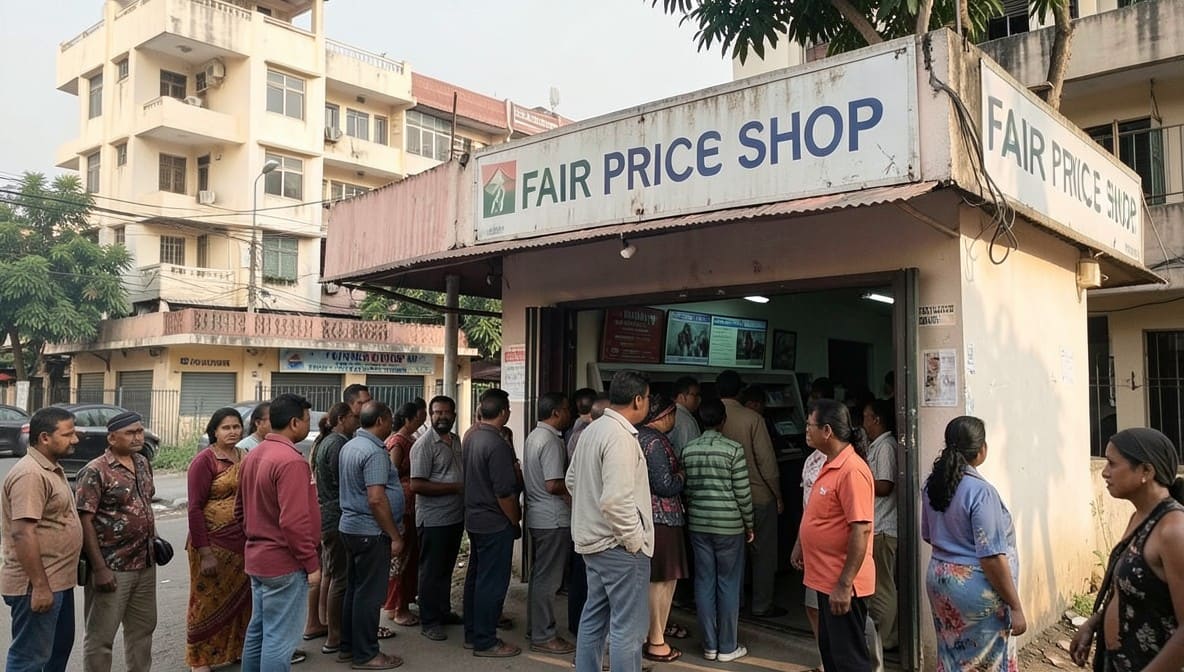
The dispute arose from the allotment of a fair price shop at Sathe Nagar, Mankhurd, Mumbai, under Advertisement No. 25/2010 issued by Respondent No. 1 (State of Maharashtra) on 11 October 2010. The advertisement reserved 27 fair price shops exclusively for Swayam Sahayata Bachat Gats (Self-Help Groups), defined as registered societies under applicable cooperative or societies laws. The Petitioner, Shabnoor Swavlamban Swai Sahayata Mahila Ayub Bachat Gat, is a registered society under the Maharashtra Co-operative Societies Act and applied for the shop. Respondent No. 5, a group registered only with the Brihanmumbai Municipal Corporation’s Daridray Nirmulan Kaksha, was also granted the allotment despite lacking statutory registration.
Key Facts
- Advertisement No. 25/2010 issued on 11.10.2010 explicitly required applicants to be registered societies under the Maharashtra Co-operative Societies Act, the Societies Registration Act, or the Maharashtra Public Trusts Act
- The Petitioner submitted its application and was recommended for allotment by Respondent No. 4, the District Controller of Rationing
- Respondent No. 3 (Deputy Controller of Rationing) rejected the Petitioner’s application and allotted the shop to Respondent No. 5 on 30.04.2012
- Documents obtained under the Right to Information Act revealed that Respondent No. 5 was not registered under any of the statutorily mandated laws
- Respondent No. 3’s own affidavit-in-reply admitted that Respondent No. 5 was registered only with the BMC’s Daridray Nirmulan Kaksha, not under any cooperative or societies law
- The Petitioner filed a Revision Application on 29.05.2012, which remained undecided for over eight months
- The Minister dismissed the Revision Application by order dated 06.02.2013, confirming the allotment to Respondent No. 5
Procedural History
- 11.10.2010: Advertisement No. 25/2010 issued by Respondent No. 1
- 29.05.2012: Petitioner filed Revision Application before the Minister
- 30.04.2012: Respondent No. 3 allotted the fair price shop to Respondent No. 5
- 22.06.2012: Bombay HC granted ad-interim relief in Writ Petition No. 5482 of 2012
- 18.09.2012: HC directed Minister to decide Revision Application within six weeks
- 23.08.2012: Minister issued order rejecting Petitioner’s claim
- 05.11.2012: Petitioner filed Writ Petition No. 8848 of 2012
- 18.12.2012: Petitioner withdrew Writ Petition No. 8848 of 2012 in light of HC’s 18.09.2012 order
- 31.01.2013: Minister held perfunctory hearing on Revision Application
- 06.02.2013: Minister dismissed Revision Application and confirmed allotment to Respondent No. 5
- 08.03.2013: Petitioner filed Contempt Petition No. 422 of 2012 for violation of interim order
- 01.04.2013: Deputy Controller cancelled Respondent No. 5’s operational permission
- 21.03.2013: Writ Petition No. 2132 of 2013 filed before Bombay HC
- 01.04.2026: Final hearing and judgment delivered
The Parties' Positions
The Petitioner contended that Respondent No. 5 was ineligible because it lacked statutory registration under the prescribed laws, and that the authorities acted arbitrarily and in violation of the advertisement’s terms. The Petitioner emphasized that its own registration under the Maharashtra Co-operative Societies Act fulfilled all eligibility conditions.
The State (Respondents 1 - 4) did not dispute the Petitioner’s registration but defended the allotment to Respondent No. 5 on grounds of administrative convenience and alleged procedural irregularities in the Petitioner’s application. Respondent No. 5 did not appear or file any written submission.
Relief Sought
The Petitioner sought:
- Quashing of the order dated 06.02.2013 confirming allotment to Respondent No. 5
- Directing the authorities to allot the fair price shop to the Petitioner
- In the alternative, cancellation of the allotment and issuance of a fresh advertisement
The Legal Issue
The central question was whether registration with a municipal department such as the Brihanmumbai Municipal Corporation’s Daridray Nirmulan Kaksha satisfies the mandatory eligibility condition of statutory registration under the Maharashtra Co-operative Societies Act, the Societies Registration Act, or the Maharashtra Public Trusts Act, as stipulated in the advertisement for fair price shop allotment.
Arguments Presented
For the Petitioner
The Petitioner’s counsel argued that the advertisement’s eligibility criteria were clear, unambiguous, and binding. The requirement of registration under specific statutes was not a mere formality but a substantive condition to ensure accountability, transparency, and institutional capacity. The Petitioner had fulfilled all conditions and was wrongfully denied the allotment. The reliance on municipal registration was legally invalid, as such registration does not confer the legal personality or regulatory oversight required under the advertised terms. The Petitioner cited State of U.P. v. Rameshwar Prasad to establish that public authorities cannot deviate from advertised terms without compelling public interest.
For the Respondent
The State did not contest the Petitioner’s eligibility but argued that Respondent No. 5 had been operating the shop for over a year and that revoking the allotment would disrupt consumer access. The State contended that the municipal registration was sufficient for practical purposes and that the Petitioner’s delay in pursuing remedies warranted equitable relief against it. However, no statutory or policy basis was cited to justify relaxing the eligibility condition.
The Court's Analysis
The Court conducted a rigorous textual analysis of the advertisement and the statutory framework governing cooperative societies. It emphasized that public procurement and welfare schemes must be conducted in strict adherence to published criteria to prevent arbitrariness and ensure equal opportunity.
"Registration with a department of the Municipal Corporation does not satisfy the requirement of statutory registration of a society."
The Court held that the term "registered society" in the advertisement could only mean a society registered under one of the three specified statutes: the Maharashtra Co-operative Societies Act, the Societies Registration Act, or the Maharashtra Public Trusts Act. These statutes confer legal personality, define governance structures, and subject entities to regulatory oversight. Municipal registration, by contrast, is an administrative record-keeping mechanism with no legal effect on the entity’s status or capacity.
The Court rejected the State’s argument that administrative convenience justified deviation from the advertised terms. It noted that Respondent No. 5’s ineligibility was admitted in its own affidavit-in-reply, rendering the allotment void ab initio. The Court further observed that the Petitioner had pursued remedies diligently, including filing revision applications, writ petitions, and even a contempt petition, thereby exhausting all available avenues.
The Court also addressed the practical concern of consumer disruption, noting that the State’s obligation to ensure food security could be met without perpetuating an illegal allotment. It held that the solution lay not in upholding an unlawful decision, but in ensuring continuity of service through interim accommodation.
The Verdict
The Petitioner succeeded. The Court set aside the order dated 06.02.2013 confirming the allotment to Respondent No. 5 and declared the allotment void. The Court directed the authorities to cancel the allotment and issue a fresh advertisement for the fair price shop at Sathe Nagar, Mankhurd. In the interim, consumers currently served by Respondent No. 5 shall be accommodated in adjacent fair price shops in accordance with the prevailing policy of Respondent No. 1. There shall be no order as to costs.
What This Means For Similar Cases
Statutory Registration Is Non-Negotiable
- Practitioners must verify that applicants for government welfare schemes meet the exact statutory registration criteria stated in advertisements
- Municipal or departmental registrations cannot substitute for registration under cooperative, societies, or trust laws unless explicitly permitted
- Any deviation from advertised eligibility conditions invites judicial invalidation under Article 14 of the Constitution
Public Advertisements Bind the State
- Government advertisements are quasi-contractual in nature and create legitimate expectations
- Authorities cannot later invoke administrative convenience or operational disruption to justify non-compliance
- Failure to adhere to advertised terms constitutes arbitrariness and violates the principle of equal opportunity
Remedies Must Be Pursued Promptly
- Delay in filing writ petitions may be excused if the petitioner has pursued all administrative remedies, as the Petitioner did here
- Contempt proceedings and interim relief applications strengthen the petitioner’s position when authorities flout court orders