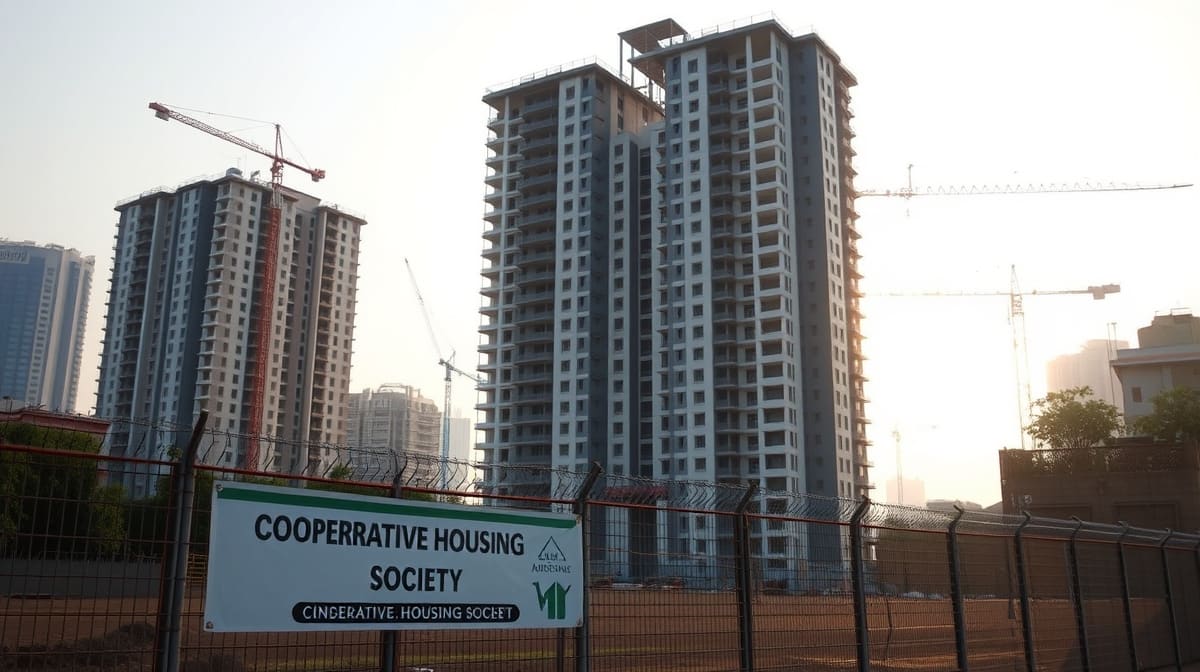
The Bombay High Court has clarified that while a developer may be barred from claiming compensation under a redevelopment agreement, the society cannot retain the purchase price of Floor Space Index (FSI) and tit-bit land acquired by the developer - doing so constitutes unjust enrichment and violates the fundamental policy of Indian law under Section 64 of the Indian Contract Act, 1872.
Background & Facts
The Dispute
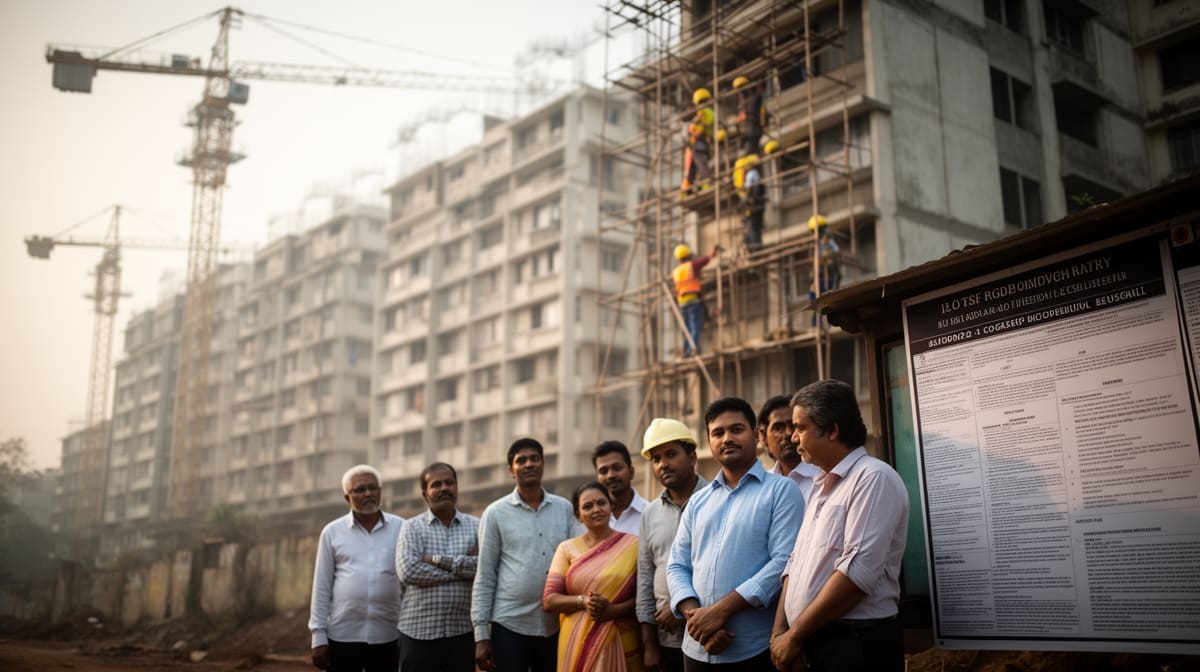
The dispute arose from a redevelopment agreement between SSD Escatics Private Limited (Petitioner-Developer) and Goregaon Pearl Cooperative Housing Society Limited (Respondent-Society). The Society, comprising 60 flat owners in Goregaon (West), Mumbai, engaged the Petitioner in 2005 to redevelop its aging buildings. A Development Agreement (DA) and Power of Attorney (POA) were executed on 26 September 2007. The Society’s members vacated their flats in October/November 2007, handing over possession to the Petitioner.
Key Facts
- The DA permitted utilization of FSI up to 2.4, with any additional FSI or TDR to be shared equally between the parties.
- The Petitioner purchased additional tit-bit land from MHADA for Rs. 8,18,03,435/- and additional FSI for Rs. 20,61,150/- to increase the plot area from 2,543 sq. mtrs to 3,747.81 sq. mtrs.
- The Municipal Corporation issued an Intimation of Disapproval (IOD) on 16 August 2007 and a Commencement Certificate on 17 June 2008.
- Construction halted on 4 August 2011 after MCGM issued a stop-work notice for violations.
- The Petitioner completed only the RCC shell of Wing-A (7 floors) and Wing-B (21 floors) by 2013.
- On 14 March 2014, MCGM offered approval for 3.5 FSI, subject to payment of a premium of Rs. 10,54,17,300/-, which the Petitioner did not pay.
- On 16 August 2016, the Society revoked the POA and encashed the Petitioner’s Rs. 5 crore bank guarantee, appropriating Rs. 2.5 crores as its share of additional FSI.
- On 16 May 2017, parties entered into Consent Terms before the Court, fixing the Petitioner’s liability at Rs. 7.62 crores, with Rs. 2.5 crores adjusted from the bank guarantee as the Society’s share of additional FSI.
- The Petitioner agreed to complete Wing-A by 30 June 2018 (with 4-month grace) and Wing-B by 31 December 2017 (with 3-month grace).
- The Petitioner defaulted on all post-dated cheques for rent and failed to pay Rs. 5.42 crores as directed by the Court in a contempt proceeding.
- On 9 June 2018, the Society terminated the DA, POA, and Consent Terms.
- The Arbitral Tribunal upheld the termination and awarded Rs. 7,08,53,695.03/- to the Society for arrears of rent, costs, and interest.
- The Tribunal rejected the Petitioner’s counterclaim for return of construction costs, rent, and FSI purchase amounts.
Procedural History
- 26 September 2007: Development Agreement and Power of Attorney executed.
- 17 June 2008: Commencement Certificate issued by MCGM.
- 4 August 2011: Stop-work notice issued by MCGM; construction halted.
- 16 August 2016: Society revoked POA and encashed Rs. 5 crore bank guarantee.
- 16 May 2017: Consent Terms executed before Bombay High Court.
- 7 July 2017: Section 9 petition converted into arbitration.
- 3 June 2018: Society resolved to terminate DA and POA.
- 9 June 2018: Termination notice served on Petitioner.
- 17 September 2018: Arbitrator granted interim relief permitting Society to engage new developer.
- 14 December 2018: Bombay HC dismissed Petitioner’s appeal against interim order.
- 24 June 2023: Arbitral Tribunal delivered award upholding termination and awarding Rs. 7,08,53,695.03/- to Society.
- 26 June 2023: Tribunal corrected interest amount to Rs. 2,80,71,194.03/-, increasing total claim to Rs. 7,08,53,695.03/-.
- 30 March 2026: Bombay High Court delivered judgment on Section 34 petition.
The Parties' Positions
Petitioner (Developer): Argued that termination was invalid due to Society’s failure to issue NOCs for additional FSI under Consent Terms. Contended that the Society unjustly retained Rs. 8,18,03,435/- (tit-bit land), Rs. 20,61,150/- (RG FSI), and Rs. 2,50,00,000/- (FSI benefit from bank guarantee), which must be restored under Section 64 of the Contract Act. Asserted that Clause 22 of the DA barred only compensation, not restitution.
Respondent (Society): Maintained that termination was justified due to repeated breaches of DA and Consent Terms. Argued that Clause 22, read with Clauses 9(h), 42, 47, and 53, barred any claim for return of expenses or benefits. Contended that the Petitioner’s expenditure was an investment, not a benefit, and that Section 64 did not apply.
Relief Sought
The Petitioner sought:
- Setting aside of the Arbitral Award dated 24 June 2023.
- Restoration of Rs. 8,18,03,435/- for tit-bit land, Rs. 20,61,150/- for RG FSI, and Rs. 2,50,00,000/- adjusted from bank guarantee as FSI benefit.
- Declaration that Clause 22 of the DA does not bar restitution under Section 64 of the Contract Act.
- Costs of arbitration and litigation.
The Legal Issue
Can a cooperative housing society retain the purchase price of FSI and tit-bit land acquired by a terminated developer under a redevelopment agreement, even when the agreement bars claims for compensation, and if so, does such retention violate the fundamental policy of Indian law under Section 64 of the Indian Contract Act, 1872?
Arguments Presented
For the Petitioner
The Petitioner relied on Section 64 of the Indian Contract Act, which mandates restoration of benefits received under a rescinded contract. It argued that the Society’s retention of Rs. 8,18,03,435/- (tit-bit land), Rs. 20,61,150/- (RG FSI), and Rs. 2,50,00,000/- (FSI benefit) constituted unjust enrichment. It distinguished between compensation under Section 73 and restitution under Section 64, asserting that Clause 22 of the DA only barred the former. The Petitioner cited Mundakath Mathu v. Chalora Illath Vishnu Nambudripad, Chacko v. Sreeja, and Muralidhar Chatterji v. International Film Co. to establish that Section 64 applies even to valid contracts rescinded due to breach. It emphasized that the FSI and tit-bit land were purchased in the Society’s name under Clause 9(h), but the purchase price remained the Petitioner’s financial outlay.
For the Respondent
The Society contended that Clause 22 of the DA, read with Clauses 9(h), 42, 47, and 53, created a comprehensive bar against any claim for return of expenses or benefits. It argued that the Petitioner’s expenditure was an investment for profit, not a benefit conferred on the Society. It relied on Steel Authority of India Ltd. v. J.C. Budharaja, Vilayati Ram Mittal v. RBI, and Associated Engineering Co. v. Government of Andhra Pradesh to assert that arbitrators are bound by contractual terms. It contended that the judgment in Borivali Anamika Niwas CHSL established that developer expenditure does not create equity in favor of the developer. It further argued that the Petitioner’s claim for return of FSI purchase price was disguised as restitution but was in essence a claim for compensation, which Clause 22 explicitly barred.
The Court's Analysis
The Court undertook a meticulous analysis of the contractual framework and the statutory provisions governing restitution. It first affirmed the validity of the termination, holding that the Petitioner’s repeated breaches of the DA and Consent Terms justified the Society’s action. The Court upheld the Arbitral Tribunal’s award of Rs. 7,08,53,695.03/- to the Society for arrears of rent, costs, and interest, and rejected the Petitioner’s claims for compensation, loss of profit, and return of transit rent.
However, the Court found a critical flaw in the Tribunal’s reasoning regarding the FSI and tit-bit land. The Tribunal had conflated the claim for restitution under Section 64 with a claim for compensation under Section 73, and erroneously applied Clause 22 of the DA to bar the former. The Court held:
"The concept of ‘benefit’ under Section 64 is distinct from ‘compensation’ under Section 73. While Clause 22 bars damages, it does not prohibit the return of benefits received by the Society under the terminated contract."
The Court emphasized that the purchase of FSI and tit-bit land was made by the Petitioner, but the rights vested in the Society under Clause 9(h). This clause ensured the Society could retain the FSI and land for construction purposes, but it did not absolve the Society of the obligation to return the purchase price. The Court observed:
"The Society has enjoyed the benefit of the purchased FSI by completing construction and planning to sell 75 flats. To permit it to retain the purchase price while enjoying the asset is to sanction unjust enrichment, which Section 64 was designed to prevent."
The Court distinguished Borivali Anamika Niwas CHSL, noting that its observations were made in the context of interim measures under Section 9, not final adjudication under Section 64. It further rejected the Society’s reliance on Vilayati Ram Mittal and Associated Engineering Co., as those cases dealt with compensation, not restitution.
The Court concluded that the Tribunal’s refusal to restore the FSI purchase price was in conflict with the fundamental policy of Indian law, as it allowed the Society to enrich itself at the Petitioner’s expense without contractual justification.
The Verdict
The Petitioner succeeded in part. The Bombay High Court set aside the Arbitral Tribunal’s award only to the extent it rejected the Petitioner’s counterclaim for return of the purchase price of FSI and tit-bit land. The Court directed the Respondent-Society to restore to the Petitioner the sum of Rs. 8,18,03,435/- for tit-bit land, Rs. 20,61,150/- for RG FSI, and Rs. 2,50,00,000/- adjusted from the bank guarantee as FSI benefit. The remainder of the award - including the termination, monetary claim of Rs. 7,08,53,695.03/-, and rejection of other counterclaims - was upheld. No costs were awarded.
What This Means For Similar Cases
Restitution Under Section 64 Is Not Barred by Compensation Clauses
- Practitioners must now argue that contractual clauses barring compensation (e.g., Clause 22) do not automatically bar restitution under Section 64.
- The distinction between ‘compensation’ (Section 73) and ‘restoration of benefit’ (Section 64) must be clearly pleaded and argued.
- Arbitrators and courts must independently assess whether a benefit was received and whether its retention constitutes unjust enrichment.
FSI and Tit-bit Land Purchases Are Recoverable Benefits
- When a developer purchases FSI or tit-bit land in the society’s name under a redevelopment agreement, the purchase price constitutes a recoverable benefit under Section 64 upon termination.
- The society may retain the FSI rights and land (per Clause 9(h)), but must return the actual cost paid by the developer.
- This applies even if the developer defaulted, as long as the society has utilized the purchased FSI.
Evidence Must Distinguish Between Investment and Benefit
- Developers must maintain clear, project-specific records of FSI and land purchase payments.
- Invoices for cement, steel, or labor cannot be treated as evidence of benefit unless directly tied to construction that is usable by the society.
- Courts will not allow recovery of construction costs unless the structure is complete and usable - bare RCC shells do not qualify as benefits.
Contractual Drafting Implications
- Societies seeking to bar restitution must explicitly state in the DA that no purchase price shall be returned upon termination.
- Ambiguous clauses like Clause 9(h) protect the asset but not the financial outlay - drafters must now include express forfeiture clauses for purchase price.
- The inclusion of Clause 8 (forfeiture only until commencement certificate) in the DA was pivotal; its absence in later stages created the opening for restitution.