Bombay High Court judgments

2134 Bombay High Court judgments explained in plain English: what was decided, the law applied and why it matters. Page 50 of 89.

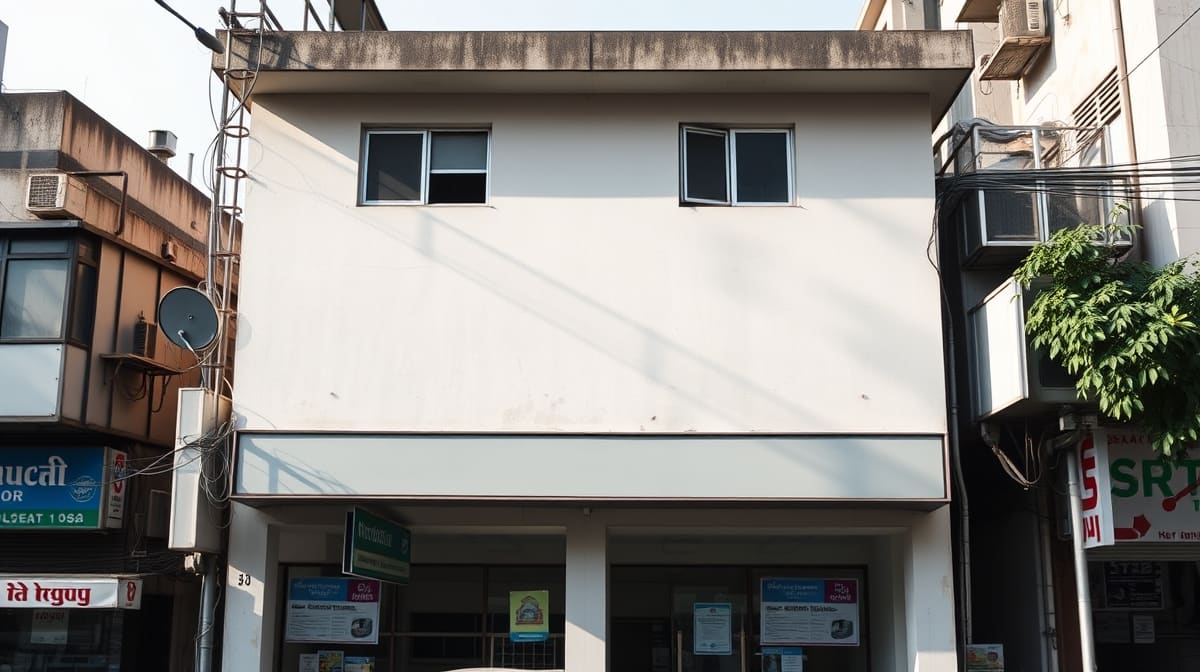
Section 351 MMC Act | Documentary Evidence Overrides Photographic Assumption in Mezzanine Floor Disputes : Bombay HC
Case Law Analysis
|Bombay High Court

Section 351 MMC Act | Documentary Evidence Overrides Photographic Assumption in Mezzanine Floor Disputes : Bombay HC

The Bombay High Court ruled that municipal demolition orders based solely on photographic evidence cannot override documented proof of a pre-existing mezzanine floor. The judgment establishes that factual disputes over structural classification require full trial, protecting property owners from arbitrary enforcement under the Mumbai Municipal Corporation Act and reinforcing procedural fairness in urban development cases.


MPID Act | Residential Property Cannot Be First Target for Attachment When Other Assets Suffice : Bombay HC Upholds Right to Shelter
Case Law Analysis
|Bombay High Court

MPID Act | Residential Property Cannot Be First Target for Attachment When Other Assets Suffice : Bombay HC Upholds Right to Shelter

Bombay High Court rules that under the MPID Act, residential properties cannot be prioritized for attachment if other assets (e.g., a Rs. 302 crore hotel) sufficiently cover depositor dues. The judgment reinforces the proportionality principle and the right to shelter, setting a precedent for asset attachment cases involving financial fraud.

MPDA Act Section 3(1) | Preventive Detention Invalid Without Proximate Material Linking Detainee to Public Order Threat : Bombay HC
Case Law Analysis
|Bombay High Court

MPDA Act Section 3(1) | Preventive Detention Invalid Without Proximate Material Linking Detainee to Public Order Threat : Bombay HC

The Bombay High Court quashed a preventive detention order under the MPDA Act, holding that mere registration of unrelated criminal cases does not establish a detainee as a 'dangerous person.' The ruling reinforces that preventive detention requires concrete, proximate evidence of imminent threat to public order, not speculative or distant allegations. This sets a critical safeguard against arbitrary detention under broad statutory powers.

Specific Performance | Bonafide Purchaser in Possession Defeats Prior Agreement Without Pleading Hardship Under Section 20(1) SPA: Bombay HC
Case Law Analysis
|Bombay High Court

Specific Performance | Bonafide Purchaser in Possession Defeats Prior Agreement Without Pleading Hardship Under Section 20(1) SPA: Bombay HC

The Bombay High Court ruled that a bonafide purchaser in actual possession of property, with no notice of a prior registered sale agreement, can defeat a claim for specific performance under Section 20(1) of the Specific Relief Act - even without alleging hardship. This clarifies that possession alone, coupled with lack of constructive notice, suffices to bar specific performance, reshaping how buyers and sellers assess risk in property transactions.

Reliance on Set-Aside Precedent Invalidates EPF Adjudication | Section 14B EPF Act : Bombay HC
Case Law Analysis
|Bombay High Court

Reliance on Set-Aside Precedent Invalidates EPF Adjudication | Section 14B EPF Act : Bombay HC

The Bombay High Court quashed an EPF Appellate Tribunal order built entirely on a Delhi HC judgment later overturned by the Supreme Court. This ruling establishes that tribunals cannot depend on judicial precedents that have been expressly set aside - reinforcing that binding law must reflect the highest court’s current interpretation, not defunct rulings. Employers and employees alike must now expect adjudications grounded in live, authoritative precedent.

Section 12(1)(c) Presidency Towns Insolvency Act | Covid-19 Limitation Extension Applies to Time-Bound Insolvency Petitions : Bombay HC
Case Law Analysis
|Bombay High Court

Section 12(1)(c) Presidency Towns Insolvency Act | Covid-19 Limitation Extension Applies to Time-Bound Insolvency Petitions : Bombay HC

Bombay HC rules that the Covid-19 limitation extension applies to the time-bound condition precedent under Section 12(1)(c) of the Presidency Towns Insolvency Act, 1909. The judgment validates insolvency petitions filed during the pandemic, reinforcing the applicability of Supreme Court's limitation extensions to procedural timelines in insolvency proceedings.

Section 34 Arbitration Act | Suppressing Vital Evidence Like EOW Complaint Renders Award Patentedly Illegal : Bombay HC
Case Law Analysis
|Bombay High Court

Section 34 Arbitration Act | Suppressing Vital Evidence Like EOW Complaint Renders Award Patentedly Illegal : Bombay HC

The Bombay High Court has held that an arbitral tribunal commits patent illegality by dismissing material evidence-such as an EOW complaint or tax returns-as irrelevant or private, thereby evading its duty to adjudicate core factual disputes. This ruling reinforces that arbitrators cannot sidestep substantive justice by procedural label, impacting all commercial arbitration parties relying on documentary proof.

Section 34 Arbitration Act | Withholding Partnership Records Forfeits Right to Challenge Award’s Turnover-Based Share Calculation : Bombay HC
Case Law Analysis
|Bombay High Court

Section 34 Arbitration Act | Withholding Partnership Records Forfeits Right to Challenge Award’s Turnover-Based Share Calculation : Bombay HC

The Bombay High Court upheld an arbitral award of Rs. 7.39 crores to a partner whose financial records were deliberately withheld by the co-partner, ruling that such obstruction forfeits the right to contest the award’s computation method. The judgment establishes that limitation in partnership dissolution begins at dissolution, not profit accrual, and deliberate non-cooperation undermines procedural fairness in arbitration.

Section 126 Electricity Act, 2003 | Final Assessment Order Mandatory Before Electricity Disconnection to Protect Livelihood Rights : Bombay HC
Case Law Analysis
|Bombay High Court

Section 126 Electricity Act, 2003 | Final Assessment Order Mandatory Before Electricity Disconnection to Protect Livelihood Rights : Bombay HC

The Bombay High Court has ruled that electricity suppliers cannot disconnect power without a final assessment order under Section 126 of the Electricity Act, 2003, even in cases of alleged theft. This protects the livelihood of businesses and employees by enforcing procedural fairness and preventing arbitrary deprivation of essential utility, reinforcing natural justice in public utility enforcement.

Asset Disclosure & Injunction Against Disposal of Ill-Gotten Gains | Ex-Employee’s Confession of Rs. 8 Cr Fraud Triggers Interim Relief : Bombay HC
Case Law Analysis
|Bombay High Court

Asset Disclosure & Injunction Against Disposal of Ill-Gotten Gains | Ex-Employee’s Confession of Rs. 8 Cr Fraud Triggers Interim Relief : Bombay HC

The Bombay High Court granted interim asset disclosure and injunction against a former HR employee who siphoned over Rs. 8 crores through fake payroll claims, relying on his own confession and evidence of investments in real estate and bank accounts. This ruling reinforces that courts will not hesitate to freeze assets even before trial when fraud is confessed and funds are demonstrably dissipated, setting a critical precedent for corporate fraud recovery.

Section 14B EPF Act | Order Invalidated for Relying on Supreme Court-Overruled Precedent : Bombay HC
Case Law Analysis
|Bombay High Court

Section 14B EPF Act | Order Invalidated for Relying on Supreme Court-Overruled Precedent : Bombay HC

The Bombay High Court set aside a PF Appellate Tribunal order that depended on a Delhi HC judgment later overturned by the Supreme Court, reinforcing that tribunals cannot anchor decisions on precedent rendered legally void. This clarifies that binding authority in EPF adjudication requires current, unchallenged jurisprudence - protecting employers and employees from legally unsound liability determinations.

Section 14 SARFAESI Act | Court Orders Police & Tehsildar to Use Reasonable Force to Evict Trespassing Borrowers, Holds Officials Personally Liable for Non-Compliance : Bombay HC
Case Law Analysis
|Bombay High Court

Section 14 SARFAESI Act | Court Orders Police & Tehsildar to Use Reasonable Force to Evict Trespassing Borrowers, Holds Officials Personally Liable for Non-Compliance : Bombay HC

The Bombay High Court has directed the Tehsildar of Nashik, backed by police including lady constables, to forcibly evict trespassing borrowers from a secured asset by 16 April 2026, with personal accountability imposed on officials for non-compliance. This ruling reinforces that creditor possession under SARFAESI is not merely procedural but enforceable by state machinery, setting a precedent for aggressive, state-backed execution against repeated borrower defiance.

Documentary Residence Proof Supersedes Hearsay in Anganwadi Appointments | ICDS Scheme, Writ Petition : Bombay HC
Case Law Analysis
|Bombay High Court

Documentary Residence Proof Supersedes Hearsay in Anganwadi Appointments | ICDS Scheme, Writ Petition : Bombay HC

The Bombay High Court has ruled that ration card, Aadhaar, and EPIC documents proving permanent residence cannot be invalidated by unsubstantiated complaints or undated panchanamas in Anganwadi Sevika appointments. This sets a critical precedent for fair recruitment under the Integrated Child Development Services Scheme, protecting rural women from arbitrary removal based on oral allegations.

Section 53A TPA | Unregistered Agreement for Sale Does Not Terminate Landlord-Tenant Relationship : Bombay HC
Case Law Analysis
|Bombay High Court

Section 53A TPA | Unregistered Agreement for Sale Does Not Terminate Landlord-Tenant Relationship : Bombay HC

The Bombay High Court has ruled that an unregistered Agreement for Sale cannot extinguish a pre-existing landlord-tenant relationship, even if possession is claimed under Section 53A of the Transfer of Property Act. This clarifies that registration is mandatory for equitable ownership claims, preserving tenants' rights against speculative sales agreements and reinforcing procedural safeguards in property transactions.

Article 25(da) Stamp Act | Goodwill and Share Premium Are Non-Taxable Accounting Entries in Amalgamations With No Consideration : Bombay HC
Case Law Analysis
|Bombay High Court

Article 25(da) Stamp Act | Goodwill and Share Premium Are Non-Taxable Accounting Entries in Amalgamations With No Consideration : Bombay HC

The Bombay High Court has ruled that stamp duty cannot be levied on amalgamation orders where no shares are issued and no consideration is paid, even if book entries reflect goodwill or share premium. This clarifies that accounting adjustments alone do not trigger stamp liability under Article 25(da), offering critical relief to corporate restructuring transactions across India.

POCSO Act Section 6 | Attempt to Rape a Minor Requires No Medical Proof of Penetration for Conviction : Bombay HC
Case Law Analysis
|Bombay High Court

POCSO Act Section 6 | Attempt to Rape a Minor Requires No Medical Proof of Penetration for Conviction : Bombay HC

The Bombay High Court affirmed that conviction under Section 6 of the POCSO Act for attempt to rape a minor is valid even without medical evidence of penetration, emphasizing that the act of attempted sexual assault against a child is itself a grave offense under the law. This ruling reinforces the Act’s child-centric intent and expands prosecutorial leverage in cases where physical evidence is absent due to the victim’s age or delayed reporting.

Specific Performance | Oral Property Agreement Enforceable Through Conduct, Not Cash Payment: Bombay HC
Case Law Analysis
|Bombay High Court

Specific Performance | Oral Property Agreement Enforceable Through Conduct, Not Cash Payment: Bombay HC

The Bombay High Court held that readiness and willingness to perform an oral sale agreement can be proven through contemporaneous conduct and documents, not merely by depositing the balance amount. This clarifies that equitable relief under the Specific Relief Act extends to parties who act in good faith, even without full payment, reshaping how courts assess performance readiness in property disputes.

Section 7 & 13 PCA | No Direct Bribe Demand or Acceptance Proven: Bombay HC Quashes ACB Case for Lack of Evidence & Invalid Sanction
Case Law Analysis
|Bombay High Court

Section 7 & 13 PCA | No Direct Bribe Demand or Acceptance Proven: Bombay HC Quashes ACB Case for Lack of Evidence & Invalid Sanction

Bombay HC's Aurangabad Bench dismissed the State's appeal, ruling that the prosecution failed to establish a direct bribe demand or acceptance under the Prevention of Corruption Act. The court also invalidated the sanction due to conflicting opinions, setting a precedent for stricter evidence requirements in corruption cases against public servants.

MEPS Act Excludes Primary Ashram Schools from 'Private School' Definition | Bombay HC Denies School Tribunal Jurisdiction to Employees
Case Law Analysis
|Bombay High Court

MEPS Act Excludes Primary Ashram Schools from 'Private School' Definition | Bombay HC Denies School Tribunal Jurisdiction to Employees

Bombay High Court rules that Primary Ashram Schools do not fall under the definition of 'private schools' under the MEPS Act, thereby excluding their employees from invoking the School Tribunal's jurisdiction. The decision underscores the statutory exclusion of certain educational institutions from employment dispute resolution mechanisms.

Public Duty & Corruption | Delay in Mutation of Revenue Records After Tahsildar's Order Amounts to Administrative Failure: Bombay HC Nagpur Bench Directs Disciplinary Action
Case Law Analysis
|Bombay High Court

Public Duty & Corruption | Delay in Mutation of Revenue Records After Tahsildar's Order Amounts to Administrative Failure: Bombay HC Nagpur Bench Directs Disciplinary Action

Bombay HC Nagpur Bench holds that failure to implement a Tahsildar's mutation order within a reasonable time constitutes administrative negligence, especially when coupled with allegations of illegal gratification. The court directs the Sub-Divisional Officer to ensure compliance and investigate the revenue official's conduct, reinforcing accountability in public duty under administrative law.

Section 498A IPC | Acquittal Upheld for Lack of Corroboration and Material Inconsistencies in Dowry Harassment Case : Bombay HC
Case Law Analysis
|Bombay High Court

Section 498A IPC | Acquittal Upheld for Lack of Corroboration and Material Inconsistencies in Dowry Harassment Case : Bombay HC

Bombay High Court affirms acquittal in a dowry harassment case under Section 498A IPC, ruling that uncorroborated testimonies, inconsistent evidence, and doubtful documentary proof fail to meet the standard of reasonable doubt. The judgment reinforces the necessity of credible evidence in criminal prosecutions for matrimonial offenses.

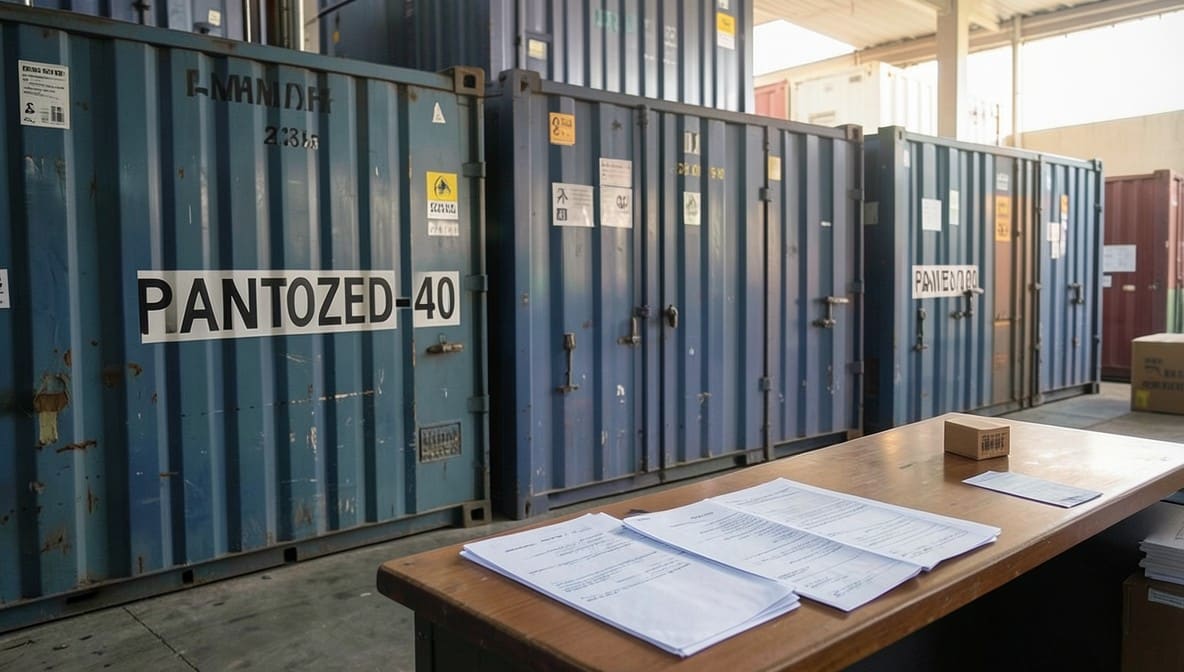
Section 56 Trade Marks Act | Export of Deceptively Similar Mark from India Constitutes 'Use' : Bombay HC Grants Injunction in 'PANTOCID' Infringement Case
Case Law Analysis
|Bombay High Court

Section 56 Trade Marks Act | Export of Deceptively Similar Mark from India Constitutes 'Use' : Bombay HC Grants Injunction in 'PANTOCID' Infringement Case

Bombay HC rules that exporting goods bearing a deceptively similar trademark from India qualifies as 'use' under Section 56 of the Trade Marks Act, entitling the plaintiff to an interim injunction. The judgment clarifies that territorial use is not a prerequisite for infringement, impacting exporters and trademark holders in cross-border disputes.

Section 37 Indian Partnership Act | Heirs of Deceased Partner Entitled to Post-Death Profits If Buyout Clause Not Executed : Bombay HC Upholds Arbitral Award
Case Law Analysis
|Bombay High Court

Section 37 Indian Partnership Act | Heirs of Deceased Partner Entitled to Post-Death Profits If Buyout Clause Not Executed : Bombay HC Upholds Arbitral Award

Bombay High Court affirms that under Section 37 of the Indian Partnership Act, heirs of a deceased partner retain entitlement to post-death profits if the partnership deed's buyout clause is not duly executed. The ruling reinforces that contractual obligations must be strictly complied with to extinguish profit-sharing rights of legal heirs.