The Bombay High Court has affirmed that the pendency of a civil suit challenging the validity of a property conveyance does not preclude the Competent Authority from granting deemed conveyance under Section 11 of the Maharashtra Ownership Flats Act, 1963. This ruling reinforces the statutory objective of securing timely transfer of property rights to flat purchasers, even where title disputes remain unresolved in civil courts.
Background & Facts
The Dispute
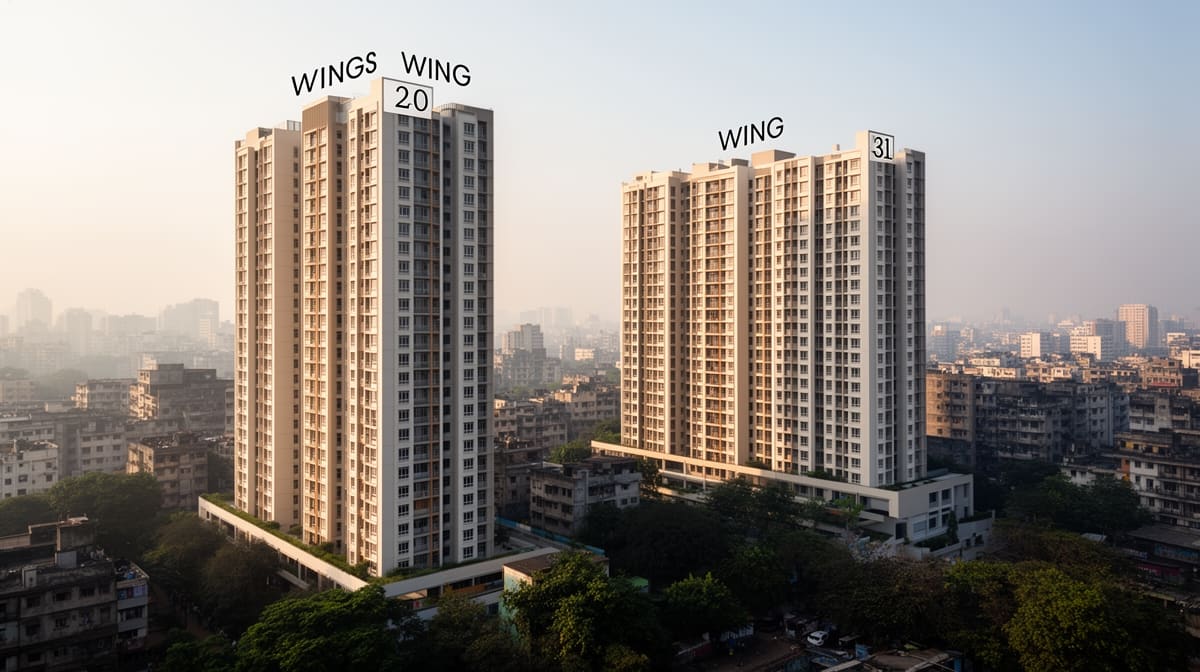
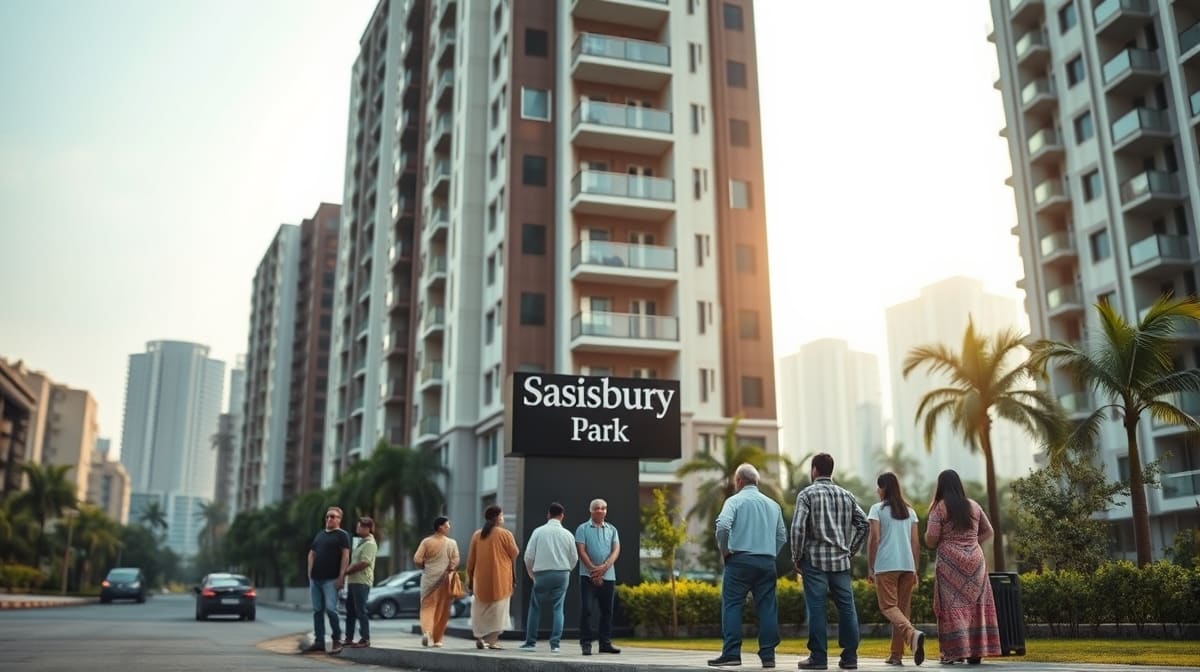
The dispute arises from a claim for deemed conveyance of land and building known as "Maria Salisbury Park" in Mumbai. The Petitioners, Suraj Properties Ltd. and its director, contend that the order granting deemed conveyance to Maria Suraj Cooperative Housing Society Ltd. (Respondent No. 1) was issued in violation of legal principles and without due regard to an ongoing civil suit challenging the foundational title of the Petitioners.
Key Facts
- The subject property was originally held by Trustees of Manuel Gonsalves Trust.
- On 29.10.1985, the Trustees executed a Deed of Conveyance in favour of Petitioner No. 2, acting as director and nominee of Petitioner No. 1.
- Petitioner No. 1 obtained necessary permissions from the Municipal Corporation of Greater Mumbai and constructed the building "Maria Salisbury Park".
- On 17.10.1987, Petitioner No. 1 executed standardized Agreements for Sale under Section 4 of the Maharashtra Ownership Flats Act (MOFA) with multiple flat purchasers.
- On 17.06.1992, the Municipal Corporation issued an Occupation Certificate for the building.
- Possession of flats was handed over to purchasers progressively after 1992.
- The housing society was registered, but the Petitioners failed to execute conveyance within four months of registration, as mandated by Section 11 of MOFA.
- On 01.08.2022, Respondent No. 1 filed an application before the Competent Authority (Respondent No. 2) seeking deemed conveyance.
- On 15.10.2022, the Petitioners filed an application seeking production of documents under the Maharashtra Ownership Flats Rules to contest the application.
- On 17.02.2023, the Competent Authority granted deemed conveyance to Respondent No. 1, including over a portion allegedly under lease.
Procedural History
- 29.10.1985: Deed of Conveyance executed from Manuel Gonsalves Trust to Petitioner No. 2.
- 17.10.1987: Agreements for Sale executed under Section 4 of MOFA with flat purchasers.
- 17.06.1992: Occupation Certificate issued by Municipal Corporation.
- 01.08.2022: Respondent No. 1 files application for deemed conveyance.
- 15.10.2022: Petitioners file application for document production under MOFA Rules.
- 17.02.2023: Competent Authority grants deemed conveyance to Respondent No. 1.
- 17.02.2023: Petitioners file Writ Petition No. 7023 of 2023 before Bombay High Court.
- 30.03.2026: Judgment delivered by Justice Amit Borkar.
The Genesis
The Petitioners’ claim to title rests entirely on the 1985 Deed of Conveyance. However, a Civil Suit bearing No. 6749 of 2005, filed by the original Trustees, is pending before a Civil Court, challenging the validity of that deed on the ground that it was executed without prior permission of the Charity Commissioner under Section 36 of the Maharashtra Public Trusts Act, 1950. The Petitioners argue that this pending litigation renders their title uncertain and precludes any statutory conveyance.
The Underlying Transaction
The transaction under MOFA involved the sale of 100+ flats to individual purchasers through standardized agreements. The Petitioners, as promoters, were statutorily obligated under Section 11 of MOFA to execute conveyance within four months of society registration. Their failure to do so triggered the statutory mechanism for deemed conveyance.
Relief Sought
The Petitioners sought quashing of the Competent Authority’s order dated 17.02.2023, arguing that it was issued without jurisdiction, in violation of judicial propriety, and in disregard of the pending civil suit. They also sought stay of the conveyance order pending final adjudication of the civil suit.
The Legal Issue
The central question was whether the pendency of a civil suit challenging the validity of the underlying conveyance deed operates as a legal bar to the Competent Authority’s power to grant deemed conveyance under Section 11 of the Maharashtra Ownership Flats Act, 1963.
Arguments Presented
For the Petitioner
Mr. Vishal Kanade argued that the Competent Authority exceeded its jurisdiction by adjudicating title issues that were already sub judice in a civil suit. He relied on Kashish Park Reality Pvt. Ltd. v. State of Maharashtra to emphasize that Section 11 proceedings are summary in nature and must not encroach upon the domain of civil courts. He contended that granting conveyance while a title challenge is pending would create irreconcilable conflicts and prejudice the original owners. He further argued that the lease deed in favour of Mr. Naval J. Ardeshir affected the extent of property subject to conveyance, and this was not properly examined.
For the Respondent
Ms. Mamta Shrivastava, AGP, and Mr. Mayur Khandeparkar contended that Section 11 of MOFA is a remedial provision designed to protect the rights of flat purchasers. They submitted that the existence of a civil suit does not automatically suspend statutory rights. The Competent Authority was only required to verify: (i) existence of agreements under Section 4, (ii) registration of the society, and (iii) failure of the promoter to execute conveyance. All three conditions were undisputed. The civil suit, they argued, pertains to a different legal regime (Public Trusts Act) and does not invalidate the statutory scheme of MOFA.
The Court's Analysis
The Court examined the statutory framework under Section 11 of MOFA and held that its purpose is to ensure that flat purchasers, who have paid substantial sums and taken possession, are not left without title due to promoter default. The scope of inquiry before the Competent Authority is strictly limited to three elements: existence of valid agreements under Section 4, registration of the cooperative society, and failure of the promoter to execute conveyance within the statutory period.
"The legal position is well settled that the scope of inquiry under Section 11 of MOFA is limited and summary in nature. The Competent Authority is required to examine only whether there exists a valid agreement under Section 4, whether the society is entitled to conveyance, and whether there is failure on the part of the promoter to discharge its statutory obligation."
The Court rejected the Petitioners’ argument that the pendency of the civil suit creates a jurisdictional bar. It clarified that the civil suit challenges title under the Maharashtra Public Trusts Act, which is a distinct legal domain from the statutory mechanism under MOFA. The Competent Authority is not required to adjudicate the validity of the original conveyance; it operates on the premise of statutory compliance, not title perfection.
"In the absence of any interim order restraining the grant of deemed conveyance, such pendency cannot operate as a legal embargo on the exercise of statutory powers under Section 11 of MOFA. Accepting such contention would defeat the very object of the statute, which is to ensure timely conveyance in favour of flat purchasers."
The Court further noted that the lease deed issue raised by the Petitioners was not substantiated with evidence before the Competent Authority and could not be raised for the first time in writ proceedings. The authority’s findings were confined to undisputed facts and fell squarely within its statutory mandate.
The Verdict
The Writ Petition was dismissed. The Court upheld the Competent Authority’s order dated 17.02.2023 granting deemed conveyance to Maria Suraj Cooperative Housing Society Ltd. The Court held that the statutory requirements under Section 11 of MOFA were fully satisfied, and the pendency of the civil suit did not invalidate the conveyance order. The Interim Application No. 370 of 2026 was disposed of as infructuous. There shall be no order as to costs. The Court clarified that any intervenor affected by the conveyance may pursue independent remedies in accordance with law.
What This Means For Similar Cases
Deemed Conveyance Is Not Dependent on Title Clarity
- Practitioners must now recognize that MOFA Section 11 operates independently of title disputes in civil courts.
- Even if a developer’s title is under challenge, flat purchasers’ right to conveyance is protected if statutory conditions are met.
- Civil suits challenging title under other statutes (e.g., Public Trusts Act) do not automatically stay MOFA proceedings.
Competent Authority’s Role Is Narrow and Procedural
- The Competent Authority must not delve into ownership disputes, validity of deeds, or third-party claims unless supported by court orders.
- Focus must remain on: (i) Section 4 agreements, (ii) society registration, (iii) promoter’s default.
- Any attempt to adjudicate title will be deemed ultra vires and subject to writ intervention.
Timing of Legal Challenges Matters
- Parties seeking to block deemed conveyance must obtain an interim injunction from the civil court before the Competent Authority acts.
- Mere pendency of a suit is insufficient to halt statutory proceedings.
- Delay in seeking injunctive relief may be construed as acquiescence to the statutory process.