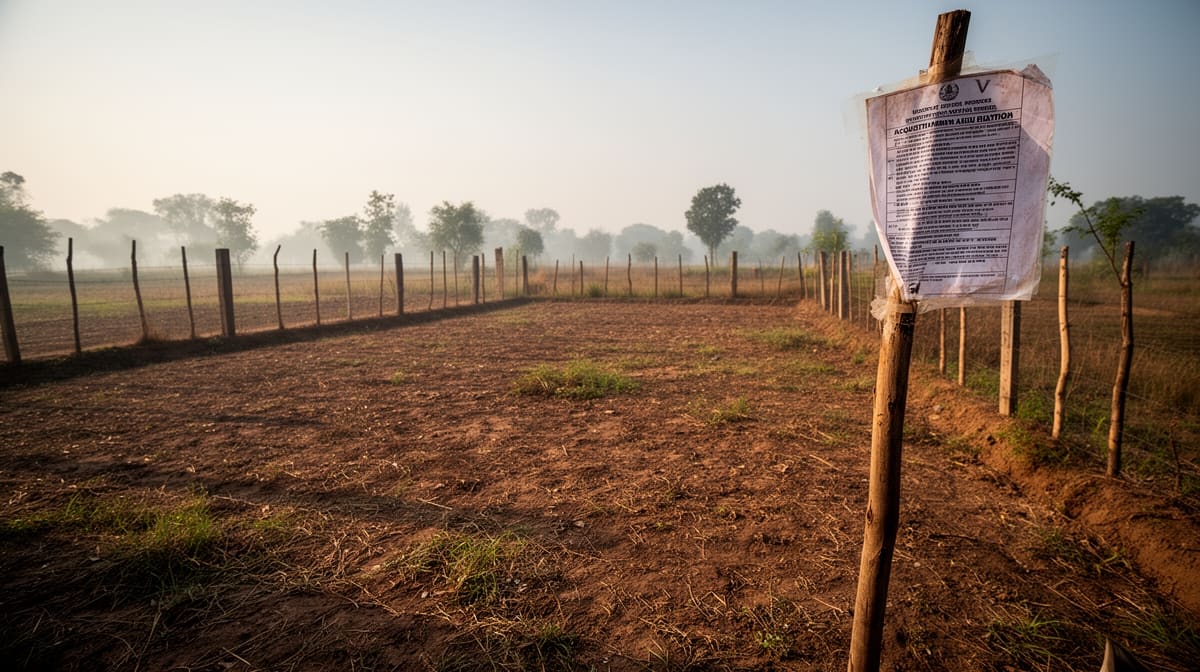
The Bombay High Court has clarified that statutory compliance under Section 77 of the Right to Fair Compensation and Transparency in Land Acquisition, Rehabilitation and Resettlement Act, 2013, does not mandate the physical presence of all claimants for compensation disbursement, provided identity and documentation are satisfactorily verified. This ruling reinforces the principle that procedural rigidity must yield to statutory intent and practical accessibility, particularly for vulnerable claimants.
Background & Facts
The Dispute
The petitioners, four individuals entitled to compensation under a land acquisition award dated 03.09.2025, sought the disbursal of their respective shares of compensation amounting to Rs. 1.2 crore collectively. Despite submitting all documents requested by the Sub-Divisional Officer (SDO), respondent No.2, the SDO refused to release the funds unless all four petitioners appeared in person. The petitioners contended that this demand was contrary to the plain language of Section 77 of the Act of 2013, which mandates deposit of compensation directly into claimants’ bank accounts.
Key Facts
- The land acquisition award was passed on 03.09.2025 by the Collector under the Act of 2013
- The petitioners submitted all documents demanded by the SDO via letters dated 15.10.2025, 20.11.2025, and 05.12.2025
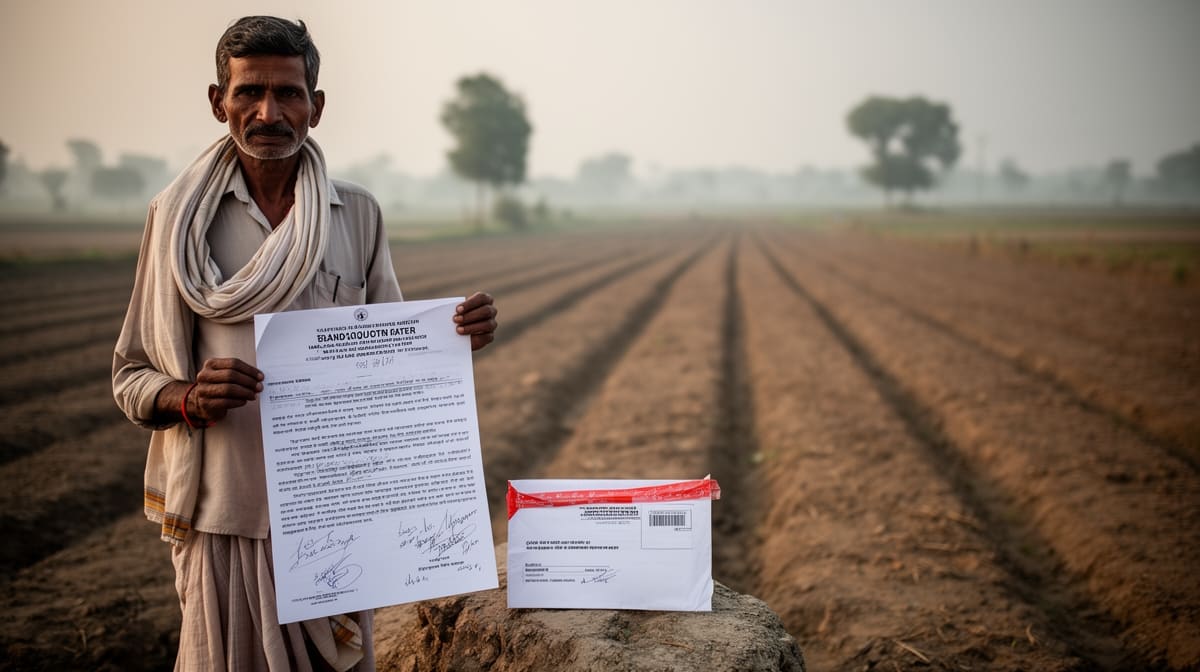
- The documents included: identity proofs, bank account details, title documents, and affidavits of ownership
- The SDO issued notices under Exhibit B, specifying the documents required, all of which were allegedly complied with
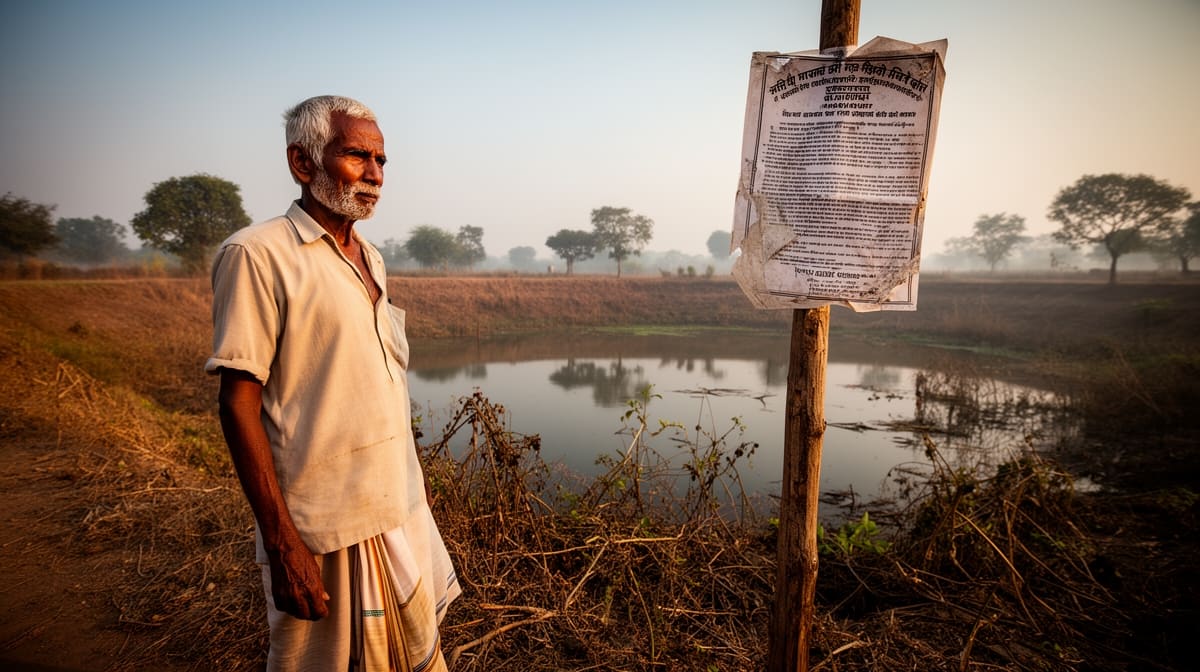
- Petitioner Nos. 1 and 4 are senior citizens with documented health issues, making personal appearance difficult
- No inter se dispute exists among the petitioners regarding distribution of compensation shares
- The petitioners have initiated reference proceedings under Section 34 of the Maharashtra Industrial Development Act, 1961, for enhancement of compensation, and will accept disbursement under protest
Procedural History
- 03.09.2025: Land acquisition award issued by the Collector
- 15.10.2025: First set of documents submitted to SDO via registered post
- 20.11.2025: Second submission of documents with cover letter
- 05.12.2025: Third communication reiterating compliance and requesting disbursement
- 15.01.2026: Formal written complaint to SDO regarding refusal to disburse
- 28.01.2026: SDO responded, insisting on personal appearance of all four petitioners
- 10.02.2026: Writ petition filed before the Bombay High Court (WP No. 3958 of 2026)
- 30.03.2026: Hearing before Division Bench of Justices Manish Pitale and Shreeram V. Shirsat
The Parties' Positions
The petitioners argued that Section 77 of the Act of 2013 is clear: compensation must be deposited in bank accounts. They emphasized that the statutory scheme is designed to eliminate bureaucratic delays and physical barriers. They cited the object of the Act - transparency, fairness, and ease of access - and contended that demanding personal presence is an unauthorized condition.
The State, through the Additional Government Pleader, did not dispute the submission of documents but sought time to verify their authenticity. The AGP acknowledged the documents were on record but insisted that personal presence was a standard practice to prevent fraud, without citing any statutory provision supporting this requirement.
Relief Sought
The petitioners sought a direction to the SDO to disburse the compensation amount as per the award dated 03.09.2025, into their respective bank accounts, without requiring personal appearance of all claimants. They also requested that the court recognize their submission of documents as sufficient for verification.
The Legal Issue
The central question was whether Section 77 of the Right to Fair Compensation and Transparency in Land Acquisition, Rehabilitation and Resettlement Act, 2013, requires the personal presence of all claimants for disbursement of compensation, or whether verification through submitted documents suffices.
Arguments Presented
For the Petitioner
The petitioners relied on the plain language of Section 77, which states: "The amount of compensation... shall be deposited in the bank account of the claimant." They argued that the provision is self-executing and leaves no room for additional conditions. They cited State of Haryana v. Smt. Sunita Devi to support that statutory mandates must be interpreted purposively to benefit beneficiaries. They emphasized that requiring physical presence defeats the Act’s objective of reducing hardship, especially for elderly or infirm claimants.
For the Respondent
The State did not dispute the authenticity of the documents but argued that personal presence is a customary safeguard against fraudulent claims. The AGP contended that while no express provision mandates presence, administrative practice permits it as a precautionary measure. No statutory rule, notification, or circular was cited to substantiate this practice.
The Court's Analysis
The Court undertook a textual and purposive interpretation of Section 77. It observed that the provision is unambiguous: compensation is to be deposited in bank accounts. The Court noted that the Act was enacted to replace the outdated Land Acquisition Act, 1894, with a rights-based framework that prioritizes efficiency and dignity.
"The mandate under Section 77 is not merely procedural but substantive - it prescribes the mode of payment, not the mode of verification. The authority may verify identity through documents, not through physical presence."
The Court examined the documents submitted by the petitioners and found them complete, consistent, and corroborated by the SDO’s own notices. It held that the SDO’s insistence on personal presence was an unauthorized condition, not grounded in law. The Court further noted that the petitioners had no inter se dispute, eliminating any risk of conflicting claims.
The Court acknowledged the vulnerability of Petitioner Nos. 1 and 4, who are senior citizens with health constraints. It emphasized that administrative convenience cannot override statutory rights, particularly when the law provides an alternative - document-based verification.
The Court rejected the State’s reliance on "customary practice" as legally insufficient. It held that administrative practices cannot override statutory mandates unless expressly authorized.
The Verdict
The petitioners succeeded. The Court directed that Petitioner No. 2 shall appear before the SDO on 06.04.2026 at 11:00 a.m. to submit one additional set of all documents on behalf of all four petitioners. The SDO shall verify the documents on that day and, within one week thereafter, deposit the compensation amount as per the award dated 03.09.2025, in the respective bank accounts of the four petitioners. The petitioners shall accept the deposit under protest, without prejudice to their pending reference proceedings for enhancement. Costs are waived.
What This Means For Similar Cases
Document Verification Supersedes Physical Presence
- Practitioners may now argue that any demand for personal appearance under Section 77 LARR is ultra vires if documents are complete and unchallenged
- Authorities must rely on Aadhaar, PAN, bank passbook, or notarized affidavits for identity verification - not physical attendance
- This applies equally to elderly, disabled, or out-of-state claimants
Statutory Mandates Trump Administrative Convenience
- No circular, office order, or practice can override a clear statutory provision
- Courts will strike down procedural hurdles that are not statutorily mandated, especially in welfare legislation
- Authorities must document their verification process - not merely assert it
Procedural Fairness Must Accommodate Vulnerable Claimants
- Courts will consider age, health, and mobility in interpreting procedural requirements
- Administrative discretion must be exercised reasonably and not as a tool for delay
- Failure to accommodate vulnerable claimants may attract writ jurisdiction under Article 226